Amines
Les amines sont un ensemble de molécules contenant un groupe fonctionnel amino (dérivé de l'ammoniac). Cette catégorie inclut les amines à tous les niveaux de substitution : primaires, secondaires, tertiaires et sels d'ammonium. Les amines sont fondamentales dans la synthèse organique et sont largement utilisées dans les produits pharmaceutiques, les agrochimiques et les sciences des matériaux. Chez CymitQuimica, nous proposons une sélection complète d'amines pour répondre à vos besoins de recherche et industriels. Notre gamme assure l'accès à diverses amines pour divers processus chimiques et recherches innovantes.
Sous-catégories appartenant à la catégorie "Amines"
- Nitrosamines(2.627 produits)
- Amines primaires(30.948 produits)
- Cations d'ammonium quaternaire(1.101 produits)
- Amines secondaires(20.887 produits)
- Amines tertiaires(17.196 produits)
8791 produits trouvés pour "Amines"
Trier par
Degré de pureté (%)
0
100
|
0
|
50
|
90
|
95
|
100
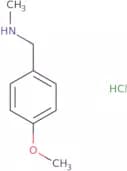
4-Methoxy-N-methylbenzylamine hydrochloride
CAS :Please enquire for more information about 4-Methoxy-N-methylbenzylamine hydrochloride including the price, delivery time and more detailed product information at the technical inquiry form on this pageFormule :C9H14NOClDegré de pureté :Min. 95%Masse moléculaire :187.67 g/mol2-Chloro-3,4-dimethoxyphenethylamine HCl
CAS :Produit contrôlé2-Chloro-3,4-dimethoxyphenethylamine is an intermediate in the synthesis of zepines. It can be synthesized by reduction of borohydride with 2-chloro-1,2,3,4-tetrahydrobenzaldehyde.Degré de pureté :Min. 95%Eltrombopag olamine
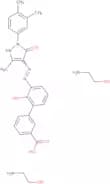
CAS :Eltrombopag olamine is an orally active drug that belongs to the class of thiazolidinones. It has been used for the treatment of thrombocytopenia in patients with chronic liver disease and myelodysplastic syndrome. Eltrombopag olamine inhibits platelet aggregation by binding to glycoprotein IIb/IIIa receptors on the surface of platelets. The drug is a prodrug that is metabolized in vivo to its active form, eltrombopag. This conversion is catalysed by CYP3A4 and CYP2D6 enzymes and can be inhibited by drugs that inhibit these enzymes, such as trifluoroacetic acid and hydroxyl group-containing compounds. Eltrombopag olamine binds to erythrocytes, which may be due to its ability to form intramolecular hydrogen bonds with nitrogen atoms. The synthesis of eltFormule :C25H22N4O4•(C2H7NO)2Degré de pureté :Min. 95%Couleur et forme :PowderMasse moléculaire :564.63 g/mol4-Aminoisoxazole
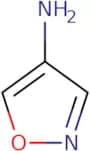
CAS :4-Aminoisoxazole is a triazole that has been found to be active against tumor cell lines. It is synthesized by reacting zinc powder with an acid solution containing 4-nitrobenzaldehyde, which results in the formation of 4-aminobenzonitrile, which subsequently undergoes nitration and reduction to form 4-aminoisoxazole. The synthesis of this compound can also be achieved by reacting ammonium nitrate with nitric acid in the presence of hydrochloric acid.Formule :C3H4N2ODegré de pureté :Min. 95%Masse moléculaire :84.08 g/mol(7S)-7-Amino-1,2,3,10-tetramethoxy-6,7-dihydro-5H-benzo[g]heptalen-9-one
CAS :(7S)-7-Amino-1,2,3,10-tetramethoxy-6,7-dihydro-5H-benzo[g]heptalen-9-one is a hydroxylated analog of demecolcine. It has been shown to be an effective antimicrobial agent with proteolytic and hypoglycemic effects in mice. 7SATM is able to inhibit the activity of human macrophages. This drug has also been shown to have diagnostic potential by binding to a monoclonal antibody that recognizes the myeloperoxidase enzyme on the surface of neutrophils.Formule :C20H23NO5Degré de pureté :Min. 95 Area-%Couleur et forme :Slightly Yellow PowderMasse moléculaire :357.4 g/molAmmonium carbonate
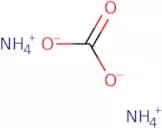
CAS :Ammonium carbonate is an inorganic salt that consists of ammonium ion and carbonate ion. It is a white crystalline solid with a molecular weight of about 166.4 g/mol. Ammonium carbonate is soluble in water, alcohol, acetone, and other organic solvents. It has been used as a buffer solution for pH adjustment and as a source of ammonium ions in analytical chemistry. Ammonium carbonate can be formed by the reaction of sodium carbonate with ammonia gas or liquid ammonia, or the reaction of sodium bicarbonate with ammonia gas or liquid ammonia. The thermal expansion coefficient of ammonium carbonate is higher than those of sodium salts such as sodium chloride and potassium chloride. Electrochemical impedance spectroscopy (EIS) measurements have shown that the reactivity between ammonium carbonate and plasma mass spectrometry is high due to its high values on the electric spectrum graph at low frequencies (1 kHz).Formule :CH8N2O3Degré de pureté :Min. 95%Couleur et forme :White SolidMasse moléculaire :96.09 g/molN-Propyl-N-isopropylamine
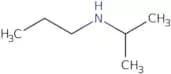
CAS :N-Propyl-N-isopropylamine is a beta-blocker that is used in the treatment of hypertension. It has potent inhibition of the enzyme transaminase, which is involved in the metabolism of amino acids and branched chain amino acids. N-Propyl-N-isopropylamine inhibits the synthesis of catecholamines, such as adrenaline, noradrenaline, and dopamine. Beta blockers are also used to treat angina pectoris and heart failure. Beta blockers work by blocking beta receptors in the sympathetic nervous system, thereby decreasing cardiac output and blood pressure. The drug can be administered orally or intravenously to achieve its desired effects. This drug is also catalytic with a low toxicity profile that makes it suitable for wastewater treatment.Formule :C6H15NDegré de pureté :Min. 95%Masse moléculaire :101.19 g/molE-3-(Tributylstannyl)-2-propen-1-amine
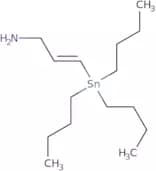
CAS :Produit contrôléPlease enquire for more information about E-3-(Tributylstannyl)-2-propen-1-amine including the price, delivery time and more detailed product information at the technical inquiry form on this pageFormule :C15H33NSnDegré de pureté :Min. 95%Masse moléculaire :346.14 g/molN-[(1S)-1-(Aminocarbonyl)propyl]-4-chlorobutanamide
CAS :Please enquire for more information about N-[(1S)-1-(Aminocarbonyl)propyl]-4-chlorobutanamide including the price, delivery time and more detailed product information at the technical inquiry form on this pageFormule :C8H15ClN2O2Degré de pureté :Min. 95%Couleur et forme :PowderMasse moléculaire :206.67 g/mol1,4-Dichloro 6-carboxytetramethylrhodamine
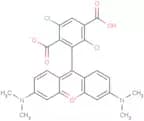
CAS :1,4-Dichloro 6-carboxytetramethylrhodamine is a rhodamine-class fluorescent dye with excitation/emission wavelengths of 541/568 nm.Formule :C25H20Cl2N2O5Degré de pureté :99.99%Couleur et forme :SolidMasse moléculaire :499.349-Aminoacridine
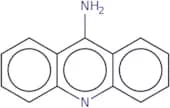
CAS :9-Aminoacridine is a potential anticancer agent that intercalates into the DNA and prevents the replication process. It has been shown to inhibit the growth of bacteria resistant to tetracycline by interfering with bacterial DNA replication. 9-Aminoacridine also has anti-inflammatory properties, which may be due to its inhibition of prostaglandin synthesis.Formule :C13H10N2Degré de pureté :Min. 95%Masse moléculaire :194.23 g/mol1-[(3,3-Diphenylpropyl)methylamino]-2-methyl-2-propanol
CAS :1-[(3,3-Diphenylpropyl)methylamino]-2-methyl-2-propanol is an epoxy that can be synthesized from benzene and lercanidipine. It has been used in the production of cinnamic acid and other molecules. This molecule can be prepared by reacting cinnamic acid with chloromethyl methyl ether in a ring-opening reaction. The chloride ion is utilized as a nucleophile to react with the amide nitrogen atom of the cinnamic acid molecule to form the amide bond. The large-scale production of 1-[(3,3-diphenylpropyl)methylamino]-2-methyl-2-propanol utilizes refluxing to remove water and other byproducts that are formed during the process.Formule :C20H27NODegré de pureté :Min. 95%Masse moléculaire :297.43 g/molFmoc-(3S,4S)-4-amino-3-hydroxy-6-methylheptanoic acid
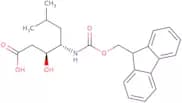
CAS :Fmoc-(3S,4S)-4-amino-3-hydroxy-6-methylheptanoic acid is a pharmacokinetic drug that is under investigation for prostate cancer. It has been shown to inhibit the growth of prostate carcinoma cells and reduce the expression of prostate specific antigen (PSA) in vivo. Fmoc-(3S,4S)-4-amino-3-hydroxy-6-methylheptanoic acid has also been used in bioconjugate chemistry to produce a prodrug that can be taken orally. This prodrug is activated by viral proteases in the stomach, leading to an increase in cytotoxicity against HIV virus and other retroviruses. Fmoc-(3S,4S)-4-amino-3-hydroxy-6-methylheptanoic acid has also been shown to inhibit the production of human serum erythropoietin (EPO).Formule :C23H27NO5Degré de pureté :Min. 95%Couleur et forme :White To Off-White SolidMasse moléculaire :397.46 g/molL(+)-2,3-Diaminopropionic acid HCl
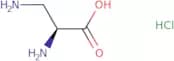
CAS :L(+)-2,3-Diaminopropionic acid HCl is a chiral modifier that is used in the separation of organic compounds. It has been shown to selectively interact with borate, sulfate, and hydroxyapatite. This interaction changes the physical properties of these substances by modifying their surface charge or adsorption capacity. L(+)-2,3-Diaminopropionic acid HCl has also been shown to be useful in diastereoselective reactions. The technique of elution can be used to isolate specific compounds from mixtures using this compound as a modifier. Hydrogen bonding groups and moieties on the functional group are important factors in the specificity of this interaction.END>>Formule :C3H8N2O2·HClDegré de pureté :Min. 95%Couleur et forme :White PowderMasse moléculaire :140.57 g/mol(R)-3-Amino-4-(2,4,5-trifluorophenyl)butyric acid
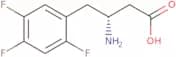
CAS :(R)-3-Amino-4-(2,4,5-trifluorophenyl)butyric acid is an antibacterial agent that inhibits the enzyme acetylcholine esterase. This inhibition prevents the breakdown of acetylcholine, leading to increased levels of this neurotransmitter in the brain and an enhancement of cholinergic transmission. (R)-3-Amino-4-(2,4,5-trifluorophenyl)butyric acid has been shown to be effective against bacterial strains resistant to β-lactam antibiotics. The synthesis of taxol as well as other β-amino acids has been demonstrated using a variety of enzymatic methods. A reaction scheme for the synthesis of nicotinic acetylcholine has also been proposed. (R)-3-Amino-4-(2,4,5-trifluorophenyl)butyric acid is a dipeptFormule :C10H10F3NO2Degré de pureté :Min. 95%Couleur et forme :PowderMasse moléculaire :233.19 g/mol6-Fluoro-3,4-Pyridinediamine
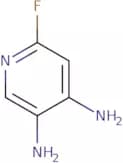
CAS :Please enquire for more information about 6-Fluoro-3,4-Pyridinediamine including the price, delivery time and more detailed product information at the technical inquiry form on this page
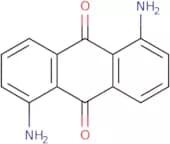
Formule :C5H6FN3Degré de pureté :Min. 95%Masse moléculaire :127.12 g/mol1,5-Diaminoanthraquinone
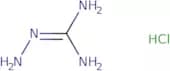
CAS :1,5-Diaminoanthraquinone (1,5-DA) is an intermolecular hydrogen bonding compound that has been used as an optical sensor. The 1,5-DA molecule has the ability to form hydrogen bonds with chloride and sodium carbonate. This interaction can be exploited for surface-enhanced Raman spectroscopy of cell nuclei. The 1,5-DA molecule also interacts with supramolecular assemblies to produce surface-enhanced Raman scattering. In addition, 1,5-DA has a metal chelate property that allows it to bind to ferrocene carboxylic acid molecules. It can also form hydrogen bonds with vinyl alcohol molecules in multiwall carbon nanotubes. The molecular structure of 1,5-DA consists of rings containing five carbons each. These rings are linked together by amine groups and are attached to a central nitrogen atom on one end and a hydroxyl group on the other end.Formule :C14H10N2O2Degré de pureté :Min. 95%Couleur et forme :Red PowderMasse moléculaire :238.24 g/molAminoguanidine hydrochloride
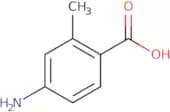
CAS :Aminoguanidine hydrochloride is a basic compound that can be used as an anti-inflammatory drug. It has been shown to have a hypoglycemic effect, which may be due to its ability to increase the activity of glutathione peroxidase and glutathione reductase in experimental models. Aminoguanidine hydrochloride also inhibits the production of inflammatory cytokines such as TNF-α, IL-1β and IL-6. Experiments with transfected cells have shown that aminoguanidine hydrochloride induces neuronal death, which may be due to its ability to inhibit protein synthesis by interfering with ribosomal function.Formule :CH6N4·HClDegré de pureté :Min. 95%Couleur et forme :White PowderMasse moléculaire :110.55 g/mol4-Amino-2-methylbenzoic acid
CAS :4-Amino-2-methylbenzoic acid is a low molecular weight compound that has been shown to inhibit the neuraminidase enzyme. It interacts with the imine group of the enzyme and forms a covalent bond, which prevents the release of sialic acid from the terminal sugar residue of glycoproteins. The inhibition of this enzyme leads to decreased bacterial growth. 4-Amino-2-methylbenzoic acid has been shown to be active against Gram positive bacteria such as Staphylococcus aureus and Streptococcus pneumoniae, but not against Gram negative bacteria such as Escherichia coli or Pseudomonas aeruginosa. This compound is also able to inhibit the synthesis of c-reactive protein (CRP) in human erythrocytes.Formule :C8H9NO2Degré de pureté :Min. 95%Couleur et forme :PowderMasse moléculaire :151.16 g/mol3-Maleimidopropionylaminomethyl resin (200-400 mesh)
Please enquire for more information about 3-Maleimidopropionylaminomethyl resin (200-400 mesh) including the price, delivery time and more detailed product information at the technical inquiry form on this pageDegré de pureté :Min. 95%


![(7S)-7-Amino-1,2,3,10-tetramethoxy-6,7-dihydro-5H-benzo[g]heptalen-9-one](/_next/image/?url=https%3A%2Fstatic.cymitquimica.com%2Fproducts%2F3D%2Fthumb-webp%2FFA20821.webp&w=3840&q=75)
![N-[(1S)-1-(Aminocarbonyl)propyl]-4-chlorobutanamide](/_next/image/?url=https%3A%2Fstatic.cymitquimica.com%2Fproducts%2F3D%2Fthumb-webp%2FFA171302.webp&w=3840&q=75)

![1-[(3,3-Diphenylpropyl)methylamino]-2-methyl-2-propanol](/_next/image/?url=https%3A%2Fstatic.cymitquimica.com%2Fproducts%2F3D%2Fthumb-webp%2FFD22513.webp&w=3840&q=75)