Amines
Sous-catégories appartenant à la catégorie "Amines"
- Nitrosamines(2.649 produits)
- Amines primaires(30.948 produits)
- Cations d'ammonium quaternaire(1.102 produits)
- Amines secondaires(20.887 produits)
- Amines tertiaires(17.195 produits)
8790 produits trouvés pour "Amines"
2-[(1S)-1-Aminopropyl]-5-fluoro-3-phenyl-4(3H)-quinazolinone
CAS :Produit contrôléIntermediate in the synthesis of idelalisib (CAL 101)
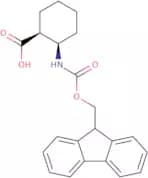
Formule :C17H16FN3ODegré de pureté :Min. 95%Masse moléculaire :297.33 g/mol(1S,2R)-Fmoc-aminocyclohexane carboxylic acid
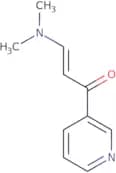
CAS :Please enquire for more information about (1S,2R)-Fmoc-aminocyclohexane carboxylic acid including the price, delivery time and more detailed product information at the technical inquiry form on this pageFormule :C22H23NO4Degré de pureté :Min. 95%Masse moléculaire :365.42 g/mol3-Dimethylamino-1-(3-pyridyl)-2-propen-1-one
CAS :3-Dimethylamino-1-(3-pyridyl)-2-propen-1-one is a synthetic anticancer compound. It is an amide derivative of 3-dimethylamino-1-(3-pyridyl)-2-propenal, which is synthesized by reacting 3,5,6,7 tetrahydrobenzo[b]thiophene with 3-(dimethylamino)acrylic acid chloride. The synthesis of 3DAP was reported in 1974 by Novartis Pharmaceuticals Corporation and it has been used as a lead compound for the development of other anticancer agents. This drug can inhibit the growth of myelogenous leukemia cells and has been shown to be effective against cancer cells that are resistant to imatinib.Formule :C10H12N2ODegré de pureté :Min. 95%Couleur et forme :Off-White To Yellow SolidMasse moléculaire :176.22 g/mol2-Aminoindole hydrochloride
CAS :2-Aminoindole hydrochloride is a heterocyclic amine that is formed by the reaction of benzene and an aminoindole. It is a difunctional compound that can react with alcohols to form amides, carbonyl groups to form ketones, or carbamate groups to form ureas. This compound has been shown to act as an activated aromatic amine that reacts with oxygen in the atmosphere to form a variety of products, including chlorinated aromatic amines. 2-Aminoindole hydrochloride has been shown to have carcinogenic effects in rats when administered orally at high doses.
Formule :C8H9ClN2Degré de pureté :Min. 95%Couleur et forme :Slightly Yellow PowderMasse moléculaire :168.62 g/mol2-chloro-3-fluoropyridin-4-amine
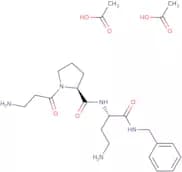
CAS :Please enquire for more information about 2-chloro-3-fluoropyridin-4-amine including the price, delivery time and more detailed product information at the technical inquiry form on this pageFormule :C5H4ClFN2Degré de pureté :Min. 95%Masse moléculaire :146.55 g/mol(2S)-beta-Alanyl-L-prolyl-2,4-diamino-N-(phenylmethyl)butanamideacetate
CAS :Produit contrôlé(2S)-beta-Alanyl-L-prolyl-2,4-diamino-N-(phenylmethyl)butanamideacetate (BAP) is a skin care product that can be applied topically to the skin. BAP is an amino acid derivative that has been shown in clinical studies to hydrate the skin. It acts as a humectant and binds to water molecules, thus increasing the moisture content of the skin. This product also has antioxidant and anti-inflammatory properties, as well as anti-aging effects. BAP is often used in cosmetic products for its film forming properties and ability to form polymeric films on the surface of cells.
Formule :C21H33N5O5Degré de pureté :Min. 95%Masse moléculaire :435.52 g/moltrans-1,2-Diaminocyclohexane-N,N,N',N'-tetraacetic acid monohydrate
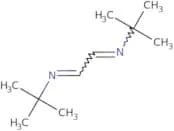
CAS :Trans-1,2-Diaminocyclohexane-N,N,N',N'-tetraacetic acid monohydrate (CDTA) is a chelating agent that has been shown to be effective in the treatment of some cancers. CDTA has been shown to inhibit the growth of tumor cells by binding to lysine residues on histones and DNA and inhibiting their acetylation. CDTA also prevents the genotoxicity induced by irradiation. CDTA can be used as an adjuvant in cancer therapy due to its ability to inhibit histone deacetylase activity. Trans-1,2-Diaminocyclohexane-N,N,N',N'-tetraacetic acid monohydrate is synthesized from two amino acids: lysine and glutamic acid. This molecule is a polymeric compound composed of cyclic molecules linked together through amide bonds. These polymers are linear chains ofFormule :C14H22N2O8·H2OCouleur et forme :White PowderMasse moléculaire :364.35 g/molN,N'-Ethane-1,2-diylidenebis(2-methylpropan-2-amine)
CAS :Please enquire for more information about N,N'-Ethane-1,2-diylidenebis(2-methylpropan-2-amine) including the price, delivery time and more detailed product information at the technical inquiry form on this pageFormule :C10H20N2Degré de pureté :Min. 95%Couleur et forme :PowderMasse moléculaire :168.28 g/mol4-Piperidylformylaminomethyl resin (200-400 mesh)
Please enquire for more information about 4-Piperidylformylaminomethyl resin (200-400 mesh) including the price, delivery time and more detailed product information at the technical inquiry form on this pageDegré de pureté :Min. 95%Couleur et forme :Solid(aR)-a-[[[2-(4-Aminophenyl)ethyl]amino]methyl]-benzenemethanol
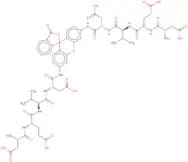
CAS :Please enquire for more information about (aR)-a-[[[2-(4-Aminophenyl)ethyl]amino]methyl]-benzenemethanol including the price, delivery time and more detailed product information at the technical inquiry form on this pageFormule :C16H20N2ODegré de pureté :Min. 95%Couleur et forme :PowderMasse moléculaire :256.34 g/mol(H-Asp-Glu-Val-Asp)2-Rhodamine 110 trifluoroacetate salt
CAS :Please enquire for more information about (H-Asp-Glu-Val-Asp)2-Rhodamine 110 trifluoroacetate salt including the price, delivery time and more detailed product information at the technical inquiry form on this pageFormule :C56H66N10O23Degré de pureté :Min. 95%Masse moléculaire :1,247.18 g/mol5-Nitro-2-aminophenol
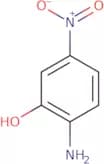
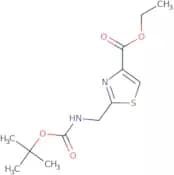
CAS :5-Nitro-2-aminophenol is an aminophenol that has been shown to be a carcinogen in animal studies. It can cause allergic reactions and has been shown to have oxidative DNA damage, which can lead to cancer. 5-Nitro-2-aminophenol is used as a chemical intermediate in the preparation of other chemicals and pharmaceuticals. This chemical has been studied extensively for its analytical properties and is used as a reagent in chromatography. The coordination geometry of 5-nitro-2-aminophenol is octahedral, with nitro groups occupying one axial site each. The toxicity of this compound in animals has been studied extensively, including carcinogenic potential and mutagenicity studies, and it has been shown to inhibit the growth of cultured cells at high concentrations.Formule :C6H6N2O3Degré de pureté :Min. 95%Masse moléculaire :154.12 g/molEthyl 2-((tert-butoxycarbonylamino)methyl)thiazole-4-carboxylate
CAS :Please enquire for more information about Ethyl 2-((tert-butoxycarbonylamino)methyl)thiazole-4-carboxylate including the price, delivery time and more detailed product information at the technical inquiry form on this pageFormule :C12H18N2O4SDegré de pureté :Min. 95%Masse moléculaire :286.35 g/molDes[3-acetyl-5-(2-dimethylamino)ethyl] diltiazem
CAS :Diltiazem is an anti-anginal agent that belongs to the group of calcium channel blockers. It is used to treat chest pain (angina) due to coronary artery disease and other conditions. Diltiazem is a racemic mixture of two enantiomers, (+)-diltiazem and (-)-diltiazem. The synthesis of diltiazem from (+)-diltiazem has been reported by asymmetric synthesis with a chiral catalyst. In this process, irradiation of the reaction mixture at 254 nm converts the nitro group in the molecule into an anisaldehyde group, which can be cleaved by nucleophilic substitution with phenylmethyl sulfide. This high yield, efficient method produces diltiazem hydrochloride as a white solid that crystallizes in needles or crystals.Formule :C16H15NO3SDegré de pureté :Min. 95%Couleur et forme :Beige PowderMasse moléculaire :301.36 g/mol3-Maleimidopropionylaminomethyl resin (200-400 mesh)
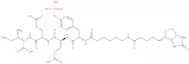
Please enquire for more information about 3-Maleimidopropionylaminomethyl resin (200-400 mesh) including the price, delivery time and more detailed product information at the technical inquiry form on this pageDegré de pureté :Min. 95%Biotinyl-epsilon-aminocaproyl-Tyr(PO3H2)-Glu-Glu-Ile-OH
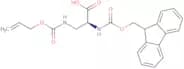
CAS :Please enquire for more information about Biotinyl-epsilon-aminocaproyl-Tyr(PO3H2)-Glu-Glu-Ile-OH including the price, delivery time and more detailed product information at the technical inquiry form on this pageFormule :C41H62N7O16PSDegré de pureté :Min. 95%Masse moléculaire :972.01 g/molN-alpha-Fmoc-Nbeta-allyloxycarbonyl-L-2,3-diaminopropionic acid
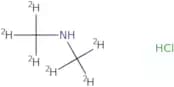
CAS :Please enquire for more information about N-alpha-Fmoc-Nbeta-allyloxycarbonyl-L-2,3-diaminopropionic acid including the price, delivery time and more detailed product information at the technical inquiry form on this pageFormule :C22H22N2O6Degré de pureté :Min. 95%Masse moléculaire :410.53 g/molDimethyl-d6-amine HCl
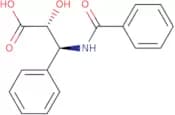
CAS :Produit contrôléDimethyl-d6-amine HCl is a drug that inhibits the growth of cancer cells. It is an inhibitor of epidermal growth factor (EGF), which has been shown to be effective in the treatment of skin cancer. Dimethyl-d6-amine HCl is also effective against some strains of bacteria that are resistant to other antibiotics, such as erythromycin and tetracycline. Dimethyl-d6-amine HCl has been shown to have a suppressive effect on the production of sesquiterpene lactones by dehydrocostus lactone, which may be responsible for its anti-inflammatory properties.Formule :C2H2ClD6NDegré de pureté :Min. 95%Couleur et forme :White PowderMasse moléculaire :87.58 g/molN-Benzoyl-(2R,3S)-3-amino-2-hydroxy-3-phenyl-propionicacid
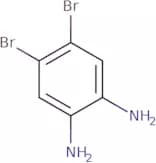
CAS :N-Benzoyl-(2R,3S)-3-amino-2-hydroxy-3-phenylpropionic acid (BAPA) is a substance that is used in the manufacture of various drugs. It is also a potent anticancer drug that can be used for the treatment of cancer. BAPA has been shown to be an effective chemotherapeutic agent against many types of cancer cells. This drug is synthesized through an asymmetric synthesis process and has been shown to have potent cytotoxic effects against cancer cells with low levels of glutathione peroxide reductase. BAPA also inhibits the growth of bacteria by hydrolyzing or oxidizing proteins or by binding to DNA and RNA.Formule :C16H15NO4Degré de pureté :Min. 95%Masse moléculaire :285.29 g/mol4,5-Dibromobenzene-1,2-diamine
CAS :Dibromobenzene-1,2-diamine (DBD) is a chemical compound that belongs to the group of diamines. It is used in cancer research as an anticancer drug, inhibiting the growth of cancer cells by blocking intracellular calcium levels. DBD has been shown to be effective against pancreatic cancer cells and human cancer cells. The photophysical properties of DBD are determined by its neutral structure and electron deficiency, which makes it a suitable candidate for use in radiation treatment.Formule :C6H6Br2N2Degré de pureté :Min. 95%Couleur et forme :PowderMasse moléculaire :265.93 g/mol
![2-[(1S)-1-Aminopropyl]-5-fluoro-3-phenyl-4(3H)-quinazolinone](/_next/image/?url=https%3A%2Fstatic.cymitquimica.com%2Fproducts%2F3D%2Fthumb-webp%2FFA96431.webp&w=3840&q=75)





![(aR)-a-[[[2-(4-Aminophenyl)ethyl]amino]methyl]-benzenemethanol](/_next/image/?url=https%3A%2Fstatic.cymitquimica.com%2Fproducts%2F3D%2Fthumb-webp%2FFA75045.webp&w=3840&q=75)
![Des[3-acetyl-5-(2-dimethylamino)ethyl] diltiazem](/_next/image/?url=https%3A%2Fstatic.cymitquimica.com%2Fproducts%2F3D%2Fthumb-webp%2FFD21106.webp&w=3840&q=75)