Amines
Les amines sont un ensemble de molécules contenant un groupe fonctionnel amino (dérivé de l'ammoniac). Cette catégorie inclut les amines à tous les niveaux de substitution : primaires, secondaires, tertiaires et sels d'ammonium. Les amines sont fondamentales dans la synthèse organique et sont largement utilisées dans les produits pharmaceutiques, les agrochimiques et les sciences des matériaux. Chez CymitQuimica, nous proposons une sélection complète d'amines pour répondre à vos besoins de recherche et industriels. Notre gamme assure l'accès à diverses amines pour divers processus chimiques et recherches innovantes.
Sous-catégories appartenant à la catégorie "Amines"
- Nitrosamines(2.605 produits)
- Amines primaires(30.947 produits)
- Cations d'ammonium quaternaire(1.100 produits)
- Amines secondaires(20.886 produits)
- Amines tertiaires(17.193 produits)
8780 produits trouvés pour "Amines"
Trier par
Degré de pureté (%)
0
100
|
0
|
50
|
90
|
95
|
100
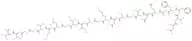
Amyloid beta-Protein (17-40) ammonium salt
CAS :<p>Please enquire for more information about Amyloid beta-Protein (17-40) ammonium salt including the price, delivery time and more detailed product information at the technical inquiry form on this page</p>Formule :C110H178N26O31SDegré de pureté :Min. 95%Masse moléculaire :2,392.81 g/molBenzyltributylammonium chloride
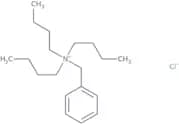
CAS :Benzyltributylammonium chloride is a quaternary ammonium salt that is used as a surfactant. It is commercially available in the form of its sodium salt, which is prepared by the reaction of benzyltriethylamine with trifluoroacetic acid and sodium carbonate. The surface methodology used to characterize the adsorption properties of this compound was Langmuir adsorption isotherms. The optimum concentration for this compound was found to be 0.05 M at 25°C, where it exhibits surface adsorption kinetics at a rate of 1.1 x 10⁻⁴ mol/cm2/s. Benzyltributylammonium chloride has strong hydroxyl groups, which gives it an affinity for water molecules and makes it an excellent surfactant for use in detergent formulations. It also chelates metal ions such as chloride and metal ions (e.g., zinc) that are present in hardFormule :C19H34ClNDegré de pureté :Min. 95%Couleur et forme :PowderMasse moléculaire :311.93 g/molMca-(Asn670,Leu671)-Amyloid β/A4 Protein Precursor770 (667-675)-Lys(Dnp) ammonium acetate salt
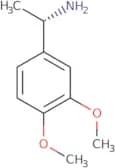
CAS :Please enquire for more information about Mca-(Asn670,Leu671)-Amyloid beta/A4 Protein Precursor770 (667-675)-Lys(Dnp) ammonium acetate salt including the price, delivery time and more detailed product information at the technical inquiry form on this pageFormule :C68H88N14O27Degré de pureté :Min. 95%Masse moléculaire :1,533.5 g/mol(1S)-1-(3,4-Dimethoxyphenyl)ethan-1-amine
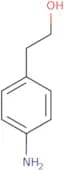
CAS :<p>Please enquire for more information about (1S)-1-(3,4-Dimethoxyphenyl)ethan-1-amine including the price, delivery time and more detailed product information at the technical inquiry form on this page</p>Formule :C10H15NO2Degré de pureté :Min. 95%Masse moléculaire :181.23 g/mol4-Aminophenethyl alcohol
CAS :4-Aminophenethyl alcohol is a monosubstituted, basic compound that is used in the laboratory as a cell culture medium supplement to promote growth of fibroblasts. This compound has been shown to stimulate human intestinal cells and human peripheral blood mononuclear cells. 4-Aminophenethyl alcohol acts as a hydroxyl group donor, which may be due to its ability to form hydrogen ions when reacted with sodium hydroxide solution. The reaction of this compound with diazonium salt produces an intermediate, which can be hydrolyzed by the addition of sodium hydroxide solution. The resultant chloride ion reacts with the aminophenethyldihydroxylamine (APDA) moiety to produce APDCl. This product has been shown to increase the population growth rate of fibroblasts in culture by causing DNA synthesis and protein synthesis. Linear regression analysis revealed that there was no statistically significant difference between the control and experimental groups for either DNAFormule :C8H11NODegré de pureté :Min. 95%Masse moléculaire :137.18 g/mol2-Amino-4-fluorobenzaldehyde
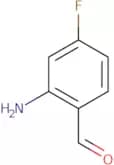
CAS :<p>2-Amino-4-fluorobenzaldehyde is a plant growth regulator that has been shown to be effective at increasing the yield of flowers and fruit crops. It is used as an intermediate in the synthesis of agrochemicals, such as 2-aminobenzaldehyde and anthranilic acid. The biosynthesis of 2-amino-4-fluorobenzaldehyde starts from methanol and intermediates such as anthranilic acid, aminoaldehydes, or alcohols. It can also be produced by oxidative coupling of 2-aminobenzaldehyde with phenylacetone in the presence of sodium hydroxide. 2-Amino-4-fluorobenzaldehyde has been shown to be more efficient than other plant growth regulators such as robinia or aminocyclopentane carboxylic acid (ACC).</p>Formule :C7H6FNODegré de pureté :Min. 95%Couleur et forme :SolidMasse moléculaire :139.13 g/mol(Deamino-Cys1,b-cyclohexyl-Ala4,Arg8)-Vasopressin trifluoroacetate salt
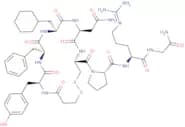
CAS :Desmopressin is a synthetic analogue of vasopressin, which is used to treat disorders associated with insufficient secretion of vasopressin. It has been shown that desmopressin binds to the vasopressin V2 receptor subtype and stimulates the release of arginine-vasopressin in corticotropin-releasing hormone (CRH)-treated rat pituitary cells. This stimulation was mediated by a residue on the Cys1,b-cyclohexyl residue. The binding of desmopressin to this site was demonstrated in vitro using binding experiments on rat brain synaptosomes. Desmopressin has also been shown to stimulate ovulation in rats and humans, and it has been shown to be effective for treating nocturnal enuresis in children.Formule :C50H71N13O11S2Degré de pureté :Min. 95%Masse moléculaire :1,094.31 g/mol(S)-3-Amino-3-(4-chlorophenyl)-propan-1-ol
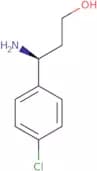
CAS :<p>Please enquire for more information about (S)-3-Amino-3-(4-chlorophenyl)-propan-1-ol including the price, delivery time and more detailed product information at the technical inquiry form on this page</p>Formule :C9H12ClNODegré de pureté :Min. 95%Masse moléculaire :185.65 g/mol5-Amino-2-bromobenzonitrile
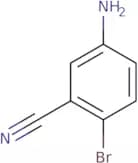
CAS :Please enquire for more information about 5-Amino-2-bromobenzonitrile including the price, delivery time and more detailed product information at the technical inquiry form on this pageFormule :C7H5BrN2Degré de pureté :95%NmrMasse moléculaire :197.03 g/molEthyl 3-(pyridin-2-ylamino)propanoate
CAS :<p>Ethyl 3-(pyridin-2-ylamino)propanoate is a thrombin inhibitor that can be used for the treatment of cancer. Ethyl 3-(pyridin-2-ylamino)propanoate is a reactive, profile compound with electrons and hydrogen bonds. It has been shown to have anticancer activity in vitro and in vivo, inhibiting tumor cell growth by inhibiting DNA synthesis. This molecule also has anti-inflammatory properties, which may be due to its ability to inhibit platelet aggregation.</p>Formule :C10H14N2O2Degré de pureté :Min. 95 Area-%Couleur et forme :PowderMasse moléculaire :194.23 g/molDimethylbenzyl-(3-sulfopropyl)ammonium, inner salt
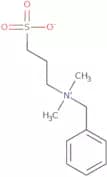
CAS :Dimethylbenzyl-(3-sulfopropyl)ammonium, inner salt (DMBAPA-IS) is a nutrient solution that contains antimicrobial agents, such as fatty acids and diastolic pressure. DMBAPA-IS is used in the treatment of infectious diseases. It has been shown to be effective against solid tumours and bacterial strains. The structure of DMBAPA-IS is similar to that of dimethylbenzylammonium chloride (DMBAC), which inhibits bacterial growth by binding to the 30S ribosomal subunit, preventing protein synthesis.Formule :C12H19NO3SDegré de pureté :Min. 95%Masse moléculaire :257.35 g/molChloramine T trihydrate
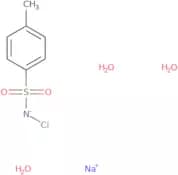
CAS :<p>Chloramine T trihydrate is a water-soluble and biodegradable chemical that is used in wastewater treatment. It reacts with chloramines to produce chloramine, which has a higher disinfectant potential than chlorine. Chloramine T trihydrate also has antimicrobial properties and can be used to control microbial growth in biological samples. In addition, it can inhibit the activity of certain enzymes, such as aziridination, which is involved in the production of nitrosamines and nitric oxide. The matrix effect for chloramine-t may be different from other antimicrobial agents because it does not have a high affinity for proteins. It was found that benzalkonium chloride had an inhibitory effect on chloramine-t activity.<br>MECHANISM OF ACTION: Chloramine T trihydrate is an oxidizing agent that reacts with organic matter to form chloramines and other oxidized products. When these reactions occur in the presence of water or organic material,</p>Formule :C7H7ClNNaO2S•(H2O)3Degré de pureté :Min. 98 Area-%Couleur et forme :PowderMasse moléculaire :282.7 g/mol7-Diethylamino-4-methylcoumarin
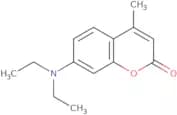
CAS :<p>7-Diethylamino-4-methylcoumarin is a fluorescence probe that can be used in applications such as the study of hydrogen bonding interactions. It is excited by laser light and emits a red-shifted fluorescent light. 7-Diethylamino-4-methylcoumarin is a hydroxyl group analogue of coumarin, which has been shown to have physiological effects on the liver cells. The absorption spectrum of 7-Diethylamino-4-methylcoumarin is sensitive to changes in pH and chemical stability. A decrease in pH increases the intensity of the emission while an increase in pH decreases the intensity of the emission. This compound can also be used to label nucleic acids during polymerase chain reactions (PCR) or for sample preparation before analysis using nuclear magnetic resonance spectroscopy (NMR).</p>Formule :C14H17NO2Degré de pureté :Min. 98 Area-%Couleur et forme :PowderMasse moléculaire :231.29 g/molTetra-n-propylammonium hydrogen sulfate
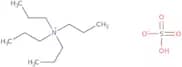
CAS :<p>Tetra-n-propylammonium hydrogen sulfate (TPAS) is a pharmaceutical dosage that consists of tetra-n-propylammonium ions and hydrogen sulfate anions. It has a diameter of about 2 nm, and can be detected by fluorescence techniques. TPAS has shown to have pharmacologic activities, including the ability to react with hydrogen fluoride in solution to form a precipitate that can be used as a sample preparation reagent. TPAS also has been shown to produce dehydrating effects on chloride in an alicyclic system.</p>Formule :C12H29NO4SDegré de pureté :Min. 95%Masse moléculaire :283.43 g/mol(R)-3-[((tert-Butoxy)carbonyl)amino]-4-(2,5-difluorophenyl)butanoic acid
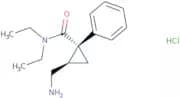
CAS :Please enquire for more information about (R)-3-[((tert-Butoxy)carbonyl)amino]-4-(2,5-difluorophenyl)butanoic acid including the price, delivery time and more detailed product information at the technical inquiry form on this pageFormule :C15H19F2NO4Degré de pureté :Min. 95%Masse moléculaire :315.31 g/mol(E)-2-(Aminomethyl)-N,N-diethyl-1-phenylcyclopropanecarboxamideHydrochloride
CAS :Produit contrôlé<p>Levomilnacipran is a serotonin-norepinephrine reuptake inhibitor (SNRI) that is used for the treatment of major depressive disorder and fibromyalgia. It has been shown to have antidepressant effects in patients with major depressive disorder and fibromyalgia. Levomilnacipran inhibits the reuptake of serotonin and norepinephrine by blocking the transporter proteins in these neurotransmitter pathways, increasing their availability to interact with receptors in the brain. Levomilnacipran also has been found to inhibit aminotransferase activity, which may be responsible for its hepatotoxicity.</p>Formule :C15H23ClN2ODegré de pureté :Min. 95%Masse moléculaire :282.81 g/mol2-Amino-6-chloropyrimidin-4(3h)-one
CAS :<p>2-Amino-6-chloropyrimidin-4(3H)-one (ACPP) is a betaine that has been shown to exhibit potent activity against clinical isolates of methicillin-resistant Staphylococcus aureus (MRSA). It is a mesomeric molecule, which means that it can exist as two different tautomers. The frequency of the absorption bands in the FTIR spectra for ACPP are characteristic of the carbenes and ethanolamine tautomers. The presence of these tautomers may be due to stabilization from the nucleophilic character of the nitrogen atom in betaines. Betaines are also able to form polymersized chains by reacting with themselves or other molecules, such as ethanolamine.</p>Formule :C4H4ClN3ODegré de pureté :Min. 95%Couleur et forme :PowderMasse moléculaire :145.55 g/molPyrithiamine
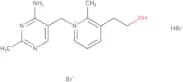
CAS :<p>Pyrithiamine is an antimicrobial agent that inhibits the growth of bacteria by disrupting the disulfide bond between two cysteine residues. It has been shown to inhibit the formation of bacterial spores, which are resistant to many antibiotics. Pyrithiamine also has antioxidant properties and can reduce oxidative stress in neurons, leading to neuronal death. This drug also has a strong effect on energy metabolism and may be used as a treatment for mitochondrial diseases.</p>Formule :C14H20Br2N4ODegré de pureté :Min. 95%Masse moléculaire :420.14 g/mol5-Pyrimidinemethanamine
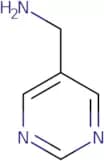
CAS :5-Pyrimidinemethanamine is a synthetic chemical that belongs to the group of carbonitriles. It is used as an adsorbent and has been shown to be selective for quinoline derivatives. 5-Pyrimidinemethanamine has been shown to have high yield in reactions with trimethyl, enolate, carbonyl, high yields, and vitamin B1. The reaction product can be used at temperatures up to 150 degrees Celsius. This compound can also be prepared by reacting hydrochloric acid with alkali metal temperatures.Formule :C5H7N3Degré de pureté :Min. 95%Masse moléculaire :109.13 g/molN-1-Z-1,6-diaminohexane·HCl
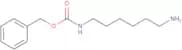
CAS :<p>Please enquire for more information about N-1-Z-1,6-diaminohexane·HCl including the price, delivery time and more detailed product information at the technical inquiry form on this page</p>Formule :C14H22N2O2·HClDegré de pureté :Min. 95%Masse moléculaire :286.8 g/mol



![(R)-3-[((tert-Butoxy)carbonyl)amino]-4-(2,5-difluorophenyl)butanoic acid](/_next/image/?url=https%3A%2Fstatic.cymitquimica.com%2Fproducts%2F3D%2Fthumb-webp%2FFB103971.webp&w=3840&q=75)