Amines
Sous-catégories appartenant à la catégorie "Amines"
- Nitrosamines(2.606 produits)
- Amines primaires(30.948 produits)
- Cations d'ammonium quaternaire(1.098 produits)
- Amines secondaires(20.886 produits)
- Amines tertiaires(17.195 produits)
8785 produits trouvés pour "Amines"
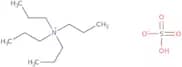
Tetra-n-propylammonium hydrogen sulfate
CAS :Tetra-n-propylammonium hydrogen sulfate (TPAS) is a pharmaceutical dosage that consists of tetra-n-propylammonium ions and hydrogen sulfate anions. It has a diameter of about 2 nm, and can be detected by fluorescence techniques. TPAS has shown to have pharmacologic activities, including the ability to react with hydrogen fluoride in solution to form a precipitate that can be used as a sample preparation reagent. TPAS also has been shown to produce dehydrating effects on chloride in an alicyclic system.
Formule :C12H29NO4SDegré de pureté :Min. 95%Masse moléculaire :283.43 g/mol2-Dimethylaminoethanol (+)-bitartrate salt
CAS :Produit contrôlé2-Dimethylaminoethanol (+)-bitartrate salt is a potent, reversible inhibitor of protein synthesis that binds reversibly to the 50S ribosomal subunit. It is used in regulatory toxicology and clinical pathology as a positive control for the study of chronic toxicity and long-term effects. 2-Dimethylaminoethanol (+)-bitartrate salt has shown no treatment effect on ovary weight or estrous cycle length in female Sprague-Dawley rats after chronic exposure and long-term exposure at doses up to 1,000 mg/kg/day. This drug has also shown no effect on rat fertility or reproductive performance, indicating it does not cause reproductive toxicity.
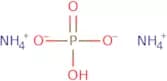
Formule :C4H11NO·C4H6O6Couleur et forme :White Off-White PowderMasse moléculaire :239.22 g/molDiammonium hydrogenphosphate
CAS :Diammonium hydrogenphosphate is a monoammonium or diammonium phosphate salt of the phosphoric acid. It is used as a fertilizer and in analytical chemistry. Diammonium hydrogenphosphate is often used in wastewater treatment, because it has high solubility and low toxicity. Diammonium hydrogenphosphate can be synthesized by the reaction of ammonium phosphate with magnesium and ammonium hydroxide. This compound has synergic effects with magnesium, which may be due to its ability to reduce enzyme activities in the cell membrane. Diammonium hydrogenphosphate also has an effect on calcium-protein binding and phosphorus pentoxide crystallization.
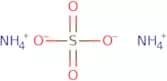
Formule :H9N2O4PDegré de pureté :(%) Min. 99%Couleur et forme :PowderMasse moléculaire :132.06 g/molAmmonium sulphate
CAS :Ammonium sulphate is a white, crystalline solid that is used as a fertilizer and in the manufacture of paper. Ammonium sulphate is an ammonium salt of sulfuric acid with the chemical formula NH4HSO4. It is most often used as a fertilizer, although it has many other uses. Ammonium sulfate enhances the absorption of water vapor by plants, which increases their ability to grow. The optimum concentration for ammonium sulfate is from 20-40 g/L. Ammonium sulfate also increases the rate of synthesis of RNA and proteins in cells. This may be because it provides sulfur for enzymes involved in energy metabolism and protein synthesis. Ammonium sulfate has been shown to have synergistic effects with zirconium oxide, allowing more rapid dissolution in water than would be expected from its solubility alone. Ammonium sulfate reacts with bowel disease causing inflammation and ulceration due to its effect on bowel flora (e
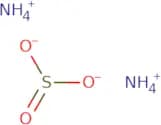
Formule :H8N2O4SDegré de pureté :Min. 95%Couleur et forme :White Clear LiquidMasse moléculaire :132.14 g/molAmmonium sulfite
CAS :Ammonium sulfite is a chemical compound that is used as an additive in wastewater treatment and as a reagent in organic synthesis. The reaction solution contains ammonium sulfite, sodium carbonate, and water. It has been shown to be toxic to animals when administered at high doses. Ammonium sulfite does not react with hydrogen fluoride or water and it is not soluble in anhydrous sodium. The polymerase chain reaction (PCR) technique has been used to study the reaction mechanism of ammonium sulfite. The reactions are catalysed by metal hydroxides such as magnesium hydroxide and aluminium hydroxide, which are present at the surface of the solid phase.
Formule :(NH4)2SO3Degré de pureté :Min. 95%Couleur et forme :PowderMasse moléculaire :116.14 g/mol