Cyano-, Nitrile-
9677 produits trouvés pour "Cyano-, Nitrile-"
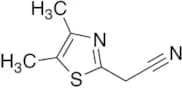
2-(Dimethyl-1,3-thiazol-2-yl)acetonitrile
CAS :Produit contrôléApplications 2-(dimethyl-1,3-thiazol-2-yl)acetonitrile (cas# 1248557-85-8) is a useful research chemical.
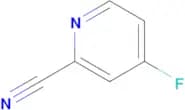
Formule :C7H8N2SCouleur et forme :NeatMasse moléculaire :152.2174-Fluoropicolinonitrile
CAS :Formule :C6H3FN2Degré de pureté :98%Couleur et forme :SolidMasse moléculaire :122.1024-(bicyclo[1.1.1]pentan-1-yl)benzonitrile
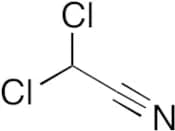
CAS :Degré de pureté :95.0%Masse moléculaire :169.2270050048828Dichloroacetonitrile
CAS :Produit contrôléApplications Dichloroacetonitrile is commonly used with gas chromatography-mass spectrometry instrument to evaluate and quantify the common halogenated disinfection by products using the headspace technique.
Not a dangerous good if item is equal to or less than 1g/ml and there is less than 100g/ml in the package
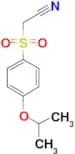
References Montesinos, I., et al.: J. Chromatogr. A., 1310 113 (2013)Formule :C2HCl2NCouleur et forme :NeatMasse moléculaire :109.94(4-iso-Propoxy-benzenesulfonyl)-acetonitrile
CAS :Formule :C11H13NO3SDegré de pureté :98.0%Couleur et forme :SolidMasse moléculaire :239.295-Amino-1-benzo[1,3]dioxol-5-yl-1H-pyrazole-4-carbonitrile
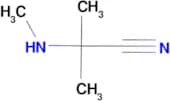
Degré de pureté :95.0%Masse moléculaire :228.210998535156252-METHYL-2-(METHYLAMINO)PROPANENITRILE
CAS :Degré de pureté :95.0%Masse moléculaire :98.149002075195314H-Benzo[4,5]imidazo[1,2-b]pyrazole-3-carbonitrile
CAS :Degré de pureté :95.0%Masse moléculaire :182.186004638671882-(4'-(Diphenylamino)-[1,1'-biphenyl]-4-yl)acetonitrile
CAS :Degré de pureté :98%Masse moléculaire :360.45999145507812,2-Diphenylcyclopropanecarbonitrile
CAS :Degré de pureté :95.0%Couleur et forme :Liquid, No data available.Masse moléculaire :219.28700256347656Ethyl Cyanoacetate
CAS :Produit contrôléApplications Reagent used in labelled pyrimidine and purine synthesis.
Not a dangerous good if item is equal to or less than 1g/ml and there is less than 100g/ml in the package
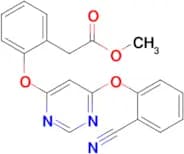
References Das, S., et al.: J. Med. Chem., 52, 5937 (2009), Kim, K., et al.: Bioorg. Med. Chem. Lett., 19, 5225 (2009),Formule :C5H7NO2Couleur et forme :NeatMasse moléculaire :113.11Methyl 2-(2-((6-(2-cyanophenoxy)pyrimidin-4-yl)oxy)phenyl)acetate
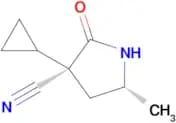
CAS :Degré de pureté :98%Masse moléculaire :361.35699462890625(3s,5r)-3-Cyclopropyl-5-methyl-2-oxo-pyrrolidine-3-carbonitrile
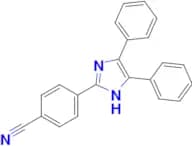
CAS :Degré de pureté :98%Masse moléculaire :164.207992553710944-(4,5-Diphenyl-1H-imidazol-2-yl)benzonitrile
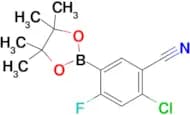
CAS :Degré de pureté :98%Masse moléculaire :321.382995605468752-Chloro-4-fluoro-5-(4,4,5,5-tetramethyl-1,3,2-dioxaborolan-2-yl)benzonitrile
CAS :Formule :C13H14BClFNO2Degré de pureté :95.0%Couleur et forme :SolidMasse moléculaire :281.526,7-Bis(benzyloxy)-4-oxo-1,4-dihydroquinoline-3-carbonitrile
CAS :Degré de pureté :98%Masse moléculaire :382.419006347656254-Chloro-2-phenylthieno[3,2-c]pyridine-7-carbonitrile
CAS :Degré de pureté :95.0%Masse moléculaire :270.73001098632813-Oxohexahydro-1H-pyrrolizine-7a-carbonitrile
CAS :Degré de pureté :98%Masse moléculaire :150.180999755859389-(Diethylamino)-5-oxo-5H-benzo[a]phenoxazine-6-carbonitrile
CAS :Degré de pureté :95+%Masse moléculaire :343.3859863281252-(2-Cyanophenyl)benzonitrile
CAS :Produit contrôléApplications 2-(2-Cyanophenyl)benzonitrile
Formule :C14H8N2Couleur et forme :NeatMasse moléculaire :204.233-Phenoxyphenylacetonitrile
CAS :Produit contrôléApplications 3-PHENOXYPHENYLACETONITRILE (cas# 51632-29-2) is a useful research chemical.
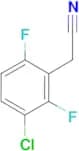
Formule :C14H11NOCouleur et forme :NeatMasse moléculaire :209.243-Chloro-2,6-difluorophenylacetonitrile
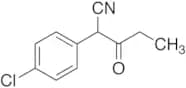
CAS :Formule :C8H4ClF2NCouleur et forme :SolidMasse moléculaire :187.57α-(4-Chlorophenyl)-α-propionylacetonitrile
CAS :Produit contrôléApplications Pyrimethamine intermediate.
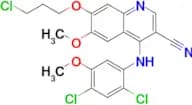
References Takayama, K., et al.: Antimicrob. Agents Chemother., 33, 1493 (1989), Robson, C., et al.: J. Med. Chem., 40, 3040 (1997), Horton, J., et al.: J. Mol. Biol., 353, 334 (2005), Horton, J., et al.: J. Mol. Biol., 353, 334 (2005), Janin, Y., et al.: Bioorg. Med. Chem., 15, 2479 (2007),Formule :C11H10ClNOCouleur et forme :White To BrownMasse moléculaire :207.667-(3-Chloropropoxy)-4-((2,4-dichloro-5-methoxyphenyl)amino)-6-methoxyquinoline-3-carbonitrile
CAS :Degré de pureté :97%Masse moléculaire :466.7399902343755-amino-1-(3-chloro-4,5,6,7-tetrahydropyrazolo[1,5-a]pyridin-2-yl)-1H-pyrazole-4-carbonitrile
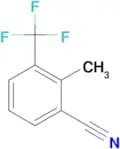
CAS :Degré de pureté :97%Masse moléculaire :262.700012207031252-Methyl-3-(trifluoromethyl)benzonitrile
CAS :Formule :C9H6F3NDegré de pureté :97%Masse moléculaire :185.1492-[(3Z)-1-(ethanesulfonyl)piperidin-3-ylidene]acetonitrile
CAS :Degré de pureté :97.0%Masse moléculaire :214.27999877929688[4-(1-benzofuran-2-yl)-1,3-thiazol-2-yl]acetonitrile
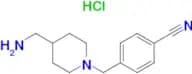
CAS :Degré de pureté :95.0%Masse moléculaire :240.279998779296884-(4-Aminomethyl-piperidin-1-ylmethyl)-benzonitrile hydrochloride
CAS :Degré de pureté :95.0%Masse moléculaire :265.79000854492193-(MORPHOLINOMETHYL)-1H-INDOLE-5-CARBONITRILE
CAS :Degré de pureté :95.0%Masse moléculaire :241.294006347656252-[Cyano(4-fluorophenyl)methyl]benzonitrile
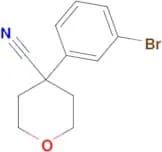
CAS :Formule :C15H9FN2Degré de pureté :95.0%Couleur et forme :SolidMasse moléculaire :236.2494-(3-Bromophenyl)oxane-4-carbonitrile
CAS :Degré de pureté :95.0%Couleur et forme :Solid, Yellow solidMasse moléculaire :266.138000488281255-Fluoro-2-nitrophenylacetonitrile
CAS :Formule :C8H5FN2O2Degré de pureté :99.0%Couleur et forme :SolidMasse moléculaire :180.1385-Phenyl-7-hydroxypyrazolo[1,5-a]pyrimidine-3-carbonitrile
CAS :Masse moléculaire :236.233993530273442-Isopropyl-2,3-dimethylbutyronitrile
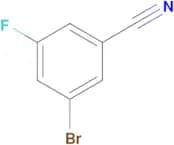
CAS :Degré de pureté :95.0%Couleur et forme :LiquidMasse moléculaire :139.242004394531253-Bromo-5-fluorobenzonitrile
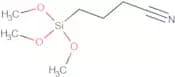
CAS :Formule :C7H3BrFNDegré de pureté :98%Couleur et forme :SolidMasse moléculaire :200.013-Cyanopropyltrimethoxysilane
CAS :S05035 - 3-Cyanopropyltrimethoxysilane
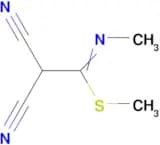
Formule :C7H15NO3SiCouleur et forme :Liquid, ClearMasse moléculaire :189.2862-(Methylamino-methylsulfanyl-methylene)-malononitrile
CAS :Degré de pureté :95.0%Masse moléculaire :153.19999694824221,4-Bis(2-cyanostyryl)benzene
CAS :Produit contrôléApplications 1,4-Bis(2-cyanostyryl)benzene (cas# 13001-39-3) is a useful research chemical.
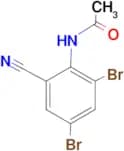
Formule :C24H16N2Couleur et forme :NeatMasse moléculaire :332.4N-(2,4-DIBROMO-6-CYANOPHENYL)ACETAMIDE
CAS :Degré de pureté :90.0%Masse moléculaire :317.9679870605469Ref: 10-F530671
1gÀ demander2gÀ demander5gÀ demander10gÀ demander100mgÀ demander250mgÀ demander500mgÀ demander9-Oxo-9H-indeno[1,2-b]pyrazine-2,3-dicarbonitrile
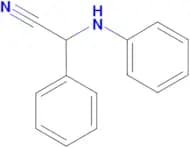
CAS :Degré de pureté :97%Masse moléculaire :232.201995849609382-phenyl-2-(phenylamino)acetonitrile
CAS :Degré de pureté :95.0%Masse moléculaire :208.26400756835938(1-ethyl-1H-pyrazol-5-yl)acetonitrile
Formule :C7H9N3Couleur et forme :LiquidMasse moléculaire :135.172-Methyl-3-oxobutanenitrile
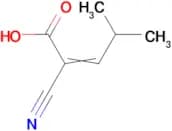
CAS :Formule :C5H7NODegré de pureté :95.0%Couleur et forme :LiquidMasse moléculaire :97.1172-Cyano-4-methylpent-2-enoic acid
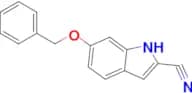
CAS :Degré de pureté :97.0%Couleur et forme :SolidMasse moléculaire :139.15400695800781H-INDOLE-2-CARBONITRILE, 6-(PHENYLMETHOXY)-
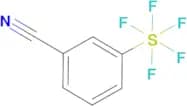
CAS :Degré de pureté :98.0%Masse moléculaire :248.285003662109383-(Pentafluorosulfanyl)benzonitrile
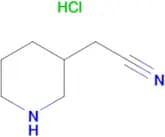
CAS :Formule :C7H4F5NSDegré de pureté :99.0%Couleur et forme :LiquidMasse moléculaire :229.173-piperidinylacetonitrile hydrochloride
CAS :Degré de pureté :95.0%Couleur et forme :SolidMasse moléculaire :160.649993896484381-Amino-3-p-tolyl-benzo[4,5]imidazo[1,2-a]pyridine-2,4-dicarbonitrile
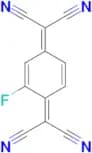
CAS :Degré de pureté :95.0%Masse moléculaire :323.35900878906252,2'-(2-Fluorocyclohexa-2,5-diene-1,4-diylidene)dimalononitrile
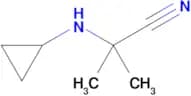
CAS :Degré de pureté :98%Masse moléculaire :222.18200683593752-(Cyclopropylamino)-2-methylpropanenitrile
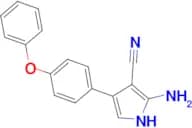
CAS :Degré de pureté :95%Masse moléculaire :124.186996459960942-amino-4-(4-phenoxyphenyl)-1H-pyrrole-3-carbonitrile
CAS :Degré de pureté :95.0%Masse moléculaire :275.31100463867191-(BENZO[D]THIAZOL-2-YL)CYCLOPROPANECARBONITRILE
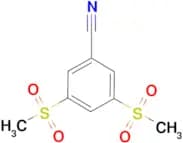
CAS :Degré de pureté :95.0%Masse moléculaire :200.259994506835943,5-Bis(methylsulfonyl)benzonitrile
CAS :Formule :C9H9NO4S2Degré de pureté :95.0%Masse moléculaire :259.292-(Dihydro-2H-pyran-4(3H)-ylidene)malononitrile
CAS :Degré de pureté :95.0%Masse moléculaire :148.16499328613283-Phenylbicyclo[1.1.1]pentane-1-carbonitrile
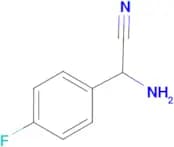
CAS :Degré de pureté :98%Masse moléculaire :169.22700500488282-Amino-2-(4′-fluorophenyl)acetonitrile
CAS :Formule :C8H7FN2Degré de pureté :95.0%Couleur et forme :SolidMasse moléculaire :150.1567-Bromoheptanenitrile
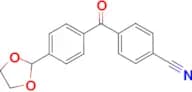
CAS :Formule :C7H12BrNDegré de pureté :95.0%Couleur et forme :LiquidMasse moléculaire :190.0844-cyano-4'-(1,3-dioxolan-2-yl)benzophenone
CAS :Degré de pureté :97.0%Masse moléculaire :279.29501342773441,4-DITHIIN-2,3,5,6-TETRACARBONITRILE
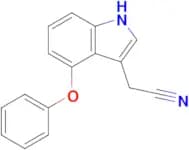
CAS :Degré de pureté :95.0%Couleur et forme :SolidMasse moléculaire :216.240005493164062-(4-Phenoxy-1H-indol-3-yl)acetonitrile
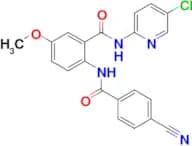
CAS :Degré de pureté :98%Masse moléculaire :248.28500366210938N-(5-chloropyridin-2-yl)-2-(4-cyanobenzamido)-5-methoxybenzamide
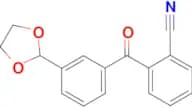
CAS :Degré de pureté :97%Masse moléculaire :406.82998657226562-cyano-3'-(1,3-dioxolan-2-yl)benzophenone
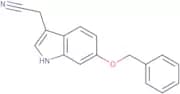
CAS :Degré de pureté :97.0%Masse moléculaire :279.29501342773442-(6-Benzyloxyindolyl)acetonitrile
CAS :Please enquire for more information about 2-(6-Benzyloxyindolyl)acetonitrile including the price, delivery time and more detailed product information at the technical inquiry form on this page
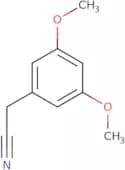
Formule :C17H14N2ODegré de pureté :Min. 95%Masse moléculaire :262.31 g/mol(3,5-Dimethoxyphenyl)acetonitrile
CAS :3,5-Dimethoxyphenylacetonitrile is a synthetic compound that has been shown to be an inhibitor of the demethylation reaction. It is postulated to have anticancer activity and inhibits the biosynthesis of octaketides in vitro. This compound has also been shown to have antibacterial activity and is structurally related to cannabinoids. The mechanism by which 3,5-dimethoxyphenylacetonitrile inhibits cancer cells is not known. However, it may be due to its ability to bind cannabinoid receptors.
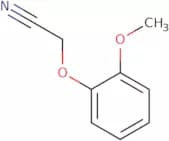
Formule :C10H11NO2Degré de pureté :Min. 95%Couleur et forme :PowderMasse moléculaire :177.2 g/mol(2-Methoxyphenoxy)acetonitrile
CAS :(2-Methoxyphenoxy)acetonitrile is a versatile building block that has been used in the synthesis of fine chemicals, complex compounds, research chemicals, reagents and speciality chemicals. It is a useful building block for high quality pharmaceuticals. (2-Methoxyphenoxy)acetonitrile can be used as a reaction component or scaffold to synthesize organic molecules with interesting biological activities.Formule :C9H9NO2Degré de pureté :Min. 95%Couleur et forme :Clear LiquidMasse moléculaire :163.17 g/mol1-(4-Cyanophenyl)-2-nitropropene
Please enquire for more information about 1-(4-Cyanophenyl)-2-nitropropene including the price, delivery time and more detailed product information at the technical inquiry form on this page
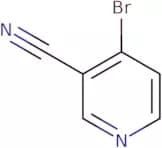
Formule :C10H8N2O2Degré de pureté :Min. 95%Masse moléculaire :188.18 g/mol4-Bromo-3-cyanopyridine
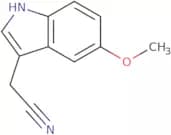
CAS :4-Bromo-3-cyanopyridine is a reactive chemical that can be used as a building block in organic synthesis. It is often used as a starting material for the synthesis of heterocycles and other complex compounds. 4-Bromo-3-cyanopyridine is a versatile reagent with high quality and can be used in research, pharmaceuticals, agrochemicals, or industrial chemicals. CAS No. 154237-70-4.Formule :C6H3BrN2Degré de pureté :Min. 95%Couleur et forme :PowderMasse moléculaire :183.01 g/mol5-Methoxyindole-3-acetonitrile
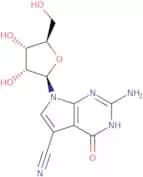
CAS :5-Methoxyindole-3-acetonitrile is a synthetic compound used as a reference for the synthesis of melatonin. It is produced by the addition of magnesium to 5-methoxyindole, followed by reaction with cyanide and nitrile. The synthesis of this compound was first published in 1938 and has since been used as a reference for many other studies. It has been shown that 5-methoxyindole-3-acetonitrile has high performance liquid chromatography properties, with a linear range from 0.5 to 50 mg/mL and an ultraviolet spectrum that falls within the region between 220 nm and 400 nm. A molecular modeling study was conducted on this compound, which showed that it conforms with 4-hydroxy indole ring systems found in natural products such as tryptophan and serotonin. This product also has fluorescent properties, which are caused by its electron withdrawing group (cyano).Formule :C11H10N2ODegré de pureté :Min. 95%Couleur et forme :PowderMasse moléculaire :186.21 g/mol7-Cyano-7-deazaguanosine
CAS :7-Cyano-7-deazaguanosine is a nucleoside that belongs to the category of 7-deazapurines. It is an optimized nucleic acid analogue that has been shown to act as a translational inhibitor in vitro and in vivo. This compound has been shown to have high yields in chemical synthesis, which makes it an attractive candidate for optimization and future research. 7-Cyano-7-deazaguanosine is a synthetic nucleotide with anticodon properties, which may be useful for the development of new drugs against bacterial infections.Formule :C12H13N5O5Degré de pureté :Min. 95%Couleur et forme :PowderMasse moléculaire :307.26 g/mol2,4-Dimethoxybenzylamine
CAS :Tak-659 is an amide compound that inhibits the serine protease activity of a number of enzymes, including cathepsin B and L. Tak-659 has been shown to have inhibitory effects on inflammation in animal models by inhibiting the production of inflammatory cytokines. Tak-659 has also been shown to impair protein synthesis in gram-negative bacteria, such as Escherichia coli and Pseudomonas aeruginosa. The mechanism for this inhibition is not entirely clear but may be due to tak-659 binding to the ribosomal RNA near the peptidyl transferase center, blocking the entry of amino acids into the ribosome. Tak-659 binds with high affinity to adenosine receptors and has been shown to reduce levels of inflammatory cytokines in mouse tumor cells.
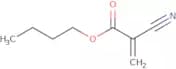
Formule :C9H13NO2Degré de pureté :Min. 95%Couleur et forme :Colorless Clear LiquidMasse moléculaire :167.21 g/molButyl cyanoacrylate
CAS :Butyl cyanoacrylate is a cyanoacrylate, a type of monomer that reacts with water to form a polymer. Cyanoacrylates are used in sealants and tissue adhesives because they form strong bonds with tissues and are biocompatible. Butyl cyanoacrylate has been shown to have an exothermic reaction when it is mixed with water, which can cause burns if the user is not careful. This product also has toxicological studies on fetal bovine and mammalian tissue. Butyl cyanoacrylate has been shown to inhibit vasoactive intestinal peptide release in the nervous system, which may be due to its ability to interfere with fatty acid metabolism.
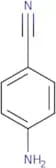
Formule :C8H11NO2Degré de pureté :Min. 95%Couleur et forme :Clear LiquidMasse moléculaire :153.18 g/mol4-Aminobenzonitrile
CAS :4-Aminobenzonitrile is a chemical compound that has been shown to be an antimicrobial agent. It has been found to be active against bacteria and fungi, such as Candida albicans and Aspergillus niger. 4-Aminobenzonitrile binds with epidermal growth factor (EGF) by intramolecular hydrogen bonding, which leads to the disruption of the protein's tertiary structure. The nitrogen atoms in this compound have been shown to react with water vapor at high temperatures, which results in the release of hydrogen gas. This reaction can be used for phase transition temperature studies. 4-Aminobenzonitrile also shows intermolecular hydrogen bonding with fatty acids, which causes the molecule to change its shape and protonation state. These changes affect its frequency shift and molecular modeling study results.Formule :C7H6N2Degré de pureté :Min. 95%Couleur et forme :Off-White PowderMasse moléculaire :118.14 g/mol4-Cyano-4'-aminobiphenyl
CAS :4-Cyano-4'-aminobiphenyl is a fluorescent dye that exhibits a strong fluorescence under UV irradiation. The dye has an absorption maximum at about 335 nm and a fluorescence emission maximum at about 455 nm, with excitation maxima of 333 nm and 478 nm. It has been used in the development of photocurrent devices, which are used for photochemical reactions and electrochemistry studies. This compound can also be used for the determination of amino groups in organic molecules such as carbostyril. The compound can be synthesized by reacting an amine with an aldehyde in the presence of acid.
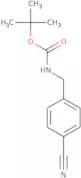
Formule :C13H10N2Couleur et forme :PowderMasse moléculaire :194.23 g/moltert-Butyl 4-cyanobenzylcarbamate
CAS :tert-Butyl 4-cyanobenzylcarbamate (tB4Cbz) is a high quality chemical that can be used as a reagent, complex compound, or useful intermediate in the production of fine chemicals. Tert-Butyl 4-cyanobenzylcarbamate is also a useful scaffold for the synthesis of speciality chemicals and research chemicals. It can be used as a versatile building block for reactions involving amides, nitriles, esters, and amines.
Formule :C13H16N2O2Degré de pureté :Min. 95%Couleur et forme :PowderMasse moléculaire :232.28 g/mol4-Cyanobenzoic acid ethyl ester
CAS :4-Cyanobenzoic acid ethyl ester is a hydrogen-bonding acceptor that is also able to form exciplexes with styrene. It has a conformation that is similar to that of aminobenzoate, which is a hydrogen-bonding donor. 4-Cyanobenzoic acid ethyl ester reacts with solvents such as benzene and chloroform, undergoing hydration reactions to form the corresponding 4-cyanophenol derivatives. It undergoes cyclization when heated in the presence of ruthenium(II) chloride to produce 1,4-dihydropyridine derivatives. The reaction mechanism for this reaction consists of two steps: an intramolecular nucleophilic attack followed by an intramolecular electrophilic substitution. The deionized water used in this synthetic process eliminates the need for drying agents and stabilizers, making it easier to carry out the synthesis.Formule :C10H9NO2Degré de pureté :Min. 95%Couleur et forme :PowderMasse moléculaire :175.18 g/mol1,2-Diphenyl-1-cyanoethylene
CAS :1,2-Diphenyl-1-cyanoethylene is a molecule that is involved in the cancer process. It has been shown to inhibit the growth of skin cancer cells and other types of cancer cells by binding to mitochondria and inhibiting the formation of proton gradients across mitochondrial membranes. This inhibition leads to a decrease in cellular ATP production and an increase in reactive oxygen species (ROS), resulting in cell death. 1,2-Diphenyl-1-cyanoethylene also has anticancer activity due to its ability to induce light emission from the skin and interfere with the optical properties of holothuria, which are sea cucumbers.
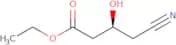
Formule :C15H11NDegré de pureté :Min. 95%Couleur et forme :PowderMasse moléculaire :205.25 g/molEthyl S-(+)-4-cyano-3-hydroxybutyrate
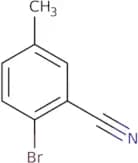
CAS :Ethyl S-(+)-4-cyano-3-hydroxybutyrate is a chiral molecule that can be used as a catalyst in the transesterification reaction. It acts by binding to the enzyme and immobilizing it on a solid support, which increases its catalytic activity. The hydroxybutanoate is converted into butyric acid, which is produced at high yield using this method. This process of immobilization increases the kinetic rate of the reaction, making it possible for the product to be obtained more quickly.Formule :C7H11NO3Degré de pureté :Min. 95%Masse moléculaire :157.17 g/mol4-Bromo-3-cyanotoluene
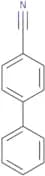
CAS :4-Bromo-3-cyanotoluene is a quinazolinone that can be synthesized by reacting 2-bromotoluene with nitric acid. It is a substrate for the synthesis of other quinazolinones.Formule :C8H6BrNDegré de pureté :Min. 95%Masse moléculaire :196.04 g/mol4-Cyanobiphenyl
CAS :4-Cyanobiphenyl is a contaminant of the environment. It is a reactive substance that can be found in the air, soil, and water. 4-Cyanobiphenyl is an active substance that can be used as an intermediate for the production of other chemicals. The chemical structure of 4-cyanobiphenyl has been elucidated by using a number of spectroscopic techniques including Raman spectroscopy. 4-Cyanobiphenyl is unstable in acidic conditions and reacts with chloride ions to form crotonic acid and benzoate. This reaction also occurs under basic conditions with biphenyl to form benzoate and low energy products such as benzene or phenol.Formule :C13H9NDegré de pureté :Min. 95%Couleur et forme :Off-White PowderMasse moléculaire :179.22 g/mol


![4-(bicyclo[1.1.1]pentan-1-yl)benzonitrile](/_next/image/?url=https%3A%2Fstatic.cymitquimica.com%2Fproducts%2F10%2Fthumb-webp%2FF516253.webp&w=3840&q=75)


![5-Amino-1-benzo[1,3]dioxol-5-yl-1H-pyrazole-4-carbonitrile](/_next/image/?url=https%3A%2Fstatic.cymitquimica.com%2Fproducts%2F10%2Fthumb-webp%2FF521572.webp&w=3840&q=75)
![4-imidazo[1,2-a]pyrimidin-2-ylbenzonitrile](/_next/image/?url=https%3A%2Fstatic.cymitquimica.com%2Fproducts%2F10%2Fthumb-webp%2FF517934.webp&w=3840&q=75)
![4H-Benzo[4,5]imidazo[1,2-b]pyrazole-3-carbonitrile](/_next/image/?url=https%3A%2Fstatic.cymitquimica.com%2Fproducts%2F10%2Fthumb-webp%2FF232758.webp&w=3840&q=75)
![2-(4'-(Diphenylamino)-[1,1'-biphenyl]-4-yl)acetonitrile](/_next/image/?url=https%3A%2Fstatic.cymitquimica.com%2Fproducts%2F10%2Fthumb-webp%2FF612519.webp&w=3840&q=75)




![4-Chloro-2-phenylthieno[3,2-c]pyridine-7-carbonitrile](/_next/image/?url=https%3A%2Fstatic.cymitquimica.com%2Fproducts%2F10%2Fthumb-webp%2FF053791.webp&w=3840&q=75)

![9-(Diethylamino)-5-oxo-5H-benzo[a]phenoxazine-6-carbonitrile](/_next/image/?url=https%3A%2Fstatic.cymitquimica.com%2Fproducts%2F10%2Fthumb-webp%2FF760018.webp&w=3840&q=75)


![5-amino-1-(3-chloro-4,5,6,7-tetrahydropyrazolo[1,5-a]pyridin-2-yl)-1H-pyrazole-4-carbonitrile](/_next/image/?url=https%3A%2Fstatic.cymitquimica.com%2Fproducts%2F10%2Fthumb-webp%2FF603435.webp&w=3840&q=75)
![2-[(3Z)-1-(ethanesulfonyl)piperidin-3-ylidene]acetonitrile](/_next/image/?url=https%3A%2Fstatic.cymitquimica.com%2Fproducts%2F10%2Fthumb-webp%2FF519455.webp&w=3840&q=75)
![[4-(1-benzofuran-2-yl)-1,3-thiazol-2-yl]acetonitrile](/_next/image/?url=https%3A%2Fstatic.cymitquimica.com%2Fproducts%2F10%2Fthumb-webp%2FF495412.webp&w=3840&q=75)

![2-[Cyano(4-fluorophenyl)methyl]benzonitrile](/_next/image/?url=https%3A%2Fstatic.cymitquimica.com%2Fproducts%2F10%2Fthumb-webp%2FF010070.webp&w=3840&q=75)

![5-Phenyl-7-hydroxypyrazolo[1,5-a]pyrimidine-3-carbonitrile](/_next/image/?url=https%3A%2Fstatic.cymitquimica.com%2Fproducts%2F10%2Fthumb-webp%2FF098187.webp&w=3840&q=75)



![9-Oxo-9H-indeno[1,2-b]pyrazine-2,3-dicarbonitrile](/_next/image/?url=https%3A%2Fstatic.cymitquimica.com%2Fproducts%2F10%2Fthumb-webp%2FF787794.webp&w=3840&q=75)



![1-Amino-3-p-tolyl-benzo[4,5]imidazo[1,2-a]pyridine-2,4-dicarbonitrile](/_next/image/?url=https%3A%2Fstatic.cymitquimica.com%2Fproducts%2F10%2Fthumb-webp%2FF549602.webp&w=3840&q=75)
![1-(BENZO[D]THIAZOL-2-YL)CYCLOPROPANECARBONITRILE](/_next/image/?url=https%3A%2Fstatic.cymitquimica.com%2Fproducts%2F10%2Fthumb-webp%2FF305602.webp&w=3840&q=75)


![3-Phenylbicyclo[1.1.1]pentane-1-carbonitrile](/_next/image/?url=https%3A%2Fstatic.cymitquimica.com%2Fproducts%2F10%2Fthumb-webp%2FF615182.webp&w=3840&q=75)

![4-(6-chloroimidazo[1,2-a]pyridin-2-yl)benzonitrile](/_next/image/?url=https%3A%2Fstatic.cymitquimica.com%2Fproducts%2F10%2Fthumb-webp%2FF517932.webp&w=3840&q=75)