Cyano-, Nitrile-
9677 produits trouvés pour "Cyano-, Nitrile-"
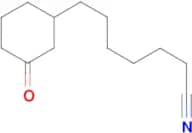
7-(3-oxocyclohexyl)heptanenitrile
CAS :Degré de pureté :97.0%Couleur et forme :LiquidMasse moléculaire :207.317001342773444-(bicyclo[1.1.1]pentan-1-yl)benzonitrile
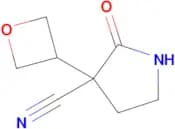
CAS :Degré de pureté :95.0%Masse moléculaire :169.22700500488283-(Oxetan-3-yl)-2-oxo-pyrrolidine-3-carbonitrile
CAS :Degré de pureté :98%Masse moléculaire :166.17999267578125(R)-3-Aminopentanenitrile
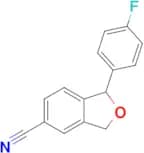
CAS :Formule :C5H10N2Degré de pureté :98.0%Couleur et forme :LiquidMasse moléculaire :98.1491-(4-Fluorophenyl)-1,3-dihydroisobenzofuran-5-carbonitrile
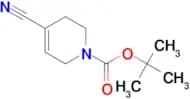
CAS :Degré de pureté :95.0%Couleur et forme :SolidMasse moléculaire :239.24899291992188Tert-Butyl 4-cyano-5,6-dihydropyridine-1(2H)-carboxylate
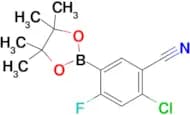
CAS :Degré de pureté :95.0%Couleur et forme :SolidMasse moléculaire :208.261001586914062-Chloro-4-fluoro-5-(4,4,5,5-tetramethyl-1,3,2-dioxaborolan-2-yl)benzonitrile
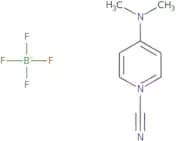
CAS :Formule :C13H14BClFNO2Degré de pureté :95.0%Couleur et forme :SolidMasse moléculaire :281.521-Cyano-4-(dimethylamino)pyridinium tetrafluoroborate
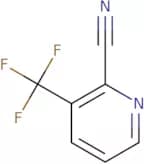
CAS :1-Cyano-4-(dimethylamino)pyridinium tetrafluoroborate (CDAP) is an organic cyanylating agent. It is reactive under acidic conditions giving CDAP an advantage over other sulfhydryl labeling agents, as it can avoid potential thiol-disulfide exchange.Formule :C8H10N3BF4Degré de pureté :Min. 98 Area-%Couleur et forme :PowderMasse moléculaire :234.99 g/mol2-Cyano-3-trifluoromethylpyridine
CAS :2-Cyano-3-trifluoromethylpyridine is a fine chemical that is used as a versatile building block in the synthesis of complex compounds. It can be used as an intermediate in research chemicals, reaction components, and speciality chemicals. 2-Cyano-3-trifluoromethylpyridine is a high quality reagent that can be used for the synthesis of various derivatives. It is also a useful scaffold for the development of new drugs and other chemical compounds.
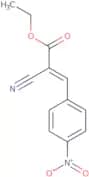
Formule :C7H3F3N2Degré de pureté :Min. 95%Couleur et forme :liquid.Masse moléculaire :172.11 g/molethyl 2-cyano-3-(4-nitrophenyl)prop-2-enoate
CAS :Ethyl 2-cyano-3-(4-nitrophenyl)prop-2-enoate is a functionalized molecule that contains a dipole. It has high selectivity for 1,3-dipolar cycloadditions because the electron density of the methylene group is greater than that of the aldehyde group. The mechanistic theory for this reaction is that the electron density on the methylene group in ethyl 2-cyano-3-(4-nitrophenyl)prop-2-enoate will cause it to become more reactive than the aldehyde group. The dipoles in this molecule are oriented such that they can react with each other to form an intermediate and then an adduct. This isomerization occurs through either dipolarophilic or electrocyclic mechanisms.Degré de pureté :Min. 95%32-Carboxycyanocobalamin
CAS :32-Carboxycyanocobalamin is a fine chemical that is used in the synthesis of complex compounds. It is a versatile building block, which can be used in reactions to synthesize other compounds and as a scaffold for drug discovery. 32-Carboxycyanocobalamin is also a reagent that has been used in organic chemistry and analytical chemistry. CAS No. 121483-62-3
Formule :C63H87CoN13O15PDegré de pureté :Min. 95%Masse moléculaire :1,356.35 g/molN-Cyanomorpholine
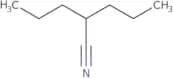
CAS :N-Cyanomorpholine is a synthetic compound that is used as a reagent in organic synthesis. It has been shown to form stable complexes with amines, such as aniline and pyridine. In addition, it can be used in the intramolecular hydrogenation of alkenes, which is catalyzed by palladium on carbon. N-Cyanomorpholine was found to be effective against some viruses, such as herpes simplex virus type 1 and influenza virus type A. It also has been validated for use in the synthesis of dianthus caryophyllus and acrylonitrile.Formule :C5H8N2ODegré de pureté :Min. 95%Masse moléculaire :112.13 g/mol4-Cyanoheptane
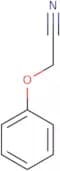
CAS :4-Cyanoheptane is a liquid that has been decarboxylated, which means it contains no CO2 molecules. It is an organic solvent with a boiling point of -2°C and a density of 0.7 g/mL. This product is used in the hydrolysis of carboxylic acids to form carboxylates. 4-Cyanoheptane has been shown to be able to hydrolyze amides, carbones, phenoxy groups, and functional groups as well as produce alkylation reactions with high concentrations.Formule :C8H15NDegré de pureté :Min. 95%Couleur et forme :Clear LiquidMasse moléculaire :125.21 g/molPhenoxyacetonitrile
CAS :Phenoxyacetonitrile is an efficient method for the synthesis of ethylene diamine by the reaction of hydrochloric acid, chloride and a carbon source. The nitro group can be reduced to an amine or a hydroxyl group by hydrogen chloride in acetonitrile. This method has been used in the synthesis of drugs such as acyclovir and penciclovir. Phenoxyacetonitrile also inhibits growth factor production, which may be due to its inhibitory properties on the enzyme houben-hoesch reaction.Formule :C8H7NODegré de pureté :Min. 95%Masse moléculaire :133.15 g/mol3-Acetylbenzonitrile
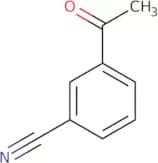
CAS :3-Acetylbenzonitrile is an isomeric, asymmetric synthesis that has been synthesised in the presence of copper complex and salicylic acid. The reaction was carried out with a gaseous phase, where the chalcone was formed. The experimental techniques used were cross-coupling reactions and molecular modeling techniques. 3-Acetylbenzonitrile has been synthesised by a rationalized enthalpic approach that includes alcohol dehydrogenases and molecular modeling techniques.Formule :C9H7NODegré de pureté :Min. 95%Couleur et forme :PowderMasse moléculaire :145.16 g/molm-Hydroxybenzonitrile
CAS :m-Hydroxybenzonitrile is a cationic surfactant that has the ability to form hydrogen bonds with an intramolecular hydrogen. It is used in the production of detergents, textile processing aids, and inks. m-Hydroxybenzonitrile inhibits fatty acids by forming an inhibitory complex at the surface of the cell membrane. This complex disrupts lipid bilayers and inhibits protein synthesis. m-Hydroxybenzonitrile also has been shown to have vibrational properties that can be seen when it absorbs ultraviolet light.Formule :C7H5NODegré de pureté :Min. 95%Couleur et forme :Off-White PowderMasse moléculaire :119.12 g/mol2-Amino-6-methoxybenzonitrile
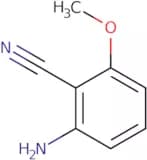
CAS :2-Amino-6-methoxybenzonitrile is an organic compound that belongs to a group of monosubstituted hydroxylamines. It has been used in the synthesis of various analogues, such as caprolactam and methoxyanthranilic acid. Hydrochloric acid reacts with 2-amino-6-methoxybenzonitrile to form 2-amino-6-hydroxybenzonitrile, which can be oxidized to 2-amino-6-(hydroxymethyl)benzonitrile. This reaction is catalyzed by copper or zinc metal.Formule :C8H8N2ODegré de pureté :Min. 95%Couleur et forme :PowderMasse moléculaire :148.16 g/mol3-Cyanocinnamic acid
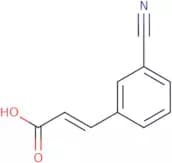
CAS :3-Cyanocinnamic acid is a reactive, unreactive, and stepwise cycloaddition compound. It can participate in photochemical reactions with other compounds to form photodimers. 3-Cyanocinnamic acid has an optimal reaction temperature of 100°C and a reaction time of 5 minutes. The diradical nature of 3-cyanocinnamic acid makes it sensitive to UV light, and the photochemical reactions are simulated by quantum mechanics calculations. Photodimerisation simulations show that 3-cyanocinnamic acid is capable of forming photodimers with 2-cyanocinnamic acid or 4-cyanocinnamic acid at room temperature.Formule :C10H7NO2Degré de pureté :Min. 95%Couleur et forme :PowderMasse moléculaire :173.17 g/mol

![4-(bicyclo[1.1.1]pentan-1-yl)benzonitrile](/_next/image/?url=https%3A%2Fstatic.cymitquimica.com%2Fproducts%2F10%2Fthumb-webp%2FF516253.webp&w=3840&q=75)