Cyano-, Nitrile-
9677 produits trouvés pour "Cyano-, Nitrile-"
3-Ethoxy-4-hydroxyphenylacetonitrile
CAS :3-Ethoxy-4-hydroxyphenylacetonitrile is a versatile building block and reagent that is used in the manufacturing of pharmaceuticals, agricultural chemicals, and other chemical products. It has been shown to be an excellent starting material for the synthesis of complex compounds. 3-Ethoxy-4-hydroxyphenylacetonitrile can be used as a high quality research chemical or useful scaffold for organic synthesis. CAS No. 205748-01-2Formule :C10H11NO2Degré de pureté :Min. 95%Couleur et forme :PowderMasse moléculaire :177.2 g/molButyl cyanoacrylate
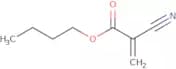
CAS :Butyl cyanoacrylate is a cyanoacrylate, a type of monomer that reacts with water to form a polymer. Cyanoacrylates are used in sealants and tissue adhesives because they form strong bonds with tissues and are biocompatible. Butyl cyanoacrylate has been shown to have an exothermic reaction when it is mixed with water, which can cause burns if the user is not careful. This product also has toxicological studies on fetal bovine and mammalian tissue. Butyl cyanoacrylate has been shown to inhibit vasoactive intestinal peptide release in the nervous system, which may be due to its ability to interfere with fatty acid metabolism.
Formule :C8H11NO2Degré de pureté :Min. 95%Couleur et forme :Clear LiquidMasse moléculaire :153.18 g/mol7-Cyano-7-deazaguanosine
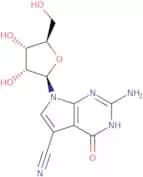
CAS :7-Cyano-7-deazaguanosine is a nucleoside that belongs to the category of 7-deazapurines. It is an optimized nucleic acid analogue that has been shown to act as a translational inhibitor in vitro and in vivo. This compound has been shown to have high yields in chemical synthesis, which makes it an attractive candidate for optimization and future research. 7-Cyano-7-deazaguanosine is a synthetic nucleotide with anticodon properties, which may be useful for the development of new drugs against bacterial infections.Formule :C12H13N5O5Degré de pureté :Min. 95%Couleur et forme :PowderMasse moléculaire :307.26 g/mol3,4-Dimethoxybenzylamine
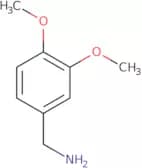
CAS :3,4-Dimethoxybenzylamine is an amine that is used in the synthesis of pharmaceuticals. It can be polymerized by heating with aqueous formaldehyde and hydrochloric acid to form a resin. 3,4-Dimethoxybenzylamine inhibits serotonin receptors, exhibiting inhibitory properties at concentrations of 10-5 M. 3,4-Dimethoxybenzylamine also has pharmacokinetic properties that are similar to vitamin B1. This compound has been shown to inhibit homogeneous catalysts and is used for coatings for ganglion cells.
Formule :C9H13NO2Degré de pureté :Min. 95%Couleur et forme :Clear LiquidMasse moléculaire :167.21 g/mol4-Cyano-L-phenylalanine
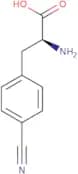
CAS :4-Cyano-L-phenylalanine is an unnatural aminoacid that has been shown to bind to amyloid protein, which is associated with Alzheimer's disease. The binding of 4-Cyano-L-phenylalanine inhibits the synthesis of amyloid protein and prevents the formation of amyloid fibrils. 4-Cyano-L-phenylalanine also irreversibly inhibits the enzyme responsible for the production of hydrochloric acid in bacteria. The x-ray crystal structures of 4-Cyano L-phenylalanine have been determined and show that this compound binds to the active site of the enzyme synthetase, preventing it from forming an amino acid bond. 4-Cyano L-phenylalanine is an analog of 4-L-phenylalanine and, thanks to its cyano (nitrile) group, is a good candidate for use as a fluorescence marker to study the peptide membrane interactions.Formule :C10H10N2O2Degré de pureté :Min. 95%Couleur et forme :PowderMasse moléculaire :190.2 g/mol2-Bromo-4-cyanotoluene
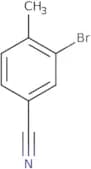
CAS :2-Bromo-4-cyanotoluene is a ligand that is used in cross-coupling reactions. It is used to form complexes with metals, such as palladium and nickel, for the preparation of organometallic reagents. 2-Bromo-4-cyanotoluene has been shown to inhibit secretory phospholipase A2 (sPLA2) and PLA2 activity in a fluorimetric assay. This compound also inhibits the catalytic activity of spla2, which is an enzyme involved in the biosynthesis of arachidonic acid. 2-Bromo-4-cyanotoluene also inhibits piperazine synthesis by reacting with the nitrogen atom on the piperazine ring.
Formule :C8H6BrNDegré de pureté :Min. 95%Masse moléculaire :196.04 g/mol3-Cyanophenylacetic acid
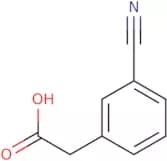
CAS :3-Cyanophenylacetic acid is a versatile building block and useful intermediate that can be used in the synthesis of a wide range of organic compounds. 3-Cyanophenylacetic acid is a fine chemical with CAS No. 1878-71-3 that can be used as a research chemical, reaction component, or speciality chemical. It is an important reagent for making complex organic compounds. 3-Cyanophenylacetic acid is a high quality product with the following characteristics:
1) Colorless crystals;
2) Soluble in water;
3) Soluble in acetone;
4) Slightly soluble in ether;
5) Reactivity: stable to heat, light, and air;
6) pH (1% solution): 2.0 - 4.0;
7) Melting point: 129 °C;
8) Boiling point: 188 °C at 760 mmHFormule :C9H7NO2Degré de pureté :Min. 95%Masse moléculaire :161.16 g/mol3,4-Dihydroxybenzylamine hydrobromide
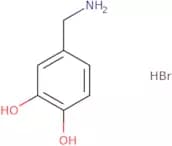
CAS :3,4-Dihydroxybenzylamine hydrobromide is a chemical that reacts with hydrogen peroxide to produce light. It is used as a nutrient for the chemiluminescent reaction in a nutrient solution to detect dopamine, chlorogenic acids, and trifluoroacetic acid. 3,4-Dihydroxybenzylamine hydrobromide can also be used as an analytical method for the measurement of cortisol concentration in plasma and saliva samples. This chemical analogically reacts with monoamine neurotransmitters such as dopamine and gamma-aminobutyric acid (GABA) to form fluorescent probes. 3,4-Dihydroxybenzylamine hydrobromide is not toxic or mutagenic and has been shown to be safe for use in humans.Formule :C7H10BrNO2Degré de pureté :Min. 95%Couleur et forme :PowderMasse moléculaire :220.06 g/molDodeca 2E,4E,8Z,10E,Z-tetraenoic acid isobutylamide - ca. 10 mg/ml acetonitrile solution
CAS :Dodeca 2E,4E,8Z,10E,Z-tetraenoic acid isobutylamide (DETBA) is a versatile building block that is used in the synthesis of natural products and pharmaceuticals. DETBA can be used as a reaction component in organic synthesis to form complex compounds such as polyesters, polyamides, polyurethanes, and polyimides. It also has high quality and can be used in research or speciality chemical applications.Formule :C16H25NODegré de pureté :Min. 96 Area-%Couleur et forme :Clear LiquidMasse moléculaire :247.38 g/mol4-Cyanobenzoic acid ethyl ester
CAS :4-Cyanobenzoic acid ethyl ester is a hydrogen-bonding acceptor that is also able to form exciplexes with styrene. It has a conformation that is similar to that of aminobenzoate, which is a hydrogen-bonding donor. 4-Cyanobenzoic acid ethyl ester reacts with solvents such as benzene and chloroform, undergoing hydration reactions to form the corresponding 4-cyanophenol derivatives. It undergoes cyclization when heated in the presence of ruthenium(II) chloride to produce 1,4-dihydropyridine derivatives. The reaction mechanism for this reaction consists of two steps: an intramolecular nucleophilic attack followed by an intramolecular electrophilic substitution. The deionized water used in this synthetic process eliminates the need for drying agents and stabilizers, making it easier to carry out the synthesis.Formule :C10H9NO2Degré de pureté :Min. 95%Couleur et forme :PowderMasse moléculaire :175.18 g/mol(3,5-Dimethoxyphenyl)acetonitrile
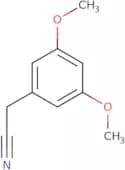
CAS :3,5-Dimethoxyphenylacetonitrile is a synthetic compound that has been shown to be an inhibitor of the demethylation reaction. It is postulated to have anticancer activity and inhibits the biosynthesis of octaketides in vitro. This compound has also been shown to have antibacterial activity and is structurally related to cannabinoids. The mechanism by which 3,5-dimethoxyphenylacetonitrile inhibits cancer cells is not known. However, it may be due to its ability to bind cannabinoid receptors.
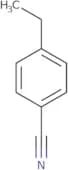
Formule :C10H11NO2Degré de pureté :Min. 95%Couleur et forme :PowderMasse moléculaire :177.2 g/mol4-Ethylbenzonitrile
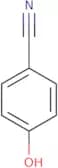
CAS :4-Ethylbenzonitrile is a chemical that is found in human lung. It is a terminal alkene, which undergoes aerobic photooxidation to form reactive oxygen species such as superoxide radical anion and hydrogen peroxide. 4-Ethylbenzonitrile is also converted to triazine, which has been shown to have tumorigenic properties in the lungs of rats and mice. The functional groups on 4-ethylbenzonitrile are amines, hydroxyls, carbonyls, and nitriles. This compound has an inhibitory effect on lung fibroblasts due to its ability to interfere with the function of β-unsaturated ketones. 4-Ethylbenzonitrile's basic structure contains three carbon atoms, two double bonds, and one triple bond.Formule :C9H9NDegré de pureté :Min. 95%Couleur et forme :Clear LiquidMasse moléculaire :131.17 g/mol4-Cyanophenol
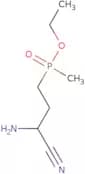
CAS :4-Cyclohexyphenol is a natural compound that belongs to the class of compounds known as phenols. It has a hydroxyl group and an intramolecular hydrogen bond. The thermal expansion of 4-cyanophenol is approximately 6.6 × 10⁻⁶/°C, which is greater than the thermal expansion of p-hydroxybenzoic acid (approximately 1.8 × 10⁻⁶/°C). The reaction mechanism for 4-cyanophenol involves intramolecular hydrogen bonding, which leads to its rapid degradation. 4-Cyanophenol reacts with trifluoroacetic acid in the presence of sodium carbonate to form p-hydroxybenzoic acid, which can be determined by measuring its absorbance at 290 nm. Hydrogen bonding interactions with the surface are responsible for the high sensitivity and selectivity of this analytical method. 4-Cyanophenol may also be detected using plasma mass spectFormule :C7H5NODegré de pureté :Min. 95%Couleur et forme :PowderMasse moléculaire :119.12 g/molEthyl (3-amino-3-cyanopropyl)methylphosphinate
CAS :Ethyl (3-amino-3-cyanopropyl)methylphosphinate is a versatile building block that can be used as a reagent, speciality chemical, or research chemical. It is useful as an intermediate for complex compounds and can be used as a reaction component in the synthesis of high quality compounds. Ethyl (3-amino-3-cyanopropyl)methylphosphinate is also a useful scaffold in organic synthesis.Formule :C7H15N2O2PDegré de pureté :Min. 95%Couleur et forme :PowderMasse moléculaire :190.18 g/mol4-Amino-2-chlorobenzonitrile
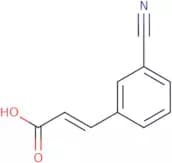
CAS :4-Amino-2-chlorobenzonitrile (4ACB) is a copper salt that can be used in antimalarial therapy. It has been shown to have strong antiplasmodial activity against the parasite Plasmodium falciparum and other species of the genus Plasmodium. 4ACB is synthesized by nitro group reduction and ammonolysis, followed by an addition reaction with chloroformate. 4ACB binds to the enzyme ferredoxin reductase and inhibits electron transfer, which leads to inhibition of ATP production and cell death. The molecular modelling study showed that 4ACB is a reactive molecule with high affinity constants for copper ion.Formule :C7H5ClN2Degré de pureté :Min. 95%Couleur et forme :PowderMasse moléculaire :152.58 g/mol3-Cyanocinnamic acid
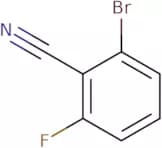
CAS :3-Cyanocinnamic acid is a reactive, unreactive, and stepwise cycloaddition compound. It can participate in photochemical reactions with other compounds to form photodimers. 3-Cyanocinnamic acid has an optimal reaction temperature of 100°C and a reaction time of 5 minutes. The diradical nature of 3-cyanocinnamic acid makes it sensitive to UV light, and the photochemical reactions are simulated by quantum mechanics calculations. Photodimerisation simulations show that 3-cyanocinnamic acid is capable of forming photodimers with 2-cyanocinnamic acid or 4-cyanocinnamic acid at room temperature.Formule :C10H7NO2Degré de pureté :Min. 95%Couleur et forme :PowderMasse moléculaire :173.17 g/mol2-Bromo-6-fluorobenzonitrile
CAS :2-Bromo-6-fluorobenzonitrile is an organic compound with a molecular formula of C6H3BrF. It is a colorless liquid that is used as a precursor in the synthesis of other compounds. 2-Bromo-6-fluorobenzonitrile has been shown to be an efficient fluorophore and can be activated by electron transfer, thermally, or chemically. 2-Bromo-6-fluorobenzonitrile also has a quantum efficiency of 0.5% and transport properties that make it ideal for fluorescence microscopy. The fluorescence intensity of 2-bromo-6-fluorobenzonitrile is proportional to the amount of energy absorbed, which makes it useful for quantifying the concentration of fluorescent molecules in solution. 2-Bromo-6-fluorobenzonitrile has also been shown to have high quantum yields and high efficiency levels when
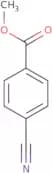
Formule :C7H3BrFNDegré de pureté :Min. 95%Couleur et forme :PowderMasse moléculaire :200.01 g/molMethyl-4-cyanobenzoate
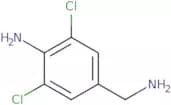
CAS :Methyl-4-cyanobenzoate is a nucleophilic compound that reacts with electrophilic functional groups. It is used in organic chemistry as an immobilized reagent for the conversion of alcohols, amines, and thiols to their corresponding halides. Methyl-4-cyanobenzoate has been shown to have anti-inflammatory properties by inhibiting neutrophil migration into cutaneous tissue and reducing the production of proinflammatory compounds such as isobutene and naphthalene. It also inhibits the release of histamine from mast cells.Formule :C9H7NO2Degré de pureté :Min. 95%Couleur et forme :PowderMasse moléculaire :161.16 g/mol4-Amino-3,5-dichlorobenzylamine dihydrochloride
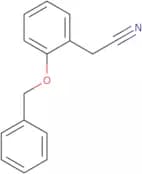
CAS :4-Amino-3,5-dichlorobenzylamine dihydrochloride is a chemical intermediate that can be used as a reagent for the synthesis of other compounds. 4-Amino-3,5-dichlorobenzylamine dihydrochloride is considered to be a high quality chemical with versatile uses. It is listed in the Chemical Abstracts Service (CAS) registry under 164648-75-3, and can be obtained from various suppliers.Formule :C7H8Cl2N2·2HClDegré de pureté :Min. 95%Couleur et forme :PowderMasse moléculaire :263.98 g/mol2-Benzyloxyphenylacetonitrile
CAS :2-Benzyloxyphenylacetonitrile is a compound that is used in the manufacture of polyester, fibre and crystallized products. It is also used as a solvent for dyes and oils, as well as an industrial chemical intermediate. 2-Benzyloxyphenylacetonitrile can be thermolysed to produce benzoic acid, which can then be oxidized to produce phenol. The residue obtained from this process has been found to have a calorific value of around 2500kcal/kg. This substance has been found to react with oxygen at high temperatures and form an oxygenated product. 2-Benzyloxyphenylacetonitrile can be synthesised by reacting benzene with styrene in the presence of water and a catalyst such as sodium hydroxide or calcium oxide. The reaction produces hydrogen gas, benzoic acid and 2-benzyloxyphenylacetonitrile.Formule :C15H13NODegré de pureté :Min. 95%Couleur et forme :PowderMasse moléculaire :223.27 g/mol