Cyano-, Nitrile-
Les composés cyano et nitrile sont des molécules organiques contenant des groupes cyano (C≡N) ou nitrile dans leur structure, caractérisées par la présence d'azote. Ces groupes jouent des rôles importants dans diverses réactions chimiques et applications industrielles. Dans cette catégorie, vous trouverez une large gamme de composés cyano et nitrile, allant de structures simples à complexes. Chez CymitQuimica, nous proposons des composés cyano et nitrile de haute qualité adaptés pour répondre aux besoins de la recherche et de l'industrie. Nos composés sont adaptés à une variété d'applications de synthèse et d'analyse.
9618 produits trouvés pour "Cyano-, Nitrile-"
Trier par
Degré de pureté (%)
0
100
|
0
|
50
|
90
|
95
|
100
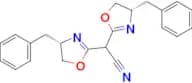
2,2-Bis((S)-4-benzyl-4,5-dihydrooxazol-2-yl)acetonitrile
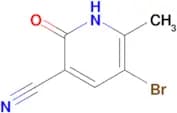
CAS :Degré de pureté :97%Masse moléculaire :359.42898565-BROMO-6-METHYL-2-OXO-1,2-DIHYDRO-PYRIDINE-3-CARBONITRILE
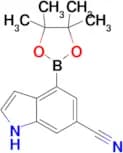
CAS :Degré de pureté :98%Masse moléculaire :213.03399661H-INDOLE-6-CARBONITRILE, 4-(4,4,5,5-TETRAMETHYL-1,3,2-DIOXABOROLAN-2-YL)-
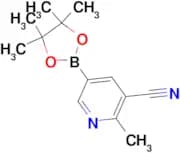
CAS :Degré de pureté :97%Masse moléculaire :268.11999512-METHYL-5-(4,4,5,5-TETRAMETHYL-1,3,2-DIOXABOROLAN-2-YL)NICOTINONITRILE
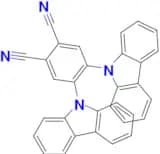
CAS :Degré de pureté :97%Masse moléculaire :244.10000611,2-Benzenedicarbonitrile, 4,5-di-9H-carbazol-9-yl-
CAS :Degré de pureté :98%Masse moléculaire :458.52398685-Oxo-4,5-dihydropyrazolo[1,5-a]pyrimidine-3-carbonitrile
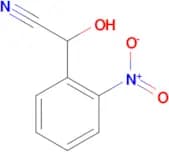
CAS :Degré de pureté :98%Masse moléculaire :160.1362-Hydroxy-2-(2-nitrophenyl)acetonitrile
CAS :Degré de pureté :98%Couleur et forme :SolidMasse moléculaire :178.1470032Ref: 10-F695435
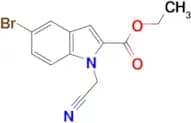
1g313,00€5g848,00€10g1.439,00€2.5g506,00€50mg92,00€100mg122,00€250mg171,00€500mg259,00€ETHYL 5-BROMO-1-(CYANOMETHYL)-1H-INDOLE-2-CARBOXYLATE
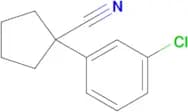
CAS :Degré de pureté :98%Masse moléculaire :307.14700321-(3-CHLOROPHENYL)CYCLOPENTANE-1-CARBONITRILE
CAS :Degré de pureté :98%Masse moléculaire :205.69000242-Cyano-N-((furan-2-ylmethyl)carbamoyl)acetamide
CAS :Produit contrôlé<p>Applications 2-Cyano-N-((furan-2-ylmethyl)carbamoyl)acetamide is an intermediate in the synthesis of novel 1- and 8-substituted-3-furfuryl xanthines as adenosine receptor antagonists.<br>References Balo, M. C., et al.: Bioorg. Med. Chem., 17, 6755 (2009);<br></p>Formule :C7H14O6·C3H8OCouleur et forme :NeatMasse moléculaire :254.278Methyl Cyanoacetate
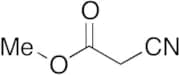
CAS :Produit contrôlé<p>Applications Methyl Cyanoacetate is often used as a nucleophile in the electrochemical oxidation of catechols. Methyl Cyanoacetate is also a reagent in the synthesis of Methyl 2-Amino-4-trifluoromethylthiophene-3-carboxylate (M287290); a compound used in the synthesis of DPP-IV inhibitors for treating type 2 diabetes.<br>References Rafiee, M., et al.: J. Electroanal. Chem., 626, 36 (2009); Deng, J., et al.: Eur. J. Med. Chem., 46, 71 (2010)<br></p>Formule :C4H5NO2Couleur et forme :NeatMasse moléculaire :99.09Ethyl Cyanoformate
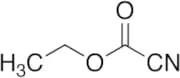
CAS :Produit contrôlé<p>Applications Ethyl Cyanoformate (cas# 623-49-4) is a compound useful in organic synthesis.<br></p>Formule :C4H5NO2Couleur et forme :NeatMasse moléculaire :99.091,2-Dicyanobenzene
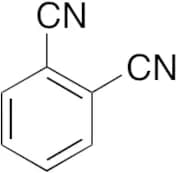
CAS :Produit contrôlé<p>Applications Phthalodinitrile monomers can be polymerized thermally in the presence of small amounts of curing agents into thermosetting polymers. Phthalodinitrile is a precursor to phthalocyanine which is used as a dye or pigment.<br>References Sastri, S. B. and Keller, T. M.: J. Polym. Sci. A Polym. Chem., 36, 1885-1890(1998), Löbbert, G. Phthalocyanines. In Ullmann's Encyclopedia of Industrial Chemistry, (Ed.)., (2000).<br></p>Formule :C8H4N2Couleur et forme :NeatMasse moléculaire :128.131Ethyl 2-Cyanopropanoate
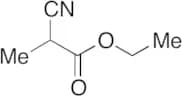
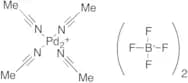
CAS :Produit contrôlé<p>Applications Ethyl 2-Cyanopropanoate is a building block used in many organic reactions such as the preparation of highly substituted benzenes.<br>References Zhang, X., et. al.: Organic Lett., 13, 5024 (2011)<br></p>Formule :C21H26N2OCouleur et forme :NeatMasse moléculaire :322.444Tetrakis(acetonitrile)palladium Bis(tetrafluoroborate)
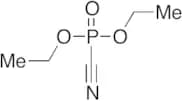
CAS :Produit contrôlé<p>Applications Tetrakis(acetonitrile)palladium Bis(tetrafluoroborate) is used to prepare an α-Diimine-transition metal complex, which is used as a catalyst for polymerization of olefins. It is also a catalyst used in cross coupling reaction for C-C, C-O, and C-N bond formation.<br>References Feldman, J., et al.: Organometallics, 16, 1514 (1997); Johnson, L., et al.: PCT Int. Appl., WO 9623010 A2 19960801 (1996); Poppenbery, J., et al.: Surface Sci., 2011; Pijnenburg, N., et al.: Dalton Transactions, 40, 8896 (2011); Kilpin, K., et al.: Inorg. Chem., 50, 6334 (2011)<br></p>Formule :C8H12B2F8N4PdCouleur et forme :NeatMasse moléculaire :444.24Diethyl Cyanophosphonate
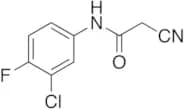
CAS :Produit contrôléFormule :C5H10NO3PCouleur et forme :NeatMasse moléculaire :163.11N-(3-Chloro-4-fluorophenyl)-2-cyanoacetamide
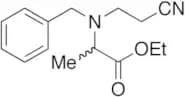
CAS :Produit contrôlé<p>Applications N-(3-Chloro-4-fluorophenyl)-2-cyanoacetamide (cas# 219529-31-4) is a compound useful in organic synthesis.<br></p>Formule :C9H6ClFN2OCouleur et forme :NeatMasse moléculaire :212.61N-(β-Cyanoethyl)-N-(ethoxycarbonylethyl)benzylamine
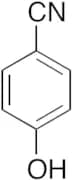
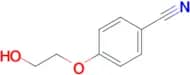
CAS :Produit contrôlé<p>Applications N-(β-Cyanoethyl)-N-(ethoxycarbonylethyl)benzylamine is a compound useful in organic synthesis.<br> Not a dangerous good if item is equal to or less than 1g/ml and there is less than 100g/ml in the package<br></p>Formule :C15H20N2O2Couleur et forme :NeatMasse moléculaire :260.334-Cyanophenol
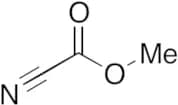
CAS :Produit contrôlé<p>Applications 4-Cyanophenol is used in a study to assess chemical uptake into human stratum corneum.<br>References Stinchcomb, A.L., et. al.: Pharm. Res., 16, 1288 (1999)<br></p>Formule :C7H5NOCouleur et forme :WhiteMasse moléculaire :119.12Methyl Cyanoformate
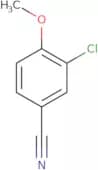
CAS :Produit contrôlé<p>Applications Methyl cyanoformate is a reagent that is used in the preparation of XEN907, which is a spiro-oxindole blocker of Nav1.7 for the treatment of pain.<br> Not a dangerous good if item is equal to or less than 1g/ml and there is less than 100g/ml in the package<br>References Chowdhury, S., et al.: Bioorg. Med. Chem. Lett., 21, 3676 (2011);<br></p>Formule :C3H3NO2Couleur et forme :NeatMasse moléculaire :85.063-Chloro-4-methoxybenzonitrile
CAS :<p>3-Chloro-4-methoxybenzonitrile is a chemical compound that can be used as a reactant, reagent, or building block in the synthesis of other chemicals. It is an important intermediate for the production of pharmaceuticals, pesticides and dyes. 3-Chloro-4-methoxybenzonitrile is also being investigated for use in the manufacture of photoresists for semiconductor device fabrication. This chemical is listed on the Chemical Abstracts Service registry with CAS number 102151-33-7.</p>Formule :C8H6ClNODegré de pureté :Min. 95%Couleur et forme :SolidMasse moléculaire :167.59 g/mol2-Nitrobenzylamine hydrochloride
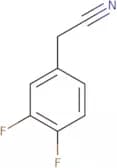
CAS :<p>2-Nitrobenzylamine hydrochloride is a compound that has been shown to have cancer-fighting properties. It inhibits the synthesis of proteins necessary for the proliferation of cancer cells, but it does not affect the synthesis of proteins in healthy cells. This drug is used to diagnose and treat certain types of cancers, such as lymphoma and leukemia. 2-Nitrobenzylamine hydrochloride can be modified by genetic engineering techniques to specifically target cancer cells, which may help with the treatment of other types of diseases in the future. It is believed that this drug will be useful for treating cancers that are resistant to chemotherapy or radiation therapy, as well as those that are caused by mutations in DNA.</p>Formule :C7H9ClN2O2Degré de pureté :Min. 95%Couleur et forme :PowderMasse moléculaire :188.61 g/mol3,4-Difluorophenylacetonitrile
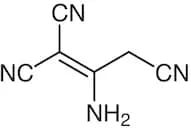
CAS :<p>3,4-Difluorophenylacetonitrile is a fine chemical that is used as a reagent for the synthesis of complex compounds. It can be used as a useful intermediate for the production of fine chemicals and speciality chemicals. 3,4-Difluorophenylacetonitrile has been shown to be useful in the synthesis of versatile building blocks, which are reaction components that can be used in many different reactions. This compound has also been shown to be an excellent scaffold for the development of new drugs that target cancer cells.</p>Formule :C8H5F2NDegré de pureté :Min. 95%Couleur et forme :Clear LiquidMasse moléculaire :153.13 g/mol2-Amino-1,1,3-tricyano-1-propene
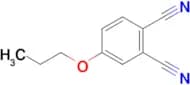
CAS :Formule :C6H4N4Degré de pureté :>98.0%(T)Couleur et forme :White to Gray to Brown powder to crystalMasse moléculaire :132.134-Butoxyphthalonitrile
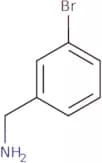
CAS :Formule :C12H12N2ODegré de pureté :>96.0%(GC)Couleur et forme :White to Light yellow powder to crystalMasse moléculaire :200.243-Bromobenzylamine
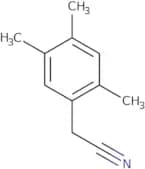
CAS :<p>3-Bromobenzylamine is a chemical compound that belongs to the class of amines. It is used as an intermediate in organic synthesis, and its derivative 3-bromobenzylamine hydrochloride is used in pharmaceuticals as a heart stimulant. 3-Bromobenzylamine can be synthesized by reacting an amine with phosgene and then brominating it. This chemical has been shown to have inhibitory activity against cancer cells and can be used for the treatment of cancer. 3-Bromobenzylamine has also been shown to inhibit the growth of bacteria, fungi, and viruses in vitro. 3-Bromobenzylamine may also be useful for treating psoriasis due to its ability to inhibit prostaglandin synthesis.</p>Formule :C7H8BrNDegré de pureté :Min. 95%Couleur et forme :Colorless PowderMasse moléculaire :186.04 g/mol2-(3,4,5-Trimethylphenyl)acetonitrile
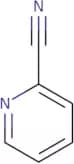
CAS :<p>2-(3,4,5-Trimethylphenyl)acetonitrile (2TMPAN) is a versatile building block that can be used in the synthesis of complex compounds and research chemicals. This chemical is a reagent that can be used to synthesize high-quality and useful intermediates. 2TMPAN has been shown to have a number of applications as a reaction component or scaffold for the synthesis of pharmaceuticals and other organic molecules.</p>Formule :C11H13NDegré de pureté :Min. 95%Masse moléculaire :159.23 g/mol2-Cyanopyridine
CAS :<p>2-Cyanopyridine is a chelate ligand that is structurally related to picolinic acid. It binds to the active site of IDO1 and prevents the enzyme from converting tryptophan into kynurenine. This leads to an increase in tryptophan levels, which can then be used for protein synthesis. 2-Cyanopyridine has been shown to have antimicrobial activity against Gram-positive bacteria in vitro and in vivo. It also inhibits the growth of Gram-negative bacteria, yeast, and fungi by binding to the iron atom of their heme molecules. 2-Cyanopyridine has shown potential as a pharmacological agent or as a biochemical probe for transfer reactions.</p>Formule :C6H4N2Degré de pureté :Min. 95%Couleur et forme :PowderMasse moléculaire :104.11 g/mol2,3-Dicyanopyrazine
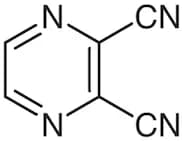
CAS :Formule :C6H2N4Degré de pureté :>99.0%(GC)Couleur et forme :White to Light yellow to Light orange powder to crystalMasse moléculaire :130.111,3-Bis(dicyanomethylidene)indan
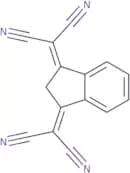
CAS :<p>1,3-Bis(dicyanomethylidene)indan is a supramolecular dye that has been shown to form complexes with a variety of acceptors. The interaction between the dye and the acceptor is determined by the dipole moment, polarity, and electron affinity of the two molecules. 1,3-Bis(dicyanomethylidene)indan has been shown to interact with viologen and anion donors as well as organic dyes such as methylene blue. 1,3-Bis(dicyanomethylidene)indan has also been used in optical devices such as light emitting diodes (LEDs).</p>Formule :C15H6N4Degré de pureté :Min. 95%Couleur et forme :PowderMasse moléculaire :242.24 g/mol2-(4-Methoxyphenoxy)acetonitrile
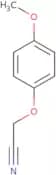
CAS :<p>2-(4-Methoxyphenoxy)acetonitrile is a chemical compound that is used to synthesize acetobromoglucose. It undergoes transformation and condensation reactions with acetobromoglucose to form 4-methoxyaceto bromoglucose.</p>Formule :C9H9NO2Degré de pureté :Min. 95%Masse moléculaire :163.17 g/mol2-Cyanobenzylamine hydrochloride
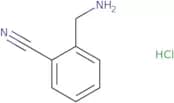
CAS :<p>2-Cyanobenzylamine hydrochloride is a chemical building block and intermediate that can be used in the synthesis of many different compounds. It is also a useful reagent for reactions involving nitro compounds. 2-Cyanobenzylamine hydrochloride is a fine chemical that is registered with the Chemical Abstract Service (CAS No. 1134529-25-1). It has been identified as a versatile building block and useful intermediate in the synthesis of pharmaceuticals, agrochemicals, and other organic chemicals.</p>Formule :C8H8N2·HClDegré de pureté :Min. 95%Couleur et forme :White/Off-White SolidMasse moléculaire :168.62 g/mol2-Amino-2-cyanoacetamide
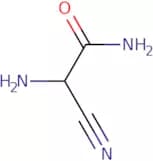
CAS :<p>2-Amino-2-cyanoacetamide is a chemical compound that has been shown to be reactive in the human liver and animal models. It is a purine derivative with a diatomic molecule, which has been shown to inhibit cancer cells in animals. 2-Amino-2-cyanoacetamide has been shown to inhibit the replication of pestivirus, an RNA virus that causes encephalitis and other diseases in humans. The nitrogen atoms on this molecule are responsible for its transport properties, including uptake by the gut and its ability to cross the blood brain barrier. 2-Amino-2-cyanoacetamide also inhibits the activity of amide hydrolase, which is an enzyme responsible for hydrolyzing peptides into amino acids. This process leads to a decrease in protein synthesis, which can lead to cell death.</p>Formule :C3H5N3ODegré de pureté :Min. 95%Couleur et forme :Beige To Tan SolidMasse moléculaire :99.09 g/molN-Cyanopyrrolidine
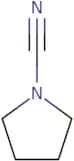
CAS :<p>N-Cyanopyrrolidine is a compound that targets enzymes, such as histone deacetylases (HDACs) and protein kinase C. It is a chemical ionization reagent that reacts with hydroxyl groups on the target molecule. This leads to the formation of covalent bonds between the target and the reagent, which results in an irreversible reaction. N-Cyanopyrrolidine has been shown to have antidiabetic effects in diabetic patients and hiv infection by decreasing levels of glucose in the blood. It also inhibits cancer cell growth by inhibiting dpp-IV, which is an enzyme that causes cancer cells to proliferate.</p>Formule :C5H8N2Degré de pureté :Min. 95%Couleur et forme :Clear LiquidMasse moléculaire :96.13 g/mol2-Cyanoethyltriethoxysilane
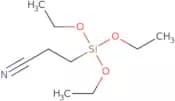
CAS :<p>2-Cyanoethyltriethoxysilane is a cross-linking agent that is used in coatings and adhesives. It has been shown to have an adsorption mechanism that is dependent on the pH of the solution, with a maximum adsorption at pH 3.2 and a minimum at pH 11. The rate of adsorption is also dependent on the concentration of 2-cyanoethyltriethoxysilane, with higher concentrations leading to faster adsorption rates. Kinetic data for 2-cyanoethyltriethoxysilane has been shown using gravimetric analysis to show that it has an adsorption rate constant of 1.0 × 10^4 s^(-1) at pH 3.2 and 6.5 × 10^4 s^(-1) at pH 11, which are independent of the concentration of this molecule in solution. Pluronic P123 was used as a model polymer</p>Formule :C9H19NO3SiDegré de pureté :Min. 97 Area-%Couleur et forme :PowderMasse moléculaire :217.34 g/mol4-Cyano-3,5-difluorophenol
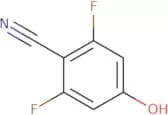
CAS :<p>4-Cyano-3,5-difluorophenol (4CF) is a mesomorphic compound that has a number of reactions with chloride. 4CF is synthesized from 3,5-difluoroaniline and the reaction product is then heated with chlorine to produce 4CF. The optimal reaction temperature is between 100°C and 120°C. When exposed to light, 4CF will react with chloride ions in the presence of heat to form a hydrophobic chlorinated product. This product reacts with proton donors such as NaOH or KOH to produce hydrogen gas. At room temperature, 4CF can be used as a gas sensor.</p>Formule :C7H3F2NODegré de pureté :Min. 95 Area-%Masse moléculaire :155.1 g/mol3-Cyanophenylacetone
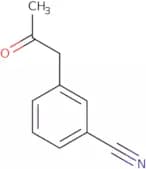
CAS :<p>3-Cyanophenylacetone is a versatile building block and useful intermediate in the synthesis of various pharmaceuticals, agrochemicals, and other chemical products. It can be used as a reagent or speciality chemical. 3-Cyanophenylacetone is also a useful scaffold for the synthesis of complex compounds. This compound is listed on the Chemical Abstracts Service (CAS) registry with the number 73013-50-0.</p>Formule :C10H9NODegré de pureté :Min. 95%Masse moléculaire :159.18 g/mol5-Cyanophthalide
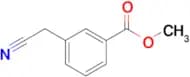
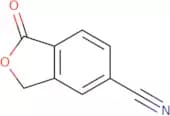
CAS :<p>5-Cyanophthalide is an inorganic acid that is a white solid. It has a molecular weight of 114.07 g/mol and a melting point of -43 degrees Celsius. 5-Cyanophthalide can be synthesized by reacting 5-carboxyphthalide with chlorine gas in the presence of an inert solvent and heat. The product is then purified by crystallization or recrystallization. The biological properties of 5-cyanophthalide are unknown, but it has been shown to have amide and chloride groups on either side of the molecule's carbon backbone. Mass spectrometry reveals that this compound exists as an enantiomer, meaning that it exists as two mirror images that are not superimposable on each other. This means there are two different forms: one left-handed and one right-handed form.</p>Formule :C9H5NO2Degré de pureté :Min. 95%Couleur et forme :PowderMasse moléculaire :159.14 g/mol3-Cyanomethylbenzoic acid methyl ester
CAS :<p>3-Cyanomethylbenzoic acid methyl ester is a synthetic chemical compound that is used as an intermediate in the production of other chemicals. It is a chlorination agent that reacts with toluene and methanol in the presence of chlorine to produce 3-chloromethylbenzoic acid methyl ester. This reaction also produces a byproduct called sulphone, which can be converted into acylation reagents for use in organic synthesis. The chloride ion can be used for cyanation reactions, which are useful for producing dyes or pharmaceuticals.</p>Formule :C10H9NO2Degré de pureté :Min. 95%Couleur et forme :SolidMasse moléculaire :175.18 g/mol3,5-Dibromo-4-hydroxybenzylamine hydrochloride
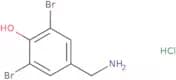
CAS :<p>3,5-Dibromo-4-hydroxybenzylamine hydrochloride is a high quality reagent that can be used as an intermediate in the production of fine chemicals and speciality chemicals. It is also a versatile building block for the synthesis of complex compounds. 3,5-Dibromo-4-hydroxybenzylamine hydrochloride has been shown to be useful in research due to its ability to react with other compounds in a variety of ways. The CAS number for this compound is 1134950-89-2.</p>Formule :C7H8Br2ClNODegré de pureté :Min. 95%Couleur et forme :PowderMasse moléculaire :317.41 g/mol3-Cyano-4-fluorobenzoic acid
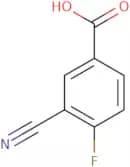
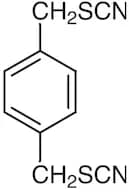
CAS :<p>3-Cyano-4-fluorobenzoic acid is a fluorinated analog of 3-cyano-4-fluorobenzoic acid, which has been shown to be effective in the treatment of prostate cancer. It is a prodrug that is metabolized by activated esterases to release the active form. The 18F radiolabeled form of 3-Cyano-4-fluorobenzoic acid has a high affinity for prostate carcinoma cells and has been used as a diagnostic agent. This drug also has an excellent pharmacokinetic profile and can be used as a nonradioactive tracer for imaging tumor cells in vivo.</p>Formule :C8H4FNO2Degré de pureté :Min. 95%Couleur et forme :White To Off-White SolidMasse moléculaire :165.12 g/molp-Xylylene Dithiocyanate
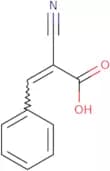
CAS :Formule :C10H8N2S2Degré de pureté :>98.0%(GC)Couleur et forme :White to Almost white powder to crystalineMasse moléculaire :220.31a-Cyanocinnamic acid
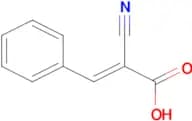
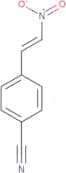
CAS :<p>a-Cyanocinnamic acid is a 3-hydroxycinnamic acid that can be found in coffee. It has been shown to inhibit the growth of colorectal adenocarcinoma cells and other cancer cells by binding to an inhibitor site on fatty acid synthesis enzymes, such as pyruvate carboxylase, hydroxylase, and acetyl-CoA carboxylase. This inhibition leads to decreased levels of fatty acids and increased levels of pyruvate and hydrogen peroxide, which inhibits cell proliferation. In addition, a-cyanocinnamic acid has been shown to have a hypoxic tumor selectivity index of 10.7%, which means it selectively targets tumors with low oxygen levels.</p>Formule :C10H7NO2Degré de pureté :Min. 95%Couleur et forme :White PowderMasse moléculaire :173.17 g/mol1-(4-Cyanophenyl)-2-nitroethene
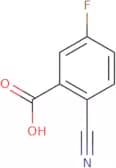
CAS :<p>1-(4-Cyanophenyl)-2-nitroethene is a reactive intermediate that belongs to the group of carboxylic acids. It is an unsaturated compound with a cinnamic acid derivative. The nitration of 1-(4-cyanophenyl)-2-nitroethene leads to the formation of 1,2-dinitrobenzene, which can be used for the synthesis of other heterocyclic compounds. This intermediate has been shown to have catalytic activity in biomolecules, including carboxylic and phenolic groups, and can be used for the synthesis of other organic compounds.</p>Formule :C9H6N2O2Degré de pureté :Min. 95%Masse moléculaire :174.16 g/mol2-Cyano-5-fluorobenzoic acid
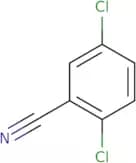
CAS :<p>2-Cyano-5-fluorobenzoic acid (2C5FBA) is a chemical that is synthesized by the reaction of sodium nitrite with methyl ester. It can be used in organic synthesis as a target product and can also be used as an intermediate for the synthesis of other chemicals. 2C5FBA has been shown to react with nitrogen to produce cyanide, which is toxic to humans and animals. 2C5FBA also reacts with acid methyl to produce methyl esters, which are often used as solvents in industrial settings.</p>Formule :C8H4FNO2Degré de pureté :Min. 95%Couleur et forme :PowderMasse moléculaire :165.12 g/mol2,5-Dichlorobenzonitrile
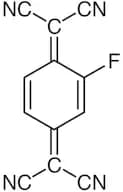
CAS :<p>2,5-Dichlorobenzonitrile is a chemical compound that contains a nitrile group. It is used as an intermediate in organic synthesis, as well as for the production of various pharmaceuticals and pesticides. 2,5-Dichlorobenzonitrile is oxidized to form 2,5-dichlorophenol which can be further converted to 2,5-dichloroquinone. This redox cycle is reversible and can be used to synthesize other compounds. The reaction time of this process is about one hour at room temperature. Maleate has been shown to inhibit the hepatic metabolism of 2,5-Dichlorobenzonitrile. This may lead to accumulation of 2,5-Dichlorobenzonitrile in the liver and potentially cause hepatitis or even liver cancer. Chloromethylation of 2,5-Dichlorobenzonitrile leads to the formation of chlor</p>Formule :C7H3Cl2NDegré de pureté :Min. 95%Couleur et forme :PowderMasse moléculaire :172.01 g/mol2-Fluoro-7,7,8,8-tetracyanoquinodimethane
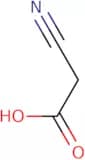
CAS :Formule :C12H3FN4Degré de pureté :>98.0%(N)Couleur et forme :Light yellow to Brown powder to crystalMasse moléculaire :222.18Cyanoacetic acid - 70% aqueous solution
CAS :<p>Cyanoacetic acid is an antimicrobial agent that can be used for the treatment of bowel disease, autoimmune diseases, and eye disorders. Cyanoacetic acid is a substrate molecule for sodium carbonate, which can be used to produce sodium carbonate by reacting with water. The reaction solution is then added to human serum or malonic acid to produce sodium carbonate, which can be used as a drug. Electrochemical impedance spectroscopy has been used as a tool to study the mechanism of cyanoacetic acid in treating inflammatory bowel disease.</p>Formule :C3H3NO2Degré de pureté :Min. 95%Couleur et forme :Yellow PowderMasse moléculaire :85.06 g/mol2-[1,2,4]Triazol-1-yl-benzylamine
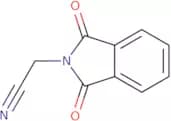
CAS :<p>2-[1,2,4]Triazol-1-yl-benzylamine is a chemical compound that has been shown to be an excellent reagent in organic synthesis. It is also used as a building block for the synthesis of compounds related to pharmaceuticals, pesticides and other speciality chemicals. 2-[1,2,4]Triazol-1-yl-benzylamine is a versatile intermediate that can be used in the synthesis of complex compounds with good yields and high purity.</p>Formule :C9H10N4Degré de pureté :Min. 95%Couleur et forme :PowderMasse moléculaire :174.2 g/mol(1,3-Dioxo-1,3-dihydro-2H-isoindol-2-yl)acetonitrile
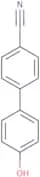
CAS :<p>Acetonitrile is a colorless liquid that is miscible with water and most organic solvents. It is mainly used as a solvent for chemical reactions, including the synthesis of pharmaceuticals. Acetonitrile has been shown to be mutagenic in vitro and in vivo. Acetonitrile was found to induce micronuclei formation, which may be due to its ability to form reactive oxygen species or cause DNA damage by forming adducts with DNA bases. Acetonitrile also induced chromosomal aberrations and micronucleated polychromatic erythrocytes in mice, as well as increased reticulocytes (immature red blood cells) in humans. The dihedral angle between the nitrate group and the benzyl group has been found to be 163°, while the average frequency of acetonitrile is 164 Hz.</p>Formule :C10H6N2O2Degré de pureté :Min. 95%Couleur et forme :PowderMasse moléculaire :186.17 g/mol4-Cyano-4'-hydroxybiphenyl
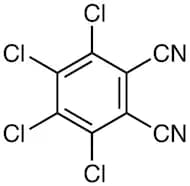
CAS :<p>4-Cyano-4'-hydroxybiphenyl is a phenolic compound that belongs to the family of compounds known as polycyclic aromatic hydrocarbons. It has been shown to bind to a variety of receptors and is used in sample pretreatment for assays. 4-Cyano-4'-hydroxybiphenyl also has a number of uses in polymerization reactions, including cationic polymerization, which involves the reaction of an electron donor with an electrophile. The electron donor is typically a Lewis acid, such as trifluoroacetic acid or formyl chloride. 4-Cyano-4'-hydroxybiphenyl can be used as an amide coupling agent, which involves the reaction of an amine with another organic compound to form an amide bond. It also reacts with chlorine gas in iodination reactions to produce hypochlorous acid.</p>Formule :C13H9NODegré de pureté :Min. 96.5 Area-%Couleur et forme :PowderMasse moléculaire :195.22 g/molTetrachlorophthalonitrile
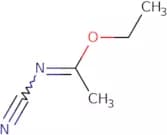
CAS :Formule :C8Cl4N2Degré de pureté :>96.0%(GC)(N)Couleur et forme :White to Almost white powder to crystalMasse moléculaire :265.90Cyano ethyl acetamidate
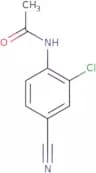
CAS :<p>Cyano ethyl acetamidate is a synthetic compound that is used in the production of immunosorbent assays. It is a reaction yield and amide. This product has been shown to be an effective amination reagent in deionized water and wastewater, as well as a powerful monoclonal antibody producer. Cyano ethyl acetamidate has also been shown to be reactive with chloride and hydrogen chloride, which can be used for the synthesis of nitro compounds.</p>Formule :C5H8N2ODegré de pureté :Min. 95%Couleur et forme :Clear Colourless LiquidMasse moléculaire :112.13 g/mol4-Nitro-2-(trifluoromethyl)benzonitrile
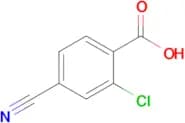
CAS :Formule :C8H3F3N2O2Degré de pureté :>98.0%(GC)Couleur et forme :White to Yellow to Green powder to crystalMasse moléculaire :216.12N-(4-Cyano-2-chlorophenyl)acetamide
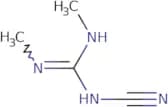
CAS :<p>N-(4-Cyano-2-chlorophenyl)acetamide is a versatile building block that is used in the synthesis of complex compounds. N-(4-Cyano-2-chlorophenyl)acetamide has been shown to be a useful intermediate in the synthesis of important compounds such as 4-aminoantipyrine, 4,5-dichloroanthranilic acid and 2,6-dichloropurine. This chemical has also been found to be an effective reagent for the preparation of other chemicals.</p>Formule :C9H7ClN2ODegré de pureté :Min. 95%Masse moléculaire :194.62 g/molN-Cyano-N',N''-dimethylguanidine
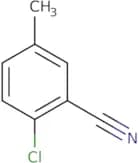
CAS :<p>N-Cyano-N',N''-dimethylguanidine is a clinical drug that has been shown to have a detectable concentration in the serum of humans. The drug is metabolized by nitrite ion, maleate, and potassium phosphate to form reaction products. N-Cyano-N',N''-dimethylguanidine binds to h2 receptors and inhibits the activity of cytochrome p450 enzymes. This inhibition can lead to carcinogenic activity. N-Cyano-N',N''-dimethylguanidine is an analog of methylene blue, which inhibits the synthesis of rna in bacteria and is used as a therapeutic agent for malaria.</p>Formule :C4H8N4Degré de pureté :Min. 95%Couleur et forme :White PowderMasse moléculaire :112.14 g/mol2-Chloro-5-methylbenzonitrile
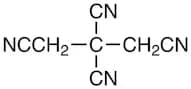
CAS :<p>2-Chloro-5-methylbenzonitrile (2C5MB) is a versatile building block that is used in the production of fine chemicals, specialty chemicals, and pharmaceuticals. It is also used as a reagent for organic synthesis and as a speciality chemical. 2C5MB can be used in the synthesis of various complex compounds and research chemicals. The compound has been shown to have high reactivity and has been used as a reaction component or scaffold for the synthesis of other products.</p>Formule :C8H6ClNDegré de pureté :Min. 95%Couleur et forme :PowderMasse moléculaire :151.59 g/mol1,2,2,3-Propanetetracarbonitrile
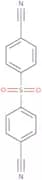
CAS :Formule :C7H4N4Degré de pureté :>96.0%(GC)Couleur et forme :White to Light yellow to Light orange powder to crystalMasse moléculaire :144.144,4'-Dicyanodiphenylsulphone
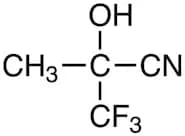
CAS :<p>Dicyanodiphenylsulphone is an inhibitory agent that prevents the HIV-2 virus from entering cells. It binds to the viral envelope, forming a sealant that blocks the virus from entering the cell and infecting it. Dicyanodiphenylsulfone also has immunosuppressive properties, but can be used in conjunction with sulfa drugs and polysulfides to prevent the development of bacterial resistance. The efficacy of dicyanodiphenylsulfone has been demonstrated in cellular assays and in human immunodeficiency virus (HIV) infected patients. This drug is not active against other types of viruses, such as herpes simplex, influenza A, or cytomegalovirus.</p>Formule :C14H8N2O2SDegré de pureté :Min. 95%Masse moléculaire :268.29 g/mol2-Hydroxy-2-(trifluoromethyl)propionitrile
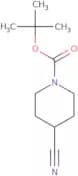
CAS :Formule :C4H4F3NODegré de pureté :>96.0%(GC)Couleur et forme :White to Almost white clear liquidMasse moléculaire :139.08N-Boc-4-cyanopiperidine
CAS :<p>N-Boc-4-cyanopiperidine is a synthetic compound that has been used as a competitive inhibitor in the study of biochemistry and neurochemistry. It has been shown to inhibit ligand binding to calcium channels, which are proteins that regulate the flow of calcium ions into cells. N-Boc-4-cyanopiperidine also inhibits the production of prostaglandins, which are chemicals that promote inflammation. This drug has been investigated for its possible use in treating neuropathic pain, since it inhibits voltage-gated sodium channels and potassium channels.</p>Formule :C11H18N2O2Degré de pureté :Min. 95%Couleur et forme :PowderMasse moléculaire :210.27 g/mol3-Cyano-2-hydroxypyridine
CAS :<p>3-Cyano-2-hydroxypyridine is an inhibitor of the noradrenaline transporter, which is a type of l-type calcium channel. 3-Cyano-2-hydroxypyridine has been shown to be a potent inhibitor of the noradrenaline transporter. It inhibits the binding of neurotransmitters to their receptors by blocking active methylene sites on the transporter molecule. This drug also has a cavity that can accommodate bulky inhibitor molecules, making it more difficult for these inhibitors to bind to the active site and compete with neurotransmitters for uptake. 3Cyano-2-hydroxypyridine also inhibits nitric oxide synthase, which may provide anti-tumor activity as well as inhibit tumor cell growth. The inhibitory effect of this drug is due to structural studies that have revealed hydrogen bonding interactions with the drug's nitrogen and oxygen atoms.</p>Formule :C6H4N2ODegré de pureté :Min. 95%Couleur et forme :Yellow To Brown SolidMasse moléculaire :120.11 g/mol3-Cyano-benzamidine; hydrochloride
CAS :Formule :C8H8ClN3Degré de pureté :95%Couleur et forme :SolidMasse moléculaire :181.623-cyano-3′-thiomorpholinomethyl benzophenone
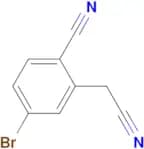
CAS :Formule :C19H18N2OSDegré de pureté :97.0%Masse moléculaire :322.435-Bromo-2-cyanobenzeneacetonitrile
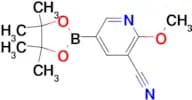
CAS :Formule :C9H5BrN2Degré de pureté :95%Couleur et forme :SolidMasse moléculaire :221.0572-Methoxy-5-(4,4,5,5-tetramethyl-1,3,2-dioxaborolan-2-yl)nicotinonitrile
CAS :Formule :C13H17BN2O3Degré de pureté :95%Couleur et forme :SolidMasse moléculaire :260.14-[2-(Trifluoromethyl)phenyl]oxane-4-carbonitrile
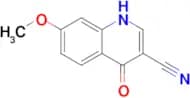
CAS :Formule :C13H12F3NOCouleur et forme :SolidMasse moléculaire :255.244-HYDROXY-7-METHOXYQUINOLINE-3-CARBONITRILE
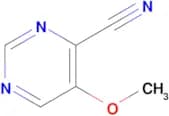
CAS :Formule :C11H8N2O2Degré de pureté :95.0%Masse moléculaire :200.1975-Methoxypyrimidine-4-carbonitrile
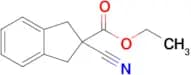
CAS :Formule :C6H5N3ODegré de pureté :95%Couleur et forme :SolidMasse moléculaire :135.126ETHYL 2-CYANO-1,3-DIHYDROINDENE-2-CARBOXYLATE
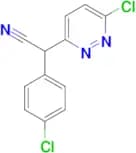
CAS :Formule :C13H13NO2Degré de pureté :98%Masse moléculaire :215.2522-(4-Chlorophenyl)-2-(6-chloropyridazin-3-yl)acetonitrile
CAS :Formule :C12H7Cl2N3Degré de pureté :95.0%Masse moléculaire :264.112-Chloroquinoline-4-carbonitrile
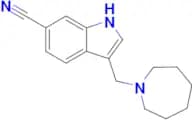
CAS :Formule :C10H5ClN2Degré de pureté :95.0%Couleur et forme :SolidMasse moléculaire :188.613-(Azepan-1-ylmethyl)-1H-indole-6-carbonitrile
CAS :Formule :C16H19N3Degré de pureté :95.0%Masse moléculaire :253.3492-(2-Chloroethoxy)acetonitrile
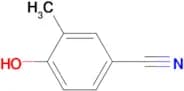
CAS :Formule :C4H6ClNODegré de pureté :97%+(GC-MS);RGMasse moléculaire :119.554-Hydroxy-3-methyl benzonitrile
CAS :Formule :C8H7NODegré de pureté :97%Couleur et forme :SolidMasse moléculaire :133.15Verapamil hydrochloride
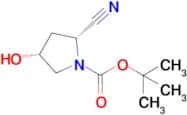
CAS :Formule :C27H39ClN2O4Degré de pureté :98.0%Couleur et forme :SolidMasse moléculaire :491.07Tert-butyl (2R,4R)-2-cyano-4-hydroxypyrrolidine-1-carboxylate
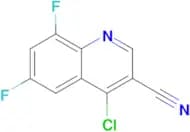
CAS :Degré de pureté :97%Masse moléculaire :212.24899294-CHLORO-6,8-DIFLUORO-QUINOLINE-3-CARBONITRILE
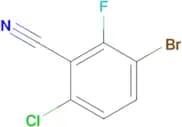
CAS :Formule :C10H3ClF2N2Degré de pureté :97.0%Masse moléculaire :224.595-Bromo-2-chloro-6-fluorobenzonitrile
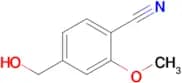
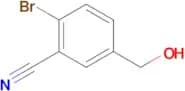
CAS :Formule :C7H2BrClFNDegré de pureté :98%Couleur et forme :SolidMasse moléculaire :234.452-Bromo-5-(hydroxymethyl)benzonitrile
CAS :Formule :C8H6BrNODegré de pureté :95.0%Couleur et forme :SolidMasse moléculaire :212.0462-AMINO-2-METHYL-PENTANENITRILE
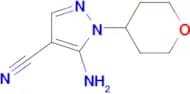
CAS :Formule :C6H12N2Degré de pureté :95.0%Masse moléculaire :112.1765-Amino-1-(tetrahydro-2H-pyran-4-yl)-1H-pyrazole-4-carbonitrile
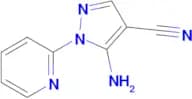
CAS :Formule :C9H12N4ODegré de pureté :95.0%Masse moléculaire :192.2225-Amino-1-(pyridin-2-yl)-1H-pyrazole-4-carbonitrile
CAS :Formule :C9H7N5Degré de pureté :98%Masse moléculaire :185.192-[(2-Chlorophenyl)sulfanyl]acetonitrile
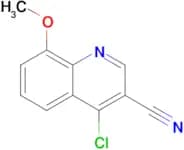
CAS :Formule :C8H6ClNSDegré de pureté :95.0%Masse moléculaire :183.654-Chloro-8-methoxyquinoline-3-carbonitrile
CAS :Formule :C11H7ClN2ODegré de pureté :97%+(GC-MS);RGMasse moléculaire :218.643,4-Dichloro-5-fluorobenzonitrile
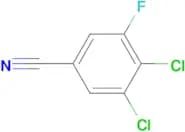
CAS :Formule :C7H2Cl2FNDegré de pureté :95.0%Masse moléculaire :1903-(3,4-DIMETHOXYPHENYL)PROPANENITRILE
CAS :Formule :C11H13NO2Degré de pureté :97.0%Masse moléculaire :191.235-Amino-1-(2-chloro-4-fluoro-5-methyl-phenyl)-3-methyl-1H-pyrazole-4-carbonitrile
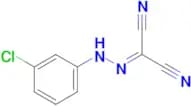
Formule :C12H10ClFN4Degré de pureté :95.0%Masse moléculaire :264.69(3-Chlorophenyl)carbonohydrazonoyl dicyanide
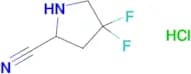
CAS :Formule :C9H5ClN4Degré de pureté :98.0%Couleur et forme :SolidMasse moléculaire :204.624,4-Difluoropyrrolidine-2-carbonitrile hydrochloride
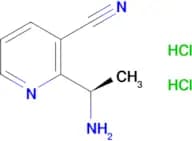
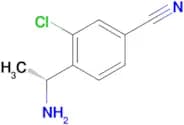
CAS :Degré de pureté :98%Couleur et forme :SolidMasse moléculaire :168.5700073(R)-2-(1-Aminoethyl)nicotinonitrile dihydrochloride
CAS :Formule :C8H11Cl2N3Degré de pureté :98%Masse moléculaire :220.13-Cyano-4-fluorobenzaldehyde
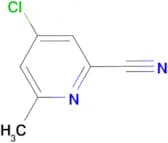
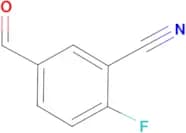
CAS :Formule :C8H4FNODegré de pureté :95%Couleur et forme :SolidMasse moléculaire :149.1244-Chloro-3-(trifluoromethyl)-2-pyridinecarbonitrile
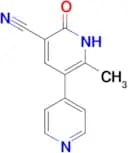
CAS :Degré de pureté :98%Masse moléculaire :206.553-Cyano-6-methyl-5-(4-pyridyl)-2-pyridone
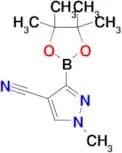
CAS :Formule :C12H9N3ODegré de pureté :97.0%Couleur et forme :CrystallineMasse moléculaire :211.2241-methyl-3-(4,4,5,5-tetramethyl-1,3,2-dioxaborolan-2-yl)-1H-pyrazole-4-carbonitrile
Formule :C11H16BN3O2Degré de pureté :97.0%Masse moléculaire :233.087-CYANO-IMIDAZO[1,2-A]PYRIDINE-2-CARBOXYLIC ACID ETHYL ESTER
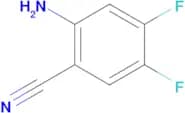
CAS :Formule :C11H9N3O2Degré de pureté :98%Masse moléculaire :215.2122-Amino-4,5-difluorobenzonitrile
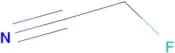
CAS :Formule :C7H4F2N2Degré de pureté :98%Couleur et forme :SolidMasse moléculaire :154.12Fluoroacetonitrile
CAS :Formule :C2H2FNDegré de pureté :95.0%Couleur et forme :LiquidMasse moléculaire :59.0432-PYRIMIDINECARBONITRILE,5-METHOXY-
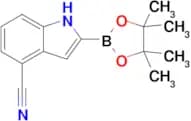
CAS :Formule :C6H5N3ODegré de pureté :97%Masse moléculaire :135.1262-(4,4,5,5-Tetramethyl-1,3,2-dioxaborolan-2-yl)-1H-indole-4-carbonitrile
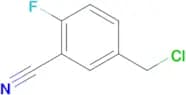
CAS :Formule :C15H17BN2O2Degré de pureté :98%Masse moléculaire :268.125-(Chloromethyl)-2-fluorobenzonitrile
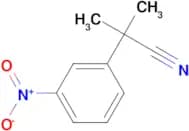
CAS :Formule :C8H5ClFNDegré de pureté :95%Masse moléculaire :169.582-Methyl-2-(3-nitrophenyl)propanenitrile
CAS :Formule :C10H10N2O2Degré de pureté :98%Couleur et forme :SolidMasse moléculaire :190.202N-(3-Cyano-4,5,6,7-tetrahydrobenzo[b]thiophen-2-yl)propionamide
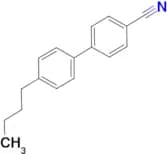
CAS :Formule :C12H14N2OSDegré de pureté :98%Masse moléculaire :234.324-Cyano-4′-butylbiphenyl
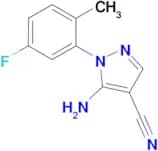
CAS :Formule :C17H17NDegré de pureté :98%Couleur et forme :SolidMasse moléculaire :235.335-Amino-1-(5-fluoro-2-methyl-phenyl)-1H-pyrazole-4-carbonitrile
Formule :C11H9FN4Degré de pureté :95.0%Masse moléculaire :216.2192-Piperidinobenzonitrile
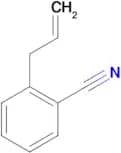
CAS :Formule :C12H14N2Degré de pureté :97.0%Couleur et forme :SolidMasse moléculaire :186.2583-(2-Cyanophenyl)-1-propene
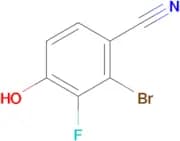
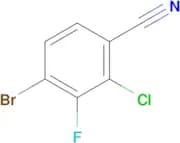
CAS :Formule :C10H9NDegré de pureté :97.0%Couleur et forme :SolidMasse moléculaire :143.1894-Bromo-2-chloro-3-fluorobenzonitrile
CAS :Formule :C7H2BrClFNDegré de pureté :97%Couleur et forme :SolidMasse moléculaire :232.904(Diphenyl-phosphinoyl)-acetonitrile
CAS :Formule :C14H12NOPDegré de pureté :95.0%Masse moléculaire :241.232-Oxo-2H-pyrrolo[2,3-b]pyridine-6-carbonitrile
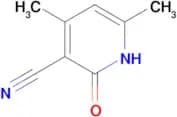
CAS :Formule :C8H3N3ODegré de pureté :95.0%Couleur et forme :SolidMasse moléculaire :157.1322-Hydroxy-4,6-dimethylnicotinonitrile
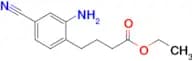
CAS :Formule :C8H8N2ODegré de pureté :95%Couleur et forme :Solid, Crystalline Powder or PowderMasse moléculaire :148.1654-(2-AMINO-4-CYANO-PHENYL)-BUTYRIC ACID ETHYL ESTER
CAS :Formule :C13H16N2O2Degré de pureté :97%Masse moléculaire :232.2833-Formylpyrazolo[1,5-a]pyridine-5-carbonitrile
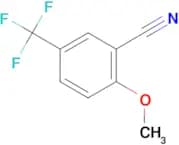
CAS :Formule :C9H5N3ODegré de pureté :97%Masse moléculaire :171.1592-Methoxy-5-(trifluoromethyl)benzonitrile
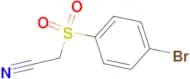
CAS :Formule :C9H6F3NODegré de pureté :97%Couleur et forme :SolidMasse moléculaire :201.1484-Bromobenzenesulfonylacetonitrile
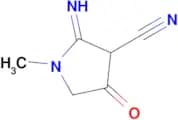
CAS :Formule :C8H6BrNO2SDegré de pureté :95.0%Couleur et forme :SolidMasse moléculaire :260.112-imino-1-methyl-4-oxopyrrolidine-3-carbonitrile
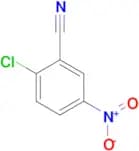
CAS :Degré de pureté :≥95%Masse moléculaire :137.14199832-Chloro-5-nitrobenzonitrile
CAS :Formule :C7H3ClN2O2Degré de pureté :98%Couleur et forme :SolidMasse moléculaire :182.563-FLUOROCYCLOBUTANE-1-CARBONITRILE
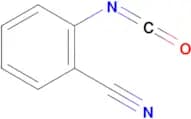
CAS :Formule :C5H6FNDegré de pureté :95.0%Masse moléculaire :99.1082-Isocyanatobenzonitrile
CAS :Formule :C8H4N2ODegré de pureté :95.0%Couleur et forme :SolidMasse moléculaire :144.1334-(dimethylamino)-3-nitrobenzonitrile
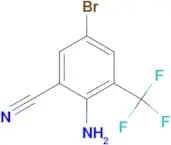
CAS :Formule :C9H9N3O2Degré de pureté :95.0%Masse moléculaire :191.192-Amino-5-bromo-3-(trifluoromethyl)benzonitrile
CAS :Formule :C8H4BrF3N2Degré de pureté :95%Couleur et forme :SolidMasse moléculaire :265.0332-Fluoro-6-iodobenzonitrile
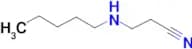
CAS :Formule :C7H3FINDegré de pureté :96%Couleur et forme :SolidMasse moléculaire :247.0113-(Pentylamino)propionitrile
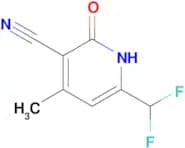
CAS :Formule :C8H16N2Degré de pureté :98.0%Couleur et forme :LiquidMasse moléculaire :140.236-Difluoromethyl-2-hydroxy-4-methyl-nicotinonitrile
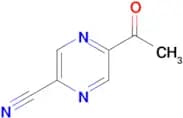
CAS :Formule :C8H6F2N2ODegré de pureté :95.0%Masse moléculaire :184.1465-Acetylpyrazine-2-carbonitrile
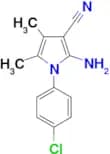
CAS :Formule :C7H5N3ODegré de pureté :95%Couleur et forme :SolidMasse moléculaire :147.1372-Amino-1-(4-chloro-phenyl)-4,5-dimethyl-1H-pyrrole-3-carbonitrile
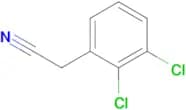
CAS :Formule :C13H12ClN3Degré de pureté :95.0%Masse moléculaire :245.712-(2,3-Dichlorophenyl)acetonitrile
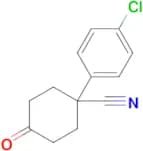
CAS :Formule :C8H5Cl2NDegré de pureté :95.0%Couleur et forme :SolidMasse moléculaire :186.041-(4-Chlorophenyl)-4-oxocyclohexane-1-carbonitrile
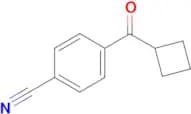
CAS :Degré de pureté :97%Masse moléculaire :233.69999694-Cyanophenyl cyclobutyl ketone
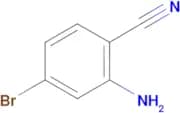
CAS :Formule :C12H11NODegré de pureté :97.0%Masse moléculaire :185.2262-Amino-4-bromobenzonitrile
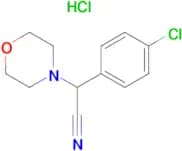
CAS :Formule :C7H5BrN2Degré de pureté :98%Couleur et forme :SolidMasse moléculaire :197.0352-(4-Chlorophenyl)-2-morpholinoacetonitrile hydrochloride
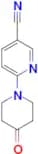
CAS :Formule :C12H14Cl2N2ODegré de pureté :95.0%Couleur et forme :SolidMasse moléculaire :273.166-(4-oxopiperidin-1-yl)pyridine-3-carbonitrile
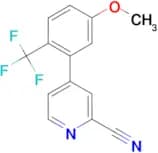
CAS :Formule :C11H11N3ODegré de pureté :97%Masse moléculaire :201.2294-(5-Methoxy-2-trifluoromethyl-phenyl)-pyridine-2-carbonitrile
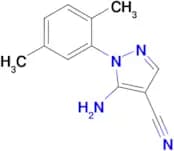
Formule :C14H9F3N2ODegré de pureté :95.0%Masse moléculaire :278.2345-Amino-1-(2,5-dimethyl-phenyl)-1H-pyrazole-4-carbonitrile
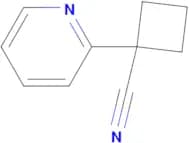
Formule :C12H12N4Degré de pureté :95.0%Masse moléculaire :212.2561-Pyridin-2-ylcyclobutanecarbonitrile
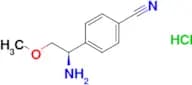
CAS :Formule :C10H10N2Degré de pureté :97.0%Masse moléculaire :158.204(R)-4-(1-Amino-2-methoxyethyl)benzonitrile hydrochloride
CAS :Formule :C10H13ClN2ODegré de pureté :97.0%Masse moléculaire :212.681-(2-Cyanoethyl)-3-(trifluoromethyl)pyrid-2-(1H)-one
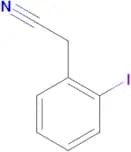
CAS :Formule :C9H7F3N2ODegré de pureté :95.0%Masse moléculaire :216.1632-Iodophenylacetonitrile
CAS :Formule :C8H6INDegré de pureté :98%Couleur et forme :LiquidMasse moléculaire :243.047DI-TERT-BUTYL 2-CYANOPIPERAZINE-1,4-DICARBOXYLATE
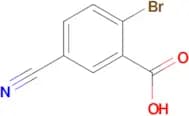
CAS :Formule :C15H25N3O4Degré de pureté :95%Masse moléculaire :311.3822-Bromo-5-cyanobenzoic acid
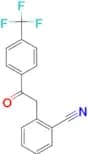
CAS :Formule :C8H4BrNO2Degré de pureté :98%Couleur et forme :SolidMasse moléculaire :226.0292-(2-cyanophenyl)-4′-trifluoromethylacetophenone
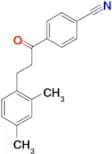
CAS :Formule :C16H10F3NODegré de pureté :97.0%Masse moléculaire :289.2574′-cyano-3-(2,4-dimethylphenyl)propiophenone
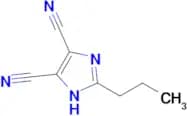
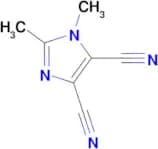
CAS :Formule :C18H17NODegré de pureté :97.0%Masse moléculaire :263.341,2-DIMETHYL-1H-IMIDAZOLE-4,5-DICARBONITRILE
CAS :Formule :C7H6N4Degré de pureté :95.0%Masse moléculaire :146.1535-CHLORO-1H-PYRROLO[3,2-B]PYRIDINE-2-CARBONITRILE
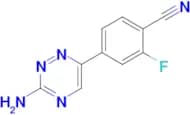
CAS :Formule :C8H4ClN3Degré de pureté :97%Masse moléculaire :177.594-(3-Amino-1,2,4-triazin-6-yl)-2-fluorobenzonitrile
CAS :Formule :C10H6FN5Degré de pureté :96%Masse moléculaire :215.191Ref: 10-F639590
1g481,00€5g1.278,00€10g2.339,00€2.5g803,00€50mg127,00€100mg183,00€250mg260,00€500mg377,00€2-Chloro-3-methylbenzonitrile
CAS :Formule :C8H6ClNDegré de pureté :97%Couleur et forme :SolidMasse moléculaire :151.59




![5-Oxo-4,5-dihydropyrazolo[1,5-a]pyrimidine-3-carbonitrile](/_next/image/?url=https%3A%2Fstatic.cymitquimica.com%2Fproducts%2F10%2Fthumb-webp%2FF979826.webp&w=3840&q=75)







![2-[1,2,4]Triazol-1-yl-benzylamine](/_next/image/?url=https%3A%2Fstatic.cymitquimica.com%2Fproducts%2F3D%2Fthumb-webp%2FFT50933.webp&w=3840&q=75)




![4-[2-(Trifluoromethyl)phenyl]oxane-4-carbonitrile](/_next/image/?url=https%3A%2Fstatic.cymitquimica.com%2Fproducts%2F10%2Fthumb-webp%2FF214464.webp&w=3840&q=75)




![2-[(2-Chlorophenyl)sulfanyl]acetonitrile](/_next/image/?url=https%3A%2Fstatic.cymitquimica.com%2Fproducts%2F10%2Fthumb-webp%2FF097737.webp&w=3840&q=75)





![7-CYANO-IMIDAZO[1,2-A]PYRIDINE-2-CARBOXYLIC ACID ETHYL ESTER](/_next/image/?url=https%3A%2Fstatic.cymitquimica.com%2Fproducts%2F10%2Fthumb-webp%2FF538113.webp&w=3840&q=75)

![4-[(Oxetan-3-ylamino)methyl]benzonitrile](/_next/image/?url=https%3A%2Fstatic.cymitquimica.com%2Fproducts%2F10%2Fthumb-webp%2FF214445.webp&w=3840&q=75)
![N-(3-Cyano-4,5,6,7-tetrahydrobenzo[b]thiophen-2-yl)propionamide](/_next/image/?url=https%3A%2Fstatic.cymitquimica.com%2Fproducts%2F10%2Fthumb-webp%2FF464071.webp&w=3840&q=75)


![2-Oxo-2H-pyrrolo[2,3-b]pyridine-6-carbonitrile](/_next/image/?url=https%3A%2Fstatic.cymitquimica.com%2Fproducts%2F10%2Fthumb-webp%2FF457874.webp&w=3840&q=75)
![3-Formylpyrazolo[1,5-a]pyridine-5-carbonitrile](/_next/image/?url=https%3A%2Fstatic.cymitquimica.com%2Fproducts%2F10%2Fthumb-webp%2FF454769.webp&w=3840&q=75)





![5-CHLORO-1H-PYRROLO[3,2-B]PYRIDINE-2-CARBONITRILE](/_next/image/?url=https%3A%2Fstatic.cymitquimica.com%2Fproducts%2F10%2Fthumb-webp%2FF504667.webp&w=3840&q=75)
![Pyrazolo[1,5-a]pyridine-3-carbonitrile](/_next/image/?url=https%3A%2Fstatic.cymitquimica.com%2Fproducts%2F10%2Fthumb-webp%2FF639590.webp&w=3840&q=75)