Cyano-, Nitrile-
Les composés cyano et nitrile sont des molécules organiques contenant des groupes cyano (C≡N) ou nitrile dans leur structure, caractérisées par la présence d'azote. Ces groupes jouent des rôles importants dans diverses réactions chimiques et applications industrielles. Dans cette catégorie, vous trouverez une large gamme de composés cyano et nitrile, allant de structures simples à complexes. Chez CymitQuimica, nous proposons des composés cyano et nitrile de haute qualité adaptés pour répondre aux besoins de la recherche et de l'industrie. Nos composés sont adaptés à une variété d'applications de synthèse et d'analyse.
9674 produits trouvés pour "Cyano-, Nitrile-"
Trier par
Degré de pureté (%)
0
100
|
0
|
50
|
90
|
95
|
100
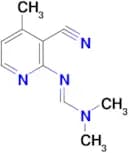
N'-(3-cyano-4-methylpyridin-2-yl)-N,N-dimethylimidoformamide
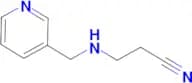
CAS :Masse moléculaire :188.233993530273443-(3-Pyridylmethylamino)propionitrile
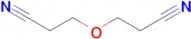
CAS :Degré de pureté :95.0%Masse moléculaire :161.20799255371094Bis(2-cyanoethyl) Ether
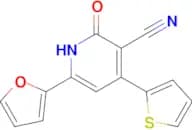
CAS :Degré de pureté :98.0%Couleur et forme :LiquidMasse moléculaire :124.142997741699226-(Furan-2-yl)-2-oxo-4-(thiophen-2-yl)-1,2-dihydropyridine-3-carbonitrile
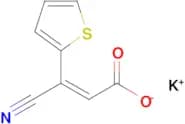
CAS :Degré de pureté :95.0%Masse moléculaire :268.2900085449219Potassium (Z)-3-cyano-3-(thiophen-2-yl)acrylate
CAS :Degré de pureté :97.0%Masse moléculaire :217.27999877929688Bicyclo[4.2.0]octa-1,3,5-triene-7-carbonitrile
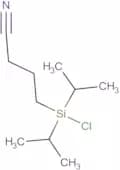
CAS :Degré de pureté :97.0%Masse moléculaire :129.162002563476563-Cyanopropyldiisopropylchlorosilane
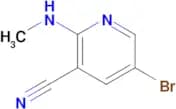
CAS :Couleur et forme :LiquidMasse moléculaire :217.809997558593755-Bromo-2-(methylamino)nicotinonitrile
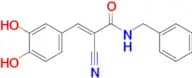
CAS :Degré de pureté :95.0%Couleur et forme :SolidMasse moléculaire :212.0500030517578N-Benzyl-2-cyano-3-(3,4-dihydroxyphenyl)acrylamide
CAS :Degré de pureté :99.0%Masse moléculaire :294.309997558593752-[4-(Trifluoromethoxy)phenoxy]isonicotinonitrile
CAS :Degré de pureté :97.0%Masse moléculaire :280.205993652343753-Iodoimidazo[1,2-a]pyridine-6-carbonitrile
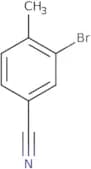
CAS :Degré de pureté :95.0%Masse moléculaire :269.04501342773442-Bromo-4-cyanotoluene
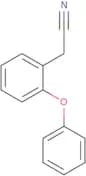
CAS :<p>2-Bromo-4-cyanotoluene is a ligand that is used in cross-coupling reactions. It is used to form complexes with metals, such as palladium and nickel, for the preparation of organometallic reagents. 2-Bromo-4-cyanotoluene has been shown to inhibit secretory phospholipase A2 (sPLA2) and PLA2 activity in a fluorimetric assay. This compound also inhibits the catalytic activity of spla2, which is an enzyme involved in the biosynthesis of arachidonic acid. 2-Bromo-4-cyanotoluene also inhibits piperazine synthesis by reacting with the nitrogen atom on the piperazine ring.</p>Formule :C8H6BrNDegré de pureté :Min. 95%Masse moléculaire :196.04 g/mol2-Phenoxyphenylacetonitrile
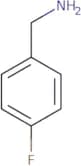
CAS :<p>2-Phenoxyphenylacetonitrile is a pyrethroid n-oxide that is chemically related to other insecticides that are used in agriculture and against insects such as mosquitoes. 2-Phenoxyphenylacetonitrile is a synthetic compound that has been shown to have an optimum pH of 5.5, which makes it difficult to dissolve in water. The compound's high stability at low pH levels means that it can be used in acidic environments. It also has been shown to have strong activity against human serum and food composition, with no detectable activity against bacteria or fungi.</p>Formule :C14H11NODegré de pureté :Min. 95%Couleur et forme :Clear LiquidMasse moléculaire :209.24 g/mol4-Fluorobenzylamine
CAS :<p>4-Fluorobenzylamine is a chemical compound with the molecular formula CHF. It has been shown to radiosensitize tumor cells by inhibiting the synthesis of cyclin D2, which is required for cell proliferation. 4-Fluorobenzylamine can also be used in asymmetric synthesis reactions such as nitration and trifluoroacetic acid hydrolysis. 4-Fluorobenzylamine has been shown to have synergistic effects on cells when paired with flupirtine or maleate. This synergistic effect is primarily due to its ability to inhibit DNA repair, which leads to cell death through apoptosis or necrosis.</p>Formule :C7H8FNDegré de pureté :Min. 98 Area-%Couleur et forme :Colourless To Pale Yellow LiquidMasse moléculaire :125.14 g/mol(3R,5R)-6-Cyano-3,5-dihydroxy-hexanoic acid tert-butyl ester
CAS :<p>(3R,5R)-6-Cyano-3,5-dihydroxy-hexanoic acid tert-butyl ester is a building block for organic synthesis. It is a versatile intermediate that can be used in the preparation of pharmaceuticals and other organic compounds. The compound is also used as a reagent to study the biological activity of other compounds. CAS No. 125971-93-9 is a fine chemical that has been shown to have high quality and purity.</p>Formule :C11H19NO4Degré de pureté :Min. 98 Area-%Couleur et forme :Yellow PowderMasse moléculaire :229.27 g/molRef: 3D-FC20614
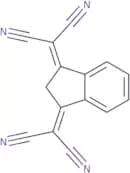
Produit arrêté1,3-Bis(dicyanomethylidene)indan
CAS :<p>1,3-Bis(dicyanomethylidene)indan is a supramolecular dye that has been shown to form complexes with a variety of acceptors. The interaction between the dye and the acceptor is determined by the dipole moment, polarity, and electron affinity of the two molecules. 1,3-Bis(dicyanomethylidene)indan has been shown to interact with viologen and anion donors as well as organic dyes such as methylene blue. 1,3-Bis(dicyanomethylidene)indan has also been used in optical devices such as light emitting diodes (LEDs).</p>Formule :C15H6N4Degré de pureté :Min. 95%Couleur et forme :PowderMasse moléculaire :242.24 g/mol2-Chloro-N-(4-(cyanomethyl)phenyl)propanamide
<p>Please enquire for more information about 2-Chloro-N-(4-(cyanomethyl)phenyl)propanamide including the price, delivery time and more detailed product information at the technical inquiry form on this page</p>Degré de pureté :Min. 95%(4-Fluoro-3-Nitrophenyl)Acetonitrile
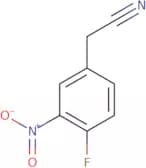
CAS :<p>4-Fluoro-3-nitrophenylacetonitrile is a monomer that can be synthesised from the reaction of carbamic acid and diphenyl ether. It is chiral, stereoselective and nucleophilic. 4-Fluoro-3-nitrophenylacetonitrile can also be synthesised by reacting fluoroacetamide with sodium cyanide in water, forming the corresponding amide, which reacts with acetonitrile to form the nitro compound. The anti-cancer properties of 4-fluoro-3 nitrophenylacetonitrile have been studied in vitro and in vivo. This substance has been shown to inhibit growth of cancer cells and induce apoptosis. In addition, this substance has been used as a synthetic strategy for dihydroisoquinolines, which are important for their anti-cancer properties.</p>Formule :C8H5FN2O2Degré de pureté :Min. 95%Masse moléculaire :180.14 g/molN-Allyl-n-(2-chloro-5-cyanophenyl)acetamide
CAS :<p>N-Allyl-n-(2-chloro-5-cyanophenyl)acetamide is a fine chemical that is used as a building block in the synthesis of other compounds. It is also used in research and as a reagent or speciality chemical. N-Allyl-n-(2-chloro-5-cyanophenyl)acetamide has been shown to be an excellent intermediate for complex organic reactions, such as coupling reactions with amines, alcohols, and thiols. In addition, this compound can be used to form new scaffolds for biological studies.</p>Formule :C12H11ClN2ODegré de pureté :Min. 95%Couleur et forme :PowderMasse moléculaire :234.68 g/mol

![Bicyclo[4.2.0]octa-1,3,5-triene-7-carbonitrile](/_next/image/?url=https%3A%2Fstatic.cymitquimica.com%2Fproducts%2F10%2Fthumb-webp%2FF069104.webp&w=3840&q=75)
![2-[4-(Trifluoromethoxy)phenoxy]isonicotinonitrile](/_next/image/?url=https%3A%2Fstatic.cymitquimica.com%2Fproducts%2F10%2Fthumb-webp%2FF403465.webp&w=3840&q=75)
![3-[(4-methylpiperidin-1-yl)methyl]benzonitrile](/_next/image/?url=https%3A%2Fstatic.cymitquimica.com%2Fproducts%2F10%2Fthumb-webp%2FF542431.webp&w=3840&q=75)
![3-Iodoimidazo[1,2-a]pyridine-6-carbonitrile](/_next/image/?url=https%3A%2Fstatic.cymitquimica.com%2Fproducts%2F10%2Fthumb-webp%2FF457188.webp&w=3840&q=75)