Cyano-, Nitrile-
9675 produits trouvés pour "Cyano-, Nitrile-"
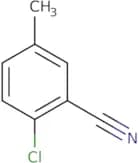
2-Chloro-5-methylbenzonitrile
CAS :2-Chloro-5-methylbenzonitrile (2C5MB) is a versatile building block that is used in the production of fine chemicals, specialty chemicals, and pharmaceuticals. It is also used as a reagent for organic synthesis and as a speciality chemical. 2C5MB can be used in the synthesis of various complex compounds and research chemicals. The compound has been shown to have high reactivity and has been used as a reaction component or scaffold for the synthesis of other products.
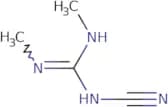
Formule :C8H6ClNDegré de pureté :Min. 95%Couleur et forme :PowderMasse moléculaire :151.59 g/molN-Cyano-N',N''-dimethylguanidine
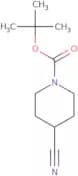
CAS :N-Cyano-N',N''-dimethylguanidine is a clinical drug that has been shown to have a detectable concentration in the serum of humans. The drug is metabolized by nitrite ion, maleate, and potassium phosphate to form reaction products. N-Cyano-N',N''-dimethylguanidine binds to h2 receptors and inhibits the activity of cytochrome p450 enzymes. This inhibition can lead to carcinogenic activity. N-Cyano-N',N''-dimethylguanidine is an analog of methylene blue, which inhibits the synthesis of rna in bacteria and is used as a therapeutic agent for malaria.Formule :C4H8N4Degré de pureté :Min. 95%Couleur et forme :White PowderMasse moléculaire :112.14 g/molN-Boc-4-cyanopiperidine
CAS :N-Boc-4-cyanopiperidine is a synthetic compound that has been used as a competitive inhibitor in the study of biochemistry and neurochemistry. It has been shown to inhibit ligand binding to calcium channels, which are proteins that regulate the flow of calcium ions into cells. N-Boc-4-cyanopiperidine also inhibits the production of prostaglandins, which are chemicals that promote inflammation. This drug has been investigated for its possible use in treating neuropathic pain, since it inhibits voltage-gated sodium channels and potassium channels.
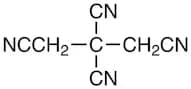
Formule :C11H18N2O2Degré de pureté :Min. 95%Couleur et forme :PowderMasse moléculaire :210.27 g/mol1,2,2,3-Propanetetracarbonitrile
CAS :Formule :C7H4N4Degré de pureté :>96.0%(GC)Couleur et forme :White to Light yellow to Light orange powder to crystalMasse moléculaire :144.145-Cyanophthalide
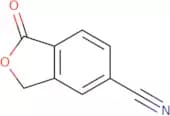
CAS :5-Cyanophthalide is an inorganic acid that is a white solid. It has a molecular weight of 114.07 g/mol and a melting point of -43 degrees Celsius. 5-Cyanophthalide can be synthesized by reacting 5-carboxyphthalide with chlorine gas in the presence of an inert solvent and heat. The product is then purified by crystallization or recrystallization. The biological properties of 5-cyanophthalide are unknown, but it has been shown to have amide and chloride groups on either side of the molecule's carbon backbone. Mass spectrometry reveals that this compound exists as an enantiomer, meaning that it exists as two mirror images that are not superimposable on each other. This means there are two different forms: one left-handed and one right-handed form.
Formule :C9H5NO2Degré de pureté :Min. 95%Couleur et forme :PowderMasse moléculaire :159.14 g/mol4-Cyano-3,5-difluorophenol
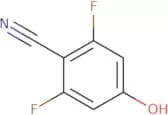
CAS :4-Cyano-3,5-difluorophenol (4CF) is a mesomorphic compound that has a number of reactions with chloride. 4CF is synthesized from 3,5-difluoroaniline and the reaction product is then heated with chlorine to produce 4CF. The optimal reaction temperature is between 100°C and 120°C. When exposed to light, 4CF will react with chloride ions in the presence of heat to form a hydrophobic chlorinated product. This product reacts with proton donors such as NaOH or KOH to produce hydrogen gas. At room temperature, 4CF can be used as a gas sensor.Formule :C7H3F2NODegré de pureté :Min. 95 Area-%Masse moléculaire :155.1 g/mol3-Cyano-2-hydroxypyridine
CAS :3-Cyano-2-hydroxypyridine is an inhibitor of the noradrenaline transporter, which is a type of l-type calcium channel. 3-Cyano-2-hydroxypyridine has been shown to be a potent inhibitor of the noradrenaline transporter. It inhibits the binding of neurotransmitters to their receptors by blocking active methylene sites on the transporter molecule. This drug also has a cavity that can accommodate bulky inhibitor molecules, making it more difficult for these inhibitors to bind to the active site and compete with neurotransmitters for uptake. 3Cyano-2-hydroxypyridine also inhibits nitric oxide synthase, which may provide anti-tumor activity as well as inhibit tumor cell growth. The inhibitory effect of this drug is due to structural studies that have revealed hydrogen bonding interactions with the drug's nitrogen and oxygen atoms.
Formule :C6H4N2ODegré de pureté :Min. 95%Couleur et forme :Yellow To Brown SolidMasse moléculaire :120.11 g/mol3,5-Dibromo-4-hydroxybenzylamine hydrochloride
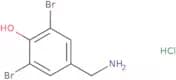
CAS :3,5-Dibromo-4-hydroxybenzylamine hydrochloride is a high quality reagent that can be used as an intermediate in the production of fine chemicals and speciality chemicals. It is also a versatile building block for the synthesis of complex compounds. 3,5-Dibromo-4-hydroxybenzylamine hydrochloride has been shown to be useful in research due to its ability to react with other compounds in a variety of ways. The CAS number for this compound is 1134950-89-2.Formule :C7H8Br2ClNODegré de pureté :Min. 95%Couleur et forme :PowderMasse moléculaire :317.41 g/mol2-Cyanoethyltriethoxysilane
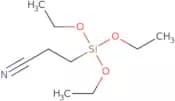
CAS :2-Cyanoethyltriethoxysilane is a cross-linking agent that is used in coatings and adhesives. It has been shown to have an adsorption mechanism that is dependent on the pH of the solution, with a maximum adsorption at pH 3.2 and a minimum at pH 11. The rate of adsorption is also dependent on the concentration of 2-cyanoethyltriethoxysilane, with higher concentrations leading to faster adsorption rates. Kinetic data for 2-cyanoethyltriethoxysilane has been shown using gravimetric analysis to show that it has an adsorption rate constant of 1.0 × 10^4 s^(-1) at pH 3.2 and 6.5 × 10^4 s^(-1) at pH 11, which are independent of the concentration of this molecule in solution. Pluronic P123 was used as a model polymer
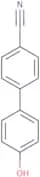
Formule :C9H19NO3SiDegré de pureté :Min. 97 Area-%Couleur et forme :PowderMasse moléculaire :217.34 g/mol4-Cyano-4'-hydroxybiphenyl
CAS :4-Cyano-4'-hydroxybiphenyl is a phenolic compound that belongs to the family of compounds known as polycyclic aromatic hydrocarbons. It has been shown to bind to a variety of receptors and is used in sample pretreatment for assays. 4-Cyano-4'-hydroxybiphenyl also has a number of uses in polymerization reactions, including cationic polymerization, which involves the reaction of an electron donor with an electrophile. The electron donor is typically a Lewis acid, such as trifluoroacetic acid or formyl chloride. 4-Cyano-4'-hydroxybiphenyl can be used as an amide coupling agent, which involves the reaction of an amine with another organic compound to form an amide bond. It also reacts with chlorine gas in iodination reactions to produce hypochlorous acid.
Formule :C13H9NODegré de pureté :Min. 96.5 Area-%Couleur et forme :PowderMasse moléculaire :195.22 g/mol2-Nitrobenzylamine hydrochloride
CAS :2-Nitrobenzylamine hydrochloride is a compound that has been shown to have cancer-fighting properties. It inhibits the synthesis of proteins necessary for the proliferation of cancer cells, but it does not affect the synthesis of proteins in healthy cells. This drug is used to diagnose and treat certain types of cancers, such as lymphoma and leukemia. 2-Nitrobenzylamine hydrochloride can be modified by genetic engineering techniques to specifically target cancer cells, which may help with the treatment of other types of diseases in the future. It is believed that this drug will be useful for treating cancers that are resistant to chemotherapy or radiation therapy, as well as those that are caused by mutations in DNA.
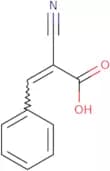
Formule :C7H9ClN2O2Degré de pureté :Min. 95%Couleur et forme :PowderMasse moléculaire :188.61 g/mola-Cyanocinnamic acid
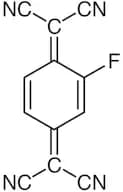
CAS :a-Cyanocinnamic acid is a 3-hydroxycinnamic acid that can be found in coffee. It has been shown to inhibit the growth of colorectal adenocarcinoma cells and other cancer cells by binding to an inhibitor site on fatty acid synthesis enzymes, such as pyruvate carboxylase, hydroxylase, and acetyl-CoA carboxylase. This inhibition leads to decreased levels of fatty acids and increased levels of pyruvate and hydrogen peroxide, which inhibits cell proliferation. In addition, a-cyanocinnamic acid has been shown to have a hypoxic tumor selectivity index of 10.7%, which means it selectively targets tumors with low oxygen levels.Formule :C10H7NO2Degré de pureté :Min. 95%Couleur et forme :White PowderMasse moléculaire :173.17 g/mol2-Fluoro-7,7,8,8-tetracyanoquinodimethane
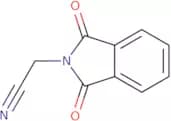
CAS :Formule :C12H3FN4Degré de pureté :>98.0%(N)Couleur et forme :Light yellow to Brown powder to crystalMasse moléculaire :222.18(1,3-Dioxo-1,3-dihydro-2H-isoindol-2-yl)acetonitrile
CAS :Acetonitrile is a colorless liquid that is miscible with water and most organic solvents. It is mainly used as a solvent for chemical reactions, including the synthesis of pharmaceuticals. Acetonitrile has been shown to be mutagenic in vitro and in vivo. Acetonitrile was found to induce micronuclei formation, which may be due to its ability to form reactive oxygen species or cause DNA damage by forming adducts with DNA bases. Acetonitrile also induced chromosomal aberrations and micronucleated polychromatic erythrocytes in mice, as well as increased reticulocytes (immature red blood cells) in humans. The dihedral angle between the nitrate group and the benzyl group has been found to be 163°, while the average frequency of acetonitrile is 164 Hz.Formule :C10H6N2O2Degré de pureté :Min. 95%Couleur et forme :PowderMasse moléculaire :186.17 g/mol3,4-Difluorophenylacetonitrile
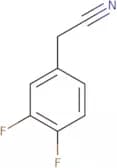
CAS :3,4-Difluorophenylacetonitrile is a fine chemical that is used as a reagent for the synthesis of complex compounds. It can be used as a useful intermediate for the production of fine chemicals and speciality chemicals. 3,4-Difluorophenylacetonitrile has been shown to be useful in the synthesis of versatile building blocks, which are reaction components that can be used in many different reactions. This compound has also been shown to be an excellent scaffold for the development of new drugs that target cancer cells.Formule :C8H5F2NDegré de pureté :Min. 95%Couleur et forme :Clear LiquidMasse moléculaire :153.13 g/mol1,3-Bis(dicyanomethylidene)indan
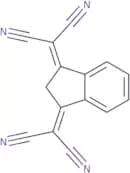
CAS :1,3-Bis(dicyanomethylidene)indan is a supramolecular dye that has been shown to form complexes with a variety of acceptors. The interaction between the dye and the acceptor is determined by the dipole moment, polarity, and electron affinity of the two molecules. 1,3-Bis(dicyanomethylidene)indan has been shown to interact with viologen and anion donors as well as organic dyes such as methylene blue. 1,3-Bis(dicyanomethylidene)indan has also been used in optical devices such as light emitting diodes (LEDs).
Formule :C15H6N4Degré de pureté :Min. 95%Couleur et forme :PowderMasse moléculaire :242.24 g/molN-(4-Cyano-2-chlorophenyl)acetamide
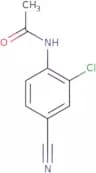
CAS :N-(4-Cyano-2-chlorophenyl)acetamide is a versatile building block that is used in the synthesis of complex compounds. N-(4-Cyano-2-chlorophenyl)acetamide has been shown to be a useful intermediate in the synthesis of important compounds such as 4-aminoantipyrine, 4,5-dichloroanthranilic acid and 2,6-dichloropurine. This chemical has also been found to be an effective reagent for the preparation of other chemicals.Formule :C9H7ClN2ODegré de pureté :Min. 95%Masse moléculaire :194.62 g/mol3-Bromobenzylamine
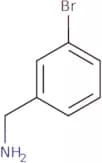
CAS :3-Bromobenzylamine is a chemical compound that belongs to the class of amines. It is used as an intermediate in organic synthesis, and its derivative 3-bromobenzylamine hydrochloride is used in pharmaceuticals as a heart stimulant. 3-Bromobenzylamine can be synthesized by reacting an amine with phosgene and then brominating it. This chemical has been shown to have inhibitory activity against cancer cells and can be used for the treatment of cancer. 3-Bromobenzylamine has also been shown to inhibit the growth of bacteria, fungi, and viruses in vitro. 3-Bromobenzylamine may also be useful for treating psoriasis due to its ability to inhibit prostaglandin synthesis.
Formule :C7H8BrNDegré de pureté :Min. 95%Couleur et forme :Colorless PowderMasse moléculaire :186.04 g/mol3-Cyanomethylbenzoic acid methyl ester
CAS :3-Cyanomethylbenzoic acid methyl ester is a synthetic chemical compound that is used as an intermediate in the production of other chemicals. It is a chlorination agent that reacts with toluene and methanol in the presence of chlorine to produce 3-chloromethylbenzoic acid methyl ester. This reaction also produces a byproduct called sulphone, which can be converted into acylation reagents for use in organic synthesis. The chloride ion can be used for cyanation reactions, which are useful for producing dyes or pharmaceuticals.Formule :C10H9NO2Degré de pureté :Min. 95%Couleur et forme :SolidMasse moléculaire :175.18 g/mol3-Cyanophenylacetone
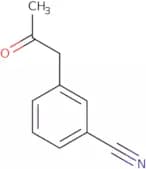
CAS :3-Cyanophenylacetone is a versatile building block and useful intermediate in the synthesis of various pharmaceuticals, agrochemicals, and other chemical products. It can be used as a reagent or speciality chemical. 3-Cyanophenylacetone is also a useful scaffold for the synthesis of complex compounds. This compound is listed on the Chemical Abstracts Service (CAS) registry with the number 73013-50-0.Formule :C10H9NODegré de pureté :Min. 95%Masse moléculaire :159.18 g/mol