Cyano-, Nitrile-
Les composés cyano et nitrile sont des molécules organiques contenant des groupes cyano (C≡N) ou nitrile dans leur structure, caractérisées par la présence d'azote. Ces groupes jouent des rôles importants dans diverses réactions chimiques et applications industrielles. Dans cette catégorie, vous trouverez une large gamme de composés cyano et nitrile, allant de structures simples à complexes. Chez CymitQuimica, nous proposons des composés cyano et nitrile de haute qualité adaptés pour répondre aux besoins de la recherche et de l'industrie. Nos composés sont adaptés à une variété d'applications de synthèse et d'analyse.
9674 produits trouvés pour "Cyano-, Nitrile-"
Trier par
Degré de pureté (%)
0
100
|
0
|
50
|
90
|
95
|
100
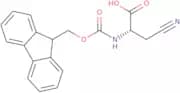
Fmoc-b-cyano-L-alanine
CAS :Please enquire for more information about Fmoc-b-cyano-L-alanine including the price, delivery time and more detailed product information at the technical inquiry form on this pageFormule :C19H16N2O4Degré de pureté :Min. 95%Masse moléculaire :336.34 g/molN-(4-Chlorophenyl)-2-cyanoacetamide
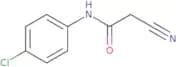
CAS :<p>N-(4-Chlorophenyl)-2-cyanoacetamide is a pyridine compound that can be synthesized from chloroacetonitrile and acetamide. It has been shown to react with an active methylene group in benzene or pyridine to produce a heterocycle. This reaction is reversible and can be used as a preparative method for the synthesis of heterocycles. The 1,3-dipolar cycloaddition of N-(4-chlorophenyl)-2-cyanoacetamide with nitro groups in nitrobenzene produces the corresponding 2-nitropyridines, which are important intermediates in the synthesis of other heterocycles. N-(4-Chlorophenyl)-2-cyanoacetamide has been used as an efficient method for the preparation of nitrogen nucleophiles that are useful for catalysis.</p>Formule :C9H7ClN2ODegré de pureté :Min. 95%Masse moléculaire :194.62 g/mol3,5-Bis(trifluoromethyl)phenylacetonitrile
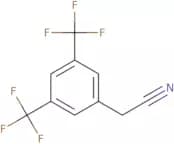
CAS :<p>3,5-Bis(trifluoromethyl)phenylacetonitrile (3,5-BTFAPN) is a compound that has anticancer activity. It can be used to treat cancer by inhibiting the growth of cancer cells. 3,5-BTFAPN has been shown to be effective against some human cancer cell lines in vitro and in vivo. The drug was found to have cytotoxic effects by inducing apoptosis through changes in mitochondrial membrane potential and cytochrome c release. 3,5-BTFAPN also binds to DNA and forms adducts with guanine residues, which may explain its anticancer activity.</p>Formule :C10H5F6NDegré de pureté :Min. 98 Area-%Couleur et forme :Colorless Yellow Clear LiquidMasse moléculaire :253.14 g/mol[4-(1-Cyano-1-methylethyl)phenyl]boronic acid
CAS :<p>Please enquire for more information about [4-(1-Cyano-1-methylethyl)phenyl]boronic acid including the price, delivery time and more detailed product information at the technical inquiry form on this page</p>Formule :C10H12BNO2Degré de pureté :Min. 95%Masse moléculaire :189.02 g/molp-(Methylthio)phenylacetonitrile
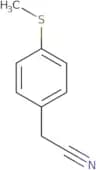
CAS :<p>p-(Methylthio)phenylacetonitrile (p-MTPA) is a synthetic analgesic that belongs to the group of benzyl derivatives. It has analgesic, antiinflammatory and antipyretic properties. p-MTPA is used in organic synthesis as a hydrolysis reagent for benzyl halides. The drug has been shown to be an inhibitor of cyclooxygenase-2 (COX-2) and exerts its effects by decreasing prostaglandin production. P-MTPA is also decarboxylated to produce benzoic acid and phenylacetic acid, which have acidic properties.</p>Formule :C9H9NSDegré de pureté :Min. 95%Masse moléculaire :163.24 g/mol1-Boc-5-Cyano-3-hydroxymethylindole
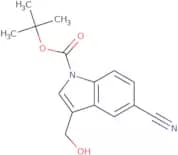
CAS :<p>Please enquire for more information about 1-Boc-5-Cyano-3-hydroxymethylindole including the price, delivery time and more detailed product information at the technical inquiry form on this page</p>Formule :C15H16N2O3Degré de pureté :Min. 95%Masse moléculaire :272.3 g/molEthyl 2,3-dicyanopropionate
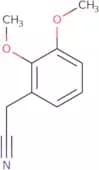
CAS :<p>Ethyl 2,3-dicyanopropionate is a white crystalline solid that is soluble in organic solvents. It has the molecular formula CHClNOS and the molecular weight of 138.1 g/mol. This compound has a melting point of 92 °C and can be purchased as a mixture of cis and trans isomers. The cis form melts at 93 °C and the trans form melts at 88 °C. Ethyl 2,3-dicyanopropionate is synthesized from chlorobenzene by dehydrating it with hydrochloric acid in an organic solvent. It can also be prepared by reacting ethyl cyanoacetate with ammonia in an inert atmosphere. Impurities may include chloride, sulfoxide, or imine.</p>Formule :C7H8N2O2Degré de pureté :Min. 95%Masse moléculaire :152.15 g/mol2,3-(Dimethoxyphenyl)acetonitrile
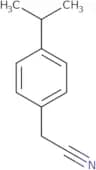
CAS :<p>2,3-(Dimethoxyphenyl)acetonitrile is a chemical intermediate that is used in the synthesis of pharmaceuticals and specialty chemicals. It can be used as a reaction component and reagent for the synthesis of other chemicals. This compound has a high quality and is also a versatile building block for complex compounds. 2,3-(Dimethoxyphenyl)acetonitrile has been shown to be useful in the production of fine chemicals such as pharmaceuticals, agrochemicals, and dyes. The CAS number for this compound is 4468-57-9.</p>Formule :C10H11NO2Degré de pureté :Min. 95%Masse moléculaire :177.2 g/mol4-Isopropylphenylacetonitrile
CAS :<p>4-Isopropylphenylacetonitrile is a nicotinic receptor agonist. It has high affinity for the nicotinic acid receptor, and potentiates the response to other nicotinic receptor agonists. 4-Isopropylphenylacetonitrile was discovered by screening for acid binding compounds and allosteric potentiators of the nicotinic acid receptor. This compound binds to the ion channel in the central nervous system, which leads to increased neuronal excitability and decreased pain sensation. 4-Isopropylphenylacetonitrile also displays antiinflammatory properties due to its ability to inhibit prostaglandin synthesis.</p>Formule :C11H13NDegré de pureté :Min. 95%Masse moléculaire :159.23 g/molN-Allyl-n-(2-chloro-5-cyanophenyl)acetamide
CAS :<p>N-Allyl-n-(2-chloro-5-cyanophenyl)acetamide is a fine chemical that is used as a building block in the synthesis of other compounds. It is also used in research and as a reagent or speciality chemical. N-Allyl-n-(2-chloro-5-cyanophenyl)acetamide has been shown to be an excellent intermediate for complex organic reactions, such as coupling reactions with amines, alcohols, and thiols. In addition, this compound can be used to form new scaffolds for biological studies.</p>Formule :C12H11ClN2ODegré de pureté :Min. 95%Couleur et forme :PowderMasse moléculaire :234.68 g/mol2-[4-(2-Cyanoethylthio)methyl]thiazolyl guanidine
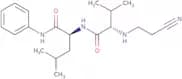
CAS :<p>2-[4-(2-Cyanoethylthio)methyl]thiazolyl guanidine (HCTZ) is a histamine H2 receptor antagonist that belongs to the class of synthetic compounds. It is an effective anti-histamine and has been shown to inhibit acid secretion in the stomach in response to histamine. HCTZ also inhibits the release of gastric acid by blocking the action of histamine on the H2 receptor of parietal cells, which are located in the lining of the stomach. This drug is also used for treating reflux esophagitis and gastroesophageal reflux disease. Other uses include as a proton pump inhibitor for treatment of peptic ulcers, and as an adjunct therapy for ulcerative colitis. The following product details are about a company that sells organic food products:</p>Formule :C8H11N5S2Degré de pureté :Min. 98 Area-%Couleur et forme :White PowderMasse moléculaire :241.34 g/molN-2-Cyanoethyl-Val-Leu-anilide
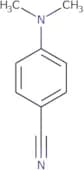
CAS :Please enquire for more information about N-2-Cyanoethyl-Val-Leu-anilide including the price, delivery time and more detailed product information at the technical inquiry form on this pageFormule :C20H30N4O2Degré de pureté :Min. 95%Masse moléculaire :358.48 g/mol1-Cyano-4-(dimethylamino)benzene
CAS :<p>1-Cyano-4-(dimethylamino)benzene is a molecule that has been shown to inhibit the growth of hamster v79 cells. It also inhibits the synthesis of DNA and RNA. The binding constants for this molecule have been determined to be 1.0 x 10^9 M^-1, with an n-octanol/water partition coefficient (log P) of 5.5. This molecule is soluble in nonpolar solvents and may be used as a model system for hydrogen bonding interactions or reaction mechanisms in organic chemistry. This compound contains a deuterium isotope and can be used to study the effects of hydrogen bonding on reactions in organic chemistry at high temperatures, with the use of preparative hplc.</p>Formule :C9H10N2Degré de pureté :Min. 95%Couleur et forme :Beige PowderMasse moléculaire :146.19 g/mol3-Cyano-2-methylphenylboronic acid
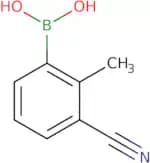
CAS :<p>3-Cyano-2-methylphenylboronic acid is a high quality compound that can be used as a reagent, intermediate, or building block in the synthesis of complex compounds. This chemical is also useful as a speciality chemical and research chemical. 3-Cyano-2-methylphenylboronic acid has versatile uses in organic synthesis due to its versatility in reactions and building blocks.</p>Formule :C8H8BNO2Degré de pureté :Min. 95%Couleur et forme :PowderMasse moléculaire :160.97 g/mol4-Biphenylacetonitrile
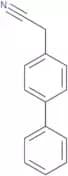
CAS :<p>Biphenylacetonitrile is an organic compound that belongs to the group of reactive functional groups and is used as a reagent in organic synthesis. It has been shown to inhibit the growth of cancer cells, likely due to its ability to react with sulfamates. Biphenylacetonitrile inhibits the production of the inflammatory mediator nitric oxide by reacting with trifluoroacetic acid, which may be useful for treating inflammatory diseases such as endometriosis. This drug also has an inhibitory effect on fatty acid metabolism and can thus be used for treating diabetes patients.</p>Formule :C14H11NDegré de pureté :Min. 95%Masse moléculaire :193.24 g/mol2,2'-(Perchloro-1,2-phenylene)diacetonitrile
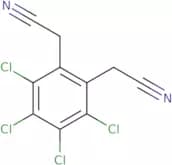
CAS :<p>Please enquire for more information about 2,2'-(Perchloro-1,2-phenylene)diacetonitrile including the price, delivery time and more detailed product information at the technical inquiry form on this page</p>Formule :C10H4Cl4N2Degré de pureté :Min. 95%Masse moléculaire :293.96 g/molEthyl-2-ethoxy-1-[[(2'-cyanobiphenyl-4-yl) methyl] benzimidazole-7-carboxylate
CAS :<p>Candesartan is a selective angiotensin II receptor antagonist that inhibits the binding of angiotensin II to its receptors, which in turn decreases the activity of angiotensin-converting enzyme. Candesartan cilexetil is an ester prodrug that has been shown to be effective in the treatment of high blood pressure. In the crystalline form, candesartan cilexetil is a white powder with a melting point of 130–135 °C and a solubility in water of >1 g/L. The molecular weight of candesartan cilexetil is 393.8 g/mol and it has a molecular formula C17H21NO2S. The chemical structure consists of two benzimidazole rings coupled together through an ethyl-2-ethoxy linker and attached to a carboxylate group on one end and an amide group on the other</p>Formule :C26H23N3O3Degré de pureté :Min. 95%Masse moléculaire :425.48 g/mol1,6-Bis(cyano-guanidino)hexane
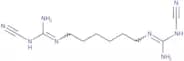
CAS :<p>1,6-Bis(cyano-guanidino)hexane is a bactericidal agent that can be used to remove bacteria from water. The compound has been shown to have a bactericidal activity against Gram-positive and Gram-negative bacteria in concentrations of 100 mg/L and 200 mg/L, respectively. 1,6-Bis(cyano-guanidino)hexane has also been shown to be effective against industrial strains of Bacillus subtilis and Pseudomonas aeruginosa in concentrations of 200 mg/L. This compound is soluble in organic solvents but insoluble in deionized water. It has a viscosity of 30000 cP at 20°C and an anion charge of -1.</p>Formule :C10H18N8Degré de pureté :Min. 95%Couleur et forme :PowderMasse moléculaire :250.3 g/mol2-Cyano-3,4,5,6-tetrachloropyridine
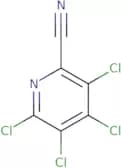
CAS :<p>2-Cyano-3,4,5,6-tetrachloropyridine is a genotoxic compound that is used for the preparation of picolinic acid. It has been shown to induce DNA damage and cytotoxicity in vitro. The reaction products of this compound have also been found to be genotoxic in vitro and in vivo. This chemical has been shown to inhibit the growth of cells in culture as well as cause cell death by releasing hydrogen chloride gas. 2-Cyano-3,4,5,6-tetrachloropyridine is a potent mutagen and carcinogen that can be activated by fluorine or chlorine compounds. This chemical can also form chlorinated derivatives with chlorine. 2-Cyano-3,4,5,6-tetrachloropyridine reacts with phosphorus pentachloride to produce hydrogen chloride gas and other reaction products such as chloride (Cl) or sublimed (P</p>Formule :C6Cl4N2Degré de pureté :Min. 95%Masse moléculaire :241.89 g/mol3-(2-Cyanopropan-2-yl)benzoic acid
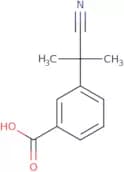
CAS :<p>Please enquire for more information about 3-(2-Cyanopropan-2-yl)benzoic acid including the price, delivery time and more detailed product information at the technical inquiry form on this page</p>Formule :C11H11NO2Degré de pureté :Min. 95%Masse moléculaire :189.21 g/mol

![[4-(1-Cyano-1-methylethyl)phenyl]boronic acid](/_next/image/?url=https%3A%2Fstatic.cymitquimica.com%2Fproducts%2F3D%2Fthumb-webp%2FFC121870.webp&w=3840&q=75)


![2-[4-(2-Cyanoethylthio)methyl]thiazolyl guanidine](/_next/image/?url=https%3A%2Fstatic.cymitquimica.com%2Fproducts%2F3D%2Fthumb-webp%2FFC21486.webp&w=3840&q=75)
![Ethyl-2-ethoxy-1-[[(2'-cyanobiphenyl-4-yl) methyl] benzimidazole-7-carboxylate](/_next/image/?url=https%3A%2Fstatic.cymitquimica.com%2Fproducts%2F3D%2Fthumb-webp%2FFE31863.webp&w=3840&q=75)