Cyano-, Nitrile-
Les composés cyano et nitrile sont des molécules organiques contenant des groupes cyano (C≡N) ou nitrile dans leur structure, caractérisées par la présence d'azote. Ces groupes jouent des rôles importants dans diverses réactions chimiques et applications industrielles. Dans cette catégorie, vous trouverez une large gamme de composés cyano et nitrile, allant de structures simples à complexes. Chez CymitQuimica, nous proposons des composés cyano et nitrile de haute qualité adaptés pour répondre aux besoins de la recherche et de l'industrie. Nos composés sont adaptés à une variété d'applications de synthèse et d'analyse.
9674 produits trouvés pour "Cyano-, Nitrile-"
Trier par
Degré de pureté (%)
0
100
|
0
|
50
|
90
|
95
|
100
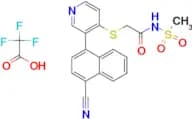
2-((3-(4-Cyanonaphthalen-1-yl)pyridin-4-yl)thio)-N-(methylsulfonyl)acetamide 2,2,2-trifluoroacetate
Degré de pureté :97%Masse moléculaire :511.492-Cyanoacetamide
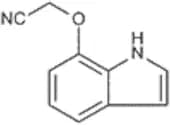
CAS :<p>2-Cyanoacetamide is an organic compound that is used in pharmaceutical preparations. It reacts with malonic acid to form a dioxime, which is a precursor of various drugs. The optimum concentration for the reaction to occur is at 10% (w/v). The reaction mechanism has not been fully elucidated and it involves the transfer of nitrogen from an amide group to a carbonyl group. 2-Cyanoacetamide has shown anti-angiogenic effects in mice by inhibiting the expression of Mcl-1 protein, which is involved in the regulation of apoptosis and inflammation. This drug also has biological functions as a precursor for dopamine, which helps regulate motor and cognitive functions.</p>Formule :C3H4N2ODegré de pureté :Min. 98%Couleur et forme :White Off-White PowderMasse moléculaire :84.08 g/mol7-(Cyanomethoxy)indole
CAS :<p>7-(Cyanomethoxy)indole is a versatile building block that can be used as a scaffold for the synthesis of complex molecules. It has been used as an intermediate in organic synthesis and as a reaction component for the preparation of useful compounds. 7-(Cyanomethoxy)indole is also known to have high quality and is widely used in research laboratories.</p>Formule :C10H8N2ODegré de pureté :Min. 95%Masse moléculaire :172.18 g/molN-Cyanomorpholine
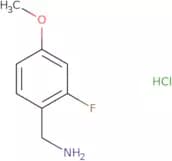
CAS :<p>N-Cyanomorpholine is a synthetic compound that is used as a reagent in organic synthesis. It has been shown to form stable complexes with amines, such as aniline and pyridine. In addition, it can be used in the intramolecular hydrogenation of alkenes, which is catalyzed by palladium on carbon. N-Cyanomorpholine was found to be effective against some viruses, such as herpes simplex virus type 1 and influenza virus type A. It also has been validated for use in the synthesis of dianthus caryophyllus and acrylonitrile.</p>Formule :C5H8N2ODegré de pureté :Min. 95%Masse moléculaire :112.13 g/mol2-Fluoro-4-methoxybenzylamine hydrochloride
CAS :<p>2-Fluoro-4-methoxybenzylamine hydrochloride is a potent inhibitor of polymerase (DNA and RNA). It has been shown to inhibit the growth of human breast cancer cells and to induce apoptosis. 2-Fluoro-4-methoxybenzylamine hydrochloride binds to the polymerase, which blocks synthesis of DNA or RNA. The binding site is located near the active site of the enzyme. This drug also has an insulin-like effect by stimulating IGF-I production and increasing protein synthesis in somatotrophic cells.</p>Formule :C8H11ClFNODegré de pureté :Min. 95%Couleur et forme :PowderMasse moléculaire :191.63 g/molMesitylacetonitrile
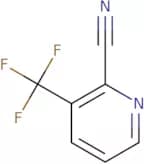
CAS :<p>Mesitylacetonitrile is a mesityl-substituted acetonitrile. It is used in organic synthesis as a Grignard reagent, which is an organometallic compound containing an alkyl or other carbon group bound to magnesium. Mesitylacetonitrile has been shown to react with chlorides to produce furyl chlorides and chloride. Mesitylacetonitrile can be synthesized by reacting phenylacetonitrile (a byproduct of the synthesis of acetone) with chlorine gas and hydrogen in the presence of a catalyst such as copper(II) chloride. This reaction produces mesitylacetonitrile and hydrogen chloride gas as byproducts. The compound has been used to synthesize corticotropin-releasing factor receptor antagonists that have potential therapeutic applications for the treatment of stress-related disorders.</p>Formule :C11H13NDegré de pureté :Min. 95%Couleur et forme :PowderMasse moléculaire :159.23 g/mol2-Cyano-3-trifluoromethylpyridine
CAS :<p>2-Cyano-3-trifluoromethylpyridine is a fine chemical that is used as a versatile building block in the synthesis of complex compounds. It can be used as an intermediate in research chemicals, reaction components, and speciality chemicals. 2-Cyano-3-trifluoromethylpyridine is a high quality reagent that can be used for the synthesis of various derivatives. It is also a useful scaffold for the development of new drugs and other chemical compounds.</p>Formule :C7H3F3N2Degré de pureté :Min. 95%Couleur et forme :liquid.Masse moléculaire :172.11 g/mol2,4,6-Trimethoxybenzonitrile
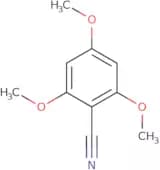
CAS :<p>2,4,6-Trimethoxybenzonitrile is a ligand that forms coordination complexes with metal ions. It can be used to make N-oxide compounds and reaction products with aryl chlorides. The 2,4,6-trimethoxybenzonitrile ligand has been shown to form cross-coupling complexes with benzotriazolyl. This compound is soluble in organic solvents and has a vapor pressure of 0.0025 mm Hg at 25°C. The molecular weight of this compound is 196.2 g/mol and its melting point is 190°C. 2,4,6-Trimethoxybenzonitrile has a symmetric molecule in the gas phase and an asymmetric molecule in solution due to the interactions of hydrogen bonding and van der Waals forces.</p>Formule :C10H11NO3Degré de pureté :Min. 95%Couleur et forme :PowderMasse moléculaire :193.2 g/mol[(4-Methylphenyl)sulfonyl]acetonitrile
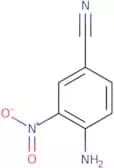
CAS :<p>[(4-Methylphenyl)sulfonyl]acetonitrile is a synthetic compound that has been shown to inhibit the enzyme SHP2. This inhibition leads to decreased proliferation of cells and may be useful in the treatment of degenerative diseases. [(4-Methylphenyl)sulfonyl]acetonitrile is an organic solvent and a nucleophilic reagent that reacts with metal carbonates, such as calcium carbonate, to form carbanions. The carbanion intermediate can react with nucleophiles, such as acetonitrile, to form a new compound that is structurally related to the original starting material.</p>Formule :C9H9SNO2Degré de pureté :Min. 95%Masse moléculaire :195.24 g/mol4-Amino-3-nitrobenzonitrile
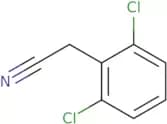
CAS :<p>4-Amino-3-nitrobenzonitrile is an organic compound that is used as a precursor in the synthesis of drugs to treat infectious diseases. 4-Amino-3-nitrobenzonitrile has been shown to have potent activity against Leishmania species, including L. major and L. braziliensis. It binds to sulfoxides by a nitro group and forms a covalent bond with the sulfoxide. This results in the formation of an intramolecular hydrogen bond between the nitro group and the sulfoxide, which prevents it from forming hydrogen bonds with other molecules. Gel permeation chromatography can be used for analytical determination of this drug. 4-Amino-3-nitrobenzonitrile has also been studied using chemosensors and in vivo studies, showing that it can be used to inhibit protozoa such as Giardia lamblia, Entamoeba histolyt</p>Formule :C7H5N3O2Degré de pureté :Min. 98%Couleur et forme :PowderMasse moléculaire :163.13 g/mol2,6-Dichlorophenylacetonitrile
CAS :<p>2,6-Dichlorophenylacetonitrile (2,6-DCPA) is a cyanide herbicide that controls weed growth. 2,6-DCPA is used as a preemergent herbicide and is applied to the soil before planting. It can be mixed with calcium oxide or other materials to form a dust, which is then applied to the soil surface. 2,6-DCPA inhibits plant growth by interfering with the photosynthesis process, which may be due to its high cytotoxicity. The exact mechanism of action has not been determined but it may be due to interference with chloride transport or ethyl esters production in plants. This chemical has also been shown to inhibit amine metabolism in plants and animals.<br>2,6-DCPA has two isomers: cis and trans. They differ only in the position of the chlorine atom on the benzene ring: cis (left) and trans (right).</p>Formule :C8H5Cl2NDegré de pureté :Min. 95%Couleur et forme :White PowderMasse moléculaire :186.04 g/mol4-Aminophenylacetonitrile
CAS :<p>4-Aminophenylacetonitrile is a molecule that is structurally similar to nitrobenzene. 4-Aminophenylacetonitrile has been shown to be an efficient method for inhibiting faecalis growth and secretory phospholipase A2 (sPLA2) activity in vitro. It also inhibits the population growth of E. coli in vivo, which can be attributed to its ability to inhibit the enzyme catalysed by hydrogen bond formation.</p>Formule :C8H8N2Degré de pureté :Min. 95%Couleur et forme :PowderMasse moléculaire :132.16 g/mol3-Methoxy-4-methylbenzonitrile
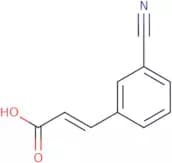
CAS :<p>3-Methoxy-4-methylbenzonitrile is a reagent that is used in the synthesis of complex compounds, such as pharmaceuticals and fine chemicals. It has been shown to be useful as an intermediate for the synthesis of various drugs, including antibiotics. 3-Methoxy-4-methylbenzonitrile has also been shown to be a useful scaffold for the synthesis of new drugs and other chemical compounds. This compound is listed on the Chemical Abstracts Service registry number 3556-60-3.</p>Formule :C9H9NODegré de pureté :Min. 95%Couleur et forme :PowderMasse moléculaire :147.17 g/mol3-Cyanocinnamic acid
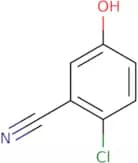
CAS :<p>3-Cyanocinnamic acid is a reactive, unreactive, and stepwise cycloaddition compound. It can participate in photochemical reactions with other compounds to form photodimers. 3-Cyanocinnamic acid has an optimal reaction temperature of 100°C and a reaction time of 5 minutes. The diradical nature of 3-cyanocinnamic acid makes it sensitive to UV light, and the photochemical reactions are simulated by quantum mechanics calculations. Photodimerisation simulations show that 3-cyanocinnamic acid is capable of forming photodimers with 2-cyanocinnamic acid or 4-cyanocinnamic acid at room temperature.</p>Formule :C10H7NO2Degré de pureté :Min. 95%Couleur et forme :PowderMasse moléculaire :173.17 g/mol2-Chloro-5-hydroxybenzonitrile
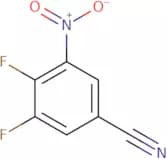
CAS :<p>2-Chloro-5-hydroxybenzonitrile is a versatile, building block chemical that can be used as a reactant or intermediate in the synthesis of other compounds. It is also an excellent research chemical with a high quality and purity. 2-Chloro-5-hydroxybenzonitrile has many uses, such as being a reagent for organic synthesis, a speciality chemical, and a useful intermediate. This compound is suitable for complex synthesis and has been shown to be useful as a building block or scaffold in the production of other chemicals.</p>Formule :C7H4ClNODegré de pureté :Min. 95%Couleur et forme :Off-White PowderMasse moléculaire :153.57 g/mol3,4-Difluoro-5-nitrobenzonitrile
CAS :<p>3,4-Difluoro-5-nitrobenzonitrile is a hepatotoxic compound that is found in the environment. It has been shown to cause cirrhosis and overgrowth of the liver. 3,4-Difluoro-5-nitrobenzonitrile also inhibits hepatic encephalopathy and may be used to treat liver disease. This toxicant has been detected in the bowel and duodenum of humans with nonalcoholic steatohepatitis, as well as in the jejunum and duodenum of mice with spontaneous steatohepatitis. It also causes nonalcoholic steatohepatitis when given orally to rats.</p>Formule :C7H2F2N2O2Degré de pureté :Min. 95%Couleur et forme :Yellow PowderMasse moléculaire :184.1 g/mol4,5-Bis(2-cyanoethylthio)-1,3-dithiole-2-thione
CAS :<p>4,5-Bis(2-cyanoethylthio)-1,3-dithiole-2-thione is a fluorescent compound that exists in two orientations, cis and trans. It has been used as a linker for the construction of new compounds with interesting properties. 4,5-Bis(2-cyanoethylthio)-1,3-dithiole-2-thione has been shown to be an effective ligand for palladium cross coupling reactions. This compound can also be used in supramolecular chemistry due to its ability to fluoresce brightly.</p>Formule :C9H8N2S5Degré de pureté :Min. 95%Masse moléculaire :304.5 g/mol2-(Diphenylamino)benzoic acid
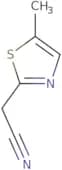
CAS :<p>Please enquire for more information about 2-(Diphenylamino)benzoic acid including the price, delivery time and more detailed product information at the technical inquiry form on this page</p>Formule :C19H15NO2Degré de pureté :Min. 95%Masse moléculaire :289.33 g/mol(5-Methyl-1,3-thiazol-2-yl)acetonitrile
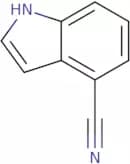
CAS :<p>5-Methyl-1,3-thiazol-2-yl)acetonitrile is a chemical that is used as a building block in organic synthesis. It has been shown to be an intermediate in the preparation of other compounds and has been used as a research chemical. This chemical has also been shown to have useful properties, such as high quality and versatility. 5-Methyl-1,3-thiazol-2-yl)acetonitrile can be used as a reaction component or a reagent for synthesizing other chemicals.</p>Formule :C6H6N2SDegré de pureté :Min. 95%Couleur et forme :Clear LiquidMasse moléculaire :138.19 g/mol4-Cyanoindole
CAS :<p>The 4-cyanoindole is a fluorescent molecule that binds to proteins and affects protein homeostasis. It has been shown to bind to the sodium salt form of proteins, which are typically found in human liver cells. The binding of 4-cyanoindole to these proteins leads to its reduction by borohydride and fluorescence resonance energy transfer (FRET) between the molecule and the protein. This binding can be detected using a fluorescence lifetime spectroscopy technique, which detects changes in the fluorescence's lifetime as well as intensity. The binding of 4-cyanoindole to proteins has been shown to have anti-cancer properties. It has also been used for detection of monoclonal antibodies against cancer cells or for fluorescent labeling of cancer cells for immunofluorescent microscopy.</p>Formule :C9H6N2Couleur et forme :White PowderMasse moléculaire :142.16 g/mol




![[(4-Methylphenyl)sulfonyl]acetonitrile](/_next/image/?url=https%3A%2Fstatic.cymitquimica.com%2Fproducts%2F3D%2Fthumb-webp%2FFM58773.webp&w=3840&q=75)