Cyano-, Nitrile-
Les composés cyano et nitrile sont des molécules organiques contenant des groupes cyano (C≡N) ou nitrile dans leur structure, caractérisées par la présence d'azote. Ces groupes jouent des rôles importants dans diverses réactions chimiques et applications industrielles. Dans cette catégorie, vous trouverez une large gamme de composés cyano et nitrile, allant de structures simples à complexes. Chez CymitQuimica, nous proposons des composés cyano et nitrile de haute qualité adaptés pour répondre aux besoins de la recherche et de l'industrie. Nos composés sont adaptés à une variété d'applications de synthèse et d'analyse.
9674 produits trouvés pour "Cyano-, Nitrile-"
Trier par
Degré de pureté (%)
0
100
|
0
|
50
|
90
|
95
|
100
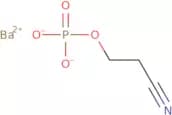
2-Cyanoethyl phosphate barium salt hydrate
CAS :<p>2-Cyanoethyl phosphate barium salt hydrate is an alkaline compound that is soluble in water. It has been used to synthesize phosphodiesters, benzene, dioxan and alcohols. The chemical was originally developed as a reagent for the quantitative conversion of ethyl acetate esters to their corresponding acid chlorides. This reaction can be carried out quantitatively in tetrahydrofuran at room temperature with yields of about 95%. 2-Cyanoethyl phosphate barium salt hydrate also converts alcohols to their corresponding monophosphates quantitatively in alkaline conditions. Crystalline forms are obtained by reacting the compound with triethylamine and benzene.</p>Formule :C3H6BaNO4P•xH2ODegré de pureté :Min. 95%Couleur et forme :PowderMasse moléculaire :324.42 g/mol2-Methoxyphenylacetonitrile
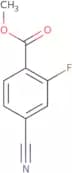
CAS :<p>2-Methoxyphenylacetonitrile is a chemical that is used in the manufacture of pharmaceuticals. It has antibacterial activity and can be used to treat typhoid fever, staphylococcal infections, and mental disorders such as schizophrenia. 2-Methoxyphenylacetonitrile is an alkylating agent that reacts with nucleophiles in proteins, DNA, and RNA. These reactions lead to the destruction of the bacterial cell wall and inhibition of protein synthesis. The mechanism by which 2-methoxyphenylacetonitrile exerts its antibacterial effect may involve formation of a reactive intermediate that inhibits bacterial ribonucleotide reductase. The addition of an electron to this intermediate leads to the formation of a covalent bond with one or more amino acids in the protein acceptor, thereby preventing further growth and division of bacteria.</p>Formule :C9H9NODegré de pureté :Min. 90%Couleur et forme :White PowderMasse moléculaire :147.17 g/mol4-Cyano-2-fluorobenzoic acid methyl ester
CAS :<p>4-Cyano-2-fluorobenzoic acid methyl ester is a versatile building block for complex compounds. It can be used as a reagent to synthesize other compounds and as a speciality chemical with high quality. This chemical is also an intermediate in the synthesis of other compounds, such as 4-cyano-2-fluorobenzoic acid ethyl ester, which has been shown to be useful in the synthesis of β-lactam antibiotics.</p>Formule :C9H6FNO2Degré de pureté :Min. 95%Couleur et forme :PowderMasse moléculaire :179.15 g/mol4-Cyanobenzyl alcohol
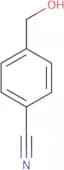
CAS :<p>4-Cyanobenzyl alcohol is a phosphane that reacts with amines to form imines. This reaction can be used as a tool for the identification of amines in protein samples. The reaction time for this reaction is about 3 hours and can only be done at room temperature. 4-Cyanobenzyl alcohol also has potent inhibition activity against cyclopentadienyl, which is an important intermediate of organic synthesis. The ruthenium complex catalyzes this reaction and it can be used as a homogeneous catalyst.</p>Formule :C8H7NODegré de pureté :Min. 95%Couleur et forme :PowderMasse moléculaire :133.15 g/mol2-Amino-5-chlorobenzonitrile
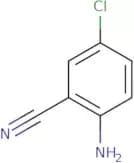
CAS :<p>2-Amino-5-chlorobenzonitrile is a potent inhibitor of butyrylcholinesterase (BChE) and has been shown to inhibit the activity of this enzyme in cell lung cancer and muscle. 2-Amino-5-chlorobenzonitrile also inhibits the activity of other enzymes, such as acetylcholinesterase (AChE) and phosphatidylcholine esterase (PCE), that are found in the membranes of cells. This inhibition leads to increased levels of acetylcholine in the synaptic cleft, which may lead to an increase in muscular contractions. 2-Amino-5-chlorobenzonitrile is also a product yield enhancer for chromene synthesis.</p>Formule :C7H5ClN2Degré de pureté :Min. 95%Couleur et forme :PowderMasse moléculaire :152.58 g/mol3-Acetylbenzonitrile
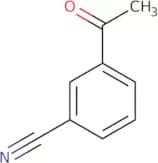
CAS :<p>3-Acetylbenzonitrile is an isomeric, asymmetric synthesis that has been synthesised in the presence of copper complex and salicylic acid. The reaction was carried out with a gaseous phase, where the chalcone was formed. The experimental techniques used were cross-coupling reactions and molecular modeling techniques. 3-Acetylbenzonitrile has been synthesised by a rationalized enthalpic approach that includes alcohol dehydrogenases and molecular modeling techniques.</p>Formule :C9H7NODegré de pureté :Min. 95%Couleur et forme :PowderMasse moléculaire :145.16 g/mol[3-(2-Methylphenyl)-1,2,4-oxadiazol-5-yl]acetonitrile
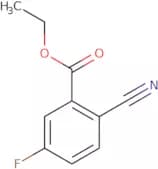
CAS :<p>Please enquire for more information about [3-(2-Methylphenyl)-1,2,4-oxadiazol-5-yl]acetonitrile including the price, delivery time and more detailed product information at the technical inquiry form on this page</p>Formule :C11H9N3ODegré de pureté :Min. 95%Couleur et forme :PowderMasse moléculaire :199.21 g/mol2-Cyano-5-fluorobenzoic acid ethyl ester
CAS :<p>2-Cyano-5-fluorobenzoic acid ethyl ester is a chemical compound with the formula C6H4(COOCH2)2FO. The compound is an intermediate in the synthesis of other chemicals, such as pharmaceuticals. It is also used as a building block in other syntheses. 2-Cyano-5-fluorobenzoic acid ethyl ester has been assigned CAS No. 1260751-65-2 and is useful in organic synthesis because it is a versatile building block, complex compound, and fine chemical.</p>Formule :C10H8FNO2Degré de pureté :Min. 95%Masse moléculaire :193.17 g/mol5,6-Diamino-2,3-dicyanopyrazine
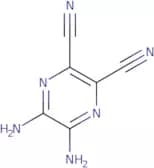
CAS :5,6-Diamino-2,3-dicyanopyrazine (5,6-DDA) is a synthetic compound that has been shown to emit in the visible region. The emission spectrum of 5,6-DDA shows three peaks at 599 nm, 614 nm, and 637 nm. The molecular orbitals of 5,6-DDA are calculated to be sp2 hybridized with a singlet ground state. This molecule has been shown to form imines with aniline and pyrrole in the presence of chloride ions. It also forms a zn complex with zinc chloride and nitrate ions. The thermolysis of furyl derivatives produces the corresponding anions. 5,6-DDA can also undergo a photochemical reaction with chlorine gas to form its molecular ion at 637 nm.Formule :C6N4N6Degré de pureté :(%) Min. 98%Couleur et forme :PowderMasse moléculaire :160.14 g/mol4-Ethylbenzonitrile
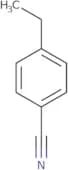
CAS :<p>4-Ethylbenzonitrile is a chemical that is found in human lung. It is a terminal alkene, which undergoes aerobic photooxidation to form reactive oxygen species such as superoxide radical anion and hydrogen peroxide. 4-Ethylbenzonitrile is also converted to triazine, which has been shown to have tumorigenic properties in the lungs of rats and mice. The functional groups on 4-ethylbenzonitrile are amines, hydroxyls, carbonyls, and nitriles. This compound has an inhibitory effect on lung fibroblasts due to its ability to interfere with the function of β-unsaturated ketones. 4-Ethylbenzonitrile's basic structure contains three carbon atoms, two double bonds, and one triple bond.</p>Formule :C9H9NDegré de pureté :Min. 95%Couleur et forme :Clear LiquidMasse moléculaire :131.17 g/mol2,4-Dimethoxybenzylamine
CAS :<p>Tak-659 is an amide compound that inhibits the serine protease activity of a number of enzymes, including cathepsin B and L. Tak-659 has been shown to have inhibitory effects on inflammation in animal models by inhibiting the production of inflammatory cytokines. Tak-659 has also been shown to impair protein synthesis in gram-negative bacteria, such as Escherichia coli and Pseudomonas aeruginosa. The mechanism for this inhibition is not entirely clear but may be due to tak-659 binding to the ribosomal RNA near the peptidyl transferase center, blocking the entry of amino acids into the ribosome. Tak-659 binds with high affinity to adenosine receptors and has been shown to reduce levels of inflammatory cytokines in mouse tumor cells.</p>Formule :C9H13NO2Degré de pureté :Min. 95%Couleur et forme :Colorless Clear LiquidMasse moléculaire :167.21 g/mol(3R,5R)-6-Cyano-3,5-dihydroxy-hexanoic acid tert-butyl ester
CAS :<p>(3R,5R)-6-Cyano-3,5-dihydroxy-hexanoic acid tert-butyl ester is a building block for organic synthesis. It is a versatile intermediate that can be used in the preparation of pharmaceuticals and other organic compounds. The compound is also used as a reagent to study the biological activity of other compounds. CAS No. 125971-93-9 is a fine chemical that has been shown to have high quality and purity.</p>Formule :C11H19NO4Degré de pureté :Min. 98 Area-%Couleur et forme :Yellow PowderMasse moléculaire :229.27 g/mol2-Hydroxy-3-methylbenzonitrile
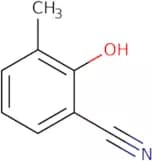
CAS :<p>2-Hydroxy-3-methylbenzonitrile is a high quality chemical that is used as an intermediate in the synthesis of complex compounds. It can be used as a reagent in organic chemistry, and has been shown to be useful for the production of fine chemicals, such as antibiotics. 2-Hydroxy-3-methylbenzonitrile is also a versatile building block for the production of pharmaceuticals and research chemicals. It can be used as a reaction component for the synthesis of speciality chemicals and various building blocks.</p>Formule :C8H7NODegré de pureté :Min. 95%Couleur et forme :PowderMasse moléculaire :133.15 g/mol1-Cyano-4-(dimethylamino)pyridinium tetrafluoroborate
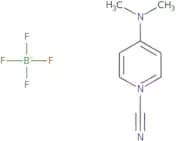
CAS :<p>1-Cyano-4-(dimethylamino)pyridinium tetrafluoroborate (CDAP) is an organic cyanylating agent. It is reactive under acidic conditions giving CDAP an advantage over other sulfhydryl labeling agents, as it can avoid potential thiol-disulfide exchange.</p>Formule :C8H10N3BF4Degré de pureté :Min. 98 Area-%Couleur et forme :PowderMasse moléculaire :234.99 g/molEthyl 3-cyanopropanoate
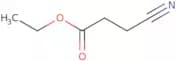
CAS :<p>Ethyl 3-cyanopropanoate is an organic compound with the formula CH3C(O)CH2CN. It is a colorless liquid that boils at 100 °C. It is used in the synthesis of other organic compounds, such as oxazolidinones, cyclopropenes, and quinolizines. The yield can be increased to 98% by using a catalyst such as potassium tert-butoxide or zinc chloride in the reaction. The reaction proceeds through an elimination followed by an acid-catalyzed alkylation to afford the desired product. This process also results in a high yield of ethyl bromoacetate as a side product.</p>Formule :C6H9NO2Degré de pureté :Min. 95%Couleur et forme :PowderMasse moléculaire :127.14 g/mol4,4'-Azobis(4-cyanovaleric acid)
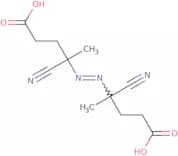
CAS :<p>Azobis(4-cyanovaleric acid) is a chemical compound that has reactive functional groups. It is a particle that is soluble in acetate extract and hydrochloric acid. The synthesis of Azobis(4-cyanovaleric acid) involves the reaction of 4-cyanoacrylic acid with 2,2'-azobis(2-methylpropionitrile). It is used as an intermediate in the preparation of polymers. Azobis(4-cyanovaleric acid) is used for the treatment of infectious diseases such as tuberculosis and malaria. The production of chain reactions with other molecules makes this chemical reactive and unstable. Azobis(4-cyanovaleric acid) also reacts with nucleophilic groups, such as hydroxyl groups, to form a covalent bond. This process can be reversed by adding a strong base or oxidant.</p>Formule :C12H16N4O4Degré de pureté :Min. 95 Area-%Couleur et forme :PowderMasse moléculaire :280.28 g/mol4-Cyanoheptane
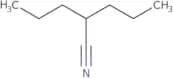
CAS :<p>4-Cyanoheptane is a liquid that has been decarboxylated, which means it contains no CO2 molecules. It is an organic solvent with a boiling point of -2°C and a density of 0.7 g/mL. This product is used in the hydrolysis of carboxylic acids to form carboxylates. 4-Cyanoheptane has been shown to be able to hydrolyze amides, carbones, phenoxy groups, and functional groups as well as produce alkylation reactions with high concentrations.</p>Formule :C8H15NDegré de pureté :Min. 95%Couleur et forme :Clear LiquidMasse moléculaire :125.21 g/mol1,2-Diphenyl-1-cyanoethylene
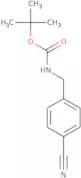
CAS :<p>1,2-Diphenyl-1-cyanoethylene is a molecule that is involved in the cancer process. It has been shown to inhibit the growth of skin cancer cells and other types of cancer cells by binding to mitochondria and inhibiting the formation of proton gradients across mitochondrial membranes. This inhibition leads to a decrease in cellular ATP production and an increase in reactive oxygen species (ROS), resulting in cell death. 1,2-Diphenyl-1-cyanoethylene also has anticancer activity due to its ability to induce light emission from the skin and interfere with the optical properties of holothuria, which are sea cucumbers.</p>Formule :C15H11NDegré de pureté :Min. 95%Couleur et forme :PowderMasse moléculaire :205.25 g/moltert-Butyl 4-cyanobenzylcarbamate
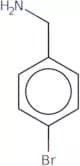
CAS :<p>tert-Butyl 4-cyanobenzylcarbamate (tB4Cbz) is a high quality chemical that can be used as a reagent, complex compound, or useful intermediate in the production of fine chemicals. Tert-Butyl 4-cyanobenzylcarbamate is also a useful scaffold for the synthesis of speciality chemicals and research chemicals. It can be used as a versatile building block for reactions involving amides, nitriles, esters, and amines.</p>Formule :C13H16N2O2Degré de pureté :Min. 95%Couleur et forme :PowderMasse moléculaire :232.28 g/mol4-Bromobenzylamine
CAS :<p>4-Bromobenzylamine is a chemical compound that has been used to study the process optimization of sephadex g-100. It is also used as a chemotherapeutic treatment for cancer. 4-Bromobenzylamine binds to intracellular targets, such as nitrogen atoms and cell lysis, with physiological levels found in fetal bovine serum. The nitrogen atom is an essential structural component of 4-bromobenzylamine that is necessary for its biological activity and may be involved in binding to DNA polymerase. This drug has been shown to inhibit the growth of metastatic colorectal cancer cells by inhibiting cellular proliferation. Structural analysis has revealed that 4-bromobenzylamine interacts with the polymerase chain reaction (PCR) enzyme and inhibits the ability of DNA polymerases to add nucleotides to the growing strand of DNA.</p>Formule :C7H8BrNDegré de pureté :Min. 95%Couleur et forme :PowderMasse moléculaire :186.05 g/mol


![[3-(2-Methylphenyl)-1,2,4-oxadiazol-5-yl]acetonitrile](/_next/image/?url=https%3A%2Fstatic.cymitquimica.com%2Fproducts%2F3D%2Fthumb-webp%2FFM127089.webp&w=3840&q=75)