Imines
Les imines sont des composés organiques présentant une double liaison carbone-azote (C=N). Ces composés servent d'intermédiaires dans de nombreuses réactions chimiques et sont essentiels dans la synthèse de produits pharmaceutiques et agrochimiques. Chez CymitQuimica, nous proposons une large gamme d'imines pour répondre à vos besoins en synthèse et en recherche. Nos imines de haute qualité sont conçues pour fournir des résultats fiables et reproductibles dans vos travaux expérimentaux.
130 produits trouvés pour "Imines"
Trier par
Degré de pureté (%)
0
100
|
0
|
50
|
90
|
95
|
100
Clarithromycin oxime
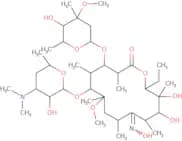
CAS :<p>Clarithromycin oxime is an erythromycin derivative that is a potent inhibitor of protein synthesis in bacteria. It contains a methylating group, which has been shown to be necessary for its antibacterial activity. Clarithromycin oxime inhibits the growth of filamentous fungi and can be used to treat infectious diseases caused by pyogenes and staphylococci. The effective dose is not known, but it should be administered orally or intravenously.</p>Formule :C38H70N2O13Degré de pureté :Min. 95 Area-%Couleur et forme :White PowderMasse moléculaire :762.97 g/mol4-Nitrobenzaldehyde oxime
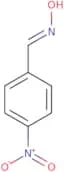
CAS :<p>4-Nitrobenzaldehyde oxime is a phenylhydrazone derivative that is a potent cytotoxic agent. The 1,2-nitration of the benzene ring in 4-nitrobenzaldehyde oxime produces a reactive intermediate that reacts with nucleophilic groups on cellular macromolecules to produce DNA strand breaks and other types of damage. 4-Nitrobenzaldehyde oxime has been shown to have significant anticancer activity against leukemia cells in culture, as well as antibacterial and anticancer activity against Staphylococcus aureus and Escherichia coli.</p>Formule :C7H6N2O3Degré de pureté :Min. 95%Couleur et forme :PowderMasse moléculaire :166.13 g/mol(2-Methoxyphenyl)acetone oxime
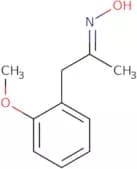
CAS :<p>2-Methoxyphenyl)acetone oxime is a versatile building block that can be used in the synthesis of complex compounds. It is a colourless crystalline solid with a melting point of 138°C and a boiling point of 188°C. This compound has been assigned CAS No. 43021-97-2 and is soluble in water, ethanol, acetone, benzene, chloroform, ether and ethyl acetate. The chemical structure for this compound is shown below:</p>Formule :C10H13NO2Degré de pureté :Min. 95%Couleur et forme :PowderMasse moléculaire :179.22 g/molIndirubin-3'-monoxime
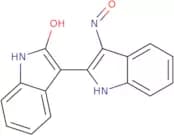
CAS :<p>Inhibitor of YB-1 nuclear translocation; anti-cancer</p>Formule :C16H11N3O2Degré de pureté :Min. 95%Couleur et forme :PowderMasse moléculaire :277.28 g/mol2-Methoxybenzaldehyde oxime
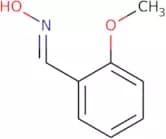
CAS :<p>2-Methoxybenzaldehyde oxime is a synthetic amine that is used in the synthesis of peroxides. The reaction rate and nature depend on the type of peroxide being synthesized, but typically, it is used with acetonitrile as a solvent and an acid catalyst. 2-Methoxybenzaldehyde oxime reacts with peracid to create an aldoxime and nitrite. This product can also be made by reacting benzaldehyde with nitrous acid, which will produce dioxane as an intermediate. The reaction time for this process takes about four hours at room temperature.</p>Formule :C8H9NO2Degré de pureté :Min. 95%Couleur et forme :PowderMasse moléculaire :151.16 g/mol2-Chlorobenzaldehyde oxime
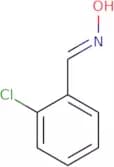
CAS :<p>2-Chlorobenzaldehyde oxime is a compound that inhibits the growth of mycobacterium tuberculosis. It reacts with chloride in the environment to form 2-chlorobenzaldehyde, which reacts with an isoxazole to produce a quinone. Quinones are toxic to mammals and are thought to be responsible for the antimycobacterial activity of this compound. The reaction mechanism of 2-chlorobenzaldehyde oxime has been studied using various techniques and its toxicity has been evaluated in both culture and animal studies. This compound has shown no significant effects on mice at up to 100 mg/kg body weight, but it was found to cause death in rats at doses as low as 0.1 mg/kg body weight.<br>2-Chlorobenzaldehyde oxime was synthesised by reacting 2-chlorobenzaldehyde with oxalyl chloride under conditions suitable for safety, and the product was purified by recrystallisation from acetone. The synthesis</p>Formule :C7H6ClNODegré de pureté :Min. 95%Couleur et forme :PowderMasse moléculaire :155.58 g/mol2-Bromobenzaldoxime
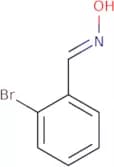
CAS :<p>2-Bromobenzaldoxime is a chemical compound that belongs to the class of isoxazoles. It is used as an agrochemical to control nematodes and insects in crops. 2-Bromobenzaldoxime has been shown to have a high transformation efficiency, with a low response of resistant strains, and is effective against acarids and insects. The product yields are high when 2-bromobenzaldoxime is applied on soil or as a foliar spray. This chemical can be used as an alternative to diethyl ether when it comes to controlling pests in agricultural environments.</p>Formule :C7H6BrNODegré de pureté :Min. 95%Masse moléculaire :200.03 g/molSalicylaldoxime
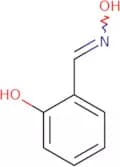
CAS :<p>Salicylaldoxime is a coordination compound that is used for the treatment of malaria. Salicylaldoxime has a high affinity for the cell nuclei, which leads to its inhibitory properties. It binds to cell factor and inhibits the growth of malarial parasites. The inhibition of x-ray crystal structures by salicylaldoxime has been shown in Langmuir adsorption isotherms and electrochemical impedance spectroscopy. This drug binds to metal ions and forms complexes with them, which can be detected through plasma mass spectrometry. The coordination geometry and reaction solution were also analyzed using structural analysis. Hydrogen bonding interactions are present in salicylaldoxime due to its formation of chelates with metals such as iron, copper, cobalt, nickel, and zinc.</p>Formule :C7H7NO2Degré de pureté :Min. 95%Couleur et forme :PowderMasse moléculaire :137.14 g/mol2-Naphthaldehyde oxime
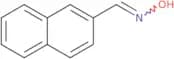
CAS :<p>2-Naphthaldehyde oxime is a reactive aldoxime that can be used as an oxidant in organic chemistry. It is able to increase the rate of hydrolysis by acid catalysts, and has been shown to cause biomolecular damage due to its ability to react with functional groups such as amines and alcohols. 2-Naphthaldehyde oxime reacts with silicon, styrene, and polystyrene. The reaction produces carbon dioxide, hydrogen, and water. This product also has the capability of solvating organic compounds through the use of water molecules. Hypervalent oxidation reactions may occur with 2-naphthaldehyde oxime due to its ability to form multiple bonds with oxygen atoms.</p>Formule :C11H9NODegré de pureté :Min. 95%Couleur et forme :PowderMasse moléculaire :171.2 g/mol9-Fluorenone oxime
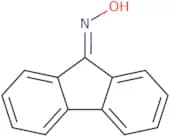
CAS :<p>9-Fluorenone oxime is a pharmacological agent that has been shown to inhibit the activity of proteases. It has been shown to be effective in the treatment of hepatitis caused by radiation and amines, such as fluorenone. 9-Fluorenone oxime binds to the hydroxyl group of the active site on the protease enzyme and forms a covalent bond with it. This prevents hydrolysis of substrate proteins and thus blocks protein synthesis. 9-Fluorenone oxime also has chelate ligand properties, which allow it to bind to metal ions, such as phosphotungstic acid or fluorescence probes, and form complexes. The thermal expansion property of 9-fluorenones can be used for thermometry in biochemistry research.</p>Formule :C13H9NODegré de pureté :90%Couleur et forme :PowderMasse moléculaire :195.22 g/molDL-Methionine-DL-sulfoximine
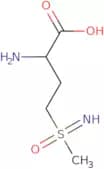
CAS :<p>DL-Methionine sulfoximine is a drug that blocks the synthesis of glutathione, an important antioxidant and detoxifying agent. DL-Methionine sulfoximine may be useful in preventing or treating eye disorders, such as age-related macular degeneration and retinitis pigmentosa. It also has been shown to have beneficial effects in animal models of epilepsy, Alzheimer’s disease, Parkinson's disease, and stroke. DL-Methionine sulfoximine has been shown to have beneficial effects in animal models of epilepsy, Alzheimer’s disease, Parkinson's disease, and stroke. This drug is being studied for its potential use in metabolic disorders such as diabetes and obesity.</p>Formule :C5H12N2O3SDegré de pureté :Min. 95%Couleur et forme :White PowderMasse moléculaire :180.23 g/mola-Benzoin oxime
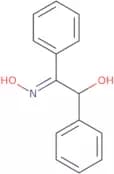
CAS :<p>a-Benzoin oxime is a molecule that has been synthesized and characterized by nuclear magnetic resonance (NMR) spectroscopy. The compound contains a hydroxy group, which is responsible for the vibrational mode observed in anhydrous acetonitrile, sodium citrate and galleria mellonella. This molecule also has a metal ion which coordinates with the hydroxyl group of the benzoin oxime. The coordination complex is formed in an enzyme preparation containing p. aeruginosa and molybdenum as the metal ion.</p>Formule :C14H13NO2Degré de pureté :Min. 95%Couleur et forme :PowderMasse moléculaire :227.26 g/mol1-(4-Aminophenyl)ethanone oxime
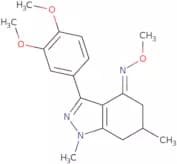
CAS :<p>4-Aminoacetophenone oxime is an organic compound that is soluble in water and methanol. It has a molecular weight of 169.17 g/mol, a melting point of 190 °C, and a boiling point of 260 °C. 4-Aminoacetophenone oxime has been shown to have antimicrobial activity against Gram-positive bacteria, such as Staphylococcus aureus, but not against Gram-negative bacteria. This compound can be used as a ligand for metal ions such as copper and zinc, which are important in biological processes. The magnetic properties of 4-aminoacetophenone oxime make it possible to detect the molecule using nuclear magnetic resonance spectroscopy.<br>4-Aminoacetophenone oxime can be synthesized by reacting 5-nitrosalicylaldehyde with ammonium acetate in the presence of hydrochloric acid:</p>Formule :C8H10N2ODegré de pureté :Min. 95%Couleur et forme :PowderMasse moléculaire :150.18 g/mol3-(3,4-dimethoxyphenyl)-1,6-dimethyl-(5,6,7-trihydro1H-indazol)-4-O-methyloxime
CAS :<p>Please enquire for more information about 3-(3,4-dimethoxyphenyl)-1,6-dimethyl-(5,6,7-trihydro1H-indazol)-4-O-methyloxime including the price, delivery time and more detailed product information at the technical inquiry form on this page</p>Degré de pureté :Min. 95%3,4-Dichlorobenzaldehyde oxime
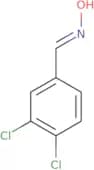
CAS :<p>3,4-Dichlorobenzaldehyde oxime is a natural carotenoid that has been shown to have antibacterial activity. 3,4-Dichlorobenzaldehyde oxime is produced by the reaction of malonate and aldehyde in an incubated system. This compound has been shown to be active against Gram-positive bacteria such as staphylococcus and aldoximes and Gram-negative bacteria such as E. coli, Salmonella typhimurium, and Shigella flexneri. 3,4-Dichlorobenzaldehyde oxime inhibits bacterial growth by binding to the 50S ribosomal subunit of the bacterial cell membrane. This binding prevents protein synthesis, leading to cell death. The biosynthesis of 3,4-dichlorobenzaldehyde oxime involves the conversion of abscisic acid (ABA) into ABA quinone through oxidation by an enzyme called ABA oxidase</p>Formule :C7H5Cl2NODegré de pureté :Min. 95%Couleur et forme :PowderMasse moléculaire :190.03 g/molβ-Resorcylic aldehyde oxime
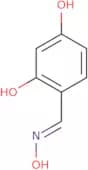
CAS :<p>beta-Resorcylic aldehyde oxime is a compound that can be used as a reagent, speciality chemical, and research chemical. It has the CAS number 5399-68-8, and it is a fine chemical that has been shown to be useful in organic synthesis. beta-Resorcylic aldehyde oxime is soluble in methanol, ethanol, benzene, diethyl ether, and acetone. This compound can be used as a building block for other compounds by reacting with amines or carboxylic acids. It can also be used as an intermediate for other reactions. beta-Resorcylic aldehyde oxime has been shown to have versatile properties that make it an excellent scaffold for creating new compounds.</p>Formule :C7H7NO3Masse moléculaire :153.14 g/mol4-Diethylaminobenzaldoxime
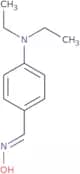
CAS :<p>4-Diethylaminobenzaldoxime is a reaction component that is used in the synthesis of complex compounds. It has been shown to be a useful scaffold for the construction of novel chemical entities. It also has high quality, and can be used as a reagent in research or as a speciality chemical. 4-Diethylaminobenzaldoxime is versatile and can be used as an intermediate or building block in organic chemistry. This chemical has CAS No. 54376-65-7 and is classified as a fine chemical.</p>Formule :C11H16N2ODegré de pureté :Min. 95%Couleur et forme :PowderMasse moléculaire :192.26 g/mol2,3-Dimethoxybenzaldoxime
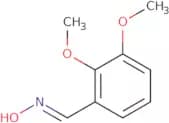
CAS :<p>2,3-Dimethoxybenzaldoxime is an oxime that can be used as a chlorinating agent in organic synthesis. It has been shown to be a good catalyst for the Suzuki coupling of chlorides and boronic acids and for the Miyaura coupling of alkenes and halides.<br>2,3-Dimethoxybenzaldoxime also reacts with alkenes to form dimers. This reaction is catalyzed by a palladium complex, which may be due to its ability to activate the alkene by oxidative addition or reductive elimination.</p>Formule :C9H11NO3Degré de pureté :Min. 95%Couleur et forme :PowderMasse moléculaire :181.19 g/mol2,6-Dimethylbenzaldehyde oxime
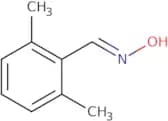
CAS :<p>2,6-Dimethylbenzaldehyde oxime is a reagent and useful intermediate for the synthesis of complex compounds. It is also a building block for speciality chemicals. 2,6-Dimethylbenzaldehyde oxime has been used in research and as a reaction component for various organic syntheses. This compound has a CAS number of 55882-62-7.</p>Formule :C9H11NODegré de pureté :Min. 95%Masse moléculaire :149.19 g/mol4-Bromo-2-fluorobenzaldoxime
CAS :<p>4-Bromo-2-fluorobenzaldoxime is a fine chemical that is used as a building block in the synthesis of complex molecules. It is also an intermediate in the production of pharmaceuticals, research chemicals, and other specialty chemicals. 4-Bromo-2-fluorobenzaldoxime has a CAS number of 202865-64-3 and is a useful reagent for organic synthesis. It can be used to produce high quality compounds with versatile building blocks.</p>Formule :C7H5BrFNODegré de pureté :Min. 95%Couleur et forme :PowderMasse moléculaire :218.02 g/mol