Nitro
2517 produits trouvés pour "Nitro"
2-Nitro-3,4,5-trimethoxybenzoic acid
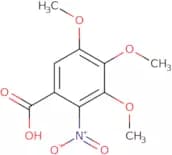
CAS :2-Nitro-3,4,5-trimethoxybenzoic acid (2-NTMB) is a potent anticancer agent that has shown cytotoxic effects in human epidermoid carcinoma cells. It inhibits the growth of cancer cells by interfering with their DNA synthesis and repair. 2-NTMB binds to DNA and blocks the action of enzymes involved in DNA synthesis and repair. This binding leads to cancer cell death through irradiation or by blocking the production of new proteins vital for cell division. 2-NTMB is bioisosteric with combretastatin A4, which means it can be substituted for this drug without significant loss of potency. It also has been shown to be an effective chemotherapeutic agent against breast cancer in mice.
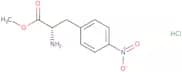
Formule :C10H11NO7Degré de pureté :Min. 95%Couleur et forme :PowderMasse moléculaire :257.2 g/mol4-Nitro-L-phenylalanine methyl ester hydrochloride
CAS :4-Nitro-L-phenylalanine methyl ester hydrochloride is a 4-nitrophenyl derivative of L-phenylalanine. It is a useful building block, reagent, or scaffold in organic synthesis. This compound finds use as a precursor to other derivatives and it has been used in the preparation of complex compounds. 4-Nitro-L-phenylalanine methyl ester hydrochloride is also used as a reaction component for the synthesis of different organic compounds and as a useful intermediate.
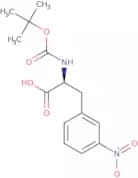
Formule :C10H13N2O4ClDegré de pureté :Min. 98 Area-%Couleur et forme :White PowderMasse moléculaire :260.67 g/molBoc-3-nitro-L-phenylalanine
CAS :Boc-3-nitro-L-phenylalanine is a chemical intermediate that is useful for the synthesis of a wide variety of compounds. It is a versatile building block with many applications in research and industry. Boc-3-nitro-L-phenylalanine has been used as a reaction component in organic synthesis, as well as in the production of pharmaceuticals and other specialized chemicals. This compound can be used as a reagent or starting material for the synthesis of other organic compounds. Boc-3-nitro-L-phenylalanine is an important chemical with high quality, which can be used in the production of many different types of products.
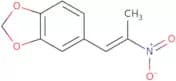
Formule :C14H18N2O6Degré de pureté :Min. 98 Area-%Couleur et forme :PowderMasse moléculaire :310.3 g/mol1-(3,4-Methylenedioxyphenyl) 2-nitropropene
CAS :1-(3,4-Methylenedioxyphenyl) 2-nitropropene (1-MPNP) is a phosphatase inhibitor that is active against gram-negative bacteria by inhibiting enterotoxins and chlamydia. 1-MPNP inhibits the activity of tyrosine phosphatases, which are enzymes that play a major role in bacterial virulence. 1-MPNP competitively inhibits the activity of tyrosine phosphatases and prevents them from catalyzing the hydrolysis of polyphosphate substrates. This inhibition leads to an accumulation of polyphosphates in the bacterial cell membrane, which disrupts its permeability and leads to cell death.
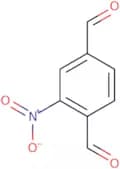
Formule :C10H9NO4Degré de pureté :Min. 97.5 Area-%Couleur et forme :Yellow PowderMasse moléculaire :207.18 g/mol2-Nitroterephthalaldehyde
CAS :2-Nitroterephthalaldehyde is a chiral molecule that can be used in the supramolecular synthesis of macrocycles. This molecule has been shown to catalyze the formation of imines, which are important for the synthesis of macrocycles. The kinetic and thermodynamic properties of 2-Nitroterephthalaldehyde have been studied and found to be favorable for this type of reaction.
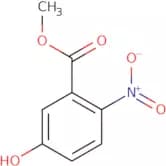
Formule :C8H5NO4Degré de pureté :Min. 95%Couleur et forme :PowderMasse moléculaire :179.13 g/molMethyl 5-hydroxy-2-nitrobenzoate
CAS :Methyl 5-hydroxy-2-nitrobenzoate is a synthetic pesticide that is used to control pests in animals. It has been shown to be an antigen that induces antibody production in mice. This chemical is also a ligand, as it binds with proteins and other molecules. Methyl 5-hydroxy-2-nitrobenzoate has been shown to inhibit the enzymatic activity of the organophosphorus pesticide, which is primarily used for pest control. The chemical was also found to inhibit the growth of plants by inhibiting protein synthesis and cell division at low concentrations.
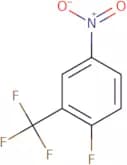
Formule :C8H7NO5Degré de pureté :Min. 95%Couleur et forme :White PowderMasse moléculaire :197.14 g/mol2-Fluoro-5-nitrobenzotrifluoride
CAS :2-Fluoro-5-nitrobenzotrifluoride is a chiral, fluorinated organic compound that has been shown to be an effective antiviral agent. It is active against Coxsackievirus B3 and other viruses in vitro. The antiviral activity of 2-fluoro-5-nitrobenzotrifluoride appears to be due to its ability to inhibit the virus's ability to bind and enter the host cell. In vivo studies have shown that 2-fluoro-5-nitrobenzotrifluoride can reduce the spread of coxsackievirus B3 in mice. This compound also has been shown to inhibit viral replication by preventing the synthesis of viral protein pai-1, which is necessary for viral assembly and release from infected cells.
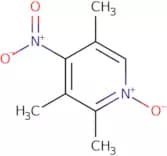
Formule :C7H3F4NO2Degré de pureté :Min. 95%Couleur et forme :PowderMasse moléculaire :209.1 g/mol2,3,5-Trimethyl-4-nitropyridine 1-oxide
CAS :The reaction of 2,3,5-trimethyl-4-nitropyridine 1-oxide with hydrogen peroxide is an example of a peroxide reaction. The HOOH molecule is a nucleophilic and attacks the CNO group. This leads to the formation of a new bond between the oxygen and carbon atoms in the molecule. The oxygen atom then becomes an oxidizing agent, which can react with other molecules in order to form more products. In this reaction, hydrogen peroxide is used as an oxidizing agent to produce chlorine gas, water vapor, and nitric oxide gas. The reaction can be summarized as follows: 2CNO + 3HOOH → 4CO + 2O + 3N2O + 3HO2
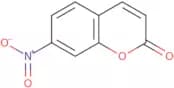
Formule :C8H10N2O3Degré de pureté :Min. 95%Couleur et forme :PowderMasse moléculaire :182.18 g/mol7-Nitrocoumarin
CAS :7-Nitrocoumarin is an agent that inhibits the growth of protozoa by inhibiting enzyme activities, specifically those involved in glycolysis. It has been shown to be a potent inhibitor of surface proteins and functional assays. 7-Nitrocoumarin is also active against trophozoites in vitro. The compound has been shown to be nontoxic to mammalian cells, with a constant of 0.3 μM for inhibition of resazurin reduction. The mechanism of action for 7-nitrocoumarin is not well understood, but it may involve oxidation products such as nitro groups, which are indicated by the prefix '7-'.
Formule :C9H5NO4Degré de pureté :Min. 95%Couleur et forme :PowderMasse moléculaire :191.14 g/mol2,4,6-Trinitrobenzenesulfonic acid, 1% DMF solution
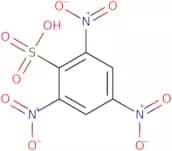
CAS :2,4,6-Trinitrobenzenesulfonic acid, also known as TNBS, TNSBA orâ¯picrylsulfonicâ¯acid, is a strongly oxidising organic acid that has long been used as a reagent to determine the presence of free primary amine groups. TNBS reacts rapidly with primary amines to form highly colouredâ¯N-trinitrophenylâ¯products which can thenâ¯beâ¯analysed by colorimetry.â¯Competing hydrolysis of the TNBS reagentâ¯mayâ¯influence the assay result. The amine can be regenerated by treatment with hydrazine. This analytical technique can also be applied to thiols and hydrazides.
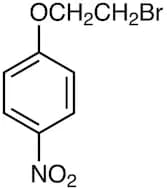
As is common with nitrated aromatic compounds, there is a risk of explosion and TNBS is typically commercially available as a solution. We also supply the 5% aqueous solution.Formule :C6H3N3O9SDegré de pureté :Min. 95%Couleur et forme :Clear LiquidMasse moléculaire :293.17 g/molβ-Bromo-4-nitrophenetole
CAS :Formule :C8H8BrNO3Degré de pureté :>97.0%(GC)Couleur et forme :White to Light yellow powder to crystalMasse moléculaire :246.06(NZ)-4-chloro-N-[1-[2-(4-nitrophenyl)ethyl]piperidin-2-ylidene]benzenesulfonamide
CAS :Produit contrôléPlease enquire for more information about (NZ)-4-chloro-N-[1-[2-(4-nitrophenyl)ethyl]piperidin-2-ylidene]benzenesulfonamide including the price, delivery time and more detailed product information at the technical inquiry form on this page
Formule :C19H20ClN3O4SDegré de pureté :Min. 95%Masse moléculaire :421.9 g/mol4-Chloronitrobenzene
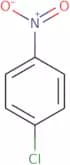
CAS :4-Chloronitrobenzene is a type strain of the bacterium Nitrosomonas europaea. It has been shown to be toxic to cells in both aerobic and anaerobic culture. 4-Chloronitrobenzene inhibits the activity of hydrogenase enzymes, which are required for the reduction of molecular oxygen to water. The toxicity of 4-chloronitrobenzene is due to its ability to inhibit enzyme activity, leading to cell death. This bacterium also has the ability to use chlorinated hydrocarbons as a carbon source and cause chlorination of other biological molecules. In addition, it can reduce metal hydroxides and form metal complexes with palladium and platinum metals. 4-Chloronitrobenzene is found in soil samples that have high concentrations of chloride ions or neutral pH values. Its phase equilibrium diagram shows that this compound exists mainly in liquid form when it is at low temperature, but becomes more
Formule :C6H4ClNO2Degré de pureté :Min. 95%Couleur et forme :SolidMasse moléculaire :157.55 g/mol3-Chloro-4-nitropyridine 1-oxide
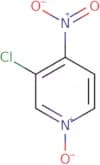
CAS :3-Chloro-4-nitropyridine 1-oxide is the condensation product of 2-chloro-3-nitropyridine and nitric acid. 3-Chloro-4-nitropyridine 1-oxide has an isomeric nature and can be purified by recrystallization from water. The compound has a molecular weight of 286.1 g/mol and a monoclinic crystal structure. It has two n-oxides, which are isomers of each other, with nmr spectra that differ by the shift in the chemical shifts of the protons on the aromatic ring. 3-Chloro-4-nitropyridine 1-oxide condenses with lanthanides to form lanthanide complexes, such as Eu(III)(3,5'-ClO 4 ) 2 . This compound is also used in the synthesis of phenoxathiine derivatives that have antihypertensive activity.
Formule :C5H3ClN2O3Degré de pureté :Min. 95%Masse moléculaire :174.54 g/molRef: 3D-FC139827
Produit arrêtéRuthenium(III) nitrosyl nitrate, soluble in 10% dilute nitric acid
CAS :Please enquire for more information about Ruthenium(III) nitrosyl nitrate, soluble in 10% dilute nitric acid including the price, delivery time and more detailed product information at the technical inquiry form on this page
Formule :RuN4O10Degré de pureté :Min. 95%Couleur et forme :Clear LiquidMasse moléculaire :317.09 g/mol3-Nitro-1,2,4-triazole
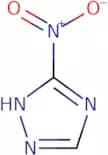
CAS :3-Nitro-1,2,4-triazole is a heterocyclic compound that can be used in organic synthesis. It has been shown to react with nucleophiles such as thiols and amines. The reaction products are covalent adducts, which are low detection and can be used for the chemical analysis of nucleophiles. 3-Nitro-1,2,4-triazole is also known to form a coordination complex with palladium (II) chloride and zinc chloride in the presence of a base. This coordination complex has been shown to inhibit the growth of v79 cells in vitro. 3-Nitro-1,2,4-triazole has also been shown to have antiangiogenic properties and inhibit tumor growth in animal models.
Formule :C2H2N4O2Degré de pureté :Min. 95%Couleur et forme :PowderMasse moléculaire :114.06 g/mol4-Nitro-Z-Gly-Trp-Gly-OH
CAS :Please enquire for more information about 4-Nitro-Z-Gly-Trp-Gly-OH including the price, delivery time and more detailed product information at the technical inquiry form on this page
Formule :C23H23N5O8Degré de pureté :Min. 95%Masse moléculaire :497.46 g/mol


![(NZ)-4-chloro-N-[1-[2-(4-nitrophenyl)ethyl]piperidin-2-ylidene]benzenesulfonamide](/_next/image/?url=https%3A%2Fstatic.cymitquimica.com%2Fproducts%2F3D%2Fthumb-webp%2FFN154024.webp&w=3840&q=75)