Nitro
Les composés nitro sont des molécules organiques contenant un ou plusieurs groupes nitro (NO2). Ces composés sont largement utilisés dans la synthèse d'explosifs, de produits pharmaceutiques et de colorants. Chez CymitQuimica, nous proposons une large gamme de composés nitro de haute qualité pour soutenir vos applications de recherche et industrielles, garantissant des résultats sûrs et efficaces. Notre sélection comprend une variété de composés nitro adaptés à différentes synthèses chimiques et applications.
2516 produits trouvés pour "Nitro"
Trier par
Degré de pureté (%)
0
100
|
0
|
50
|
90
|
95
|
100
8-Hydroxy-5-nitroquinoline-2-carbaldehyde
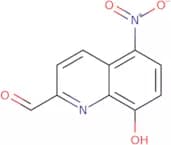
CAS :8-Hydroxy-5-nitroquinoline-2-carbaldehyde is a high quality, versatile building block that can be used as a reaction intermediate or to synthesize heterocycles. It is also a useful scaffold for the synthesis of complex compounds. The CAS number of this chemical is 884497-63-6.Formule :C10H6N2O4Degré de pureté :Min. 95%Couleur et forme :PowderMasse moléculaire :218.17 g/mola-Nitrotoluene
CAS :a-Nitrotoluene is a yellow crystalline solid that is soluble in organic solvents. It is used as a precursor to dyes and other chemicals. The chemical has been shown to bind to the DNA of humans, rats, and mice. It also binds to fatty acids and malonic acid, which are important components of cell membranes. a-Nitrotoluene has been shown to induce infectious diseases in animals by inhibiting transcriptional regulation and protein synthesis in rat liver microsomes. In addition, it has been shown to have immunosuppressive properties by inducing nitric oxide synthase and nitrite ion production. These properties may be due to its ability to inhibit the activity of nitroalkanes, including nitrite ion, which can lead to the formation of reactive nitrogen species such as hydroxyl radicals.Formule :C7H7NO2Degré de pureté :Min. 95%Couleur et forme :PowderMasse moléculaire :137.14 g/mol2-Methyl-1-nitroprop-1-ene
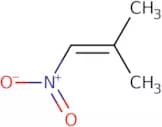
CAS :<p>2-Methyl-1-nitroprop-1-ene is a labile molecule that can be readily synthesized from 2-methyl propanal and nitrous acid. The postulated reaction mechanism for the formation of 2-methyl-1-nitroprop-1-ene begins with the nucleophilic attack of the azide anion on the carbonyl group of 2 methyl propanal, forming a tetrahedral intermediate. This intermediate undergoes a stepwise reaction to form 2 methyl 1 nitropropane. Nitro groups have been observed in both the product and starting material, which could indicate a transfer mechanism.</p>Formule :C4H7NO2Degré de pureté :Min. 95%Couleur et forme :Clear LiquidMasse moléculaire :101.1 g/mol4-Chloro-2-nitrobenzonitrile
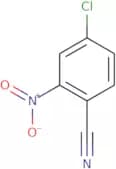
CAS :<p>4-Chloro-2-nitrobenzonitrile is a nitroarene that can be used to synthesize gold nanoparticles. It has been shown to inhibit the growth of Candida parapsilosis, an opportunistic fungal pathogen, with a halide anion and a catalytic inorganic base. 4-Chloro-2-nitrobenzonitrile also inhibits the activity of butyrylcholinesterase, which is an enzyme that breaks down acetylcholine in the brain and nervous system. This compound may be useful in the synthesis of pharmaceuticals as well as other synthetic applications.</p>Formule :C7H3ClN2O2Masse moléculaire :182.56 g/mol4-Nitro-3-picoline
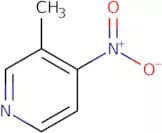
CAS :<p>4-Nitro-3-picoline (NPP) is a colorless liquid that has an intramolecular hydrogen bond. It reacts with water to form the corresponding nitrate, which is a strong oxidizer. 4-Nitro-3-picoline has been shown to have optical properties that are sensitive to changes in pH and temperature. This compound also has dipole, n-oxide, and hydroxyl functional groups that can be used for chemical reactions. 4-Nitro-3-picoline is a type species of 5-azaindole and can be used as a precursor in the synthesis of other compounds such as dyes. NPP also has supramolecular properties that allow it to be used in macroscopic systems such as polymer films or membranes.</p>Formule :C6H6N2O2Degré de pureté :Min. 95%Masse moléculaire :138.12 g/molZ-L-pyroglutamic acid 4-nitrophenyl ester
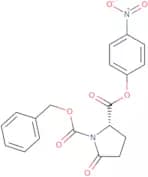
CAS :<p>Please enquire for more information about Z-L-pyroglutamic acid 4-nitrophenyl ester including the price, delivery time and more detailed product information at the technical inquiry form on this page</p>Formule :C19H16N2O7Degré de pureté :Min. 95%Masse moléculaire :384.34 g/molN-Phenyl-2-nitro-4-trifluoromethyl-phenylamine
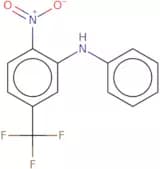
CAS :<p>N-Phenyl-2-nitro-4-trifluoromethylphenylamine is a versatile building block. It is a fine chemical that is used in research and as a reagent, speciality chemical, or useful scaffold for the synthesis of complex compounds. This compound has CAS No. 5108-04-3 and can be used as an intermediate in reactions. It is also useful in the synthesis of various types of building blocks. N-Phenyl-2-nitro-4-trifluoromethylphenylamine has been shown to be a high quality product that can be used in various ways.</p>Formule :C13H9F3N2O2Degré de pureté :Min. 95%Masse moléculaire :282.22 g/mol3-Methyl-6-nitro-2,4,5-trifluorobenzoic acid
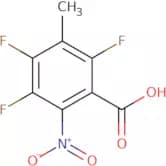
CAS :<p>3-Methyl-6-nitrobenzoic acid is a chemical intermediate in the production of nitrobenzene, which is used as a precursor to other chemicals. It can be used for the synthesis of 3-methyl-6-nitrobenzoic acid (used in the synthesis of pesticides) and 3,5-dimethyl-2,4,6-trinitrobenzoic acid (used in the synthesis of dyes). This chemical has been recrystallized and contains less than 1% impurities such as halogens or methylbenzoic acid.</p>Formule :C8H4F3NO4Degré de pureté :Min. 95%Masse moléculaire :235.12 g/mol3-Ethoxy-4-hydroxyphenylnitroethene
CAS :<p>3-Ethoxy-4-hydroxyphenylnitroethene is a fine chemical with the CAS number 90922-85-3. It is a versatile building block that can be used for research, as a reagent, or as a speciality chemical. This compound has many applications in synthesis due to its high quality and complex nature. It is also an intermediate in the production of other compounds.</p>Formule :C10H11NO4Degré de pureté :Min. 95%Couleur et forme :PowderMasse moléculaire :209.2 g/molN-α-[2,4-Dinitro-5-fluorophenyl]-D-alanine amide
CAS :N-alpha-[2,4-Dinitro-5-fluorophenyl]-D-alanine amide is a potential drug for the treatment of cancer. It has been shown to be effective in inhibiting the proliferation of human prostate carcinoma cells in culture. This compound is a potential anticancer drug that binds to DNA and inhibits topoisomerase II, which is an enzyme involved in DNA replication. The mechanism of action of this drug was studied using methods such as optimization, isomers, plates, trifluoroacetic acid, tautomers, amino acid analysis and nanomolar concentrations. N-alpha-[2,4-Dinitro-5-fluorophenyl]-D-alanine amide has also been shown to inhibit cyanobacteria growth.Formule :C9H9N4O5FDegré de pureté :Min. 95%Couleur et forme :Light (Or Pale) Yellow To Yellow SolidMasse moléculaire :272.0557Boc-2-nitro-L-phenylalanine
CAS :<p>Boc-2-nitro-L-phenylalanine is a chemical building block that has been used as an intermediate in the synthesis of other compounds. It has been shown to be a useful scaffold for the synthesis of complex compounds and can be used as a reagent in organic syntheses. Boc-2-nitro-L-phenylalanine is commercially available from several suppliers and can be purchased at low cost.</p>Formule :C14H18N2O6Degré de pureté :Min. 95%Couleur et forme :PowderMasse moléculaire :310.3 g/molN-alpha,epsilon-Bis-Boc-L-lysine 4-nitrophenyl ester
CAS :N-alpha,epsilon-Bis-Boc-L-lysine 4-nitrophenyl ester is a chiral compound that has been used as an antigen for the detection of antibodies against lysine. It is a synthetic peptide that can be used as an adjuvant to improve the efficacy of vaccines. The kinetic and orientations of the antigen were determined by electrospray ionization mass spectrometry. The enantiomeric composition was determined using high performance liquid chromatography with chiral stationary phase, followed by thioether cleavage and liquid chromatography.Formule :C22H33N3O8Degré de pureté :Min. 95%Couleur et forme :White To Beige To Light (Or Pale) Yellow SolidMasse moléculaire :467.51 g/mol4-Nitro-4'-acetylaminodiphenyl sulfone
CAS :<p>4-Nitro-4'-acetylaminodiphenyl sulfone is a high quality reagent that is useful for the synthesis of complex compounds. It is a useful intermediate and building block in the synthesis of fine chemicals, pharmaceuticals, and other organic compounds. 4-Nitro-4'-acetylaminodiphenyl sulfone has CAS No. 1775-37-7 and can be used as a speciality chemical in research laboratories. This compound has versatile uses in many types of reactions and can be used as a reaction component in the synthesis of many types of organic compounds.</p>Formule :C14H12N2O5SDegré de pureté :Min. 95%Masse moléculaire :320.32 g/mol1,5-Dinitroanthrachinon
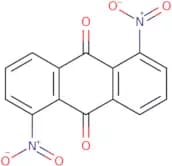
CAS :<p>1,5-Dinitroanthracene is an aromatic hydrocarbon that is insoluble in most solvents. It has a high activation energy and is activated by acid supplementation or organic solvents. 1,5-Dinitroanthracene undergoes a radical reaction to form azobenzene, which can be used as a diazonium salt. This compound's liquid chromatography properties are affected by the monosodium salt that it forms with water. The monoammonium salt of 1,5-dinitroanthracene is more soluble than the disodium salt and has a lower retention time in liquid chromatography. The chemical kinetic of 1,5-dinitroanthracene depends on its amine content. Dry powder formulations of this compound are available for use in electrochemical experiments.</p>Formule :C14H6N2O6Degré de pureté :(%) Min. 95%Couleur et forme :PowderMasse moléculaire :298.21 g/mol3,5-Dinitrosalicylic acid sodium
CAS :<p>3,5-Dinitrosalicylic acid sodium is an inorganic compound that is used as a biochemical reagent. It can be used to measure the phosphatase activity of muscle and liver samples, as well as to determine the level of autophagy in cells. 3,5-Dinitrosalicylic acid sodium has been shown to inhibit the activity of a number of enzymes, including acid phosphatase and thiourea. When combined with chloroplast or mitochondria, it can be used to determine the rate of electron transport chain. 3,5-Dinitrosalicylic acid sodium binds to sulfhydryl groups on proteins and prevents them from being used for other purposes. This process optimization leads to engulfment followed by lysosomal degradation.</p>Formule :C7H3N2NaO7Degré de pureté :Min. 95%Couleur et forme :PowderMasse moléculaire :250.1 g/mol3-Hydroxy-4-nitrobenzoic acid
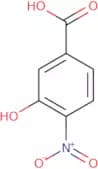
CAS :<p>3-Hydroxy-4-nitrobenzoic acid is a hydroxybenzoic acid that has been used for the synthesis of other compounds. It is an intermediate in the Friedel-Crafts reaction, which involves the conversion of 3-hydroxybenzoic acid to 3-ethylbenzthiazoline-6-sulfonic acid. It also forms reaction products with p-hydroxybenzoic acid and 5-nitrosalicylic acid as well as monosodium salt. This chemical can be analyzed using spectroscopy, enzymatic reactions, or laser ablation. It can also be used in analytical chemistry to identify phospholipases and hydroxybenzoic acids.</p>Formule :C7H5NO5Degré de pureté :Min. 95%Couleur et forme :Slightly Yellow PowderMasse moléculaire :183.12 g/molFenitrothion
CAS :<p>Fenitrothion is a neurotoxic organophosphate insecticide that has been widely used in agriculture. It is toxic to humans and animals, causing headaches, dizziness, nausea, vomiting, diarrhea, and respiratory distress. Fenitrothion has been shown to cause locomotor activity changes in rats. The matrix effect of this chemical has also been studied and found to be high resistance when compared with other organophosphates. Toxicological studies on fenitrothion have shown that it is toxic to the liver and kidneys as well as having biochemical composition that may lead to metabolic disorders. The toxicity of fenitrothion has also been studied using an in vitro assay in which it was found that the compound inhibits acetylcholinesterase (AChE) enzyme activities. Fenitrothion can be analyzed using dispersive solid-phase extraction (DSPE), which involves extracting the chemical from a solid matrix by adsorption on silica particles followed by el</p>Formule :C9H12NO5PSDegré de pureté :Min. 95%Couleur et forme :Buff To Dark BrownMasse moléculaire :277.24 g/mol1-(3-Bromophenyl)-2-nitropropane
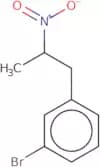
CAS :<p>1-(3-Bromophenyl)-2-nitropropane is a fine chemical that is used as a building block in the synthesis of complex organic compounds. It can be used as a reagent and speciality chemical with high quality. 1-(3-Bromophenyl)-2-nitropropane is versatile for use in reactions, such as coupling reactions, because it can be used as an intermediate or scaffold to create many different compounds. CAS No.: 155988-18-4</p>Formule :C9H10BrNO2Degré de pureté :Min. 95%Masse moléculaire :244.09 g/mol(1-(4-Diethylamino)phenyl)-2-nitroethene
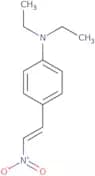
CAS :<p>(1-(4-Diethylamino)phenyl)-2-nitroethene is a fluorescent probe that can be used to measure the growth rate of microorganisms. It is also a polarizable fluorescent molecule that is sensitive to environmental effects such as pH, temperature, and light intensity. This compound has been used as a chromophore in optical devices and has been observed to have linear responses to changes in time constants. The fluorescence of (1-(4-diethylamino)phenyl)-2-nitroethene is proportional to the molecular response of the protein or nucleic acid it binds to. This compound is also an inorganic compound with dipole moments, which are properties that allow it to interact with other compounds.</p>Formule :C12H16N2O2Degré de pureté :Min. 95%Masse moléculaire :220.27 g/mol4-Methoxy-2-nitro-benzaldehyde
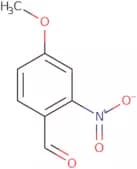
CAS :<p>4-Methoxy-2-nitrobenzaldehyde is a chemical that is used in the synthesis of many pharmaceuticals. It has been shown to be an effective agent in the treatment of cancer cells and is activated by chloride ions. 4-Methoxy-2-nitrobenzaldehyde reacts with nucleophiles such as hydroxide, amines, or thiols in order to form alkylating agents. This reaction can be used for the synthesis of many drugs including antihistamines, antidiabetic drugs, and antipsychotics. The rate of this reaction increases with increasing temperature. It also undergoes demethylation when exposed to nitrous acid, which may lead to a different product.</p>Formule :C8H7NO4Degré de pureté :Min. 95%Masse moléculaire :181.15 g/mol



![N-α-[2,4-Dinitro-5-fluorophenyl]-D-alanine amide](/_next/image/?url=https%3A%2Fstatic.cymitquimica.com%2Fproducts%2F3D%2Fthumb-webp%2FFD48427.webp&w=3840&q=75)