Nitro
Les composés nitro sont des molécules organiques contenant un ou plusieurs groupes nitro (NO2). Ces composés sont largement utilisés dans la synthèse d'explosifs, de produits pharmaceutiques et de colorants. Chez CymitQuimica, nous proposons une large gamme de composés nitro de haute qualité pour soutenir vos applications de recherche et industrielles, garantissant des résultats sûrs et efficaces. Notre sélection comprend une variété de composés nitro adaptés à différentes synthèses chimiques et applications.
2516 produits trouvés pour "Nitro"
Trier par
Degré de pureté (%)
0
100
|
0
|
50
|
90
|
95
|
100
6-Nitrobenzothiazole
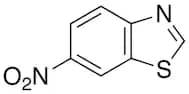
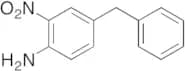
CAS :Produit contrôlé<p>Applications A related compound of 1,2,3-benzothiadiazoles as synergists against the housefly (M. domestica).<br>References Gil, D.L., et al.: Pesticide Biochem. Physiol., 6, 338 (1976),<br></p>Formule :C7H4N2O2SCouleur et forme :NeatMasse moléculaire :180.184-Benzyl-2-nitroaniline
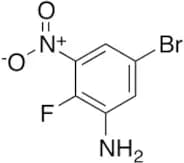
CAS :Produit contrôléFormule :C13H12N2O2Couleur et forme :NeatMasse moléculaire :228.2475-Bromo-2-fluoro-3-nitroaniline
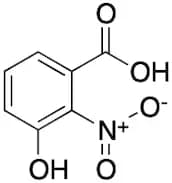
CAS :Produit contrôléFormule :C6H4BrFN2O2Couleur et forme :NeatMasse moléculaire :235.0113-Hydroxy-2-nitrobenzoic Acid
CAS :Produit contrôlé<p>Applications 3-Hydroxy-2-nitrobenzoic Acid (cas# 602-00-6) is a compound useful in organic synthesis.<br></p>Formule :C7H5NO5Couleur et forme :NeatMasse moléculaire :183.121-Amino-3-nitroadamantane
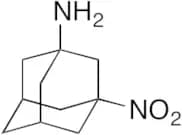
CAS :Produit contrôlé<p>Impurity Vildagliptin Impurity<br>Applications 1-Amino-3-nitroadamantane has potential application in co-catalyst for transition metal reactions and maybe a useful intermediate for the synthesis of Vildagliptin (V305000), an antidiabetic drug that inhibits dipeptidyl peptidase 4 (DPP-4). Vildagliptin exhibits antioxidant properties and may be an apoptotic compound against pancreatic cancer cells.<br>References Amritha, C., et al.: JCDR 9, FC14 (2015); Ahren, B., et al.: J. Clin. Endocrinol. Metab., 89, 2078 (2004), Ahren, B., et al.: Diabetes Care, 27, 2874 (2004), Barlocco, D., et al.: Curr. Opin. Invest. Drugs, 5, 1094 (2004)<br></p>Formule :C10H16N2O2Couleur et forme :NeatMasse moléculaire :196.25Methyl 2-fluoro-3-nitrobenzoate
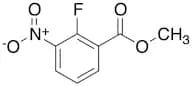
CAS :Produit contrôlé<p>Applications Methyl 2-fluoro-3-nitrobenzoate<br></p>Formule :C8H6FNO4Couleur et forme :NeatMasse moléculaire :199.144-Nitroaniline
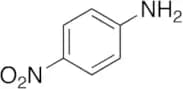
CAS :Produit contrôléFormule :C6H6N2O2Couleur et forme :YellowMasse moléculaire :138.12N-(3-Dibenzofuranyl)-5-nitro-2-furancarboxamide
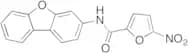
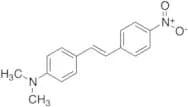
CAS :<p>Applications N-(3-Dibenzofuranyl)-5-nitro-2-furancarboxamide is synthesized from Dibenzo[b,d]furan-3-amine (D418205), which is a building block used as a reactant in the preparation of dibenzofuryl(phosphonomethyl)alanines as endothelin converting enzyme inhibitors.<br>References De Lombaert, S., et al.: J. Med. Chem., 43, 488 (2000);<br></p>Formule :C17H10N2O5Couleur et forme :NeatMasse moléculaire :322.274-Dimethylamino-4'-nitrostilbene
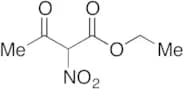
CAS :Produit contrôlé<p>Applications 4-Dimethylamino-4'-nitrostilbene (cas# 4584-57-0) is a useful research chemical.<br> Not a dangerous good if item is equal to or less than 1g/ml and there is less than 100g/ml in the package<br></p>Formule :C16H16N2O2Couleur et forme :NeatMasse moléculaire :268.32Ethyl Nitroacetoacetate
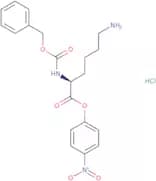
CAS :Produit contrôléFormule :C6H9NO5Couleur et forme :NeatMasse moléculaire :175.139N-α-Z-L-lysine 4-nitrophenyl ester hydrochloride
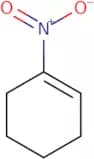
CAS :<p>N-alpha-Z-L-lysine 4-nitrophenyl ester hydrochloride is a protease that belongs to the family of serine proteases. It is produced by the biotechnological process of enzymatic extraction from the natural polysaccharide carrageenan. This product has been used in the production of high yield and purified enzymes for industrial applications. The enzyme has been shown to have cysteine and hydrolytic activity, as well as being able to break peptidic bonds in peptides. N-alpha-Z-L-lysine 4-nitrophenyl ester hydrochloride also has a high specificity for proteolytic cleavage of proteins at their carboxy terminal end.</p>Formule :C20H23N3O6•HClDegré de pureté :Min. 95%Masse moléculaire :437.87 g/mol1-Nitro-Cyclohexene
CAS :<p>1-Nitro-cyclohexene is an aromatic compound that reacts with nitric oxide to form a nitroso. 1-Nitro-cyclohexene has been shown to be a reactive intermediate in the Covid-19 pandemic, catalyzing the formation of covidimycin from dimethoxymethylpenicillin. 1-Nitro-cyclohexene also has been found to react with hydrogen peroxide and flavin mononucleotide to form hydroxyl radicals, which are highly reactive chemical species capable of damaging DNA and other cellular components. The toxicity of 1-nitrocyclohexene is related to its ability to form nitrosamines and nitrophenols, which are both carcinogenic. 1-Nitro-cyclohexene can also react with protonated amines or amides to form imines or imides, which are chemically stable species that can persist in the environment.</p>Formule :C6H9NO2Degré de pureté :Min. 95%Masse moléculaire :127.14 g/mol6-Amino-5-nitroso-2-thiouracil
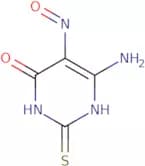
CAS :<p>6-Amino-5-nitroso-2-thiouracil is a water molecule that has been synthesized and characterized by the kinetic method. It has an intense absorption line at 514 nm and can be used as a marker for technetium. 6-Amino-5-nitroso-2-thiouracil is also a ligand, which is a chemical that binds to metal ions in order to form coordination complexes. 6-Amino-5-nitroso-2-thiouracil is formed by the reaction of chloramine with ammonia, as well as other reactions involving chlorine atoms. 6Amino - 5 nitroso - 2 thiouracil can be used as a chelate ring, which is a type of ligand that contains both nitrogen and sulfur atoms. Bleomycin, a five membered ring molecule, reacts with 6 amino - 5 nitroso - 2 thiouracil to</p>Formule :C4H4N4O2SDegré de pureté :Min. 95%Masse moléculaire :172.17 g/mol3-Chloro-4-nitropyridine 1-oxide
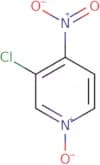
CAS :<p>3-Chloro-4-nitropyridine 1-oxide is the condensation product of 2-chloro-3-nitropyridine and nitric acid. 3-Chloro-4-nitropyridine 1-oxide has an isomeric nature and can be purified by recrystallization from water. The compound has a molecular weight of 286.1 g/mol and a monoclinic crystal structure. It has two n-oxides, which are isomers of each other, with nmr spectra that differ by the shift in the chemical shifts of the protons on the aromatic ring. 3-Chloro-4-nitropyridine 1-oxide condenses with lanthanides to form lanthanide complexes, such as Eu(III)(3,5'-ClO 4 ) 2 . This compound is also used in the synthesis of phenoxathiine derivatives that have antihypertensive activity.</p>Formule :C5H3ClN2O3Degré de pureté :Min. 95%Masse moléculaire :174.54 g/mol4-(Benzyloxy)-5-methoxy-2-nitrobenzaldehyde
CAS :<p>4-(Benzyloxy)-5-methoxy-2-nitrobenzaldehyde (BOMBA) is an amide with affinity for microtubules. It has been shown to interact with the microtubule lattice and inhibit the polymerization of tubulin. This leads to a decrease in cell viability and cytotoxicity, as well as a decrease in tumor size. In vivo studies have demonstrated that BOMBA inhibits tumor growth by inducing thrombosis and coagulation, which results in reduced blood flow to the tumor. The mechanism of action of BOMBA is thought to be due to its ability to form sulfamates, which are known for their anti-coagulant activity.</p>Formule :C15H13NO5Degré de pureté :Min. 95%Masse moléculaire :287.27 g/mol(4-Fluoro-3-Nitrophenyl)Acetonitrile
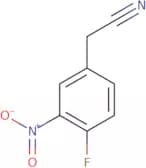
CAS :<p>4-Fluoro-3-nitrophenylacetonitrile is a monomer that can be synthesised from the reaction of carbamic acid and diphenyl ether. It is chiral, stereoselective and nucleophilic. 4-Fluoro-3-nitrophenylacetonitrile can also be synthesised by reacting fluoroacetamide with sodium cyanide in water, forming the corresponding amide, which reacts with acetonitrile to form the nitro compound. The anti-cancer properties of 4-fluoro-3 nitrophenylacetonitrile have been studied in vitro and in vivo. This substance has been shown to inhibit growth of cancer cells and induce apoptosis. In addition, this substance has been used as a synthetic strategy for dihydroisoquinolines, which are important for their anti-cancer properties.</p>Formule :C8H5FN2O2Degré de pureté :Min. 95%Masse moléculaire :180.14 g/molN-Nitroso guvacoline
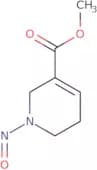
CAS :<p>N-Nitroso guvacoline is a nitrosated guvacoline analog that is used to induce cancer in animals and as an experimental tool for studying the role of acetylcholine in lung cancer. N-Nitroso guvacoline has been shown to inhibit the growth of bacteria such as typhimurium and nadph-cytochrome p450 in the presence of fatty acids, suggesting that it may be genotoxic. The carcinogenic effects of N-nitrosoguvacolin were studied using Sprague-Dawley rats exposed to this agent by inhalation. The rats were found to have increased levels of urinary nitrite and nitrate, which are products from the metabolism of N-nitrosoguvacolin.</p>Formule :C7H10N2O3Degré de pureté :Min. 95%Masse moléculaire :170.17 g/molN,N-Dimethyl-2-nitroaniline
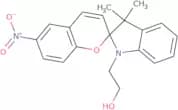
CAS :<p>N,N-Dimethyl-2-nitroaniline is a colorless liquid with a characteristic odor. It has a boiling point of 170 degrees Celsius and a melting point of -10 degrees Celsius. The molecule is composed of two nitro groups and one methyl group, which are in an ionic bond. N,N-Dimethyl-2-nitroaniline can be found in solvents such as hexane or benzene and has an intramolecular hydrogen bonding frequency of 3.4 GHz. This compound is soluble in water and ethanol, but insoluble in ether.</p>Formule :C8H10N2O2Degré de pureté :Min. 95%Masse moléculaire :166.18 g/mol1-(2-Hydroxyethyl)-3,3-dimethylindolino-6'-nitrobenzopyrylospiran
CAS :<p>Please enquire for more information about 1-(2-Hydroxyethyl)-3,3-dimethylindolino-6'-nitrobenzopyrylospiran including the price, delivery time and more detailed product information at the technical inquiry form on this page</p>Degré de pureté :Min. 95%2,6-Dibromo-3-nitropyridine
CAS :2,6-Dibromo-3-nitropyridine is a chemical compound that has been shown to inhibit serine protease activity. The compound was shown to be an inhibitor of the enzyme trypsin, and showed some activity against a number of other proteases. 2,6-Dibromo-3-nitropyridine has also been shown to inhibit nucleophilic alkylation of DNA bases by 2,6-dichloroquinoxaline. 2,6-Dibromo-3-nitropyridine is a targeted inhibitor that binds to the active site of the enzyme and prevents the formation of an enzyme-substrate complex. This inhibition leads to a decrease in the production of proteins essential for cell division.Formule :C5H2Br2N2O2Degré de pureté :Min. 95%Masse moléculaire :281.89 g/mol