Nitro
Les composés nitro sont des molécules organiques contenant un ou plusieurs groupes nitro (NO2). Ces composés sont largement utilisés dans la synthèse d'explosifs, de produits pharmaceutiques et de colorants. Chez CymitQuimica, nous proposons une large gamme de composés nitro de haute qualité pour soutenir vos applications de recherche et industrielles, garantissant des résultats sûrs et efficaces. Notre sélection comprend une variété de composés nitro adaptés à différentes synthèses chimiques et applications.
2516 produits trouvés pour "Nitro"
Trier par
Degré de pureté (%)
0
100
|
0
|
50
|
90
|
95
|
100
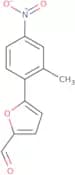
5-(2-Methyl-4-nitrophenyl)-2-furaldehyde
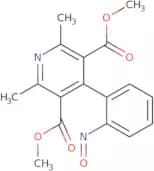
CAS :<p>Please enquire for more information about 5-(2-Methyl-4-nitrophenyl)-2-furaldehyde including the price, delivery time and more detailed product information at the technical inquiry form on this page</p>Formule :C12H9NO4Degré de pureté :Min. 95%Masse moléculaire :231.2 g/molDehydronitroso nifedipine
CAS :<p>Dehydronitroso nifedipine is an antibiotic-resistant drug that is used to treat infectious diseases. It is a carboxylate, which can react with water to form a reactive intermediate. This reactive intermediate reacts with various functional groups, including amines and amino acids, leading to the formation of products such as trimers and tetramers. Dehydronitroso nifedipine has been shown to have physiological activities in muscle cells and tissues. Dehydronitroso nifedipine has two structural analogs: nitrosobenzene and nitrosophenol. Nitrosobenzene is used as an analytical reagent in the detection of beta-lactamase inhibitors. Nitrosophenol can be used as a linker for the synthesis of triazines.br>br> END>></p>Formule :C17H16N2O5Degré de pureté :Min. 95%Masse moléculaire :328.32 g/mol5-Nitropseudocumene
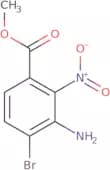
CAS :<p>5-Nitropseudocumene (5NPC) is a molecule that belongs to the group of methylbenzenes. It is a precursor to dyes such as nitrobenzene, which are used in the production of nylon. 5NPC is also an intermediate in the synthesis of trifluoroacetic acid, which is used as an industrial solvent and chemical reagent. The acetoxylation of 5NPC with acetic acid yields methylbenzoate. This reaction requires two molecules of acetic acid for each molecule of 5NPC. Desorption from the catalyst can be achieved by treatment with methyl groups or nitrous acid. Naphthalene reacts with 5NPC to form biphenyl and nitric oxide gas, which are released into the atmosphere. The inorganic residue can be removed by filtration.</p>Formule :C9H11NO2Degré de pureté :Min. 95%Couleur et forme :PowderMasse moléculaire :165.19 g/molMethyl 3-amino-4-bromo-2-nitrobenzoate
CAS :<p>Please enquire for more information about Methyl 3-amino-4-bromo-2-nitrobenzoate including the price, delivery time and more detailed product information at the technical inquiry form on this page</p>Formule :C8H7BrN2O4Degré de pureté :Min. 95%Masse moléculaire :275.06 g/mol2-Nitro-9H-carbazole
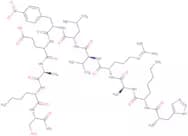
CAS :<p>2-Nitro-9H-carbazole is a nitro aromatic compound that is used in the synthesis of other organic compounds. It has shown mutagenic and carcinogenic properties, as well as toxicity to the liver and kidney. 2-Nitro-9H-carbazole is metabolized by a number of metabolic transformations, including activation by cytochrome P450 enzymes and conjugation with glucuronic acid. The liver enzyme S9 also catalyzes the conversion of 2-nitro-9H-carbazole to its ultimate metabolite, 3-methylcholanthrene, which is cytotoxic to both cultured hepatocytes and lung cells.</p>Formule :C12H8N2O2Degré de pureté :Min. 95%Couleur et forme :PowderMasse moléculaire :212.2 g/molHIV Protease Substrate III
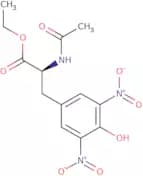
CAS :<p>HIV protease is a large protein that cleaves the polyprotein of HIV. This enzyme is essential for viral replication and so any drug that inhibits its function will inhibit HIV infectivity. The HIV protease substrate III, which contains histidine at position 3, has been used to study the effects of HIV proteases on different tissue types. It has been shown that this substrate can be detected in the cytoplasm and vacuole of cells infected with HIV, indicating that it may be involved in the transport process. The addition of an acidic amino acid (p-nitro-phenylalanine) to the substrate increases its antiviral activity by increasing its stability against proteolytic enzymes and allowing it to penetrate into cells more easily.</p>Formule :C58H95N19O16Degré de pureté :Min. 95%Masse moléculaire :1,314.49 g/molAc-3,5-dinitro-Tyr-OEt
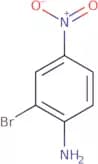
CAS :<p>Please enquire for more information about Ac-3,5-dinitro-Tyr-OEt including the price, delivery time and more detailed product information at the technical inquiry form on this page</p>Formule :C13H15N3O8Degré de pureté :Min. 95%Masse moléculaire :341.27 g/mol2-Bromo-4-nitroaniline
CAS :<p>2-Bromo-4-nitroaniline is a chemical compound that belongs to the group of amines. It has been shown to inhibit the activity of insulin and epidermal growth factor (EGF) receptors. This inhibition leads to decreased insulin sensitivity and reduced EGF receptor activation, respectively. 2-Bromo-4-nitroaniline has also been shown to have growth factor activity in a mouse model for wound healing, which may be due to its ability to inhibit the tyrosine kinase domain of epidermal growth factor. The irreversible inhibition of this enzyme by 2-bromo-4-nitroaniline prevents downstream signaling pathways that regulate cell proliferation and differentiation.</p>Formule :C6H5BrN2O2Degré de pureté :Min. 95%Couleur et forme :PowderMasse moléculaire :217.02 g/mol4-Fluoro-2-methoxy-5-nitroaniline
CAS :<p>Intermediate in the synthesis of osimertinib (AZD9291)</p>Formule :C7H7FN2O3Degré de pureté :Min. 95%Masse moléculaire :186.14 g/mol2,5-Dinitrofluorene
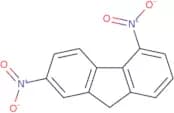
CAS :<p>2,5-Dinitrofluorene is a carcinogenic compound that has been shown to cause cancer in laboratory animals. It can be found in high concentrations in tissues of rats and other animals. 2,5-Dinitrofluorene is metabolized by nitroreductase to the amide form. This compound has been shown to cause cancer in rats and mice when administered intramammary or topically. The tumorigenicity of 2,5-dinitrofluorene is significant at high doses, but it does not show significant effects at low doses. This agent also causes tumours on the skin of mice when applied topically.<br>2,5-Dinitrofluorene is an environmental pollutant that may be found in air emissions from coal burning power plants and vehicle exhausts, as well as in the soil near these facilities.</p>Formule :C13H8N2O4Degré de pureté :Min. 95%Couleur et forme :PowderMasse moléculaire :256.21 g/molAc-3,5-dinitro-Tyr-OH
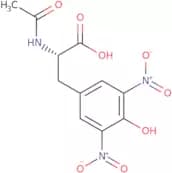
CAS :<p>Please enquire for more information about Ac-3,5-dinitro-Tyr-OH including the price, delivery time and more detailed product information at the technical inquiry form on this page</p>Formule :C11H11N3O8Degré de pureté :Min. 95%Masse moléculaire :313.22 g/mol4-Bromo-2-nitro-1H-imidazole
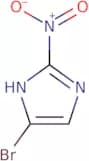
CAS :<p>4-Bromo-2-nitro-1H-imidazole (4BNI) is a synthetic drug that is used in the treatment of cancer. 4BNI inhibits the synthesis of DNA, which leads to cell death by preventing the production of proteins vital for cell division. When 4BNI is taken up by cells it becomes activated and binds to DNA, inhibiting the synthesis of RNA and protein. This process eventually leads to apoptosis (cell death). 4BNI has been shown to be effective against tumors in mice, but has not yet been tested on humans. The uptake of 4BNI in tumor tissue can be visualized using hypoxia imaging techniques such as positron emission tomography or magnetic resonance imaging.</p>Formule :C3H2BrN3O2Degré de pureté :Min. 95%Couleur et forme :PowderMasse moléculaire :191.97 g/molBis(2-nitrophenyl) disulfide
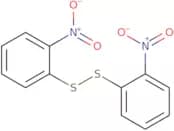
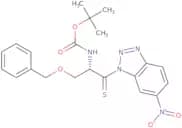
CAS :<p>Bis(2-nitrophenyl) disulfide is an organic solvent that has a wide range of potential uses. It is a useful reagent for the synthesis of amines, solutes, and other compounds in organic chemistry. Bis(2-nitrophenyl) disulfide can be used to form stable bonds between two different organic molecules by reacting with an electron-rich molecule such as amine or alkyne. This reaction forms a covalent bond between two molecules through the formation of a new bond between the sulfur atom and the carbon of one molecule and an electron-deficient molecule such as nitro or acetonitrile. Bis(2-nitrophenyl) disulfide reacts with chloride ions to form bis(chlorosulfonyl)disulfide, which can be used to synthesize chloroalkanes and fluorinated alkenes. Disulfides are also useful in metathesis reactions, which are reactions that involve the</p>Formule :C12H8N2O4S2Degré de pureté :Min. 95%Masse moléculaire :308.34 g/molBoc-Thionoser(Bzl)-1-(6-nitro)benzotriazolide
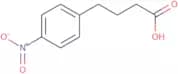
CAS :<p>Please enquire for more information about Boc-Thionoser(Bzl)-1-(6-nitro)benzotriazolide including the price, delivery time and more detailed product information at the technical inquiry form on this page</p>Formule :C21H23N5O5SDegré de pureté :Min. 95%Masse moléculaire :457.5 g/mol4-Nitro benzenebutanoic acid
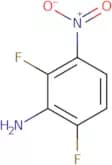
CAS :<p>4-Nitro benzenebutanoic acid is a synthetic molecule that has not been extensively studied in biological systems. It is a calcium-binding molecule and may be used to study the mechanisms of calcium binding. 4-Nitrobenzenebutanoic acid has also shown some bifunctional activity and is used as a substrate in pharmacokinetic studies. The synthesis of this compound can be achieved by reacting azobenzene with butyric acid in the presence of an amine and inulin. This reaction produces nitrobenzenebutanoic acid, which undergoes hydrolysis to yield 4-nitrobenzenebutanoic acid.</p>Formule :C10H11NO4Degré de pureté :Min. 95%Masse moléculaire :209.2 g/mol2,6-difluoro-3-nitroaniline
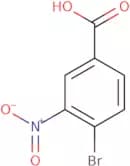
CAS :<p>Please enquire for more information about 2,6-difluoro-3-nitroaniline including the price, delivery time and more detailed product information at the technical inquiry form on this page</p>Formule :C6H4F2N2O2Degré de pureté :Min. 95%Couleur et forme :PowderMasse moléculaire :174.11 g/mol4-Bromo-3-nitrobenzoicacid
CAS :<p>4-Bromo-3-nitrobenzoicacid is a fluorogenic substrate for the labeling of d-serine. It reacts with picric acid to form a fluorescent product, which can be detected by fluorescence spectroscopy. 4BnBA has been used in immobilized enzyme studies to determine the catalysis of chloride and the fluorescence response of chloride. The hydrolysis of 4BnBA by esterases produces 3-nitroaniline, which has been shown to be an intermediate for the synthesis of flavin mononucleotide (FMN). FMN is an essential cofactor for catalytic reactions involving ribonucleotides and ATP. The subunits of FMN are flavin adenine dinucleotide (FAD) and nicotinamide adenine dinucleotide (NAD). 4BnBA has also been analysed using synthetic techniques and functional theory to determine its role in biomolecular processes.</p>Formule :C7H4BrNO4Degré de pureté :Min. 95%Couleur et forme :PowderMasse moléculaire :246.02 g/mol(2-{Ethyl-[4-(4-nitro-phenylazo)-phenyl]-amino}-ethoxy)-acetic acid-4-nitro-phenyl ester
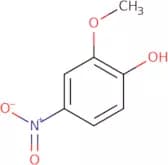
CAS :<p>Please enquire for more information about (2-{Ethyl-[4-(4-nitro-phenylazo)-phenyl]-amino}-ethoxy)-acetic acid-4-nitro-phenyl ester including the price, delivery time and more detailed product information at the technical inquiry form on this page</p>Formule :C24H23N5O7Degré de pureté :Min. 95%Masse moléculaire :493.47 g/mol4-Nitroguaiacol
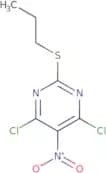
CAS :<p>4-Nitroguaiacol is a nitro compound that has been shown to inhibit the growth of bacteria by reacting with fatty acids. The mechanism of this reaction is not well understood, but it may be due to the formation of an intermediate nitrite reductase that reduces nitrite to nitric oxide. 4-Nitroguaiacol has been shown to have antioxidative properties and can reduce hydrochloric acid in vitro. This compound also has been used as a clinical study for the treatment of bacterial infections.</p>Formule :C7H7NO4Degré de pureté :Min. 95%Couleur et forme :PowderMasse moléculaire :169.13 g/mol4,6-Dichloro-5-nitro-2-propylthiopyrimidine
CAS :<p>Intermediate in the synthesis of ticagrelor</p>Formule :C7H7Cl2N3O2SDegré de pureté :Min. 95%Masse moléculaire :268.12 g/mol




![(2-{Ethyl-[4-(4-nitro-phenylazo)-phenyl]-amino}-ethoxy)-acetic acid-4-nitro-phenyl ester](/_next/image/?url=https%3A%2Fstatic.cymitquimica.com%2Fproducts%2F3D%2Fthumb-webp%2FFE111186.webp&w=3840&q=75)