Nitro
2517 produits trouvés pour "Nitro"
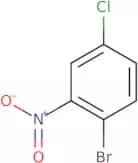
2-Bromo-5-chloronitrobenzene
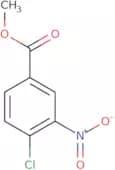
CAS :2-Bromo-5-chloronitrobenzene is a synthetic drug that has been shown to inhibit the growth of cancer cells. It is a potent antagonist at the tyrosine kinase receptor, which may be involved in the development of some cancers. The drug was first synthesized in 1887 by German chemists for use as an antipsychotic drug, but it was not until 1962 that researchers discovered its therapeutic value in treating schizophrenia. Clozapine also blocks the activity of other receptors including factor receptors and growth factors, which may account for its antitumor effects. Clozapine has also been used to treat resistant breast cancer cases with imatinib therapy.Formule :C6H3BrClNO2Degré de pureté :Min. 95%Couleur et forme :PowderMasse moléculaire :236.45 g/mol4-Chloro-3-nitrobenzoic acid methyl ester
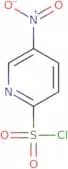
CAS :4-Chloro-3-nitrobenzoic acid methyl ester is a chemical compound that inhibits the synthesis of nucleic acids. It binds to the functional groups of DNA, preventing replication and transcription. 4-Chloro-3-nitrobenzoic acid methyl ester also inhibits protein synthesis by inhibiting ribosomal RNA which is required for translation. This agent has been shown to induce apoptotic cell death in leukemia cells, HL60 cells, and other types of cancer cells in vitro. 4-Chloro-3-nitrobenzoic acid methyl ester has a potent inhibitory activity against replicons in vitro and is a synthetic molecule with two sulfoxide functional groups.Formule :C8H6ClNO4Degré de pureté :Min. 95%Couleur et forme :PowderMasse moléculaire :215.59 g/mol5-Nitro-pyridine-2-sulfonyl chloride
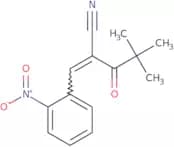
CAS :5-Nitro-pyridine-2-sulfonyl chloride is a chemical reagent that is used in the synthesis of various organic compounds. It is a versatile building block and can be used as an intermediate for the synthesis of other compounds. 5-Nitro-pyridine-2-sulfonyl chloride is also a reaction component in the synthesis of some pharmaceutical drugs, such as benzoic acid, which can be used to manufacture more complex compounds, such as antibiotics.Formule :C5H3ClN2O4SDegré de pureté :Min. 90 Area-%Couleur et forme :PowderMasse moléculaire :222.61 g/mol2-(2,2-dimethylpropanoyl)-3-(2-nitrophenyl)prop-2-enenitrile
CAS :Please enquire for more information about 2-(2,2-dimethylpropanoyl)-3-(2-nitrophenyl)prop-2-enenitrile including the price, delivery time and more detailed product information at the technical inquiry form on this pageDegré de pureté :Min. 90%1-Chloro-2,6-dinitrobenzene
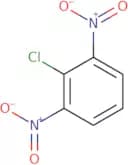
CAS :1-Chloro-2,6-dinitrobenzene is a synthetic compound that has been shown to be an effective antiviral agent in vitro. It has a high affinity for nucleophilic sites and can react with the nitro group of compounds to form dinitrobenzoic acid derivatives. 1-Chloro-2,6-dinitrobenzene is highly reactive and can undergo thermolytic decomposition, which limits its use as an antiviral agent. This chemical is not active against HIV or influenza A virus strains.Formule :C6H3ClN2O4Degré de pureté :Min. 98 Area-%Couleur et forme :Clear LiquidMasse moléculaire :202.55 g/molEthyl 3,5-dinitrobenzoate
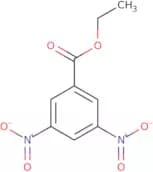
CAS :Ethyl 3,5-dinitrobenzoate is an ethyl ester of 3,5-dinitrobenzoic acid. It is used as a stabilizer for polymers and plastics. It has been shown to be effective in the analysis of molecular descriptors, with a high molecular weight and moderate polarity. This molecule has not been found to have any amine groups or nitro groups, but does contain one hydroxyl group and two methyl groups. Ethyl 3,5-dinitrobenzoate also contains one carboxylic acid group that can form an ester with a second molecule. The refractive index is 1.638 and the inorganic content is 0%. The malic acid content is 12%. Regression analysis shows that the melting point of this compound is 93 degrees Celsius.Formule :C9H8N2O6Degré de pureté :Min. 95%Couleur et forme :PowderMasse moléculaire :240.17 g/molMethyl 4-bromo-3-nitrobenzoate
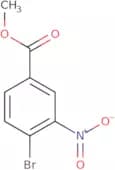
CAS :Methyl 4-bromo-3-nitrobenzoate is a methoxy-substituted methyl ester of 3-nitrobenzoic acid. It has been shown to bind to copper ions with high affinity, and can be used to regulate the uptake of copper ions in cells. Methyl 4-bromo-3-nitrobenzoate is a ligand for many metal ions, and can be used as a predictable, conformationally constrained framework for drug design. Selectivities are achieved by carboxylate substituents and nitro groups on the benzene ring. The asymmetric center allows for conformational control of the molecule, which can be exploited in drug design.Formule :C8H6BrNO4Degré de pureté :Min. 95%Couleur et forme :PowderMasse moléculaire :260.04 g/mol2-(2,4-Dinitrophenoxy)ethanol
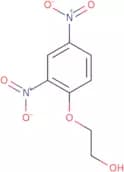
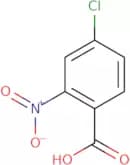
CAS :2-(2,4-Dinitrophenoxy)ethanol is a glycol ether that has been shown to be an effective nucleophile in nucleophilic substitution reactions. It is a colorless liquid with a boiling point of between 204°C and 205°C. 2-(2,4-Dinitrophenoxy)ethanol reacts with deionized water in the presence of ethylene to produce a crystalline precipitate. The product can be recrystallized from ethanol/water or purified by chromatography on silica gel. This chemical can also be used as an activated nucleophile in the synthesis of spirocyclic compounds and isomeric ketones. 2-(2,4-Dinitrophenoxy)ethanol is toxic and may cause severe skin burns if it comes into contact with unprotected skin. It is also environmentally hazardous when released into the environment because it breaks down slowly and may accumulate in soil or water systems.Formule :C8H8N2O6Degré de pureté :Min. 95%Couleur et forme :PowderMasse moléculaire :228.16 g/mol4-Chloro-2-nitrobenzoic acid
CAS :4-Chloro-2-nitrobenzoic acid is a hydrogen bond donor with a coordination geometry of tetrahedral. It has two functional groups: an organic acid and a nitro group. This compound has been used in molecular modeling to study telomeric interactions. 4-Chloro-2-nitrobenzoic acid is also found in biological systems such as the enzyme chloramphenicol acetyltransferase and the antibiotic chloramphenicol. 4-Chloro-2-nitrobenzoic acid can be synthesized from phosphorus pentachloride and amine, which are both commercially available.Formule :C7H4CINO4Degré de pureté :Min. 95%Couleur et forme :PowderMasse moléculaire :305.03 g/mol4-Nitrocatechol
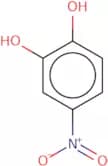
CAS :4-Nitrocatechol is a reactive chemical that has been used as an analytical reagent for the detection of nitrite ions. It reacts with nitrite ion to form stable complexes, which can be detected by titration calorimetry. 4-Nitrocatechol has also been used as a model for study of reaction mechanisms and coordination geometry. The reaction mechanism of 4-nitrocatechol is thought to involve formation of a dinucleotide phosphate intermediate and subsequent attack by the nitrite ion to produce an unstable intermediate that decomposes to form stable complexes with the nitrite ion.
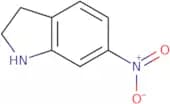
Formule :C6H5NO4Degré de pureté :Min. 95%Couleur et forme :Yellow PowderMasse moléculaire :155.11 g/mol6-Nitroindoline
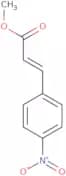
CAS :6-Nitroindoline is a nitro compound that inhibits the polymerization of nitrite. It is an acidic acceptor and has been used as an agrochemical to inhibit nitrification in soil. 6-Nitroindoline has been shown to be mutagenic, which may be due to its ability to form covalent bonds with DNA bases or alkylate DNA bases. 6-Nitroindoline can also undergo borohydride reduction, which is the conversion of a compound into a more reduced form by reaction with borohydride.Formule :C8H8N2O2Degré de pureté :Min. 95%Couleur et forme :PowderMasse moléculaire :164.16 g/molMethyl 4-nitrocinnamate
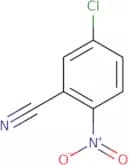
CAS :Methyl 4-nitrocinnamate is a potential drug candidate for the treatment of cancer. Methyl 4-nitrocinnamate is an analog of cinnamic acid and has been shown to inhibit tumor growth in experimental models. The structural modifications that have been made to methyl 4-nitrocinnamate allow it to be more potent than cinnamic acid. This compound has also shown activity against other types of cancer cells, including breast, colorectal, and prostate cancers. Methyl 4-nitrocinnamate binds to diphenolase enzymes and inhibits their activity, which may lead to its anticancer effects.Formule :C10H9NO4Degré de pureté :Min. 95%Couleur et forme :PowderMasse moléculaire :207.18 g/mol5-Chloro-2-nitrobenzonitrile
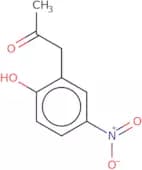
CAS :5-Chloro-2-nitrobenzonitrile is a nucleophilic compound that inhibits bacterial growth by means of an attack on the sulfhydryl group. 5-Chloro-2-nitrobenzonitrile has shown antibacterial activity against Streptococcus faecalis and Staphylococcus aureus. This drug also has anti-inflammatory properties, which may be due to its ability to inhibit prostaglandin synthesis. The molecule has been shown to bind to chloride ions and sulfinyl groups, as well as being able to form a stable complex with erythrocytes in vitro (X-ray crystal structures). 5-Chloro-2-nitrobenzonitrile is structurally similar to fluoroquinolones and cephalosporins, which have been shown to have an oral bioavailability of 100%.Formule :C7H3ClN2O2Degré de pureté :Min. 95%Masse moléculaire :182.56 g/mol(2-Hydroxy-5-nitrophenyl)acetone
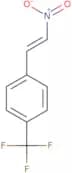
CAS :2-Hydroxy-5-nitrophenyl)acetone is a high quality reagent that has been used as an intermediate in the synthesis of many complex compounds. It is a useful intermediate and building block in organic synthesis. 2-Hydroxy-5-nitrophenyl)acetone is also a versatile building block, which can be used to form chemical derivatives with different functional groups.Formule :C9H9NO4Couleur et forme :PowderMasse moléculaire :195.17 g/mol1-(4-(Trifluoromethyl)phenyl)-2-nitroethene
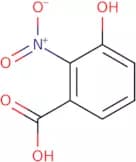
CAS :1-(4-(Trifluoromethyl)phenyl)-2-nitroethene is a high quality reagent, which is used as a useful intermediate in the production of fine chemicals. It is also a useful scaffold for the synthesis of speciality chemicals and research chemicals. 1-(4-(Trifluoromethyl)phenyl)-2-nitroethene can be used as a versatile building block for organic synthesis reactions.Formule :C9H6F3NO2Couleur et forme :PowderMasse moléculaire :217.14 g/mol3-Hydroxy-2-nitrobenzoic acid
CAS :3-Hydroxy-2-nitrobenzoic acid is a metabolite of 3-hydroxyanthranilic acid, which is an intermediate in the biosynthesis of amino acids. It can be found in animals and plants. 3-Hydroxy-2-nitrobenzoic acid has two isomers: 3,5-dihydroxybenzoic acid and 3,4,5-trihydroxybenzoic acid. The former is more abundant than the latter. In animal tissues, 3-hydroxybenzoic acid can be found as a diacid or as a salt with sodium or potassium. It reacts with various compounds to form oxidation products that have been shown to have sequences that are different from those of their precursors. These oxidation products are analyzed for the presence of their carboxylate group to identify the original compound. This carboxylate group can then be used as a ligand in matrix assisted laser desorption
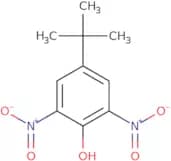
Formule :C7H5NO5Degré de pureté :90%Couleur et forme :Yellow PowderMasse moléculaire :183.12 g/mol4-tert-Butyl-2,6-dinitrophenol
CAS :4-tert-Butyl-2,6-dinitrophenol is a yellowish solid that is soluble in organic solvents. It is used as an intermediate for the synthesis of dyes, pesticides and pharmaceuticals. 4-tert-Butyl-2,6-dinitrophenol has been shown to cause respiratory tract irritation and narcosis in animals. The toxic effects of 4-tert-Butyl-2,6-dinitrophenol are due to its high electrophilicity and nitro group (NO) which causes oxidative stress. The logistic regression analysis showed that the population growth of ciliates was negatively affected by the presence of halogens in the water.
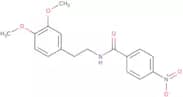
Formule :C10H12N2O5Degré de pureté :Min. 98 Area-%Couleur et forme :White PowderMasse moléculaire :240.21 g/molN-(2-(3,4-dimethoxyphenyl)ethyl)(4-nitrophenyl)formamide
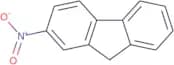
CAS :Produit contrôléPlease enquire for more information about N-(2-(3,4-dimethoxyphenyl)ethyl)(4-nitrophenyl)formamide including the price, delivery time and more detailed product information at the technical inquiry form on this pageDegré de pureté :Min. 95%2-Nitrofluorene
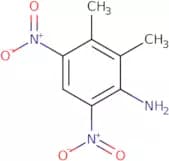
CAS :2-Nitrofluorene is a reactive compound that is not naturally found in the environment. It is an inhibitor of cytochrome P450 enzymes and can be used in probiotic bacteria as a selective agent for genotoxic compounds. 2-Nitrofluorene inhibits the production of reactive oxygen species and has been shown to induce liver lesions in rats after oral exposure. This compound also induces DNA strand breaks and has genotoxic effects on both natural and recombinant cytochrome P450 enzymes.Formule :C13H9NO2Degré de pureté :Min. 98 Area-%Couleur et forme :PowderMasse moléculaire :211.22 g/mol2,4-Dimethyl-3,5-dinitroaniline
CAS :2,4-Dimethyl-3,5-dinitroaniline is a high quality chemical that is used as an intermediate in the synthesis of other compounds. It has been shown to be a useful building block for the synthesis of complex compounds. 2,4-Dimethyl-3,5-dinitroaniline is also a versatile building block and can be used in reactions involving nucleophilic substitution with electron transfer or nucleophilic addition. It has also been shown to be a useful scaffold for a variety of reactions including Friedel-Crafts alkylation and acylation. 2,4-Dimethyl-3,5-dinitroaniline is not available for sale to consumers or retailers.
Formule :C8H9N3O4Degré de pureté :Min. 95%Masse moléculaire :211.17 g/mol