


Nitro
2516 produits trouvés pour "Nitro"
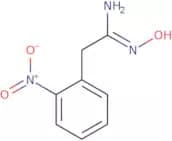
1-(Hydroxyimino)-2-(2-nitrophenyl)ethylamine
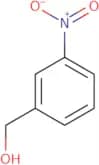
CAS :Please enquire for more information about 1-(Hydroxyimino)-2-(2-nitrophenyl)ethylamine including the price, delivery time and more detailed product information at the technical inquiry form on this pageFormule :C8H9N3O3Degré de pureté :Min. 95%Couleur et forme :PowderMasse moléculaire :196.18 g/mol3-Nitrobenzyl alcohol
CAS :3-Nitrobenzyl alcohol is a low potency drug that is used for the treatment of cancer. It is a derivative of trifluoroacetic acid, which has been shown to have anti-tumor effects in animals. 3-Nitrobenzyl alcohol binds to the matrix on the surface of cells by hydrogen bonding and forms an intramolecular hydrogen bond with the nitrogen atom. This process leads to increased fluorescence intensity, which can be detected using matrix-assisted laser desorption ionization mass spectrometry (MALDI MS). The fatty acid group found in 3-nitrobenzyl alcohol increases its solubility in water and facilitates penetration into lipid bilayers. This compound exhibits cytotoxicity against monoclonal antibody-positive B cell lymphoma cells and may also have anti-inflammatory properties due to its inhibition of picolinic acid synthesis.Formule :C7H7NO3Degré de pureté :Min 98%Couleur et forme :PowderMasse moléculaire :153.14 g/molbeta-Nitroisomyristicin
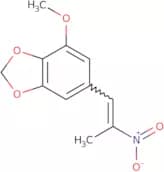
CAS :Beta-nitroisomyristicin is a chemical building block that is used in the synthesis of various compounds. It is a versatile intermediate that can be used in many organic syntheses, such as the synthesis of fine chemicals and pharmaceuticals. Beta-nitroisomyristicin is a high quality reagent for research, which can be used to make other compounds for use in research or commercial purposes.
Formule :C11H11NO5Degré de pureté :Min. 98 Area-%Couleur et forme :PowderMasse moléculaire :237.21 g/mol(E)-β-Nitrostyrene
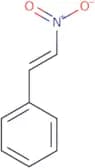
CAS :(E)-b-Nitrostyrene is a nitro compound that is used as a precursor in the synthesis of teicoplanin. (E)-b-Nitrostyrene is synthesized by the reaction of sodium carbonate with cationic surfactant, which produces an intermediate. This intermediate then undergoes a cycloaddition process with nitric oxide to produce (E)-b-nitrostyrene and water. The redox potentials of this compound are determined using kinetic data. The structural analysis of b-nitrostyrene includes NMR and FTIR spectra, which reveal that it has one asymmetric center. It was found that b-nitrostyrene has apoptotic effects on human macrophages in vitro.
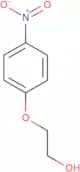
Formule :C8H7NO2Degré de pureté :Min. 95%Masse moléculaire :149.15 g/mol2-(4-Nitrophenoxy)ethanol
CAS :2-(4-Nitrophenoxy)ethanol (NPEO) is a water soluble, synthetic compound that has been shown to have anti-tumor properties. NPEO was found to be toxic to tumor cells in vitro and inhibits the growth of tumor cells in vivo. NPEO also inhibits the synthesis of DNA and RNA, which are important for cell division. This inhibitory effect may lead to the death of cancer cells by interfering with their ability to grow and divide.
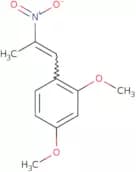
Formule :C8H9NO4Degré de pureté :Min. 95%Couleur et forme :PowderMasse moléculaire :183.16 g/mol1-(2,4-Dimethoxyphenyl)-2-nitropropene
CAS :1-(2,4-Dimethoxyphenyl)-2-nitropropene is a versatile building block that can be used in the synthesis of a wide range of compounds. It is a high quality chemical with a CAS number of 15804-78-1. This compound has been used as an intermediate to synthesize other compounds such as 2-amino-3,5,6-trimethylbenzaldehyde and 1-(2,4-dimethoxyphenyl)-2-(pyrrolidin-1-yl)propene. The compound is also useful as a reagent for reaction components in organic chemistry and biochemistry.
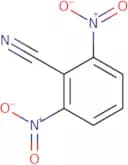
Formule :C11H13NO4Degré de pureté :Min. 95%Couleur et forme :PowderMasse moléculaire :223.23 g/mol2,6-Dinitrobenzonitrile
CAS :2,6-Dinitrobenzonitrile inhibits nitrobenzene by reacting with the electron-rich nitro group to form a stable radical. This reaction is a nucleophilic attack that results in the formation of an electron-deficient intermediate. The intermediate can react with other molecules to form isomeric products. Nitrosamines are formed when 2,6-dinitrobenzonitrile reacts with nitrosamines and amines. These compounds have been shown to cause cancer in laboratory animals. 2,6-Dinitrobenzonitrile has been used as a radiosensitizer for cancer therapy and as an analytical reagent for detection of nitrates in water. It has also been used for staining proteins and DNA samples on microscope slides and as a photographic developer for silver halide films.Formule :C7H3N3O4Degré de pureté :Min. 95%Masse moléculaire :193.12 g/mol4,5-Dimethoxy-2-nitrocinnamic acid
CAS :4,5-Dimethoxy-2-nitrocinnamic acid is a versatile building block that can be used as a reagent or speciality chemical. It is useful for the synthesis of complex compounds, and can be used as a reaction component or scaffold in organic chemistry. 4,5-Dimethoxy-2-nitrocinnamic acid is a high quality intermediate with CAS No. 20567-38-8.
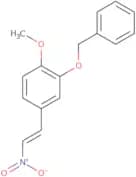
Formule :C11H11NO6Degré de pureté :Min. 95%Masse moléculaire :253.21 g/mol1-(3-Benzyloxy-4-methoxyphenyl)-2-nitroethene
CAS :1-(3-Benzyloxy-4-methoxyphenyl)-2-nitroethene (1BMN) is an ethanamine that has a skeleton of five benzene and one methoxybenzene rings. It is an analogue of lamellarin, which has been shown to have efficient synthetic and biological properties. 1BMN is biologically active as a lamellarin analog and may be useful for the treatment of diseases such as cancer, malaria, hypertension, hyperglycemia, hypercholesterolemia, and ulcerative colitis. 1BMN is synthesized from 2-nitroethanol by reacting with 3-bromobenzaldehyde in the presence of sodium hydroxide. This reaction results in the formation of 1BMN in high yield with few side reactions.
Formule :C16H15NO4Degré de pureté :Min. 95%Couleur et forme :PowderMasse moléculaire :285.29 g/mol3-(tert-butyl)-6-nitroindeno[3,2-c]pyrazol-4-one
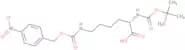
CAS :Please enquire for more information about 3-(tert-butyl)-6-nitroindeno[3,2-c]pyrazol-4-one including the price, delivery time and more detailed product information at the technical inquiry form on this pageDegré de pureté :Min. 95%N-α-Boc-Nε-4-nitro-Z-L-lysine
CAS :Nepsilon-4-nitro-Z-L-lysine is a plant nutrient that can be used in agricultural and horticultural applications. It is a particle that can be added to the soil to improve fertility and stimulate plant growth. Nepsilon-4-nitro-Z-L-lysine has been shown to have a protective effect on plants against insect pests and fungal infections, as well as inhibiting the formation of toxic compounds during fermentation. This product also provides an alternative to chemical treatment and can be used for environmental monitoring or mesoscale studies. Nepsilon-4-nitro-Z-L-lysine has been shown to improve horse fertility and reduce the number of treatments required for resistant bacterial infections.Formule :C19H27N3O8Degré de pureté :Min. 95%Couleur et forme :SolidMasse moléculaire :425.43 g/mol2-Nitrophenylhydrazine
CAS :2-Nitrophenylhydrazine is a drug that is used as an anti-inflammatory agent. It is a nonsteroidal anti-inflammatory drug (NSAID) that acts by blocking the production of prostaglandins in the body, preventing inflammation and pain. 2-Nitrophenylhydrazine can be used to treat conditions such as arthritis, gout, and rheumatoid arthritis. This drug also has the ability to remove organic contaminants from water. 2-Nitrophenylhydrazine binds with fatty acids in wastewater treatment plants, forming an insoluble complex that precipitates out of solution. The compound inhibits the activity of hydrogen bond and methyl ethyl groups, which are needed for the biosynthesis of polyunsaturated fatty acids like phytanic acid and diphenyl ether.
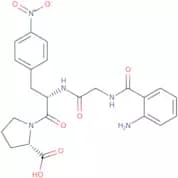
Formule :C6H7N3O2Degré de pureté :Min. 95%Couleur et forme :PowderMasse moléculaire :153.14 g/molo-Aminobenzoylglycyl-p-nitro-L-phenylalanyl-L-proline TFA salt
CAS :O-Aminobenzoylglycyl-p-nitro-L-phenylalanyl-L-proline TFA salt is a synthetic, hydrophilic interaction chromatography (HIC) substrate. It has inhibitory properties and is used in biological assays to measure the activities of enzymes that catalyze the hydrolysis of the substrate. O-Aminobenzoylglycyl-p-nitro-L-phenylalanyl-L-proline TFA salt also has been shown to have bioactivities on blood pressure and cell monolayers.
Formule :C23H25N5O7•C2HF3O2Degré de pureté :Min. 95 Area-%Couleur et forme :PowderMasse moléculaire :597.49 g/mol4-Nitrophenylmethylcarbinol
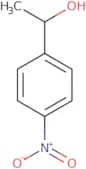
CAS :4-Nitrophenylmethylcarbinol is a nitro compound that has been isolated from the nitration of 4-nitrophenol. It is used as a reagent to synthesize β-unsaturated ketones. The inhibitory effect of 4-nitrophenylmethylcarbinol is due to the presence of two nitro groups and one methyl group on its structure. This compound has been shown to have an inhibitory effect on glucose 6-phosphate dehydrogenase, which functions in cellular respiration by catalyzing the conversion of glucose 6-phosphate to glucose 1,6-bisphosphate. The inhibition of this enzyme leads to a reduction in the formation of ATP and NADPH, which are essential for cell growth. 4-Nitrophenylmethylcarbinol also has reductase activities that allow it to reduce phosphotriesters (e.g., DNA) and dehydrogenase deficiency (e.g., py
Formule :C8H9NO3Degré de pureté :Min. 95%Couleur et forme :Orange Clear LiquidMasse moléculaire :167.16 g/mol2-Methyl-5-nitroaniline
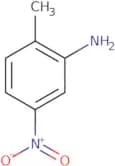
CAS :2-Methyl-5-nitroaniline (2MNA) is a chemical that has been found to be toxic to humans. It is used in wastewater treatment and as a reagent for the production of dyes, rubber products, pesticides, and plastics. 2MNA is oxidized by cytochrome P450 enzymes to create reactive intermediates that react with DNA bases or nucleic acids. 2MNA has also been shown to cause cancer in animals and humans at high doses. It is unclear whether this effect is due to the 2MNA itself or the reactive intermediate formed during metabolism. 2MNA binds to proteins on the surface of cells which may interfere with their function, including enzyme activities and signal transduction pathways. The carcinogenic potential of 2MNA may be due to its ability to form covalent bonds with cellular components such as fatty acids and proteins.Formule :C7H8N2O2Degré de pureté :Min. 98%Couleur et forme :Slightly Yellow Orange PowderMasse moléculaire :152.15 g/molL-Leucine 4-nitrophenyl ester hydrochloride
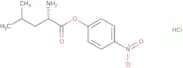
CAS :L-Leucine 4-nitrophenyl ester hydrochloride is a reaction component, reagent, and useful scaffold that is used in the synthesis of complex compounds. It is a versatile building block and useful intermediate that can be used to synthesize fine chemicals such as pharmaceuticals, agrochemicals, or dyes. L-Leucine 4-nitrophenyl ester hydrochloride has CAS number 75691-76-8.Formule :C12H16N2O4•HClDegré de pureté :Min. 95%Masse moléculaire :288.73 g/mol2-Nitro-4-(trifluoromethyl)benzaldehyde
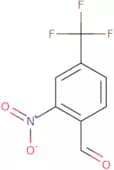
CAS :2-Nitro-4-(trifluoromethyl)benzaldehyde is an immunosuppressive agent that binds to the active site of the enzyme nitric oxide synthase, inhibiting its activity. This drug has been shown to be active against human immunocompromised patients and those with a history of melamine exposure. It also inhibits the production of nitric oxide, which is associated with inflammation. 2-Nitro-4-(trifluoromethyl)benzaldehyde has been shown to bind to vinylic positions on proteins, leading to immunosuppression.Formule :C8H4F3NO3Degré de pureté :Min. 95%Couleur et forme :PowderMasse moléculaire :219.12 g/mol(2-Nitrophenyl)acetone
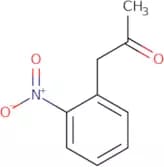
CAS :2-Nitrophenylacetone is a polycyclic compound with an alkyl group, phenyl group, and a diterpenoid substituent. It is acylated with an acetate group on the 2-nitrophenyl group. The skeleton of this molecule contains a ketone (C=O) framework. The hydrogen atom in the molecule constitutes its chemistry. This molecule has been expressed in E. coli and purified to homogeneity. It constitutes the first example of a ketone containing framework for which biomolecular chemistry has been studied.
Formule :C9H9NO3Degré de pureté :Min. 95%Couleur et forme :PowderMasse moléculaire :179.17 g/mol2-Hydroxy-5-nitroacetophenone
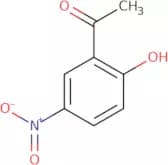
CAS :2-Hydroxy-5-nitroacetophenone is a synthetic molecule that has two functional groups. It is synthesized by reacting morpholine with malonic acid. 2-Hydroxy-5-nitroacetophenone is an electron donor, which means it can accept electrons from other molecules. This compound can be used as a diagnostic tool for cancer cells because it reacts with oxygen to form polyhedra, which are indicative of cancer senescence. In addition, this compound can be used to measure the concentration of plasma mass spectrometers by using electron spin resonance (ESR) and magnetic resonance imaging (MRI). The unpaired electrons on the nitro group of the molecule react with oxygen in the air to form polyhedra and give off characteristic signals in ESR and MRI. These signals are proportional to the concentration of unpaired electrons and therefore provide a quantitative measurement of 2-hydroxy-5 nitroacetophenone in solution.Formule :C8H7NO4Degré de pureté :Min. 95%Couleur et forme :PowderMasse moléculaire :181.15 g/molN-Ethyl-N-nitroso-1-[3-(trifluoromethyl)phenyl]-2-propanamine
CAS :Usnic acid is a dietary supplement that has been shown to have beneficial effects on the liver, including hepatoprotective and anti-inflammatory properties. Usnic acid prevents mitochondrial membrane potential from decreasing, leading to an increase in adenine nucleotide content and improved mitochondrial function. Usnic acid also reverses the inhibition of monoamine neurotransmitters caused by chemical ionization and pharmacologic agents such as acetaminophen. Usnic acid also has been shown to be effective against hepatitis A virus (HAV) infection in CD-1 mice.Formule :C12H15F3N2ODegré de pureté :Min. 95%Couleur et forme :Clear LiquidMasse moléculaire :260.26 g/mol


![3-(tert-butyl)-6-nitroindeno[3,2-c]pyrazol-4-one](/_next/image/?url=https%3A%2Fstatic.cymitquimica.com%2Fproducts%2F3D%2Fthumb-webp%2FFB169679.webp&w=3840&q=75)

![N-Ethyl-N-nitroso-1-[3-(trifluoromethyl)phenyl]-2-propanamine](/_next/image/?url=https%3A%2Fstatic.cymitquimica.com%2Fproducts%2F3D%2Fthumb-webp%2FFE96581.webp&w=3840&q=75)