Nitro
2516 produits trouvés pour "Nitro"
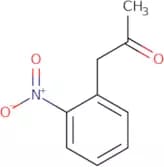
(2-Nitrophenyl)acetone
CAS :2-Nitrophenylacetone is a polycyclic compound with an alkyl group, phenyl group, and a diterpenoid substituent. It is acylated with an acetate group on the 2-nitrophenyl group. The skeleton of this molecule contains a ketone (C=O) framework. The hydrogen atom in the molecule constitutes its chemistry. This molecule has been expressed in E. coli and purified to homogeneity. It constitutes the first example of a ketone containing framework for which biomolecular chemistry has been studied.
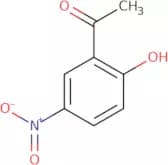
Formule :C9H9NO3Degré de pureté :Min. 95%Couleur et forme :PowderMasse moléculaire :179.17 g/mol2-Hydroxy-5-nitroacetophenone
CAS :2-Hydroxy-5-nitroacetophenone is a synthetic molecule that has two functional groups. It is synthesized by reacting morpholine with malonic acid. 2-Hydroxy-5-nitroacetophenone is an electron donor, which means it can accept electrons from other molecules. This compound can be used as a diagnostic tool for cancer cells because it reacts with oxygen to form polyhedra, which are indicative of cancer senescence. In addition, this compound can be used to measure the concentration of plasma mass spectrometers by using electron spin resonance (ESR) and magnetic resonance imaging (MRI). The unpaired electrons on the nitro group of the molecule react with oxygen in the air to form polyhedra and give off characteristic signals in ESR and MRI. These signals are proportional to the concentration of unpaired electrons and therefore provide a quantitative measurement of 2-hydroxy-5 nitroacetophenone in solution.Formule :C8H7NO4Degré de pureté :Min. 95%Couleur et forme :PowderMasse moléculaire :181.15 g/molN-Ethyl-N-nitroso-1-[3-(trifluoromethyl)phenyl]-2-propanamine
CAS :Usnic acid is a dietary supplement that has been shown to have beneficial effects on the liver, including hepatoprotective and anti-inflammatory properties. Usnic acid prevents mitochondrial membrane potential from decreasing, leading to an increase in adenine nucleotide content and improved mitochondrial function. Usnic acid also reverses the inhibition of monoamine neurotransmitters caused by chemical ionization and pharmacologic agents such as acetaminophen. Usnic acid also has been shown to be effective against hepatitis A virus (HAV) infection in CD-1 mice.Formule :C12H15F3N2ODegré de pureté :Min. 95%Couleur et forme :Clear LiquidMasse moléculaire :260.26 g/mol1,5-Dinitronaphthalene
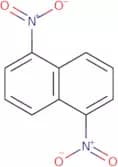
CAS :1,5-Dinitronaphthalene is a test compound that has been used in the analytical method to determine the presence of basophilic leukemia cells. This reaction mechanism involves hydrogen bonding interactions with naphthalene, which is a test sample. The results are then read by chromatographic science and solubility data are collected. The 1,5-dinitronaphthalene can be used as a test compound for steric interactions with other compounds. It can also be used to measure the solubility of other compounds in different solvents.
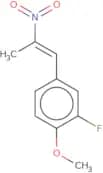
Formule :C10H6N2O4Degré de pureté :Min. 97.0 Area-%Masse moléculaire :218.17 g/mol3'-Fluoro-4'-methoxy-beta-methyl-beta-nitrostyrene
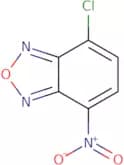
CAS :3'-Fluoro-4'-methoxy-beta-methyl-beta-nitrostyrene is a reactive building block that can be used in the synthesis of many different compounds. It is a fine chemical and a reagent which is useful in organic chemistry. 3'-Fluoro-4'-methoxy-beta-methyl-beta-nitrostyrene is used as a reaction component for the synthesis of many different compounds, including pharmaceuticals, agrochemicals, and other specialty chemicals. It has CAS number 1023717-11-4 and can be used as an intermediate compound or building block for the production of complex compounds.Formule :C10H10FNO3Degré de pureté :Min. 95%Couleur et forme :PowderMasse moléculaire :211.19 g/mol4-Chloro-7-nitrobenzofurazan
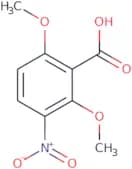
CAS :4-Chloro-7-nitrobenzofurazan is a fluorescent derivative that binds to the α subunit of DNA polymerase. It can be used as an analytical method for the detection of DNA polymerase inhibitors. 4-Chloro-7-nitrobenzofurazan has also been shown to inhibit cell nuclei and human serum, as well as binding to reactive sites on human cells. This compound can be used in control analysis for laboratory experiments related to protein synthesis and cell death.Formule :C6H2ClN3O3Degré de pureté :Min. 97 Area-%Couleur et forme :Yellow PowderMasse moléculaire :199.55 g/mol2,6-Dimethoxy-3-nitrobenzoic acid
CAS :2,6-Dimethoxy-3-nitrobenzoic acid is an aromatic compound that has been shown to have a molecular weight of 136.2 g/mol. It is extracted from the leaves of "Nepeta cataria" and can be found in many other plants as well. This compound has been shown to inhibit bacterial growth in vitro by inhibiting protein synthesis. The mode of action for this compound is not yet known, but it may be due to its ability to form hydrogen bonds with the ribosomes and inhibit nucleotide binding sites on the ribosome surface.
Formule :C9H9NO6Degré de pureté :Min. 98 Area-%Couleur et forme :PowderMasse moléculaire :227.17 g/molPigment YellOw 5;2-[(2-NitrOphenyl)azO]-3-OxO-N-phenylbutanamide
CAS :Please enquire for more information about Pigment YellOw 5;2-[(2-NitrOphenyl)azO]-3-OxO-N-phenylbutanamide including the price, delivery time and more detailed product information at the technical inquiry form on this pageDegré de pureté :Min. 95%1-(4-Cyanophenyl)-2-nitropropene
Please enquire for more information about 1-(4-Cyanophenyl)-2-nitropropene including the price, delivery time and more detailed product information at the technical inquiry form on this page
Formule :C10H8N2O2Degré de pureté :Min. 95%Masse moléculaire :188.18 g/mol3-Nitro-5-(trifluoromethyl)benzene-1,2-diamine
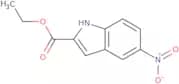
CAS :3-Nitro-5-(trifluoromethyl)benzene-1,2-diamine is a chemical compound that can be used as a reaction component or reagent in research. It is a useful scaffold and building block for complex compounds. 3-Nitro-5-(trifluoromethyl)benzene-1,2-diamine has CAS No. 2078-01-5 and is classified as a speciality chemical. This chemical is versatile because it has many uses in both organic chemistry and biology, including use as an intermediate or building block for more complex compounds.Formule :C7H6F3N3O2Degré de pureté :Min. 95%Couleur et forme :PowderMasse moléculaire :221.14 g/molEthyl 5-Nitroindole-2-Carboxylate
CAS :Ethyl 5-Nitroindole-2-Carboxylate is a precursor to the anti-HIV drug Delavirdine. It is synthesized by condensation of ethyl pyruvate and urea derivative in the presence of thionyl chloride. This compound can be used as an intermediate in the synthesis of other compounds such as ethyl ester and ethyl pyruvate. The chemical reaction is carried out at room temperature using a chlorinated solvent such as methylene chloride or chloroform. Ethyl 5-nitroindole-2-carboxylate can also be used for the synthesis of other drugs, including antitumor agents.
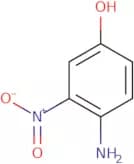
Formule :C11H10N2O4Degré de pureté :Min. 95%Couleur et forme :PowderMasse moléculaire :234.21 g/mol4-Amino-3-nitrophenol
CAS :4-Amino-3-nitrophenol is a reactive aminophenol that can be synthesized from hydrogen sulfate and diethyl ester. It is used in the synthesis of amines and other chemicals, as well as in analytical methods for determining the concentration of nitrates, nitrites, and aminophenols. 4-Amino-3-nitrophenol has been shown to have photocatalytic activity.
Formule :C6H6N2O3Degré de pureté :Min. 95%Couleur et forme :PowderMasse moléculaire :154.12 g/mol3-Amino-3'-nitrobiphenyl hydrochloride
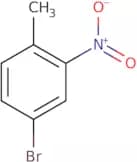
CAS :3-Amino-3'-nitrobiphenyl hydrochloride is a versatile intermediate that can be used in the synthesis of complex compounds. It is a white crystalline solid with a melting point of 178 °C. This product is soluble in water, methanol, ethanol, acetone and chloroform. 3-Amino-3'-nitrobiphenyl hydrochloride has many applications including research chemicals and speciality chemicals.Formule :C12H10N2O2·HClDegré de pureté :Min. 95%Couleur et forme :PowderMasse moléculaire :250.68 g/mol4-Bromo-2-nitrotoluene
CAS :4-Bromo-2-nitrotoluene is a solvent with an orange color. It has been shown to have antimycobacterial activity and insecticidal activities, as well as being a potent anticancer agent. This compound is often used in the synthesis of β-carboline alkaloids and can be debrominated to form bromobenzene, which is used in the synthesis of phenolic compounds. 4-Bromo-2-nitrotoluene also inhibits the growth of human breast cancer cells.
Formule :C7H6BrNO2Degré de pureté :Min. 95%Couleur et forme :PowderMasse moléculaire :216.03 g/mol4-Nitrobenzyl (4R,5R,6S)-3-[(diphenylphosphono)oxy]-6-[(R)-1-hydroxyethyl]-4-methyl-7-oxo-1-azabicyclo[3.2.0]hept-2-ene-2-carboxylat e
CAS :4-Nitrobenzyl (4R,5R,6S)-3-[(diphenylphosphono)oxy]-6-[(R)-1-hydroxyethyl]-4-methyl-7-oxo-1-azabicyclo[3.2.0]hept-2-ene-2-carboxylat e is a synthetic compound that is used as an alkalizer and impurity scavenger in the manufacture of pesticides and other organic chemicals. It has been shown to be a stereoselective herbicide with acetonitrile as its primary degradation product. The compound has also been found to be a potent inhibitor of the enzyme carbapenemase, which may lead to increased resistance to antibiotics such as monosodium salt of ertapenem.Formule :C29H27N2O10PDegré de pureté :Min. 98 Area-%Couleur et forme :White PowderMasse moléculaire :594.51 g/mol2-Nitrobenzaldehyde
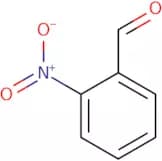
CAS :2-Nitrobenzaldehyde is a nitro compound that reacts with the intramolecular hydrogen of an alkene to form a nitroalkane. It is used as an antimicrobial agent, in which it inhibits the growth of bacteria by reacting with the intermolecular hydrogen bonding in the bacterial cell membrane. In addition, 2-Nitrobenzaldehyde has been shown to inhibit fatty acid synthesis and transfer reactions. The optimum concentration for this chemical is 0.01% to 0.1%. This chemical is soluble in both water and organic solvents, such as methanol and ethanol.Formule :C7H5NO3Degré de pureté :Min. 98 Area-%Couleur et forme :PowderMasse moléculaire :151.12 g/molMethyl 6-nitroveratrate
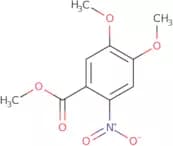
CAS :Methyl 6-nitroveratrate is an organic compound that is used as a reagent in organic synthesis. It is synthesized by the conversion of methyl 3-nitrobenzoate, an ester of benzoic acid, to methyl 6-nitrobenzoate with nitrous acid. Methyl 6-nitroveratrate has been shown to be metabolically stable and can be used in biochemical studies. Methyl 6-nitroveratrate also has protonation properties that are complementary to acetylcholine, which may account for its use as a comparator in pharmacological experiments. The molecule was postulated to have a role in synopses, but this has not been proven.Formule :C10H11NO6Degré de pureté :Min. 95%Couleur et forme :Off-White PowderMasse moléculaire :241.2 g/mol3-Formyl-6-nitrochromone
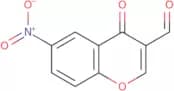
CAS :3-Formyl-6-nitrochromone is a type of sensor molecule that can be used in the detection of metal ions. It is an aromatic compound that has been shown to reversibly react with copper and other metal ions, which leads to a change in its fluorescence. 3-Formyl-6-nitrochromone reacts with the copper ion by donating an electron and forming a copper complex. This reaction is reversible, so it can be used as a sensor for copper ions. The sensor has been shown to have good spectral properties and chemosensors have been developed using this molecule.Formule :C10H5NO5Degré de pureté :Min. 95%Couleur et forme :PowderMasse moléculaire :219.15 g/mol4-Bromo-6-nitro-m-xylene
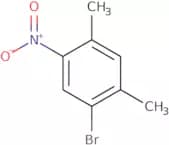
CAS :4-Bromo-6-nitro-m-xylene is a fine chemical that belongs to the group of reagents and speciality chemicals. It is a versatile building block that can be used as a reaction component or intermediate in the synthesis of complex compounds. 4-Bromo-6-nitro-m-xylene has been shown to react with nucleophiles, such as amines, alcohols, and thiols, to form nitrosamines. This chemical has been used as a research tool for studying the mechanism of action for various drugs. The compound is also useful as a scaffold for other complex compounds.
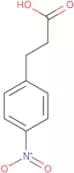
Formule :C8H8BrNO2Degré de pureté :Min. 95%Couleur et forme :PowderMasse moléculaire :230.06 g/mol3-(4-Nitrophenyl)propanoic acid - technical
CAS :3-(4-Nitrophenyl)propanoic acid is an inhibitor of aminopeptidases. Amino acid catabolism, in particular the cleavage of peptides by proteolytic enzymes, is a central process in cellular metabolism. Amino acid catabolism is regulated by a number of different enzymes, including aminopeptidases. 3-(4-Nitrophenyl)propanoic acid inhibits the activity of these enzymes and thereby prevents the degradation of amino acids. This product has been shown to inhibit aminopeptidase A with an IC50 value of about 0.5 mM and aminopeptidase B with an IC50 value of about 1 mM. 3-(4-Nitrophenyl)propanoic acid also has anti-inflammatory properties that may be due to its inhibition of prostaglandin synthesis.
Formule :C9H9NO4Degré de pureté :Min. 90 Area-%Couleur et forme :PowderMasse moléculaire :195.17 g/mol

![N-Ethyl-N-nitroso-1-[3-(trifluoromethyl)phenyl]-2-propanamine](/_next/image/?url=https%3A%2Fstatic.cymitquimica.com%2Fproducts%2F3D%2Fthumb-webp%2FFE96581.webp&w=3840&q=75)
![Pigment YellOw 5;2-[(2-NitrOphenyl)azO]-3-OxO-N-phenylbutanamide](/_next/image/?url=https%3A%2Fstatic.cymitquimica.com%2Fproducts%2F3D%2Fthumb-webp%2FFP40385.webp&w=3840&q=75)

![4-Nitrobenzyl (4R,5R,6S)-3-[(diphenylphosphono)oxy]-6-[(R)-1-hydroxyethyl]-4-methyl-7-oxo-1-azabic…](/_next/image/?url=https%3A%2Fstatic.cymitquimica.com%2Fproducts%2F3D%2Fthumb-webp%2FFM140061.webp&w=3840&q=75)