Nitro
Les composés nitro sont des molécules organiques contenant un ou plusieurs groupes nitro (NO2). Ces composés sont largement utilisés dans la synthèse d'explosifs, de produits pharmaceutiques et de colorants. Chez CymitQuimica, nous proposons une large gamme de composés nitro de haute qualité pour soutenir vos applications de recherche et industrielles, garantissant des résultats sûrs et efficaces. Notre sélection comprend une variété de composés nitro adaptés à différentes synthèses chimiques et applications.
2516 produits trouvés pour "Nitro"
Trier par
Degré de pureté (%)
0
100
|
0
|
50
|
90
|
95
|
100
Methyl 3-fluoro-4-nitrobenzoate
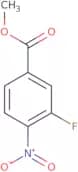
CAS :Methyl 3-fluoro-4-nitrobenzoate is a volatile, colorless liquid that belongs to the class of alcohols. Methyl 3-fluoro-4-nitrobenzoate has a phenylethyl group and an intramolecular reaction with the carbonyl group. The regioselectivity of this reaction is determined by the electron density on the oxygen atom, which is greater than on the nitrogen atom. This makes methyl 3-fluoro-4-nitrobenzoate an excellent nucleophile and allows it to react with other molecules in order to form esters. Methyl 3-fluoro-4-nitrobenzoate has been shown to be a good solvent for headspace analysis because it is volatile, but not reactive enough to interfere with organic compounds in the headspace.Formule :C8H6FNO4Degré de pureté :Min. 95%Couleur et forme :White PowderMasse moléculaire :199.14 g/mol2-Chloro-3-nitrotoluene
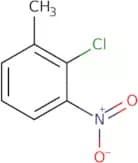
CAS :<p>2-Chloro-3-nitrotoluene (2CNT) is a primary site test compound that is used to determine the activity of enzymes that metabolize nitrate. It has been shown to inhibit inorganic nitrate reductase and plant nitrate reductase, which are important enzymes for the transport of nitrogen. The rate of 2CNT degradation increases with increasing temperature, and it is resistant to heat and oxygen. 2CNT also inhibits tobacco N-acetyltransferase, an enzyme involved in the metabolism of nicotine. 2CNT can be used as an inhibitor to study plant physiology because it evaporation occurs rapidly at room temperature.</p>Formule :C7H6ClNO2Degré de pureté :Min. 95%Couleur et forme :Clear LiquidMasse moléculaire :171.58 g/mol2-Nitro-3,4,5-trimethoxybenzoic acid methyl ester
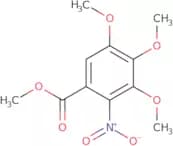
CAS :<p>2-Nitro-3,4,5-trimethoxybenzoic acid methyl ester is a potential anticancer agent. It has been shown to inhibit the growth of cancer cells in vitro and demonstrates anticancer activity against human tumor xenografts in mice. This compound binds to the epidermal growth factor receptor (EGFR) and inhibits its activity. This binding causes downstream signalling pathways to be suppressed, which ultimately prevents tumor cells from proliferating. 2-Nitro-3,4,5-trimethoxybenzoic acid methyl ester also has directional properties that may allow for selective targeting of cancerous cells.<br>2-Nitro-3,4,5-trimethoxybenzoic acid methyl ester is a white crystalline powder with an orthorhombic crystal system and an amine group on each end of the molecule.</p>Formule :C11H13NO7Degré de pureté :Min. 95%Couleur et forme :PowderMasse moléculaire :271.22 g/molL-Leucine 4-nitroanilide
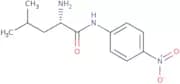
CAS :<p>L-Leucine 4-nitroanilide serves as a substrate for the colorimetric determination of leucine aminopeptidase. The application of L-Leucine-p-nitroanilide includes its utilization as a substrate in studies assessing the intestinal leucine aminopeptidase activity of juvenile rainbow trout (Oncorhynchus mykiss). Additionally, it plays a role in insulin-regulated aminopeptidase inhibition assays and is employed to determine exopeptidase activity.</p>Formule :C12H17N3O3Degré de pureté :(Titration) 99 To 101%Couleur et forme :PowderMasse moléculaire :251.28 g/molcis-4-Chloro-3-nitrocinnamic acid
<p>Cis-4-Chloro-3-nitrocinnamic acid is an aromatic organic compound with potential utility in biochemical research and synthesis. This compound is typically derived from synthetic chemical processes involving chlorination and nitration reactions on cinnamic acid derivatives. Its molecular structure, characterized by both chloro and nitro functional groups, allows it to interact in unique ways with various biochemical pathways and molecular frameworks.</p>Formule :C9H6ClNO4Degré de pureté :Min. 95%Couleur et forme :White PowderMasse moléculaire :227.6 g/mol3,5-Dinitrobenzenethiol
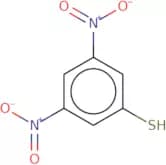
CAS :3,5-Dinitrobenzenethiol is a chemical that has been used as a building block for the synthesis of other fine chemicals. 3,5-Dinitrobenzenethiol is an intermediate used in the synthesis of research chemicals, such as pharmaceuticals and pesticides. It can also be used as a reaction component or reagent in organic synthesis. 3,5-Dinitrobenzenethiol is an excellent chemical with high quality because it has no impurities and is readily available.Formule :C6H4N2O4SDegré de pureté :Min. 95%Couleur et forme :PowderMasse moléculaire :200.17 g/molFmoc-(S)-3-amino-3-(2-nitrophenyl)propionic acid
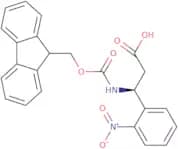
CAS :<p>Please enquire for more information about Fmoc-(S)-3-amino-3-(2-nitrophenyl)propionic acid including the price, delivery time and more detailed product information at the technical inquiry form on this page</p>Formule :C24H20N2O6Degré de pureté :Min. 95%Couleur et forme :White PowderMasse moléculaire :432.43 g/mol4-tert-Butyl-2,6-dinitroanisole
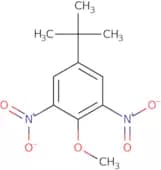
CAS :<p>4-tert-Butyl-2,6-dinitroanisole is a versatile chemical that can be used for the synthesis of complex molecules. It can be used as a building block in organic synthesis or as a reagent. 4-tert-Butyl-2,6-dinitroanisole is also useful in the production of speciality chemicals and research chemicals. This product has high quality and is a useful intermediate or reaction component.</p>Formule :C11H14N2O5Degré de pureté :Min. 95%Couleur et forme :White PowderMasse moléculaire :254.24 g/mol2-Benzyloxy-6-nitrotoluene
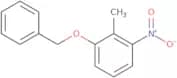
CAS :2-Benzyloxy-6-nitrotoluene is an organic compound that has the formula CHNO. It is a white solid that is soluble in alcohols and ethers, but not in water. The compound is of interest as a precursor to other compounds.Formule :C14H13NO3Degré de pureté :Min. 95%Couleur et forme :PowderMasse moléculaire :243.26 g/mol3-Amino-4-nitrobenzoic acid
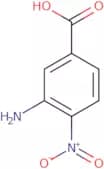
CAS :<p>3-Amino-4-nitrobenzoic acid is a synthetic compound, which has been shown to inhibit the activity of trypanothione reductase. This inhibition of the enzyme causes an increase in the level of intracellular trypanothione, which is then acetylated by ATP sulfurylase and converted to trypanothione. 3-Amino-4-nitrobenzoic acid is also a potent inhibitor of fxa, which is a coagulation factor necessary for blood clotting. The active site of 3-amino-4-nitrobenzoic acid contains two nitroarenes that are responsible for its antithrombotic properties.</p>Formule :C7H6N2O4Degré de pureté :Min. 95%Couleur et forme :PowderMasse moléculaire :182.13 g/mol6-Nitrocoumarin
CAS :<p>Substrate to study the nitroreductase activity in the pathogenic fungus Sporothrix schenckii, a thermal dimorphic pathogenic fungus causing a subcutaneous mycosis.</p>Formule :C9H5NO4Degré de pureté :Min. 95%Couleur et forme :PowderMasse moléculaire :191.14 g/mol4-Chloro-3,5-dinitrobenzamide
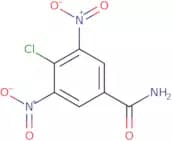
CAS :<p>4-Chloro-3,5-dinitrobenzamide is a bifunctional molecule that contains a chlorine atom. It has been found to react with dipolar solutes as well as vicinal dioxan arylation. The nucleophilic amide group is also labile and can be hydrolyzed by strong acids or bases. The electron lone pair of the chlorine atom in 4-chloro-3,5-dinitrobenzamide can be used for electrophilic substitution reactions with aromatic rings or amines. This molecule has been found to undergo an arylation reaction with imidazole in the presence of dioxan solvent at room temperature.</p>Formule :C7H4ClN3O5Degré de pureté :Min. 95%Masse moléculaire :245.58 g/mol2-Nitrobenzylcyanide
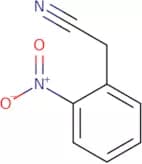
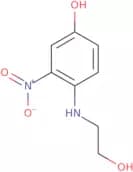
CAS :<p>2-Nitrobenzylcyanide is a potential use in the synthesis of β-unsaturated ketones, nitroalkanes, and biomolecular compounds. This compound reacts with nitrogen atoms to form an unsymmetrical nitrene group. The reaction selectivity is due to the active methylene group that is acidic, which selectively reacts with amines or cb1 receptor groups.</p>Formule :C8H6N2O2Degré de pureté :Min. 95%Couleur et forme :Off-White PowderMasse moléculaire :162.15 g/mol4-(2-Hydroxyethylamino)-3-nitrophenol
CAS :<p>4-(2-Hydroxyethylamino)-3-nitrophenol is a nitrophenol that can cause toxicity in humans. It has been investigated for its potential use as a treatment for erectile dysfunction. The compound was found to have a long half-life of over 24 hours, which may be due to its slow metabolism by esterases and glucuronidases. 4-(2-Hydroxyethylamino)-3-nitrophenol has been shown to be an allergen and is toxic to the skin, lungs, and muscles. This chemical can cause cancer when it is irradiated or mixed with other chemicals such as 4-amino-2-nitrophenol (ANP).</p>Formule :C8H10N2O4Degré de pureté :Min. 95%Couleur et forme :PowderMasse moléculaire :198.18 g/mol2-Nitro-3,4,5-trimethoxybenzoic acid
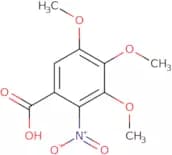
CAS :<p>2-Nitro-3,4,5-trimethoxybenzoic acid (2-NTMB) is a potent anticancer agent that has shown cytotoxic effects in human epidermoid carcinoma cells. It inhibits the growth of cancer cells by interfering with their DNA synthesis and repair. 2-NTMB binds to DNA and blocks the action of enzymes involved in DNA synthesis and repair. This binding leads to cancer cell death through irradiation or by blocking the production of new proteins vital for cell division. 2-NTMB is bioisosteric with combretastatin A4, which means it can be substituted for this drug without significant loss of potency. It also has been shown to be an effective chemotherapeutic agent against breast cancer in mice.</p>Formule :C10H11NO7Degré de pureté :Min. 95%Couleur et forme :PowderMasse moléculaire :257.2 g/mol2-Bromo-5-nitroaniline
CAS :<p>2-Bromo-5-nitroaniline is an aminobenzothiazole that is synthesized in an amination reaction with acetonitrile. It is an acidic chemical and can be introduced as a pharmacokinetic probe for studying the uptake of drugs by cells. The properties of 2-bromo-5-nitroaniline have been studied in mice and rats, where it has been shown to be metabolized by nitroreductases. 2-Bromo-5-nitroaniline can also be used as a chemokine receptor antagonist, which could lead to the optimization of other chemokines.</p>Formule :C6H5BrN2O2Degré de pureté :Min. 95%Couleur et forme :PowderMasse moléculaire :217.02 g/mol3-Methyl-2-nitroanisole
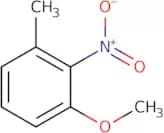
CAS :3-Methyl-2-nitroanisole is a synthetic monosubstituted nitro compound that can be produced by the oxidation of 3,4-dimethoxybenzaldehyde. It has three methyl groups and one nitro group on its ring. 3-Methyl-2-nitroanisole has been used in high concentrations as a reactant for the synthesis of other compounds. It can also be used to synthesize anthranilic acid, which is an intermediate in the synthesis of many dyes and pharmaceuticals. 3-Methyl-2-nitroanisole has been characterized using vibrational spectroscopy and NMR spectroscopy with frequency values ranging from 9 to 22 cm/sec, depending on substituents. The molecular weight is estimated at 196 g/mol. 3MNA has been shown to undergo demethylation and hydrolysis under acidic conditions to produce 2,5-dihydroxyanthFormule :C8H9NO3Degré de pureté :Min. 95%Couleur et forme :PowderMasse moléculaire :167.16 g/mol3,4-Dihydroxy-5-nitrobenzaldehyde
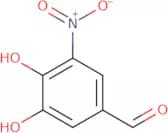
CAS :3,4-Dihydroxy-5-nitrobenzaldehyde is a chemical substance that is used in an analytical method to measure the level of methoxy groups in chronic kidney disease. The methanol solvent and hydrochloric acid are used to dissolve the sample, which is then titrated with trifluoroacetic acid. The chloride ion reacts with the methylene group from the 3,4-dihydroxy-5-nitrobenzaldehyde molecule to form a new compound that can be detected by ultraviolet light at 254 nm. The active methylene group is quantified by measuring its absorbance at this wavelength and comparing it with a calibration curve using known concentrations of sodium salts. This test has been shown to be more sensitive than other chromatographic methods for detecting methoxy groups in chronic kidney disease.Formule :C7H5NO5Degré de pureté :Min. 95%Couleur et forme :Yellow PowderMasse moléculaire :183.12 g/molO-(2,4-Dinitrophenyl)hydroxylamine
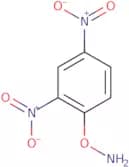
CAS :<p>O-(2,4-dinitrophenyl)hydroxylamine is a synthetic compound that binds to the enzyme bound site of the cap-dependent endonuclease. It is an inhibitor of influenza virus replication in vitro and has shown inhibitory activity against murine leukemia virus. O-(2,4-dinitrophenyl)hydroxylamine is also a model for the study of aminoglycoside antibiotics. The compound inhibits aminoglycoside-induced protein synthesis in eukaryotic cells and may be useful in understanding the mechanism of action and resistance to these antibiotics.</p>Formule :C6H5N3O5Degré de pureté :Min. 98 Area-%Couleur et forme :Yellow PowderMasse moléculaire :199.12 g/mol2,6-Dichloro-4-nitroaniline
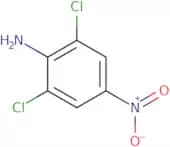
CAS :<p>2,6-Dichloro-4-nitroaniline is an organic compound that has been shown to have anti-inflammatory properties. It can be used for the treatment of inflammatory skin diseases such as psoriasis and eczema. Short-term exposure to 2,6-dichloro-4-nitroaniline showed no toxic effects in cell culture studies and 2,6-dichloro-4-nitroaniline does not cause damage to skin cells or light exposure. The hydroxyl group on the aromatic ring of this molecule can react with hydrochloric acid to form a reactive intermediate. This intermediate reacts with N2H2 molecules to form a molecule called dinitrochlorobenzene. Dinitrochlorobenzene is a highly toxic substance that will react with nitrogen atoms on the cell wall surface in an acidic environment, forming nitrosamines which are highly carcinogenic compounds.</p>Formule :C6H4Cl2N2O2Degré de pureté :Min. 95%Couleur et forme :Slightly Yellow PowderMasse moléculaire :207.01 g/mol