Cétones
18873 produits trouvés pour "Cétones"
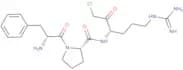
D-Phenylalanyl-prolyl-arginyl chloromethyl ketone
CAS :D-Phenylalanyl-prolyl-arginyl chloromethyl ketone is a chemical compound that inhibits the proteolytic activity of serine proteases. It binds to the thrombin receptor on the surface of cells and prevents activation of fibrinogen by thrombin, which is an enzyme that promotes clotting. D-Phenylalanyl-prolyl-arginyl chloromethyl ketone also blocks platelet aggregation and has shown an ability to induce muscle cell proliferation. This drug has been used in pharmacological experiments as an inhibitor binding agent.Formule :C21H31ClN6O3Degré de pureté :Min. 90 Area-%Couleur et forme :PowderMasse moléculaire :450.96 g/mol2-Bromo-2-(2-fluorophenyl)-1-cyclopropylethanone
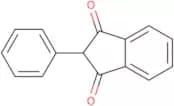
CAS :2-Bromo-2-(2-fluorophenyl)-1-cyclopropylethanone is a synthetic peroxide that is used as an additive in the production of polyvinylpyrrolidone. It has been shown to have efficient methods for the reduction of amines and chlorides to the corresponding hydroxylamine and hydrochloride, respectively. The tribromide may be generated by treatment with bromine and a base, such as potassium hydroxide or sodium hydroxide, in an inert solvent such as benzene or dichloromethane. 2-Bromo-2-(2-fluorophenyl)-1-cyclopropylethanone can also be synthesized from phenacyl chloride and acetylene.Formule :C11H10BrFODegré de pureté :Min. 95 Area-%Couleur et forme :Clear LiquidMasse moléculaire :257.1 g/mol2-Phenyl-1,3-indandione
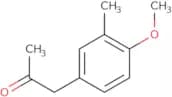
CAS :2-Phenyl-1,3-indandione is a coumarin derivative that is used as an anti-inflammatory drug. It inhibits the release of arachidonic acid from phospholipids in the cell membrane and consequently inhibits the formation of prostaglandins. The drug has been shown to inhibit light-induced tumor promotion in mice with cervical cancer, which may be due to its ability to inhibit the activity of oxidative enzymes such as cytochrome P450. 2-Phenyl-1,3-indandione also inhibits sodium-dependent glucose transport and energy metabolism by binding to potassium channels. This drug also has immunosuppressive effects on lymphocyte transformation and autoimmune diseases through hydrogen bonding interactions with protein molecules.Formule :C15H10O2Degré de pureté :Min. 95%Couleur et forme :PowderMasse moléculaire :222.24 g/mol4-Methoxy-3-methylphenylacetone
CAS :4-Methoxy-3-methylphenylacetone is an organic chemical that is used as a reaction component, reagent, and useful scaffold. It is a high quality research chemical that can be used as an intermediate in the synthesis of other compounds. 4-Methoxy-3-methylphenylacetone has a CAS number of 16882-23-8 and can be found under the category of speciality chemicals. This compound is versatile and can be used to make complex compounds.Formule :C11H14O2Degré de pureté :Min. 95%Couleur et forme :Yellow PowderMasse moléculaire :178.23 g/mol5-[(3,5-Dimethylphenoxy)methyl]oxazolidin-2-one
CAS :Metaxalone is a centrally acting muscle relaxant that belongs to the group of nonsteroidal anti-inflammatory drugs. It is used as an adjunct to rest, physical therapy, and other measures for the relief of discomfort associated with acute, painful musculoskeletal conditions. Metaxalone is also used in the treatment of spasticity due to multiple sclerosis and cerebral palsy. This drug has been shown to be effective in treating neurologic disorders such as epilepsy, Parkinson's disease, and Alzheimer's disease. Metaxalone has also been shown to be an effective analgesic agent in postoperative dental procedures. Metaxalone can cause fetal abnormalities when administered during pregnancy; therefore it should not be given during pregnancy or if there is a possibility of becoming pregnant while taking this medication. Metaxalone interacts with many drugs including warfarin, metoclopramide, oral hypoglycemic agents such as insulin and sulfonylureas, sedatives such as benzodiazepines andFormule :C12H15NO3Degré de pureté :Min. 95%Couleur et forme :White PowderMasse moléculaire :221.25 g/mol(S)-(+)-5,6,7,8-Tetrahydro-8-methylindan-1,5-dione
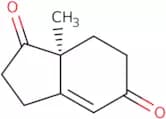
CAS :(S)-(+)-5,6,7,8-Tetrahydro-8-methylindan-1,5-dione is a chemical compound with a molecular formula of C9H14O2 that has the chemical name of methyl 8-(hydroxymethyl)indane-1,5-dione. This compound is an enantiopure substance that exists as a single stereoisomer and can be synthesized from two different starting materials. It is not commercially available but can be prepared from boronic acid and methanol or from methylamine and hydroxyacetone. The reaction time for this synthesis varies depending on the starting material used and the desired purity level. (S)-(+)-5,6,7,8-Tetrahydro-8-methylindan-1,5-dione is used in organic synthesis as an alternative to other chiral diols.Formule :C10H12O2Degré de pureté :Min. 95%Couleur et forme :White PowderMasse moléculaire :164.2 g/mol(4α,6β(E))-DL-6-(2-(4'-Fluoro-3,3',5-trimethyl(1,1'-biphenyl)-2-Yl)ethenyl)tetrahydro-4-hydroxy-2H-pyran-2-one
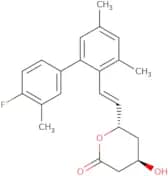
CAS :Produit contrôlé(4alpha,6beta(E))-DL-6-(2-(4'-Fluoro-3,3',5-trimethyl(1,1'-biphenyl)-2-Yl)ethenyl)tetrahydro-4-hydroxy-2H-pyran-2-one is a pharmacological agent that binds to and inhibits the HMG CoA reductase enzyme. This enzyme plays a role in the production of cholesterol, which is used to form bile acids and steroid hormones. The ring structure of (4alpha,6beta(E))-DL-6-(2-(4'-Fluoro-3,3',5-trimethyl(1,1'-biphenyl)-2--Yl)ethenyl)tetrahydro -4hydroxy -2H pyran 2 one allows for it to bind to the active site of the reductase enzymeFormule :C22H23FO3Degré de pureté :Min. 95%Masse moléculaire :354.41 g/mol1-(2-Hydroxy-1-naphthyl)ethan-1-one
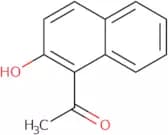
CAS :1-(2-Hydroxy-1-naphthyl)ethan-1-one is a carbonyl compound that can be used as a fluorescent probe for the determination of copper(II) ions. It has been shown to have selective binding properties and fluorescence properties with cancer cells, which may be due to its ability to bind to the active methylene group of the cancer cell's protein. Crystallographic studies have shown that 1-(2-Hydroxy-1-naphthyl)ethan-1-one binds to hydrogen bonds and hydroxide solution in water.Formule :C12H10O2Degré de pureté :Min. 95%Couleur et forme :Yellow PowderMasse moléculaire :186.21 g/mol(2,3,4-Trimethoxyphenyl)acetone
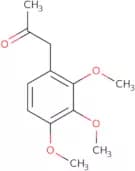
CAS :(2,3,4-Trimethoxyphenyl)acetone is a high quality chemical reagent that is used as a complex intermediate for the synthesis of various fine chemicals. It is also a useful scaffold and building block for the synthesis of speciality chemicals or research chemicals. (2,3,4-Trimethoxyphenyl)acetone can be used as a versatile building block in organic syntheses and has been used as a reaction component in the synthesis of substituted phenols. It is also listed on the Chemical Abstracts Service registry with CAS No. 102119-67-5.Formule :C12H16O4Couleur et forme :PowderMasse moléculaire :224.25 g/mol4-Chloro-1-(3-Fluorophenyl)-1-Butanone
CAS :4-Chloro-1-(3-fluorophenyl)-1-butanone is a reagent that is used in the synthesis of complex compounds. It has been used as an intermediate in the synthesis of a variety of useful compounds and as a building block for more complex molecules. This chemical is one of the most versatile building blocks available, and can be used for reactions involving deprotection, coupling, and polymerization. The CAS number for this compound is 3110-52-9.Formule :C10H10ClFODegré de pureté :Min. 95%Couleur et forme :Clear LiquidMasse moléculaire :200.64 g/molHydrocortisone
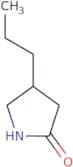
CAS :Produit contrôléHydrocortisone is a hormone that belongs to the glucocorticoid class. It is used in the treatment of various diseases, such as rheumatoid arthritis, ulcerative colitis, lupus erythematosus, and others. Hydrocortisone has been shown to inhibit cell lysis by decreasing the activity of some enzymes responsible for this process. In addition, hydrocortisone can also bind to specific receptors in the brain and regulate neurotransmitter release. Hydrocortisone has been shown to be effective against infectious diseases such as sepsis and pneumonia. However, it may cause side effects such as weight gain or mood swings when taken for a long period of time.Formule :C21H30O5Degré de pureté :Min. 97.0 Area-%Couleur et forme :White PowderMasse moléculaire :362.46 g/mol4-Propylpyrrolidin-2-one
CAS :4-Propylpyrrolidin-2-one is a chemical compound. It is the product of the condensation of two molecules of butyric acid and one molecule of hexanoic acid. The cyclization reaction occurs at the 4 position, forming a six-membered ring. This reaction can be catalyzed by bromine or UV light. Brivaracetam is a drug that belongs to the class of antiepileptic drugs and was developed as an analog of levetiracetam, which inhibits voltage-gated sodium channels in neurons. It has been shown to have only weak affinity for benzodiazepine binding sites and does not cause sedation or memory impairment.
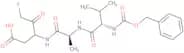
Formule :C7H13NODegré de pureté :Min. 95%Couleur et forme :PowderMasse moléculaire :127.18 g/molZ-Val-Ala-DL-Asp-fluoromethylketone
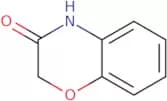
CAS :Z-Val-Ala-DL-Asp-fluoromethylketone is a drug that is used for the treatment of cancer. It can be used in combination with other chemotherapeutic drugs, such as z-vad-fmk, to induce apoptosis in cancer cells. Z-Val-Ala-DL-Asp-fluoromethylketone also inhibits autophagy and neuronal death by inhibiting caspase activation, which prevents the release of proapoptotic proteins from mitochondria into the cytosol. This drug has been shown to have antiinflammatory effects on IL2 receptor signaling pathways and inhibits the production of proinflammatory cytokines by binding to IL2.Formule :C21H28FN3O7Degré de pureté :Min. 95%Couleur et forme :PowderMasse moléculaire :453.46 g/mol4-Aza-3-chromanone
CAS :4-Aza-3-chromanone is a naturally occurring compound that has been shown to have antimicrobial properties. 4-Aza-3-chromanone inhibits the synthesis of fatty acids by inhibiting the enzyme stearoyl (CoA) desaturase. This leads to a decrease in the production of cellular membrane phospholipids, which are necessary for cell growth. 4-Aza-3-chromanone also has an inhibitory effect on the ability of colorectal adenocarcinoma cells to grow and form colonies, which indicates that it may have anticancer properties. 4-Aza-3-chromanone binds to a target enzyme, which causes a change in its conformation and prevents it from catalyzing reactions with substrates. The binding site of 4-aza-3 chromanone is hydrophobic, which means it has hydrogen bonding interactions with functional groups like amino acids or carboxyl groups.
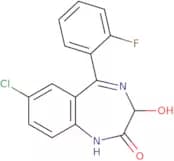
Formule :C8H7NO2Degré de pureté :Min. 95%Couleur et forme :PowderMasse moléculaire :149.15 g/mol7-Chloro-5-(2-fluorophenyl)-1,3-dihydro-3-hydroxy-2H-1,4-benzodiazepin-2-one
CAS :Produit contrôléThe chemical structure of 7-chloro-5-(2-fluorophenyl)-1,3-dihydro-3-hydroxy-2H-1,4-benzodiazepin-2-one (7CFT) is characterized by a constant and long duration of action. It is a hydroxy group extractant and has amplitudes in the organic tissues. The chlorine atom is located in the center of the molecule. 7CFT has methoxy groups on each side of the chlorine atom, which are responsible for its nature. This compound has been used as an analytical toxicology reagent and as a reference substance in analytical chemistry applications. This product description was generated using ChemSpider.Formule :C15H10ClFN2O2Degré de pureté :Min. 95%Masse moléculaire :304.7 g/mol2(5H)-Furanone
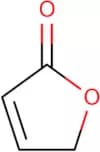
CAS :2(5H)-Furanone is a naturally occurring compound that has been found to have hypoglycemic effects. Studies have shown that 2(5H)-furanone inhibits the activity of cox-2, an enzyme involved in the synthesis of prostaglandins, which are inflammatory compounds. This chemical may be useful as an anti-inflammatory agent and for the treatment of bowel diseases. 2(5H)-Furanone also has antimicrobial properties and has been shown to inhibit the growth of animal cells that are resistant to anticancer drugs. It binds to cell nuclei and disrupts DNA synthesis by competing with basic proteins for binding sites on DNA strands. The chemical structure of 2(5H)-furanone is very similar to butenolide, a natural plant compound used in traditional Chinese medicine; both compounds have been shown to inhibit COX-2 activity.Formule :C4H4O2Degré de pureté :Min. 95%Couleur et forme :Clear LiquidMasse moléculaire :84.07 g/mol1-Hydroxy-2-butanone
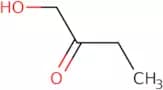
CAS :1-Hydroxy-2-Butanone is an organic compound that is used in the preparation of various fatty acids. It has been shown to be a useful analytical reagent for the determination of calcium and sodium in urine samples. The reaction mechanism is based on the addition of hydroxy groups to fatty acids. This process leads to the formation of 1,2-diols, which are then converted into 1-hydroxy-2-butanones. The reaction proceeds with a constant rate, regardless of the type or amount of the reactants.Formule :C4H8O2Degré de pureté :Min. 95%Couleur et forme :Clear LiquidMasse moléculaire :88.11 g/mol4-(Hydroxymethyl)-5-methyl-1,3-dioxol-2-one
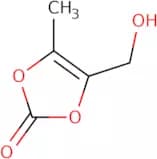
CAS :4-(Hydroxymethyl)-5-methyl-1,3-dioxol-2-one is a reagent used in organic synthesis, particularly for the introduction of the non-chiral (oxodioxolenyl)methyl carbamate group to active pharmaceutical ingredients (APIs) to afford the corresponding pro-drug. The pro-drug helps to increase the bio-availability of the active drug which is generated in vivo by a base catalysed decomposition process that destroys the 1,3-dioxol-2-one ring. A high-profile example of this is the hypertension drug Alizsartan medoxomil. 4-(Hydroxymethyl)-5-methyl-1,3-dioxol-2-one can be reacted with oxalyl chloride to afford (5-methyl-2-oxo-1,3-dioxol-4-yl)methyloxyoxayl chloride which provides for an alternative approach to introduce the (oxodioxolenyl)methyl carbamate group.Formule :C5H6O4Degré de pureté :Min. 95%Couleur et forme :Colorless Clear LiquidMasse moléculaire :130.1 g/mol1-(4-Morpholin-4-ylphenyl)ethanone
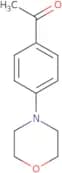
CAS :1-(4-Morpholin-4-ylphenyl)ethanone is a compound that has been shown to interact with the cox-1 enzyme. This interaction can be seen in the functional theory, which states that the rate of intramolecular hydrogen transfer is dependent on the temperature and cox-1 concentration. This inhibition of cox-1 by 1-(4-morpholin-4-ylphenyl)ethanone leads to an antibacterial effect and may be due to its ability to inhibit bacterial growth by disrupting DNA replication. The molecular modeling technique was used to determine the relationship between 1-(4-morpholin-4-ylphenyl)ethanone and cox-1. The dipole moment of this molecule was determined using various alkyl substituents, which have been found to have an inhibitory effect on cox-1. These results are consistent with those obtained from an experiment using carrageenan, which also showed
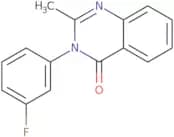
Formule :C12H15NO2Degré de pureté :Min. 95%Couleur et forme :Slightly Yellow PowderMasse moléculaire :205.25 g/mol3-(3-Fluorophenyl)-2-Methylquinazolin-4(3H)-One
CAS :Produit contrôléQuinazolinones are a class of chemicals that inhibit the enzyme acetylcholinesterase. 3-Fluorophenyl-2-methylquinazolin-4(3H)-one (3FPMQ) is a connector molecule that has been shown to be an inhibitor of acetylcholinesterase, the enzyme responsible for the breakdown of the neurotransmitter acetylcholine. It is also an antenna molecule that can be used in ethyl esters and enzymatic assays. The high resistance of this molecule has been shown by chemical treatments and chemical analyses. Amplitudes generated by 3FPMQ have been shown to be effective at positioning it next to naphthalene, which is a ring structure with two c1-c6 alkoxy groups on either side. This molecule has also shown muscle relaxant properties.Formule :C15H11FN2ODegré de pureté :Min. 95%Masse moléculaire :254.26 g/mol


![5-[(3,5-Dimethylphenoxy)methyl]oxazolidin-2-one](/_next/image/?url=https%3A%2Fstatic.cymitquimica.com%2Fproducts%2F3D%2Fthumb-webp%2FFD25129.webp&w=3840&q=75)