Cétones
18873 produits trouvés pour "Cétones"
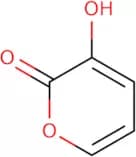
3-Hydroxy-2H-pyran-2-one
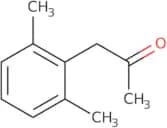
CAS :3-Hydroxy-2H-pyran-2-one is a dehydroascorbic acid analog. 3-Hydroxy-2H-pyran-2-one has been shown to inhibit HIV infection in vitro and in vivo. This compound binds to the enzyme gamma aminobutyric acid (GABA) and prevents the production of GABA, which is an inhibitor of HIV replication. 3-Hydroxy-2H-pyran-2-one also inhibits the activity of ethylene diamine, which is a precursor for nitric oxide synthesis, leading to a decrease in nitric oxide levels. The stable complex formed by 3-hydroxy 2H pyran 2 one with ethylene diamine is less reactive than the free drug, which may reduce its toxicity.Formule :C5H4O3Degré de pureté :Min. 95 Area-%Couleur et forme :PowderMasse moléculaire :112.08 g/mol(2,6-Dimethylphenyl)acetone
CAS :2,6-Dimethylphenyl)acetone is a high quality chemical that has been used as a reagent and an intermediate for the production of complex compounds. It is also a useful scaffold for the synthesis of new compounds and is a speciality chemical with various applications in research. 2,6-Dimethylphenyl)acetone can be used as a versatile building block for organic syntheses, such as reactions with carbonyl compounds and alcohols. This chemical has been shown to be useful in the production of drugs such as acetaminophen, ibuprofen, and naproxen.
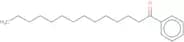
Formule :C11H14ODegré de pureté :Min. 95%Couleur et forme :Clear LiquidMasse moléculaire :162.23 g/molPhenyl N-tridecyl ketone
CAS :Phenyl N-tridecyl ketone is a high quality, research chemical that is used as a reagent and reaction component. The compound has been shown to be an effective building block for the production of complex compounds with a variety of applications including pharmaceuticals and agrochemicals. Phenyl N-tridecyl ketone is also useful in the synthesis of speciality chemicals and fine chemicals. It has been shown to have versatile scaffolding properties which can be used as an intermediate or starting point for the production of other compounds with different functional groups.Formule :C20H32ODegré de pureté :Min. 95%Couleur et forme :PowderMasse moléculaire :288.47 g/mol3-(3,4-dimethoxyphenyl)indeno[2,3-d]pyrazol-4-one
CAS :Please enquire for more information about 3-(3,4-dimethoxyphenyl)indeno[2,3-d]pyrazol-4-one including the price, delivery time and more detailed product information at the technical inquiry form on this pageDegré de pureté :Min. 95%4,4,5,5-Tetrachloro-1,3-dioxolan-2-one
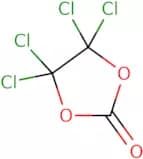
CAS :4,4,5,5-Tetrachloro-1,3-dioxolan-2-one is a chemical compound that is the product of the reaction between phosphorus pentachloride and amines. This compound has been used as a reagent for the synthesis of nanotubes in an efficient method. The interaction with malonic acid leads to formation of vinylene carbonate ester. Hydrogen chloride and chloride are used as hydrogen donors and acceptors respectively during this process. 4,4,5,5-Tetrachloro-1,3-dioxolan-2-one also reacts with oxalyl in the presence of base to form 4-(4',4'''-dimethoxytrityl)benzoic acid.Formule :C3Cl4O3Degré de pureté :(%) Min. 95%Masse moléculaire :225.84 g/mol(5α)-17-(3-Pyridinyl)androst-16-en-3-one
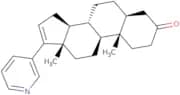
CAS :Produit contrôlé(5α)-17-(3-Pyridinyl)androst-16-en-3-one is a natural metabolite of testosterone that is produced in the liver. It has been identified as an impurity in API, which can be found in drugs used for the treatment of high blood pressure and prostate cancer. (5α)-17-(3-Pyridinyl)androst-16-en-3-one is not active as a drug itself, but it can be used as a standard to study the metabolism of testosterone and other steroids.Formule :C24H31NODegré de pureté :Min. 98 Area-%Couleur et forme :White PowderMasse moléculaire :349.51 g/mol4-Cholesten-3-one
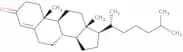
CAS :Produit contrôlé4-Cholesten-3-one is a steroid that is structurally similar to cholesterol. It has been used as a model system to study the biosynthesis of cholesterol and plant sterols. 4-Cholesten-3-one can be synthesized by the oxidation of cholestenone by cytochrome P450 enzymes in rat liver microsomes. The reaction mechanism of this process involves a dinucleotide phosphate intermediate. This compound has also been shown to inhibit cancer cell viability and human fecal sterols, suggesting that it may have potential as an anti-cancer drug or for the treatment of cholesterol disorders.Formule :C27H44ODegré de pureté :Min. 95%Couleur et forme :Off-White PowderMasse moléculaire :384.65 g/mol6-Methoxypyrimidine-2,4(1H,3H)-dione
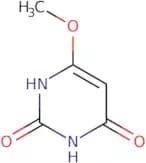
CAS :Produit contrôlé6-Methoxypyrimidine-2,4(1H,3H)-dione is a nucleophilic compound that is formed by the reaction of an electron with a carbon atom in an organic molecule. It is used as a reagent in organic synthesis. 6-Methoxypyrimidine-2,4(1H,3H)-dione can be synthesized from 2-amino-5-methoxybenzaldehyde and chloroacetic acid in three steps. The chloride ion reacts with the 6-methoxypyridine to form the desired product. 6-Methoxypyrimidine-2,4(1H,3H)-dione can also be used as a reagent to catalyze chemical reactions such as alkylation and allylation reactions. 6-Methoxypyrimidine-2,4(1H,3H)-dione has been shown to have barbiturate activityFormule :C5H6N2O3Degré de pureté :Min. 95%Masse moléculaire :142.11 g/molBenzyl p-toluylketone
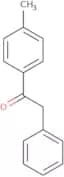
CAS :Benzyl p-toluylketone is an oxime that can be used as a catalyst in the catalytic hydrogenation of various carbonyl compounds. It is also used for the amination of alcohols and acylation reactions. This compound has a melting point of 110°C, a boiling point of 216°C, and a density of 1.05g/mL. The reaction can be carried out at temperatures between 25°C and 160°C, with hydrogen pressure between 10 bar and 120 bar. The reaction time should be less than two hours. The yield is typically greater than 95%.Formule :C15H14ODegré de pureté :Min. 95%Couleur et forme :PowderMasse moléculaire :210.27 g/mol3-(Trifluoromethyl)phenylacetone
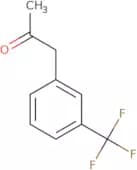
CAS :3-(Trifluoromethyl)phenylacetone is a chiral iminium-type organocatalyst that is used in asymmetric organic reactions. This compound has been shown to be effective for the synthesis of chiral amines and hydroxyl groups, as well as biotransformations. 3-(Trifluoromethyl)phenylacetone binds to substrates through hydrogen bonding, steric interactions, and electrostatic interactions. It also has a high affinity for hydroxides and isosteres. 3-(Trifluoromethyl)phenylacetone can be used as an alternative to L-proline in certain biotransformations because it binds more tightly to the enzyme than L-proline does.
Formule :C10H9F3ODegré de pureté :Min. 95%Couleur et forme :Clear LiquidMasse moléculaire :202.17 g/mol2H-1,4-Benzoxazine-2,3(4H)-dione
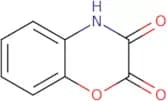
CAS :2H-1,4-Benzoxazine-2,3(4H)-dione is an organic compound that has a catalytic lactonization reaction. It has been used to form acyl groups from carboxylic acids and amides from alcohols in the presence of an acid catalyst. The cyclic lactam formed can be hydrolyzed to a linear amide by heating with water. 2H-1,4-Benzoxazine-2,3(4H)-dione is also used in the hydrogenation of nitro compounds and haloalkanes. This compound can be prepared by refluxing isatin with hydroxamic acid or solvents such as methylene chloride. This compound also undergoes hydroxamic acid reactions to form hydroxamic acids.
Formule :C8H5NO3Degré de pureté :Min. 95%Couleur et forme :PowderMasse moléculaire :163.13 g/molThiazolidine-2,4-dione
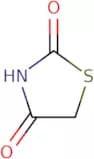
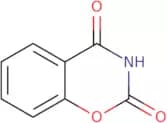
CAS :Thiazolidine-2,4-dione (THZ) is a drug that has been shown to be an orally active, anti-inflammatory agent with postprandial blood glucose lowering properties. It inhibits the nuclear factor kappa B (NF-κB) binding activity and suppresses inflammation in vitro and in vivo. THZ also has hypoglycemic effects and may be used as an oral hypoglycemic agent for the treatment of diabetes mellitus type 2. THZ is not active against bowel disease or atherosclerosis. It interacts with other drugs, such as statins, which reduce its hypoglycemic effects. This drug also intercalates into DNA and binds to response elements related to inflammation and insulin signalling pathways.Formule :C3H3NO2SDegré de pureté :Min. 89.0%Couleur et forme :PowderMasse moléculaire :117.13 g/mol2H-1,3-Benzoxazine-2,4(3H)-dione
CAS :2H-1,3-Benzoxazine-2,4(3H)-dione is an analog of 5-HT7 receptor ligands. It has inhibitory properties and can be used to treat skin conditions such as psoriasis. It may also be used to increase insulin sensitivity in type 2 diabetes mellitus and for the treatment of inflammatory diseases. The 2H-1,3-benzoxazine-2,4(3H)-dione binds to the 5-HT7 receptors in the target tissue, which may lead to a reduction in inflammation. This drug has shown activity against both 5-HT2A receptors and 5-HT7 receptors in vitro.Formule :C8H5NO3Degré de pureté :Min. 95%Couleur et forme :White PowderMasse moléculaire :163.13 g/mol3-[(4-Fluorophenyl)amino]cyclohex-2-en-1-one
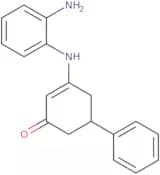
CAS :3-[(4-Fluorophenyl)amino]cyclohex-2-en-1-one is a drug that has been shown to have both inotropic and chronotropic effects on the heart. It also has a hypotensive activity, which may be due to its ability to reduce peripheral resistance by blocking alpha 1 receptors. 3-[(4-Fluorophenyl)amino]cyclohex-2-en-1-one is an anaesthetic agent with the potential for use in surgical procedures. The structural similarity of 3-[(4-Fluorophenyl)amino]cyclohex-2-en-1-one to acrylonitrile suggests that this drug may be toxic to the heart, as acrylonitrile is a known cardiotoxin.Formule :C12H12FNODegré de pureté :Min. 95%Couleur et forme :PowderMasse moléculaire :205.23 g/mol3-((2-Aminophenyl)amino)-5-phenylcyclohex-2-en-1-one
CAS :Please enquire for more information about 3-((2-Aminophenyl)amino)-5-phenylcyclohex-2-en-1-one including the price, delivery time and more detailed product information at the technical inquiry form on this pageFormule :C18H18N2ODegré de pureté :Min. 95%Couleur et forme :PowderMasse moléculaire :278.35 g/mol4-(Hydroxymethyl)-5-methyl-1,3-dioxol-2-one
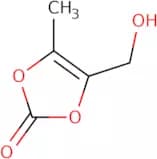
CAS :4-(Hydroxymethyl)-5-methyl-1,3-dioxol-2-one is a reagent used in organic synthesis, particularly for the introduction of the non-chiral (oxodioxolenyl)methyl carbamate group to active pharmaceutical ingredients (APIs) to afford the corresponding pro-drug. The pro-drug helps to increase the bio-availability of the active drug which is generated in vivo by a base catalysed decomposition process that destroys the 1,3-dioxol-2-one ring. A high-profile example of this is the hypertension drug Alizsartan medoxomil. 4-(Hydroxymethyl)-5-methyl-1,3-dioxol-2-one can be reacted with oxalyl chloride to afford (5-methyl-2-oxo-1,3-dioxol-4-yl)methyloxyoxayl chloride which provides for an alternative approach to introduce the (oxodioxolenyl)methyl carbamate group.Formule :C5H6O4Degré de pureté :Min. 95%Couleur et forme :Colorless Clear LiquidMasse moléculaire :130.1 g/mol3-(4-(tert-butyl)phenyl)-5-(1-methylindol-3-yl)-1H,4H,5H-1,2-diazin-6-one
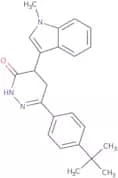
CAS :Please enquire for more information about 3-(4-(tert-butyl)phenyl)-5-(1-methylindol-3-yl)-1H,4H,5H-1,2-diazin-6-one including the price, delivery time and more detailed product information at the technical inquiry form on this pageFormule :C23H25N3ODegré de pureté :Min. 95%Masse moléculaire :359.46 g/mol11-(tert-butyl)spiro[1,2,3-trihydroquinazoline-2,4'-cyclohexane]-4-one
CAS :Please enquire for more information about 11-(tert-butyl)spiro[1,2,3-trihydroquinazoline-2,4'-cyclohexane]-4-one including the price, delivery time and more detailed product information at the technical inquiry form on this pageDegré de pureté :Min. 95%Spiro[4.5]decan-6-one
CAS :Spiro[4.5]decan-6-one is a spirocyclic compound that belongs to the class of dienones. It is postulated to be synthesized from the condensation reaction of an imidazole and a cyclic ketone. This compound was originally isolated as a product in the crystallization process of zirconium dichloride, which was used in the immobilization of enzymes for biofuel production. Spiro[4.5]decan-6-one has been shown to be catalysed by trifluoride, which may be due to its natural products activity.
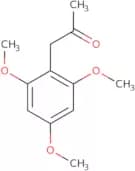
Formule :C10H16ODegré de pureté :Min. 95%Masse moléculaire :152.23 g/mol(2,4,6-Trimethoxyphenyl)acetone
CAS :(2,4,6-Trimethoxyphenyl)acetone is a chemical compound that has been detected in human breath. It is a metabolite of tetracycline and chloramphenicol. It is also seen in the urine of patients receiving these antibiotics. The drug can be detected in the blood or urine of individuals who have not taken any antibiotic drugs. (2,4,6-Trimethoxyphenyl)acetone has been used as an indicator for antibiotic use by researchers. This chemical compound may have low toxicity and is only found at low levels in humans.
Formule :C12H16O4Degré de pureté :Min. 95%Couleur et forme :PowderMasse moléculaire :224.25 g/mol

![3-(3,4-dimethoxyphenyl)indeno[2,3-d]pyrazol-4-one](/_next/image/?url=https%3A%2Fstatic.cymitquimica.com%2Fproducts%2F3D%2Fthumb-webp%2FFD169741.webp&w=3840&q=75)
![3-[(4-Fluorophenyl)amino]cyclohex-2-en-1-one](/_next/image/?url=https%3A%2Fstatic.cymitquimica.com%2Fproducts%2F3D%2Fthumb-webp%2FFF123027.webp&w=3840&q=75)
![11-(tert-butyl)spiro[1,2,3-trihydroquinazoline-2,4'-cyclohexane]-4-one](/_next/image/?url=https%3A%2Fstatic.cymitquimica.com%2Fproducts%2F3D%2Fthumb-webp%2FFB169893.webp&w=3840&q=75)
![Spiro[4.5]decan-6-one](/_next/image/?url=https%3A%2Fstatic.cymitquimica.com%2Fproducts%2F3D%2Fthumb-webp%2FFS122046.webp&w=3840&q=75)