


Amides
Les amides sont une vaste gamme de composés chimiques qui contiennent au moins un anneau hétérocyclique, lequel possède des atomes d'au moins deux éléments différents dans la structure de l'anneau, et au moins un groupe amide (-CONH2). Ces composés sont cruciaux dans la synthèse de produits pharmaceutiques, de polymères et d'agrochimiques. Les amides présentent des propriétés et une réactivité uniques, ce qui en fait des intermédiaires précieux dans la synthèse organique. Chez CymitQuimica, nous proposons une sélection complète d'amides de haute qualité pour soutenir vos besoins en recherche et en applications industrielles.
16485 produits trouvés pour "Amides"
Trier par
Degré de pureté (%)
0
100
|
0
|
50
|
90
|
95
|
100
2-Chloro-N-(3,5-dichlorophenyl)acetamide
CAS :<p>2-Chloro-N-(3,5-dichlorophenyl)acetamide is a stabilized, crystalline compound. It has a planar structure with an amide bond and hydrogen bonds. The 2-chloro group is bonded to the nitrogen atom of the acetamide group. The 3,5-dichlorophenyl group is bonded to the carbon atom of the acetamide group. The chlorine atoms are in a planar configuration with adjacent chlorine atoms forming a skeletal arrangement. This chemical is used as an intermediate for other compounds.</p>Formule :C8H6Cl3NODegré de pureté :Min. 95%Masse moléculaire :238.5 g/mol4-Hydroxyphenylacetamide
CAS :<p>4-Hydroxyphenylacetamide is a natural product that has been shown to have antibiotic properties. It inhibits the growth of bacteria by inhibiting the synthesis of p-hydroxybenzoic acid, which is an essential precursor for the biosynthesis of aromatic amino acids and other important compounds. 4-Hydroxyphenylacetamide also inhibits dopamine oxidation, which may lead to its anti-infective properties. The biological properties of 4-hydroxyphenylacetamide have been studied using electrochemical impedance spectroscopy (EIS) on bacterial strains and in vitro studies on P. aeruginosa. This compound is not metabolized by microorganisms and does not mineralize or react with oxygen at physiological pH levels. It can be used as a pharmaceutical dosage form for treatment of infectious diseases.</p>Formule :C8H9NO2Degré de pureté :Min. 95%Couleur et forme :White PowderMasse moléculaire :151.16 g/molN-Methyl-4-pyridone-3-carboxamide
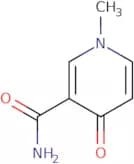
CAS :<p>N-Methyl-4-pyridone-3-carboxamide is a nonnutritive sweetener that has been shown to have no effect on peroxisome proliferation. It also had no effect on the levels of fatty acids in rat cardiomyocytes and did not affect uv absorption. N-Methyl-4-pyridone-3-carboxamide binds to the receptor α subunit of the taste receptor and inhibits adenosine uptake, which may be responsible for its effects on depression. This compound also alters energy metabolism by inhibiting mitochondrial ATP production and glycolysis.</p>Formule :C7H8N2O2Degré de pureté :(%) Min. 95%Couleur et forme :PowderMasse moléculaire :152.15 g/molHexadecanamide
CAS :<p>Hexadecanamide is a reactive amide that has an optimum concentration of 1.5-2.0 M in water and a pH range of 3.0-8.0. Hexadecanamide is oxidized by an oxidation catalyst to form hexadecane, which can be analyzed by gas chromatography or high performance liquid chromatography. The oxidation reaction can be monitored under constant pressure conditions using electrochemical impedance spectroscopy. Hexadecanamide reacts with hydroxyl groups and fatty acids to form hexadecanoic acid, which can be analyzed using gas chromatography or high performance liquid chromatography. Hexadecanamide also reacts with viral life to form hexadecanoic acid, which can be analyzed using gas chromatography or high performance liquid chromatography.<br>Hexadecanamide has been shown to have anti-inflammatory properties, which may be due to its ability to inhibit the production of pro-inflammatory cytokines such as histamine and leukotrienes</p>Formule :C16H33NODegré de pureté :Min. 95%Couleur et forme :PowderMasse moléculaire :255.44 g/mol1-(Aminomethyl)cyclopropanecarboxamide hydrochloride
CAS :<p>1-(Aminomethyl)cyclopropanecarboxamide hydrochloride is a versatile building block that can be used in the synthesis of complex compounds. It has been shown to be an excellent reagent for the synthesis of novel pharmaceuticals and speciality chemicals. This compound is also a useful intermediate for the preparation of high-quality products and can be used as a reaction component or scaffold in synthesis.</p>Formule :C5H10N2O·HClDegré de pureté :Min. 95%Couleur et forme :White PowderMasse moléculaire :150.61 g/molN-Benzylbenzamide
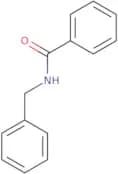
CAS :N-Benzylbenzamide is a molecule that contains an amide group, which is considered to be a hydrogen bond acceptor. The amine group of this compound can also act as a hydrogen bond donor. It has been shown to inhibit the activity of tyrosinase, which is an enzyme responsible for the production of melanin in melanocytes. N-Benzylbenzamide has been shown to have a molecular mechanism similar to that of hydroquinone and other phenolic compounds. In addition, it has been found to decrease microvessel density and inhibit the growth of cancer cells in vitro. This compound is not yet approved for use as a drug but may be used in future research studies as an alternative treatment for cancer.Formule :C14H13NODegré de pureté :Min. 95%Couleur et forme :White PowderMasse moléculaire :211.26 g/molNiclosamide
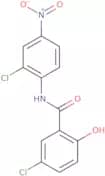
CAS :<p>Chemically a chlorinated salicylanilide, niclosamide is clinically used as an anthelmintic agent. The action of niclosamide has been proven to proceed by inhibiting the STAT3 signaling pathway. Recently, niclosamide, has been considered as an antiproliferative agent in cancer treatment, e.g. melanoma and colorectal cancer. In 2021, niclosamide has been tested for the treatment of COVID-19 patients.</p>Formule :C13H8Cl2N2O4Degré de pureté :Min. 98 Area-%Couleur et forme :Off-White PowderMasse moléculaire :327.12 g/molRink amide MBHA resin
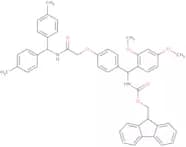
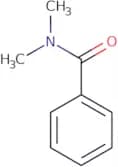
CAS :<p>Solid phase peptide anchor; tool for the Fmoc solid phase synthesis of peptide amides.<br>100-200 mesh. 1% DVB, substitution range 0.3-0.6 meq/g</p>Degré de pureté :Min. 95%Couleur et forme :PowderN,N'-Dimethyl benzamide
CAS :<p>N,N'-Dimethyl benzamide (DMAB) is an aryl halide that reacts with hydrogen to form the corresponding carbonyl group. The reaction solution of DMAB and hydrogen gas produces a chemical structure that resembles a hydrogen bond. DMAB has been shown to have anti-inflammatory effects in animals with inflammatory diseases. It has also been studied for its ability to inhibit the formation of amyloid plaque, which is associated with Alzheimer's disease. In addition, DMAB has been shown to have therapeutic effects against boron nitride and amides.<br>The crystal structure of DMAB can be found in both crystalline polymorphs: monoclinic and triclinic. The triclinic form is stable at room temperature and pressure, while the monoclinic form is only stable at higher temperatures. The monoclinic form is more soluble than the triclinic form, as it contains fewer hydrogen bonds between</p>Formule :C9H11NODegré de pureté :Min. 95%Couleur et forme :White PowderMasse moléculaire :149.19 g/molN-(4-(((2-Indol-3-ylethyl)amino)sulfonyl)phenyl)ethanamide
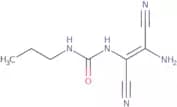
CAS :<p>Please enquire for more information about N-(4-(((2-Indol-3-ylethyl)amino)sulfonyl)phenyl)ethanamide including the price, delivery time and more detailed product information at the technical inquiry form on this page</p>Formule :C18H19N3O3SDegré de pureté :Min. 95%Couleur et forme :PowderMasse moléculaire :357.43 g/molN-(2-Amino-1,2-dinitrilovinyl)(propylamino)formamide
CAS :<p>Please enquire for more information about N-(2-Amino-1,2-dinitrilovinyl)(propylamino)formamide including the price, delivery time and more detailed product information at the technical inquiry form on this page</p>Formule :C8H11N5ODegré de pureté :Min. 95%Couleur et forme :PowderMasse moléculaire :193.21 g/molRetinamide
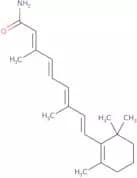
CAS :<p>Retinamide is a synthetic retinoid that is used for the treatment of skin cancer. It has been shown to induce apoptosis by activation of the c-jun N-terminal kinase (JNK) and p38 pathways, as well as by suppression of signaling through the phosphatidylinositol 3-kinase (PI3K)/Akt pathway. Retinamide also inhibits proliferation of HL60 cells and induces mitochondrial membrane depolarization in colon carcinoma cells. This drug has been shown to be a potent inhibitor of squamous cell carcinoma growth in vitro and in vivo, especially when combined with other chemotherapeutic agents. Retinamide has also been found to be effective against group P2 carcinomas, which are characterized by mutations in the BRAF gene.<br>Retinamide is metabolized by cytochrome P450 enzymes, leading to reactive metabolites that may cause toxic effects on cells. These metabolites can bind to DNA and cause strand breaks</p>Formule :C20H29NODegré de pureté :Min. 95%Couleur et forme :PowderMasse moléculaire :299.45 g/mol2-(3-Hydroxyphenyl)acetamide
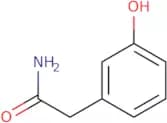
CAS :2-(3-Hydroxyphenyl)acetamide (2HPA) is a sulfonamidochrysoidine compound with analgesic, antipyretic and anti-inflammatory effects. It is used in the treatment of gout, rheumatoid arthritis, osteoarthritis and other inflammatory diseases. 2HPA has been shown to be effective in the treatment of pain following dental surgery. 2HPA is also used as a marker for dietary intake of sulfate and may be a useful indicator for determining the effect of changes in diet on urinary excretion rates. The elimination half-life of 2HPA is approximately 3 hours in humans. This drug can be detected in urine samples from humans within 24 hours after ingestion at concentrations that are proportional to dose.Formule :C8H9NO2Degré de pureté :Min. 95%Couleur et forme :PowderMasse moléculaire :151.16 g/molN-amino-2-(4-bromo-3,5-dimethylphenoxy)ethanamide
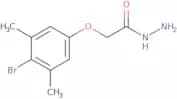
CAS :<p>Please enquire for more information about N-amino-2-(4-bromo-3,5-dimethylphenoxy)ethanamide including the price, delivery time and more detailed product information at the technical inquiry form on this page</p>Formule :C10H13BrN2O2Degré de pureté :Min. 95%Couleur et forme :PowderMasse moléculaire :273.13 g/molN-Chloro-4-toluenesulfonamide sodium
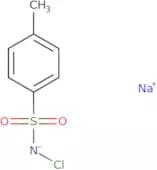
CAS :N-Chloro-4-toluenesulfonamide sodium (NCTS) is a disinfectant that is used to treat wastewater and as a preservative for water. It has been shown to be effective against bacteria, fungi, and viruses. NCTS is an antimicrobial agent that reacts with the matrix in which it is applied to form chloramines-T (NHClO). The chloramines-T inhibits the activity of enzymes such as those involved in DNA synthesis and protein synthesis. This reaction also generates an electric current due to the redox potentials of the reactants. The presence of aziridines in NCTS leads to crosslinking between proteins, which enhances its effectiveness as a disinfectant. NCTS has been shown to have no adverse effects on human erythrocytes or DNA when used at concentrations up to 100 µg/mL.Formule :C7H8ClNO2S•NaDegré de pureté :Min. 95%Couleur et forme :PowderMasse moléculaire :228.65 g/molN-(2-Piperidin-4-ylethyl)methanesulfonamide hydrochloride
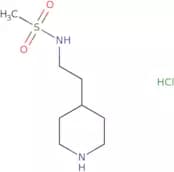
CAS :<p>N-(2-Piperidin-4-ylethyl)methanesulfonamide hydrochloride (MSM) is a fine chemical that belongs to the group of useful scaffolds. It is used as a versatile building block in research and can be used as a reaction component for speciality chemicals. The compound has high quality and can be used as a reagent, which is an important tool for organic synthesis.</p>Formule :C8H18N2O2S·HClDegré de pureté :Min. 95%Couleur et forme :SolidMasse moléculaire :242.77 g/molClorsulon
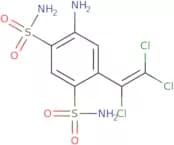
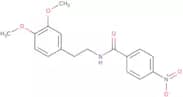
CAS :<p>Clorsulon is an anthelmintic drug that belongs to the group of benzimidazoles. It is used in veterinary medicine to treat nematode and cestode infections, as well as tapeworm infections. Clorsulon is a dispersive solid-phase extraction (DSPE) extractant that can be used for the separation of drugs and their metabolites from biological fluids. The chemical stability of clorsulon was assessed by exposing it to various solvents and pHs. Clorsulon was found to be stable in acetate, benzene, chloroform, ethyl acetate, ethanol, methanol, and water at pH 1-14 and a variety of temperatures ranging from -20 ˚C to 50 ˚C. No significant loss or degradation occurred after exposure to these conditions for up to 24 hours.</p>Formule :C8H8Cl3N3O4S2Degré de pureté :(Hplc) Min. 98.0%Couleur et forme :PowderMasse moléculaire :380.66 g/molN-(2-(3,4-dimethoxyphenyl)ethyl)(4-nitrophenyl)formamide
CAS :Produit contrôléPlease enquire for more information about N-(2-(3,4-dimethoxyphenyl)ethyl)(4-nitrophenyl)formamide including the price, delivery time and more detailed product information at the technical inquiry form on this pageDegré de pureté :Min. 95%2-Amino-N-[2-(2-chlorobenzoyl)-4-nitrophenyl]acetamide
CAS :<p>2-Amino-N-[2-(2-chlorobenzoyl)-4-nitrophenyl]acetamide is a fine chemical that is used as a building block in organic synthesis. It is a versatile intermediate for the synthesis of other compounds and can be used to make a variety of useful scaffolds. 2-Amino-N-[2-(2-chlorobenzoyl)-4-nitrophenyl]acetamide has been used in research and development of pharmaceuticals, agrochemicals, herbicides, and other compounds.</p>Formule :C15H12ClN3O4Degré de pureté :Min. 95%Couleur et forme :Slightly Yellow PowderMasse moléculaire :333.73 g/molN-[1-[2-(4-Ethyl-5-Oxotetrazol-1-Yl)Ethyl]-4-Phenylpiperidin-4-Yl]-N-(2-Fluorophenyl)Propanamide
CAS :Produit contrôlé<p>N-[1-[2-(4-Ethyl-5-Oxotetrazol-1-Yl)Ethyl]-4-Phenylpiperidin-4-Yl]-N-(2-Fluorophenyl)Propanamide is a drug that is used clinically for the treatment of depression. It is an analog of amitriptyline, an antidepressant and a tricyclic compound. N-[1-[2-(4-Ethyl-5-Oxotetrazol-1-Yl)Ethyl]-4-Phenylpiperidin-4-Yl]-N-(2-Fluorophenyl)Propanamide has been shown to increase the concentration of plasma drug levels by increasing transporter gene expression in muscle tissue. This drug also has clinical pharmacology and thermal expansion properties.</p>Formule :C25H31FN6O2Degré de pureté :Min. 95%Masse moléculaire :466.55 g/mol





![2-Amino-N-[2-(2-chlorobenzoyl)-4-nitrophenyl]acetamide](/_next/image/?url=https%3A%2Fstatic.cymitquimica.com%2Fproducts%2F3D%2Fthumb-webp%2FFA17795.webp&w=3840&q=75)
![N-[1-[2-(4-Ethyl-5-Oxotetrazol-1-Yl)Ethyl]-4-Phenylpiperidin-4-Yl]-N-(2-Fluorophenyl)Propanamide](/_next/image/?url=https%3A%2Fstatic.cymitquimica.com%2Fproducts%2F3D%2Fthumb-webp%2FFE102162.webp&w=3840&q=75)