Amides
Les amides sont une vaste gamme de composés chimiques qui contiennent au moins un anneau hétérocyclique, lequel possède des atomes d'au moins deux éléments différents dans la structure de l'anneau, et au moins un groupe amide (-CONH2). Ces composés sont cruciaux dans la synthèse de produits pharmaceutiques, de polymères et d'agrochimiques. Les amides présentent des propriétés et une réactivité uniques, ce qui en fait des intermédiaires précieux dans la synthèse organique. Chez CymitQuimica, nous proposons une sélection complète d'amides de haute qualité pour soutenir vos besoins en recherche et en applications industrielles.
16485 produits trouvés pour "Amides"
Trier par
Degré de pureté (%)
0
100
|
0
|
50
|
90
|
95
|
100
2'-Hydroxy-5'-nitrohexadecanamide
CAS :<p>2'-Hydroxy-5'-nitrohexadecanamide is a synthetic fatty acid derivative that inhibits lysosomal hydrolase, which is an enzyme that breaks down cellular lipids. This compound can be used as a diagnostic agent for the detection of certain types of cancer. 2'-Hydroxy-5'-nitrohexadecanamide reacts with the magnesium ion in the lysosome to form an insoluble precipitate, which then settles to the bottom of the test tube, allowing for easy detection of cells with high levels of lysosomal hydrolase.</p>Formule :C22H36N2O4Degré de pureté :Min. 95%Couleur et forme :PowderMasse moléculaire :392.53 g/molIndole-3-acetamide
CAS :<p>Indole-3-acetamide is an organic compound that is a component of the natural amino acid tryptophan. Indole-3-acetamide has been shown to be a potential anti-cancer drug. It inhibits prostate cancer cells and wild-type strains by inhibiting fatty acid synthase, which is an enzyme that catalyzes the synthesis of fatty acids. Indole-3-acetamide is also able to increase the production of monoclonal antibodies in mice with antigenic stimulation.</p>Formule :C10H10N2ODegré de pureté :Min. 98 Area-%Couleur et forme :PowderMasse moléculaire :174.2 g/mol5-Methyl-2-nitrobenzamide
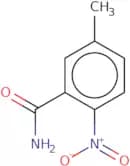
CAS :5-Methyl-2-nitrobenzamide is a compound that has antiproliferative activity and is used as an anticancer drug. This drug inhibits the polymerization of the protein tubulin in cancer cells, thereby inhibiting cell division. It also inhibits the growth of certain tumor cell lines in vitro. 5-Methyl-2-nitrobenzamide was found to inhibit the proliferation of human ovarian carcinoma cells by binding to DNA, preventing transcription and replication of genetic information. In addition, this agent binds to tubulin and prevents its polymerization, leading to inhibition of cell division.Formule :C8H8N2O3Degré de pureté :Min. 95%Couleur et forme :PowderMasse moléculaire :180.16 g/molIndapamide
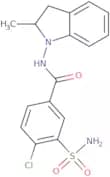
CAS :Produit contrôlé<p>Indapamide is an antihypertensive drug that inhibits the activity of the enzyme carbonic anhydrase, which is involved in the conversion of carbon dioxide to bicarbonate. It is used to treat high blood pressure and congestive heart failure. Indapamide has been shown to be effective in reducing oxidative injury to red blood cells and preventing cardiovascular events such as stroke and heart attack. Indapamide also has a long-term efficacy with no withdrawal symptoms or rebound hypertension when it is discontinued.</p>Formule :C16H16ClN3O3SDegré de pureté :Min. 95%Couleur et forme :White PowderMasse moléculaire :365.84 g/molN-(2-Oxo-2-phenylethyl)-N-phenylbenzamide
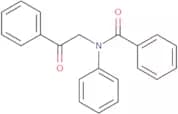
CAS :N-(2-Oxo-2-phenylethyl)-N-phenylbenzamide is a fine chemical that can be used as a versatile building block and reagent for the synthesis of complex compounds. This compound has been shown to react with both amines and alcohols in the presence of acid to produce useful products. It is also an intermediate for the synthesis of other compounds, such as pharmaceuticals, pesticides, and herbicides. N-(2-Oxo-2-phenylethyl)-N-phenylbenzamide is soluble in organic solvents and can be purified by recrystallization or column chromatography. The purity of this compound can be confirmed by nuclear magnetic resonance spectroscopy (1H NMR) or mass spectrometry (MS).Formule :C21H17NO2Degré de pureté :Min. 95%Masse moléculaire :315.37 g/molAcetyl-L-tyrosine amide
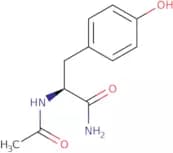
CAS :<p>Acetyl-L-tyrosine amide is an analog of L-tyrosine that is used as an active substance in the field of uv absorption. Acetyl-L-tyrosine amide reacts with sodium hydroxide to form a soluble salt, which has been shown to have binding constants that are comparable to those of human serum. This compound also has fluorescence properties and can be used for the determination of neutral pH. The reaction products formed between acetyl-L-tyrosine amide and sodium hydroxide are hydrolyzed by acids and yield a molecule with rotameric properties. These rotameric properties can be modeled using a protein model without affecting the stability or function of the protein.</p>Formule :C11H14N2O3Degré de pureté :Min. 95%Couleur et forme :PowderMasse moléculaire :222.24 g/molAZD 1152
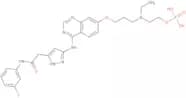
CAS :<p>AZD 1152 is an Aurora kinase inhibitor, which is a type of small-molecule therapeutic agent. It is derived from the pharmaceutical research conducted by AstraZeneca. Its primary mode of action involves the selective inhibition of Aurora B kinase, an enzyme crucial for the regulation of mitosis. By interfering with this enzyme, AZD 1152 disrupts the normal progression of cell division, leading to the inhibition of proliferation and induction of apoptosis in rapidly dividing cells.</p>Formule :C26H31FN7O6PDegré de pureté :Min. 97 Area-%Couleur et forme :Slightly Yellow PowderMasse moléculaire :587.54 g/mol(E)-N-(3-Methylaminopropyl)-2-thiopheneacrylamide
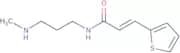
CAS :(E)-N-(3-Methylaminopropyl)-2-thiopheneacrylamide is a high quality chemical that can be used as an intermediate in the synthesis of complex compounds. It is also a useful scaffold and building block for the synthesis of speciality chemicals with versatile reactions.Formule :C11H16N2OSDegré de pureté :Min. 95%Couleur et forme :Colorless Clear LiquidMasse moléculaire :224.32 g/molN-[4-(2-Hydrazino-2-oxoethoxy)phenyl]acetamide
CAS :<p>N-[4-(2-Hydrazino-2-oxoethoxy)phenyl]acetamide is a phenolic compound that has been shown to have an antimicrobial effect. It has been shown to have antitubercular activity against Mycobacterium tuberculosis and the ability to inhibit the growth of cancer cells in vitro. N-[4-(2-Hydrazino-2-oxoethoxy)phenyl]acetamide is also known as monastrol. The pharmacophore of this drug is based on the structure of paracetamol, which is a member of the class of drugs known as analgesics, antipyretics, and antiinflammatory agents. Paracetamol has been used for decades in humans and animals for relief from pain, fever, and inflammation. N-[4-(2-Hydrazino-2-oxoethoxy)phenyl]acetamide may be useful for treating diseases such as cancer or tuberculosis due to its antic</p>Formule :C10H13N3O3Degré de pureté :Min. 95%Couleur et forme :PowderMasse moléculaire :223.23 g/molMorpholine-4-carboxamide
CAS :<p>Morpholine-4-carboxamide is a polymerase chain inhibitor that inhibits the activity of DNA polymerases. It binds to the DNA template strand and prevents the enzyme from adding nucleotides to the primer strand, thereby inhibiting DNA synthesis. Morpholine-4-carboxamide has shown efficacy in treating hyperproliferative diseases such as cancer cells and psoriasis. This drug has been shown to inhibit caspase activation and histone protein acetylation, which may be related to its anti-cancer properties. Morpholine-4-carboxamide also binds to cannabinoid receptor 2 (CB2) and may have therapeutic effects on inflammatory diseases such as psoriasis and arthritis.</p>Formule :C5H10N2O2Degré de pureté :Min. 95%Masse moléculaire :130.15 g/mol2-Amino-N-methylbenzamide
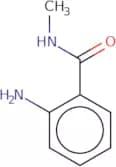
CAS :<p>2-Amino-N-methylbenzamide is a benzodiazepine receptor antagonist that has been shown to inhibit the proliferation of cancer cells in vitro. 2-Amino-N-methylbenzamide binds to the benzodiazepine receptor, which is found in cell nuclei and is involved in controlling the process of cell division. Benzodiazepines are a class of drugs that work by increasing the activity of GABA, which reduces neuronal excitability. 2-Amino-N-methylbenzamide prevents this activity by binding to the benzodiazepine receptor, preventing GABA from binding to its receptors and thereby inhibiting neuronal excitability. This drug has also been shown to inhibit cancer growth through an anthranilic acid derivative, methyl anthranilate. Methyl anthranilate inhibits DNA synthesis and induces apoptosis in cancer cells, leading to cell death.</p>Formule :C8H10N2ODegré de pureté :Min. 95%Couleur et forme :PowderMasse moléculaire :150.18 g/molN-[4-[1-(2-Fluorobenzyl)-3-butyl-2,6-dixo-2,3,6,7-tetrahydro-1H-purin-8-ylmethyl]phenyl]acetamide
CAS :Produit contrôléN-[4-[1-(2-Fluorobenzyl)-3-butyl-2,6-dixo-2,3,6,7-tetrahydro-1H-purin-8-ylmethyl]phenyl]acetamide is a fine chemical with a diverse range of potential applications. It can be used as a versatile building block in the synthesis of complex compounds and is useful as a reaction component or reagent. Its CAS number is 628279-07-2.Formule :C25H26FN5O3Degré de pureté :Min. 95%Couleur et forme :White PowderMasse moléculaire :463.5 g/mol4-Methoxybenzenecarbothioamide
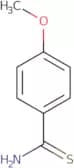
CAS :4-Methoxybenzenecarbothioamide is a urea nitrogen analogue that inhibits the synthesis of urea and other nitrogenous compounds. It is an inhibitor of the enzyme pyruvic transaminase, which converts pyruvate to alanine. The drug is also an inhibitor of the enzyme lactam synthetase, which catalyzes the formation of lactams from amino acids. This activity results in decreased production of cancer cells and renal toxicity. 4-Methoxybenzenecarbothioamide has been shown to have anticancer activity in vitro against a number of human cancer cell lines, including A549 lung carcinoma cells and MCF-7 breast cancer cells.Formule :C8H9NOSDegré de pureté :Min. 98 Area-%Couleur et forme :Off-White Yellow PowderMasse moléculaire :167.23 g/molN-Phenylpiperidine-4-carboxamide
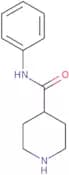
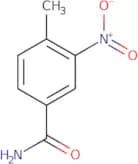
CAS :<p>N-Phenylpiperidine-4-carboxamide is a drug that inhibits the production of thromboxane A2 and other substances that promote clotting. It is used to treat patients with high blood pressure, as well as for the prevention of strokes and heart attacks. N-Phenylpiperidine-4-carboxamide is an analog of biphenyl and has been shown to have antiplatelet activity in humans. This drug also inhibits soluble guanylate cyclase, which prevents platelets from sticking together and forming clots. N-Phenylpiperidine-4-carboxamide is rapidly metabolized by esterases in the human body and excreted primarily in urine. The pharmacokinetic properties of this drug are not well understood but it can be synthesized using a number of different methods involving amide bonds.</p>Formule :C12H16N2ODegré de pureté :Min. 95%Couleur et forme :White PowderMasse moléculaire :204.27 g/mol4-Methyl-3-nitrobenzamide
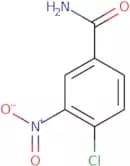
CAS :<p>4-Methyl-3-nitrobenzamide is a nitrile that can be synthesized by the reaction of potassium hydroxide and 3-nitrobenzamide. It has been shown to react with dichloroethane to form 4-methyl-3-nitrobenzoic acid. The optimum temperature for this reaction is 120°C, which leads to a high yield of 4-methyl-3-nitrobenzamide. This product is also available in an isotopic form at high purity.</p>Formule :C8H8N2O3Degré de pureté :Min. 95%Couleur et forme :PowderMasse moléculaire :180.16 g/mol4-Chloro-3-nitrobenzamide
CAS :<p>4-Chloro-3-nitrobenzamide (4CNBA) is a potent inducer of hepatic drug metabolizing enzymes. It reacts with methyl cinnamate to form the 4-chloro-3-nitrobenzamide methyl ester and chloride ions. This reaction is catalyzed by copper, which binds to the 4CNBA molecule. The chloride ion then displaces water from the ester, producing a nitroso intermediate. This intermediate breaks down into an unstable nitrite, which in turn reacts with hydrogen peroxide to form a hydroxylamine intermediate. Hydroxylamine can then react with sulfhydryl groups to produce reactive thiols that are responsible for the induction of detoxification enzymes in the liver.<br>4CNBA has been shown to be toxic at high concentrations and is rapidly detoxified by Phase II enzymes such as glutathione S transferase, UDP glucuronosyltransferase, and N-acetyl</p>Formule :C7H5ClN2O3Degré de pureté :Min. 95%Couleur et forme :PowderMasse moléculaire :200.58 g/molN-(2,5-dimethylphenyl)(3-chlorobenzo[b]thiophen-2-yl)formamide
CAS :Please enquire for more information about N-(2,5-dimethylphenyl)(3-chlorobenzo[b]thiophen-2-yl)formamide including the price, delivery time and more detailed product information at the technical inquiry form on this pageDegré de pureté :Min. 95%Rink amide-AM Resin
CAS :<p>Rink amide-AM resin is a cation exchange resin that is used in peptide synthesis. It has an optimal pH range of 8-9. Rink amide-AM resin can be activated with trifluoroacetic acid or piperidine and washed with a mixture of water and methanol to remove the salt byproduct. The resin can then be used for peptide synthesis, which is typically done by adding the desired amino acids in sequence to the resin. The synthesis is stopped when the linear peptide reaches a desired length, typically 12-15 amino acids long. The linear peptides are then cleaved from the resin using trifluoroacetic acid or piperidine, depending on which activation reagent was used during synthesis. After cleavage, the linear peptides are precipitated from solution using ethanol or acetone and collected by filtration.</p>Couleur et forme :Off-White PowderVal-Cit-PAB-OH
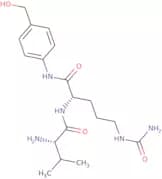
CAS :The Val-Cit-PAB linker is an activated peptide linker that is cleaved by cathepsin B. It enables the selective intracellular release of attached drugs in ADC applications.Formule :C18H29N5O4Degré de pureté :Min. 95%Couleur et forme :PowderMasse moléculaire :379.45 g/mol(S,E)-3-(6-Bromopyridin-2-yl)-2-cyano-N-(1-phenylethyl)acrylamide
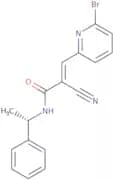
CAS :(S,E)-3-(6-Bromopyridin-2-yl)-2-cyano-N-(1-phenylethyl)acrylamide (MBI-23) is a potential antineoplastic agent that has been shown to induce regression of bladder cancer in mice. MBI-23 induces apoptosis by inhibiting the proliferation of cancer cells and inducing differentiation of cancer stem cells. It is also shown to inhibit tumor growth and progression in glioma and prostate cancer models. MBI-23 binds to the KDR receptor subtype, which is activated by organic acids and inhibited by inorganic compounds. This binding leads to constitutive activation of the KDR receptor, thereby inducing apoptosis. The tautomers and stereoisomers of MBI-23 have not been fully elucidated yet.Formule :C17H14ON3BrDegré de pureté :Min. 98 Area-%Couleur et forme :White PowderMasse moléculaire :356.22 g/mol



![N-[4-(2-Hydrazino-2-oxoethoxy)phenyl]acetamide](/_next/image/?url=https%3A%2Fstatic.cymitquimica.com%2Fproducts%2F3D%2Fthumb-webp%2FFH131261.webp&w=3840&q=75)
![N-[4-[1-(2-Fluorobenzyl)-3-butyl-2,6-dixo-2,3,6,7-tetrahydro-1H-purin-8-ylmethyl]phenyl]acetamide](/_next/image/?url=https%3A%2Fstatic.cymitquimica.com%2Fproducts%2F3D%2Fthumb-webp%2FFF23426.webp&w=3840&q=75)
![N-(2,5-dimethylphenyl)(3-chlorobenzo[b]thiophen-2-yl)formamide](/_next/image/?url=https%3A%2Fstatic.cymitquimica.com%2Fproducts%2F3D%2Fthumb-webp%2FFD169538.webp&w=3840&q=75)