Amides
Les amides sont une vaste gamme de composés chimiques qui contiennent au moins un anneau hétérocyclique, lequel possède des atomes d'au moins deux éléments différents dans la structure de l'anneau, et au moins un groupe amide (-CONH2). Ces composés sont cruciaux dans la synthèse de produits pharmaceutiques, de polymères et d'agrochimiques. Les amides présentent des propriétés et une réactivité uniques, ce qui en fait des intermédiaires précieux dans la synthèse organique. Chez CymitQuimica, nous proposons une sélection complète d'amides de haute qualité pour soutenir vos besoins en recherche et en applications industrielles.
16485 produits trouvés pour "Amides"
Trier par
Degré de pureté (%)
0
100
|
0
|
50
|
90
|
95
|
100
2-(Indenylamino)acetamide, hydrochloride salt
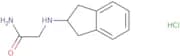
CAS :<p>2-(Indenylamino)acetamide, hydrochloride salt is a potential drug that is an uptake inhibitor. It prevents the uptake of dopamine in the brain and has been shown to be neuroprotective in animal research. It also has potential to treat diabetic neuropathy, inflammatory diseases, and pain. The kinetic properties of this drug were studied using rat striatal cells. 2-(Indenylamino)acetamide, hydrochloride salt inhibits the transport of dopamine into these cells by blocking the movement of dopamine from outside the cell to inside the cell. This drug could potentially be used for treatment of Parkinson's disease or other conditions involving dopaminergic dysfunction.</p>Formule :C11H15ClN2ODegré de pureté :Min. 95%Couleur et forme :PowderMasse moléculaire :226.7 g/mol4-(Aminomethyl)benzenesulfonamide acetate
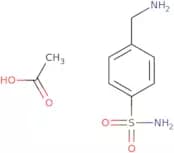
CAS :Produit contrôlé<p>4-(Aminomethyl)benzenesulfonamide acetate is a biocompatible polymer that is used in the treatment of infectious diseases. It has antibacterial efficacy against a range of microorganisms, including methicillin-resistant Staphylococcus aureus and Pseudomonas aeruginosa. This polymer binds to sulfadiazine and antimicrobial peptides, which then act as antimicrobial agents. 4-(Aminomethyl)benzenesulfonamide acetate also exhibits good chemical stability in vivo and has been shown to inhibit the growth of skin cells.</p>Formule :C9H14N2O4SDegré de pureté :Min. 95%Couleur et forme :PowderMasse moléculaire :246.28 g/mol(1Z)-N'-Hydroxypropanimidamide
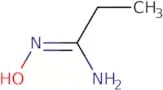
CAS :<p>1-Z-N'-Hydroxypropanimidamide is a novel anion that has been shown to inhibit the proliferation of human cancer cells. It binds to the cholinergic receptor subtype and inhibits the uptake of acetylcholine, which leads to a reduction in the production of nitric oxide. 1-Z-N'-Hydoxypropanimidamide also inhibits the growth of Mycobacterium tuberculosis and possesses antimycobacterial activity. This compound is a ligand that binds bidentate to both DNA and RNA molecules and inhibits chemokine signaling.</p>Formule :C3H8N2ODegré de pureté :Min. 95%Couleur et forme :White PowderMasse moléculaire :88.11 g/molN-1-Adamantyl-2-chloroacetamide
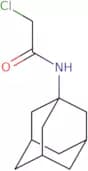
CAS :<p>Adamantyl-2-chloroacetamide is an analog of adamantyl acetamide and has been shown to be a potent inhibitor of Mycobacterium tuberculosis. Adamantyl-2-chloroacetamide inhibits the growth of Mycobacterium tuberculosis by inhibiting the synthesis of DNA, RNA, and protein. This compound also shows selectivity for Mycobacterium tuberculosis over other bacteria such as Escherichia coli. Adamantyl-2-chloroacetamide may have a role in the treatment of tuberculosis because it can inhibit the synthesis of DNA, RNA, and protein in Mycobacterium tuberculosis while leaving these functions intact in other bacteria.</p>Formule :C12H18ClNODegré de pureté :Min. 95%Couleur et forme :PowderMasse moléculaire :227.73 g/molN-(4-Cyano-2-chlorophenyl)acetamide
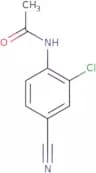
CAS :N-(4-Cyano-2-chlorophenyl)acetamide is a versatile building block that is used in the synthesis of complex compounds. N-(4-Cyano-2-chlorophenyl)acetamide has been shown to be a useful intermediate in the synthesis of important compounds such as 4-aminoantipyrine, 4,5-dichloroanthranilic acid and 2,6-dichloropurine. This chemical has also been found to be an effective reagent for the preparation of other chemicals.Formule :C9H7ClN2ODegré de pureté :Min. 95%Masse moléculaire :194.62 g/mol1-Butyl-3-methylimidazolium dicyanamide
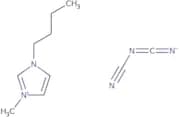
CAS :<p>1-Butyl-3-methylimidazolium dicyanamide is an ionic liquid that is a colorless, volatile liquid. It is a hydrophobic compound that has been shown to have a high thermal expansion coefficient and a low viscosity. This compound has been shown to form stable complexes with many metals and nonmetals, such as lithium, sodium, silver, copper, gold, palladium, nickel, cobalt and zinc. 1-Butyl-3-methylimidazolium dicyanamide has been used for solvent extraction of metals and as an electrolyte in electrochemical studies. The solubility of this compound in water has been found to be dependent on the concentration of the hydrogen bond acceptor sites on the surface of the solute molecule.</p>Formule :C10H15N5Degré de pureté :Min. 95%Couleur et forme :Red Clear LiquidMasse moléculaire :205.26 g/molThiophene-2-carboxamide
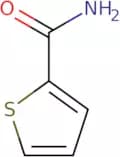
CAS :<p>Thiophene-2-carboxamide is a synthetic chemical that is an inhibitor of the efflux pump, receptor activity, and recombinant cytochrome p450. It has been shown to be effective against colorectal carcinoma cells in vitro and in vivo. Thiophene-2-carboxamide also inhibits the mitochondrial membrane potential and hydrogen bond formation. This compound has potent inhibitory activity for the enzyme synthetase, which may be a potential drug target for cancer treatment. Nitrogen atoms are present in this molecule.</p>Formule :C5H5NOSDegré de pureté :Min. 95%Couleur et forme :White PowderMasse moléculaire :127.17 g/mol4-(tert-Butyl)benzenesulfonamide
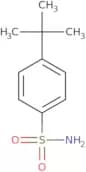
CAS :4-(tert-Butyl)benzenesulfonamide is a pyrimidine derivative that has an affinity for metal ions and can be used as a catalyst. It is insoluble in water but soluble in acetonitrile and other organic solvents. This compound is a strong oxidant when it reacts with ethylene, styrene, or propyl gallate. 4-(tert-Butyl)benzenesulfonamide has been shown to be highly reactive with the oxygen in air, leading to the formation of 4-dimethylaminobenzoic acid, formyl group, and phosphorus oxychloride.Formule :C10H15NO2SDegré de pureté :Min. 95%Couleur et forme :PowderMasse moléculaire :213.3 g/mol1-Butyl-N-(2,6-dimethylphenyl)-piperidine-2-carboxamide
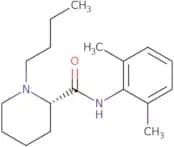
CAS :Ropivacaine is a local anaesthetic of the amino ester group that is used to provide relief from pain caused by surgery or other medical procedures. It is a potent inhibitor of the enzyme activity of cholinesterases, which are enzymes responsible for the degradation of acetylcholine. Ropivacaine also inhibits the activity of cardiac Na+/K+ ATPase and Na+-Ca2+ exchanger, thereby reducing the excitability and contractility of heart muscle. This drug has shown pharmacokinetic properties in maternal blood that are similar to those observed in plasma, indicating that it can cross the placenta. Ropivacaine has been shown to have bactericidal effects against bacterial strains such as Escherichia coli and Staphylococcus aureus. In addition, ropivacaine has been shown to inhibit colorectal adenocarcinoma cells in vitro and in vivo. LevobupivacaineFormule :C18H28N2ODegré de pureté :Min. 95%Couleur et forme :White/Off-White SolidMasse moléculaire :288.43 g/molN,N'-Ethylenebis(iodoacetamide)
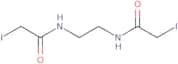
CAS :<p>N,N'-Ethylenebis(iodoacetamide) is a molecule that binds to peptides and is used in cancer research. It has been shown to inhibit the growth of leukemia cells by inhibiting the synthesis of DNA. N,N'-Ethylenebis(iodoacetamide) has been shown to be an active analog for artemisinin, a drug used for malaria prophylaxis, and podophyllotoxin, a natural product used for the treatment of cancer. The molecule also inhibits cancer cell proliferation through its effects on protein synthesis.</p>Formule :C6H10I2N2O2Degré de pureté :Min. 95%Couleur et forme :PowderMasse moléculaire :395.96 g/molPivalamide
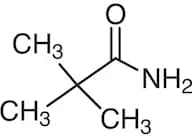
CAS :Formule :C5H11NODegré de pureté :>98.0%(GC)(N)Couleur et forme :White to Almost white powder to crystalMasse moléculaire :101.152-Cyano-N,N-diethylacetamide
CAS :Formule :C7H12N2ODegré de pureté :>98.0%(GC)Couleur et forme :Colorless to Light yellow clear liquidMasse moléculaire :140.19N-[3-(Diethylaminomethyl)-4-hydroxyphenyl]acetamide
CAS :<p>N-[3-(Diethylaminomethyl)-4-hydroxyphenyl]acetamide is a molecule that has been shown to have acetylcholine esterase (AChE) inhibitory activity. It binds to the active site of AChE, preventing it from breaking down acetylcholine, leading to the accumulation of this neurotransmitter. The inhibition of AChE by N-[3-(Diethylaminomethyl)-4-hydroxyphenyl]acetamide prevents muscle contraction and leads to paralysis and death by asphyxiation. This drug has been used in the treatment of sarin gas poisoning. The molecular structure of N-[3-(Diethylaminomethyl)-4-hydroxyphenyl]acetamide is similar to that of pyridinium chlorides, which are used for synthesizing nerve agents such as sarin and soman. This drug also has a proton</p>Formule :C13H20N2O2Degré de pureté :Min. 95%Couleur et forme :PowderMasse moléculaire :236.31 g/mol2-Amino-2-cyanoacetamide
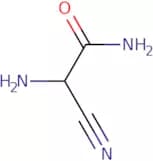
CAS :<p>2-Amino-2-cyanoacetamide is a chemical compound that has been shown to be reactive in the human liver and animal models. It is a purine derivative with a diatomic molecule, which has been shown to inhibit cancer cells in animals. 2-Amino-2-cyanoacetamide has been shown to inhibit the replication of pestivirus, an RNA virus that causes encephalitis and other diseases in humans. The nitrogen atoms on this molecule are responsible for its transport properties, including uptake by the gut and its ability to cross the blood brain barrier. 2-Amino-2-cyanoacetamide also inhibits the activity of amide hydrolase, which is an enzyme responsible for hydrolyzing peptides into amino acids. This process leads to a decrease in protein synthesis, which can lead to cell death.</p>Formule :C3H5N3ODegré de pureté :Min. 95%Couleur et forme :Beige To Tan SolidMasse moléculaire :99.09 g/mol3,5-Dimethoxycinnamide
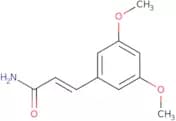
CAS :<p>3,5-Dimethoxycinnamide is a compound that has been shown to inhibit the C1-4 alkoxy and C1-4 alkyl esterase activity of the enzyme secretase. This enzyme is involved in the production of amyloid beta peptides and is thought to be an important contributor to Alzheimer's Disease. 3,5-Dimethoxycinnamide also inhibits the aspartyl protease activity of aspartyl proteases, which are enzymes that may play a role in Alzheimer's disease. 3,5-Dimethoxycinnamide binds to the hydrophobic region of these enzymes and prevents them from binding to their substrates. The affinity of this compound for these enzymes precludes its ability to bind with other proteins in the brain, thereby reducing its potential toxicity. 3,5-Dimethoxycinnamide can be labeled with halogeno groups or other chemical moieties for profiling purposes.</p>Formule :C11H13NO3Degré de pureté :Min. 95%Masse moléculaire :207.23 g/mol2-Amino-4,5-dimethoxybenzamide
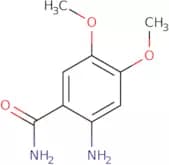
CAS :<p>2-Amino-4,5-dimethoxybenzamide is an anticancer agent that inhibits the epidermal growth factor receptor tyrosine kinase. It binds to the linker region of the epidermal growth factor receptor and prevents autophosphorylation. 2-Amino-4,5-dimethoxybenzamide has shown in vitro cytotoxic activity against testicular cancer cells and acute lymphoblastic leukemia cells. 2-Amino-4,5-dimethoxybenzamide is a synthetic compound that has been shown to have bioisosteric properties with other growth factors such as epidermal growth factor.</p>Formule :C9H12N2O3Degré de pureté :Min. 95%Couleur et forme :PowderMasse moléculaire :196.2 g/molN-(4-Butylphenyl)acetamide
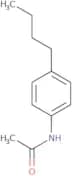
CAS :<p>N-(4-Butylphenyl)acetamide is a reactant that can be used in the production of other chemicals. It is an intermediate for the synthesis of a wide range of organic compounds, which makes it a useful building block. N-(4-Butylphenyl)acetamide has been shown to have antihistamine and anti-inflammatory properties. It is also known as acetanilide or 4-butylaniline. This chemical has CAS number 3663-20-5 and a molecular weight of 150.06 g/mol.</p>Formule :C12H17NODegré de pureté :Min. 95%Couleur et forme :White/Off-White SolidMasse moléculaire :191.27 g/mol2,5-Dihydroxy-N-(2-hydroxyethyl)benzamide
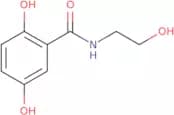
CAS :Sodium citrate is a specific antibody that is used in the treatment of inflammatory bowel disease, such as Crohn's disease. It may be effective in the prevention and treatment of infectious diseases, such as HIV and hepatitis C. Sodium citrate has been shown to be an analog of sodium bicarbonate, which can be used for the prevention and treatment of acid complex diseases. The drug also has anti-inflammatory properties, which can help with symptoms associated with bowel disease or other inflammatory conditions. It is available for intravenous injection as a sterile solution containing benzalkonium chloride and water for injection.Formule :C9H11NO4Degré de pureté :Min. 95%Couleur et forme :PowderMasse moléculaire :197.19 g/mol4-Nitrobenzenesulfonamide
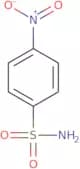
CAS :<p>4-Nitrobenzenesulfonamide is an organic compound that consists of a nitro group, a sulfonamide group, and an amine. It is the active analog of 4-dimethylaminobenzoic acid, which is used as an inhibitor of histamine release in the treatment of allergic reactions. The molecule has been shown to bind to copper ions and triflic acid and has been used as a catalyst for aziridination.</p>Formule :C6H6N2O4SDegré de pureté :Min. 96 Area-%Couleur et forme :White PowderMasse moléculaire :202.19 g/mol3-Fluorobenzamide
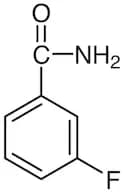
CAS :Formule :C7H6FNODegré de pureté :>97.0%(HPLC)(N)Couleur et forme :White to Almost white powder to crystalMasse moléculaire :139.13



![N-[3-(Diethylaminomethyl)-4-hydroxyphenyl]acetamide](/_next/image/?url=https%3A%2Fstatic.cymitquimica.com%2Fproducts%2F3D%2Fthumb-webp%2FFD71897.webp&w=3840&q=75)