Amides
Les amides sont une vaste gamme de composés chimiques qui contiennent au moins un anneau hétérocyclique, lequel possède des atomes d'au moins deux éléments différents dans la structure de l'anneau, et au moins un groupe amide (-CONH2). Ces composés sont cruciaux dans la synthèse de produits pharmaceutiques, de polymères et d'agrochimiques. Les amides présentent des propriétés et une réactivité uniques, ce qui en fait des intermédiaires précieux dans la synthèse organique. Chez CymitQuimica, nous proposons une sélection complète d'amides de haute qualité pour soutenir vos besoins en recherche et en applications industrielles.
16399 produits trouvés pour "Amides"
Trier par
Degré de pureté (%)
0
100
|
0
|
50
|
90
|
95
|
100
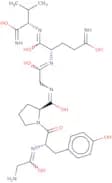
(D-Trp12,Tyr34)-pTH (7-34) amide (bovine) trifluoroacetate salt
CAS :<p>Please enquire for more information about (D-Trp12,Tyr34)-pTH (7-34) amide (bovine) trifluoroacetate salt including the price, delivery time and more detailed product information at the technical inquiry form on this page</p>Formule :C165H251N49O40S2Degré de pureté :Min. 95%Masse moléculaire :3,625.2 g/mol(D-Ala2)-GRF (1-29) amide (human)
CAS :<p>Please enquire for more information about (D-Ala2)-GRF (1-29) amide (human) including the price, delivery time and more detailed product information at the technical inquiry form on this page</p>Formule :C149H246N44O42SDegré de pureté :Min. 95%Masse moléculaire :3,357.88 g/mol1-Methyl-4-nitro-1H-pyrazole-3-carboxamide
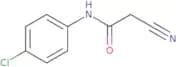
CAS :<p>Please enquire for more information about 1-Methyl-4-nitro-1H-pyrazole-3-carboxamide including the price, delivery time and more detailed product information at the technical inquiry form on this page</p>Degré de pureté :Min. 95%N-(4-Chlorophenyl)-2-cyanoacetamide
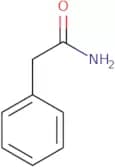
CAS :<p>N-(4-Chlorophenyl)-2-cyanoacetamide is a pyridine compound that can be synthesized from chloroacetonitrile and acetamide. It has been shown to react with an active methylene group in benzene or pyridine to produce a heterocycle. This reaction is reversible and can be used as a preparative method for the synthesis of heterocycles. The 1,3-dipolar cycloaddition of N-(4-chlorophenyl)-2-cyanoacetamide with nitro groups in nitrobenzene produces the corresponding 2-nitropyridines, which are important intermediates in the synthesis of other heterocycles. N-(4-Chlorophenyl)-2-cyanoacetamide has been used as an efficient method for the preparation of nitrogen nucleophiles that are useful for catalysis.</p>Formule :C9H7ClN2ODegré de pureté :Min. 95%Masse moléculaire :194.62 g/mol2-Phenylacetamide
CAS :Produit contrôlé<p>2-Phenylacetamide is a nitro, acetate extract that has been shown to have antimicrobial activity. It can inhibit HIV infection and has been investigated as an antiviral drug. 2-Phenylacetamide binds to the 2-adrenergic receptor, which is found in high concentrations in the brain and inhibits the release of neurotransmitters. It also binds to κ-opioid receptors and sodium carbonate, which are found on cells throughout the body. The biological properties of this substance have not been fully elucidated but some studies suggest that it may be able to inhibit microbial metabolism or stimulate monoamine neurotransmitters.</p>Formule :C8H9NODegré de pureté :Min. 95%Couleur et forme :White PowderMasse moléculaire :135.16 g/mol2-[(4-Chloro-2-nitrophenyl)azo]-N-(2-methoxyphenyl)-3-oxobutanamide
CAS :<p>2-[(4-Chloro-2-nitrophenyl)azo]-N-(2-methoxyphenyl)-3-oxobutanamide is a chelating agent that has been used as a control agent in the manufacture of dyes, plastics, and rubber. It is also used as an additive in paints, textiles, and paper. 2-[(4-Chloro-2-nitrophenyl)azo]-N-(2-methoxyphenyl)-3-oxobutanamide is nonvolatile, nonflammable, and does not produce toxic byproducts when heated. This compound has low molecular weight with a molecular formula of C12H13NO5Cl. The structure of this compound includes two hydroxy groups (OH), one aliphatic hydrocarbon group (CH3), one carboxylic acid group (COOH), and three chlorine atoms (Cl). This product is soluble in water</p>Formule :C17H15ClN4O5Couleur et forme :Yellow Clear LiquidMasse moléculaire :390.78 g/mol4-Bromo-2-fluoro-N-methylbenzamide
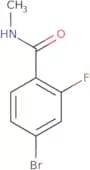
CAS :<p>4-Bromo-2-fluoro-N-methylbenzamide is an impurity in the pharmaceutical drug nilutamide. It is a ligand that binds to the androgen receptor and inhibits the binding of dihydrotestosterone, reducing its effect on prostate cells. 4-Bromo-2-fluoro-N-methylbenzamide has been shown to have pharmacokinetic properties similar to nilutamide, which is a drug used for treating prostate cancer. This impurity is also found in small quantities in other drugs including cyclobutanone, 2-aminoisobutyric acid, and chloral hydrate. The elucidation of these impurities can help regulate the quality of pharmaceutical drugs.</p>Formule :C8H7BrFNODegré de pureté :Min. 95%Couleur et forme :White Off-White PowderMasse moléculaire :232.05 g/molN-Me-Abz-Amyloid β/A4 Protein Precursor770 (708-715)-Lys(Dnp)-D-Arg-D-Arg-D-Arg amide trifluoroacetate salt
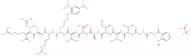
CAS :<p>Please enquire for more information about N-Me-Abz-Amyloid beta/A4 Protein Precursor770 (708-715)-Lys(Dnp)-D-Arg-D-Arg-D-Arg amide trifluoroacetate salt including the price, delivery time and more detailed product information at the technical inquiry form on this page</p>Formule :C70H116N26O18Degré de pureté :Min. 95%Masse moléculaire :1,609.83 g/mol(D-Trp6)-LHRH (1-6) amide
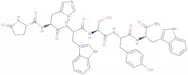
CAS :<p>Please enquire for more information about (D-Trp6)-LHRH (1-6) amide including the price, delivery time and more detailed product information at the technical inquiry form on this page</p>Formule :C45H49N11O9Degré de pureté :Min. 95%Masse moléculaire :887.94 g/molLymnaDFamide-1
CAS :<p>LymnaDFamide-1 is a neuropeptide that belongs to the family of c-terminal peptides. It is a dipeptide with a sequence of L-Pro-Tyr-Asp-Arg-Ile-Ser-Asn-Ser-Ala-Phe. This peptide was found in the nervous system of invertebrates, where it is believed to play an important role in the regulation of neurotransmitter release. In mammals, LymnaDFamide has been detected in the brain and in the gallbladder. It may be involved in regulating feeding behavior and gastric motility.</p>Formule :C68H96N18O22Degré de pureté :Min. 95%Masse moléculaire :1,517.6 g/molpTH-Related Protein (67-86) amide (human, bovine, dog, mouse, ovine, rat) trifluoroacetate salt
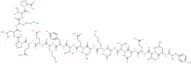
CAS :<p>Please enquire for more information about pTH-Related Protein (67-86) amide (human, bovine, dog, mouse, ovine, rat) trifluoroacetate salt including the price, delivery time and more detailed product information at the technical inquiry form on this page</p>Formule :C108H173N27O35Degré de pureté :Min. 95%Masse moléculaire :2,409.69 g/molGlycinamide hydrochloride
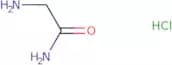
CAS :<p>Glycinamide hydrochloride is an inhibitor that binds to the glycine-binding site of the protein synthetase and inhibits the formation of glycinamide ribonucleotide. It has been shown to inhibit human glycinamide ribonucleotide synthetase in vitro. Glycinamide hydrochloride is also a glycinamide amide, which was synthesized by linking two molecules of glycine with an amide bond. This molecule is cross-linked with a macrogel, forming a hydrogel. The hydrogel can be used in biomedical applications, such as tissue engineering and drug delivery systems.</p>Formule :C2H7ClN2OCouleur et forme :White PowderMasse moléculaire :110.54 g/molN,N-Bis(2-hydroxyethyl)dodecanamide
CAS :<p>N,N-Bis(2-hydroxyethyl)dodecanamide is a surfactant that is used in the treatment of wastewater. It has been shown to be effective at removing p-hydroxybenzoic acid from water and at reducing the concentration of this compound in the environment. N,N-Bis(2-hydroxyethyl)dodecanamide also has antimicrobial properties and synergizes with other antimicrobial agents to provide a more potent effect than when it is used alone. This surfactant has been shown to have an effect on congestive heart failure by blocking the action of angiotensin II receptors.</p>Formule :C16H33NO3Couleur et forme :Clear LiquidMasse moléculaire :287.44 g/molL-trans-Epoxysuccinyl-Ile-Pro-OMe propylamide
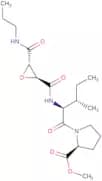
CAS :<p>L-trans-Epoxysuccinyl-Ile-Pro-OMe propylamide is a pharmacological agent that inhibits the toll-like receptor 4 signaling pathway. L-trans-Epoxysuccinyl-Ile-Pro-OMe propylamide has been shown to cause caspase independent cell death by inducing cathepsin and iron homeostasis. The drug also causes polymerase chain reaction inhibition and neuronal death in vivo.</p>Formule :C19H31N3O6Degré de pureté :Min. 95%Masse moléculaire :397.47 g/molHexahydroisonicotinamide
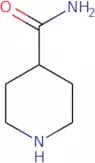
CAS :<p>Hexahydroisonicotinamide (HNI) is a potent amyloid protein inhibitor that is structurally related to picolinic acid. HNI has been shown to be effective in the treatment of infectious diseases caused by bacteria, such as diazonium salt-resistant strains of Pseudomonas aeruginosa and Enterobacter cloacae. Hexahydroisonicotinamide is also active against methicillin-resistant Staphylococcus aureus (MRSA), which may be due to its structural similarity to picolinic acid. The molecular weight of HNI is 587.6, with a molecular formula of C9H11N3O2. It has been shown that hexahydroisonicotinamide inhibits the transfer reaction between an amide and piperidinium, as well as the phosphorylation of proteins by enzyme kinases. This drug binds to hydrated biphenyl molecules and inhibits their</p>Formule :C6H12N2ODegré de pureté :Min. 95%Couleur et forme :White To Yellow SolidMasse moléculaire :128.17 g/mol6-Aminopicolinamide
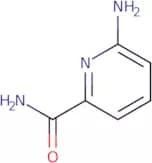
CAS :<p>6-Aminopicolinamide is a metabolite of nicotinamide, which can be found in the urine of humans and animals. 6-Aminopicolinamide has been shown to have anti-leukemic activity against experimental leukemias in animals. The mechanism of action is not well understood but may involve inhibition of nucleotide synthesis or the inhibition of dehydrogenase activity. Clinical trials are underway to determine its efficacy as an anti-tumor agent.</p>Formule :C6H7N3ODegré de pureté :Min. 95%Masse moléculaire :137.14 g/molPAR-4 (1-6) amide (human) trifluoroacetate salt
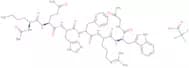
CAS :<p>Please enquire for more information about PAR-4 (1-6) amide (human) trifluoroacetate salt including the price, delivery time and more detailed product information at the technical inquiry form on this page</p>Formule :C28H42N8O8Degré de pureté :Min. 95%Masse moléculaire :618.68 g/molN-Acetyl-L-norleucyl-L-glutaminyl-L-histidyl-D-phenylalanyl-L-arginyl-D-tryptophylglycinamide
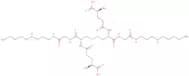
CAS :<p>Please enquire for more information about N-Acetyl-L-norleucyl-L-glutaminyl-L-histidyl-D-phenylalanyl-L-arginyl-D-tryptophylglycinamide including the price, delivery time and more detailed product information at the technical inquiry form on this page</p>Formule :C47H65N15O9Degré de pureté :Min. 95%Masse moléculaire :984.11 g/molN1-Glutathionyl-spermidine disulfide [
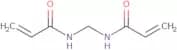
CAS :<p>N1-Glutathionyl-spermidine disulfide (N1-GS) is a molecule that has been shown to have clinical use in the treatment of chronic hepatitis C infection. The N1-GS molecule is composed of a glutathione (GSH) scaffold with two sulfhydryl groups and an amino acid side chain. N1-GS has a hydrophobic nature, which allows it to penetrate the cellular membrane and enter cells. It is also able to form hydrogen bonds and act as a catalyst for reactions. Fluorescence analysis revealed that this molecule is selective for disulfides over thiols, amines, or alcohols. Disulfides are very important in biological systems since they can be found in enzymes, proteins, and cellular membranes. The insolubility of the N1-GS molecule makes it difficult to analyze its structure using traditional methods such as gas chromatography or nuclear magnetic resonance spectroscopy. However, fluorescence</p>Formule :C34H66N12O10S2Degré de pureté :Min. 95%Masse moléculaire :867.09 g/molN,N'-Methylenediacrylamide
CAS :<p>N,N'-Methylenediacrylamide is a water-soluble compound that has been used as a fluorescent probe for hydrogen bonding. It has been shown to have different phase transition temperatures in different solvents and can be used as an experimental model for studying the effects of temperature on the behavior of water molecules. N,N'-Methylenediacrylamide reacts with hydrochloric acid to form the fatty acid N,N'-methylenebis(3-chloroacrylic acid) under acidic conditions. This reaction is reversible, and the reverse process can be catalyzed by sodium citrate or human serum. When exposed to radiation or surface methodology, it emits light at a wavelength of 350 nm.</p>Formule :C7H10N2O2Degré de pureté :Min. 95%Couleur et forme :White Clear LiquidMasse moléculaire :154.17 g/mol




![2-[(4-Chloro-2-nitrophenyl)azo]-N-(2-methoxyphenyl)-3-oxobutanamide](/_next/image/?url=https%3A%2Fstatic.cymitquimica.com%2Fproducts%2F3D%2Fthumb-webp%2FFC149929.webp&w=3840&q=75)