Acides carboxyliques
12457 produits trouvés pour "Acides carboxyliques"
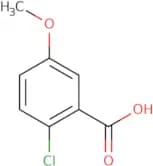
2-Chloro-5-methoxybenzoic acid
CAS :2-Chloro-5-methoxybenzoic acid (2CMB) is a copper chelator that has been shown to have antagonistic properties against microglia cells. 2CMB is synthesized from 2,5-dichlorobenzoic acid and methoxylamine. It has been shown to inhibit the synthesis of inflammatory mediators in rat spinal cord microglia cells by inhibiting the activity of polyphosphoric acid, anions and additives. 2CMB also has a high affinity for chloride ions and can be used as a tracer to measure chloride profiles. 2CMB reacts with copper ions at a slow rate and can be used as an indicator for the presence of microglia cells.
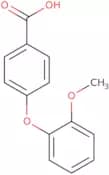
Formule :C8H7ClO3Degré de pureté :Min. 95%Masse moléculaire :186.59 g/mol4-(2-Methoxyphenoxy)benzoic acid
CAS :4-(2-Methoxyphenoxy)benzoic acid is a white crystalline solid with a melting point of 50°C. It is soluble in water, ethanol, ether, and chloroform. 4-(2-Methoxyphenoxy)benzoic acid has been used as a starting material for the synthesis of pharmaceuticals such as carbamazepine (Tegretol). The compound has two methoxy groups on the phenyl ring that are susceptible to nucleophilic attack by strong bases. This reaction occurs at room temperature and can be reversed by heating the solution to 150°C. The compound also undergoes polycondensation reactions when heated in the presence of an oxidizing agent.
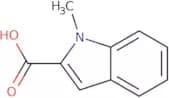
Formule :C14H12O4Degré de pureté :Min. 95%Couleur et forme :White PowderMasse moléculaire :244.24 g/mol1-Methylindole-2-Carboxylic Acid
CAS :1-Methylindole-2-Carboxylic Acid is a chemical that belongs to the group of phenylacetic acid compounds. It has been shown to inhibit lymphocyte activation and t-cell proliferation in vitro, which may be due to its ability to interfere with the production of interleukin. 1-Methylindole-2-Carboxylic Acid also has an antitumor effect on animals and can reduce the tumor burden by inhibiting DNA synthesis, protein synthesis, and mineralization. The molecular modeling studies have shown that 1-Methylindole-2-Carboxylic Acid binds in the active site of protein kinase C as a competitive inhibitor and prevents ATP from binding to the enzyme.
Formule :C10H9NO2Degré de pureté :Min. 95%Couleur et forme :PowderMasse moléculaire :175.18 g/molRef: 3D-FM56787
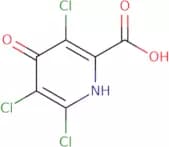
Produit arrêté3,5,6-Trichloro-4-hydroxy-2-picolinic acid
CAS :3,5,6-Trichloro-4-hydroxy-2-picolinic acid is a high quality reagent that is used as a building block for the synthesis of complex compounds with potential pharmaceutical applications. It can be used as an intermediate in the production of fine chemicals and speciality chemicals. This compound is also useful for research purposes and as a versatile building block for reactions.
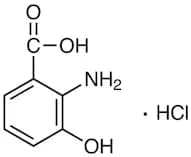
Formule :C6H2Cl3NO3Degré de pureté :Min. 95%Couleur et forme :White to off-white solid.Masse moléculaire :242.44 g/mol2-Amino-3-hydroxybenzoic Acid Hydrochloride
CAS :Formule :C7H7NO3·HClDegré de pureté :>98.0%(T)(HPLC)Couleur et forme :White to Light yellow to Purple powder to crystalMasse moléculaire :189.60ADA
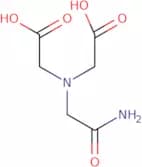
CAS :ADA, also known as N-(2-Acetamido)iminodiacetic acid, is an acetamido buffer that coordinates to metal ions. It has an optimal pH range of 6.0-7.2 and a pKa of 6.59.
Formule :C6H10N2O5Couleur et forme :White PowderMasse moléculaire :190.15 g/mol2,4-Dichlorobenzoic acid
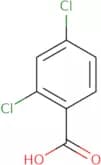
CAS :2,4-Dichlorobenzoic acid is a chemical compound that is commonly used for sample preparation for analytical methods. It is also used as a nutrient in group P2 bacteria. 2,4-Dichlorobenzoic acid has coordination geometry of octahedral with the central atom being surrounded by six ligands. This chemical has hydrogen bonding interactions that are most likely due to the electronegative chlorine atoms.
Formule :C7H4Cl2O2Degré de pureté :Min. 95%Couleur et forme :PowderMasse moléculaire :191.01 g/molUndecenoic acid
CAS :Undecenoic acid is an antimicrobial agent that is used in the treatment of infectious diseases. This compound has been shown to have significant cytotoxicity against C. glabrata, a yeast that causes vaginal yeast infections, and also inhibits the growth of other human pathogens such as Listeria monocytogenes and Salmonella typhimurium. Undecenoic acid has a broad spectrum of activity against bacteria and fungi and is effective when used at low concentrations. It is not active against viruses or protozoa. The reaction mechanism for undecenoic acid is unknown but it may be due to its ability to react with water vapor in the air to form undecenal, which then reacts with malonic acid to form malonaldehyde. Undecenoic acid binds to proteins through hydrogen bonding and hydrophobic interactions, forming complexes that inhibit bacterial growth by interfering with DNA replication, protein synthesis, and enzyme activity.
Formule :C11H20O2Degré de pureté :Min. 95%Couleur et forme :PowderMasse moléculaire :184.28 g/mol4,5-Difluoro-3-hydroxybenzoic acid
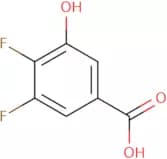
CAS :4,5-Difluoro-3-hydroxybenzoic acid is a chemical intermediate that is used in the production of 4,5-difluoro-3-hydroxyphenylacetic acid. The process development of this compound was carried out to produce indian refractories and discontinuity. It has been envisaged that monocrystalline postulated treatments will be required for the ancillary transfer of beneficiation and magnesite advances as well as isoxazolidines.
Formule :C7H4F2O3Degré de pureté :Min. 95%Couleur et forme :PowderMasse moléculaire :174.1 g/mol2-Chloro-5-fluoropyridine-3-carboxylic acid
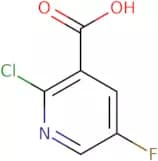
CAS :2-Chloro-5-fluoropyridine-3-carboxylic acid is an intermediate in the synthesis of fluorine compounds used in the industrial process. It can be synthesized by chlorinating 5-fluoropyridine with chlorine gas and a catalyst such as platinum, or by hydrogenating 2-chloro-5-pyridinecarboxylic acid. This chemical is used to manufacture other chemicals such as ethylene oxide, tetrafluoroethylene, and hexafluoroethane.
Formule :C6H3ClFNO2Degré de pureté :Min. 95%Masse moléculaire :175.54 g/molClavulanic acid ammonium
CAS :Clavulanic acid is a beta-lactamase inhibitor that is used to treat infections caused by bacteria that are resistant to penicillin. It is a combination of clavulanate and ammonium. Clavulanic acid blocks the action of beta-lactamases, which are enzymes produced by bacteria that can destroy penicillin before it can act on the bacterial cell wall. Clavulanic acid has been shown to be active against penicillin-resistant strains of Staphylococcus aureus, Enterobacter cloacae, and Klebsiella pneumoniae. Clavulanic acid also inhibits the growth of Mycobacterium avium complex and Mycobacterium tuberculosis.Formule :C8H9NO5•NH3Degré de pureté :Min. 95%Masse moléculaire :216.19 g/molPeriodic acid
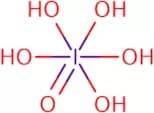
CAS :Periodic acid is a natural product that has been used as an antimicrobial agent for more than 100 years. It has been shown to have pro-apoptotic properties in a number of cell systems, including monocyte-like cells, hepatocyte-like cells, and epidermal growth factor receptor-transfected cells. Periodic acid is also effective against inflammatory bowel disease in infants. This drug also has anti-inflammatory effects and may be useful for the treatment of autoimmune diseases. Periodic acid inhibits the metabolic rate in cell cultures by blocking oxidative phosphorylation at complex I and II, leading to increased levels of reactive oxygen species (ROS). This ROS production induces apoptosis through a caspase cascade.
Formule :H5IO6Degré de pureté :Min. 95%Couleur et forme :White Clear LiquidMasse moléculaire :227.94 g/mol4-Aminophthalic acid dimethyl ester
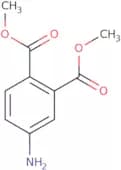
CAS :4-Aminophthalic acid dimethyl ester is a product of the reaction between p-hydroxybenzoic acid and phosphorus pentachloride. It is used in analytical methods to determine the amount of 4-aminophthalic acid in an unknown sample. This product reacts with polyclonal antibodies against 4-aminophthalic acid, which are attached to a solid support, forming an antigen-antibody complex. The amount of 4-aminophthalic acid present can be determined by measuring the extent of the colour change that occurs when hydrochloric acid is added to the mixture.
Formule :C10H11NO4Degré de pureté :Min. 95%Couleur et forme :SolidMasse moléculaire :209.2 g/mol(1R,4R)-tert-Butyl 2,5-diazabicyclo[2.2.1]heptane-2-carboxylate hydrochloride
CAS :Tert-Butyl 2,5-diazabicyclo[2.2.1]heptane-2-carboxylate hydrochloride (TBDAHC) is a fine chemical that is an intermediate for the synthesis of other compounds. TBDAHC is a versatile building block that can be used in research chemicals, reaction components, and specialty chemicals. It is also a useful scaffold for making complex compounds and useful building blocks. The compound has high quality and can be used as a reagent in organic chemistry.
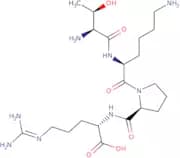
Formule :C10H18N2O2·HClDegré de pureté :Min. 95%Couleur et forme :White PowderMasse moléculaire :234.72 g/molTuftsin acetate salt
CAS :Please enquire for more information about Tuftsin acetate salt including the price, delivery time and more detailed product information at the technical inquiry form on this pageFormule :C21H40N8O6•C2H4O2Degré de pureté :Min. 95%Couleur et forme :PowderMasse moléculaire :560.64 g/mol6-Fluoroindole-3-acetic acid
CAS :6-Fluoroindole-3-acetic acid is a molecule that has been synthesized by the reaction of 6-fluoroindole with acetic anhydride. When mixed with acetonitrile, the fluorescence of 6-fluoroindole-3-acetic acid can be seen in the solution. The fluorescence intensity is proportional to the concentration of this molecule. 6-Fluoroindole-3-acetic acid is used as a template molecule for fluorescence labeling experiments. It interacts with hormones and can be used to identify their conformations and interactions. This compound has been shown to have anticancer properties in mice, and it may also be effective against cancer cells in humans. It has also been shown to inhibit the growth of pisum sativum (pea).
Formule :C10H8FNO2Degré de pureté :Min. 95%Couleur et forme :PowderMasse moléculaire :193.17 g/mol2-Aminothiophene-3-methyl carboxylate
CAS :2-Aminothiophene-3-methyl carboxylate is a hydrogen bond that is derived from the amino acid methionine. It has been shown to have potent antitumor activity and can be used for the treatment of cancer. 2-Aminothiophene-3-methyl carboxylate has a molecular weight of 244.6 g/mol, an isolated yield of 0.68%, and a melting point of 245 °C.
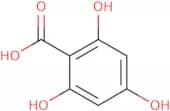
Formule :C4H2SCOOCH3NH2Degré de pureté :Min. 95%Couleur et forme :Yellow PowderMasse moléculaire :157.19 g/mol2,4,6-Trihydroxybenzoic acid
CAS :2,4,6-Trihydroxybenzoic acid is the sodium salt of 2,4,6-trihydroxybenzoic acid. It is a white to off-white crystalline powder with a molecular weight of 198.2 and a melting point of 197°C. The chemical formula for this compound is C7H5O5Na. This product has been shown to exhibit antimicrobial activity against Gram-positive and Gram-negative bacteria, including methicillin resistant Staphylococcus aureus (MRSA). In addition, 2,4,6-trihydroxybenzoic acid has been shown to inhibit the production of proteins that are necessary for bacterial growth.
Formule :C7H6O5Degré de pureté :Min. 95%Couleur et forme :PowderMasse moléculaire :170.12 g/molmethyl 5-(((4-bromophenyl)sulfonyl)methyl)furan-2-carboxylate
CAS :Please enquire for more information about methyl 5-(((4-bromophenyl)sulfonyl)methyl)furan-2-carboxylate including the price, delivery time and more detailed product information at the technical inquiry form on this page
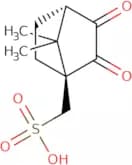
Degré de pureté :Min. 95%Camphorquinone-10-sulfonic acid hydrate
CAS :Camphorquinone-10-sulfonic acid hydrate is a soybean trypsin inhibitor that is used as a preparative agent in organic synthesis. It reacts with histidine, lysine residues, and other molecules to form a light-chain kinase that inhibits the action of the enzyme trypsin. Camphorquinone-10-sulfonic acid hydrate has been shown to be resistant to proteolysis by gastrointestinal enzymes. This agent also has diabetogenic properties by inhibiting the activity of membrane potential and chloride channels in pancreatic β cells. Camphorquinone-10-sulfonic acid hydrate forms an ion pair with choline, which can inhibit the enzyme acetylcholinesterase, leading to accumulation of acetylcholine at nerve endings.
Formule :C10H16O6SDegré de pureté :Min. 95 Area-%Couleur et forme :Yellow PowderMasse moléculaire :264.3 g/mol




![(1R,4R)-tert-Butyl 2,5-diazabicyclo[2.2.1]heptane-2-carboxylate hydrochloride](/_next/image/?url=https%3A%2Fstatic.cymitquimica.com%2Fproducts%2F3D%2Fthumb-webp%2FFB15223.webp&w=3840&q=75)