Acides carboxyliques
Les acides carboxyliques sont des molécules organiques caractérisées par un groupe fonctionnel de type carboxyle (-COOH). Ces acides sont fondamentaux dans diverses réactions chimiques, y compris l'estérification, l'amidation et la décarboxylation. Les acides carboxyliques sont largement utilisés dans la production de produits pharmaceutiques, de polymères et d'agrochimiques. Dans cette section, vous pouvez trouver un grand nombre d'acides carboxyliques prêts à l'emploi. Chez CymitQuimica, nous fournissons une large gamme d'acides carboxyliques de haute qualité pour soutenir vos applications de recherche et industrielles.
12454 produits trouvés pour "Acides carboxyliques"
Trier par
Degré de pureté (%)
0
100
|
0
|
50
|
90
|
95
|
100
N-[S-(2-Pyridylthio)cysteaminyl]ethylenediamine-N,N,N',N'-tetraacetic acid, monoamide - Technical grade 90%
CAS :<p>Furiosus is a monomeric and homodimeric protein that belongs to the group of S-adenosylmethionine synthetases. Furiosus is an enzyme that catalyzes the formation of S-adenosylmethionine from methylamine and ATP. Furiosus interacts with polymerase, subtilis, and catalysis to form a holoenzyme complex. Furiosus has been shown to have cleavage activity against peroxide and hydrogen peroxide, which is due to its ability to generate reactive oxygen species. Furiosus has also been shown to be a molecular modeling target for the development of new antibiotics.</p>Formule :C17H24N4O7S2Degré de pureté :Min. 95%Couleur et forme :Pale yellow solid.Masse moléculaire :460.53 g/mol2-Phenyl-4-quinolinecarboxylic acid
CAS :<p>2-Phenyl-4-quinolinecarboxylic acid is a nonsteroidal anti-inflammatory drug that is commonly used to treat bronchoconstrictor response and inflammatory bowel disease. It is also an antimicrobial agent, which can be used to treat infectious diseases. The compound was found to have structural similarity to other nonsteroidal anti-inflammatory drugs, such as ibuprofen and naproxen. 2-Phenyl-4-quinolinecarboxylic acid has shown the ability to inhibit leukemia inhibitory factor (LIF) production by lymphocytes, which may have a role in the development of leukemia. This drug also possesses antioxidative properties and has been shown to have high values in group P2 polymerase chain reactions.</p>Formule :C16H11NO2Degré de pureté :Min. 98.5%Couleur et forme :PowderMasse moléculaire :249.26 g/molMethyl 3-amino-6-methylthieno[2,3-b]pyridine-2-carboxylate
CAS :<p>Please enquire for more information about Methyl 3-amino-6-methylthieno[2,3-b]pyridine-2-carboxylate including the price, delivery time and more detailed product information at the technical inquiry form on this page</p>Formule :C10H10N2O2SDegré de pureté :Min. 95%Masse moléculaire :222.27 g/molPhytic acid, 50% aqueous solution
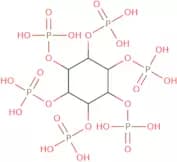
CAS :<p>Phytic acid is a naturally occurring compound that is found in plants. It can be found in grains such as wheat, corn, rice, and oats. Phytic acid has been shown to inhibit the absorption of calcium, magnesium, copper, iron, and zinc from the diet. This may be due to its ability to bind these minerals in the gastrointestinal tract. The binding of these minerals may also lead to an increase in bioavailability of phytates by preventing their absorption from the gut. Phytic acid has been shown to have a number of physiological effects on humans including inhibition of squamous carcinoma growth and autoimmune diseases. It also has been shown to have biological properties that include being an inhibitor for binding with other compounds such as sodium citrate and inositol.</p>Formule :C6H18O24P6Couleur et forme :Colorless PowderMasse moléculaire :660.04 g/molTungstosilicic acid hydrate
CAS :<p>Tungstosilicic acid hydrate is an alkanoic acid that has a chemical formula of ZrO(OH)(SO)2. It is insoluble in water and reacts with hydrogen fluoride to form tungsten hexafluoride. Tungstosilicic acid hydrate is used as a catalyst in wastewater treatment, and also has biological properties that can be used for the synthesis of esters. The chemical stability of tungstosilicic acid hydrate is high, and it has been shown to be an excellent catalyst for the hydrogenation of alkenes. Tungstosilicic acid hydrate does not react with protonated amines or amides, which makes it a good candidate for catalyzing reactions involving these functional groups.</p>Formule :H4O40SiW12·xH2ODegré de pureté :(%) Min. 80%Couleur et forme :PowderMasse moléculaire :2,878.17 g/molRef: 3D-FT41569
Produit arrêté3-Hydroxy-3-methylhexanoic acid
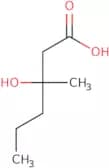
CAS :<p>3-Hydroxy-3-methylhexanoic acid is a fatty acid that is one of the metabolic products of leukocytes. It is formed in the body by conjugation with an acid and is excreted in urine. 3-Hydroxy-3-methylhexanoic acid has been shown to be a substrate for bacterial enzymes, such as corynebacterium, which can convert it to isovaleric acid. The analytical method for measuring 3-hydroxy-3-methylhexanoic acid in urine has been developed and validated on women.</p>Formule :C7H14O3Degré de pureté :Min. 95%Couleur et forme :Clear LiquidMasse moléculaire :146.18 g/mol3,5-Dinitro-4-methylbenzoic acid
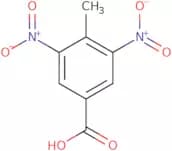
CAS :<p>3,5-Dinitro-4-methylbenzoic acid is a compound that can be used in the synthesis of many organic compounds. It is an important reagent for the preparation of nitroarenes and it is also used as a precursor to other organic compounds. 3,5-Dinitro-4-methylbenzoic acid has been shown to have a hydrogen bond with malonic acid and can form an asymmetric hydrogen bond with the hydroxyl group of protonated water. 3,5-Dinitro-4-methylbenzoic acid has three different resonance structures and its x-ray diffraction data show that it has a cavity shape. This molecule can be found in the nmr spectra at around 8.3 ppm and its kinetic constants are given as k1 = 0.01 s−1 and k2 = 0.06 s−1 for the two reactions. 3,5-Dinitro-4-methylben</p>Formule :C8H6N2O6Degré de pureté :Min. 95%Couleur et forme :PowderMasse moléculaire :226.14 g/mol3-Indoxylacetate
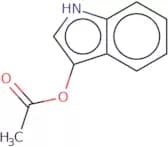
CAS :<p>Please enquire for more information about 3-Indoxylacetate including the price, delivery time and more detailed product information at the technical inquiry form on this page</p>Formule :C10H9NO2Couleur et forme :White PowderMasse moléculaire :175.18 g/molPiperidin-1-yl-acetic acid
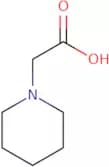
CAS :<p>Piperidin-1-yl-acetic acid is a nitrogen-containing organic compound, which is an alkanoic acid. It has a molecular weight of 104.09 and empirical formula C6H11NO2. Piperidin-1-yl-acetic acid is not soluble in cold water, but it dissolves in boiling water to form a white solid. This compound can be used as an enzyme inhibitor or as a pharmacological agent.<br>Piperidin-1-yl-acetic acid has been shown to inhibit the transcriptional regulation of enzymes that are involved in the production of porphyrins and other heme protein cofactors such as cytochrome c. The compound also inhibits the synthesis of these enzymes by binding to their active sites and inhibiting their function.</p>Formule :C7H13NO2Degré de pureté :Min. 95 Area-%Couleur et forme :PowderMasse moléculaire :143.18 g/molBis(2,2,2-trichloroethyl)azodicarboxylate
CAS :<p>Bis(2,2,2-trichloroethyl)azodicarboxylate is a nucleophile that can be used as an alkylating agent in the industrial process. It is also used to prepare chiral amines by adding an amine to the enantiomerically pure bis(2,2,2-trichloroethyl)azodicarboxylate. The anticancer activity of Bis(2,2,2-trichloroethyl)azodicarboxylate is due to its ability to inhibit tumor cell proliferation. Bis(2,2,2-trichloroethyl)azodicarboxylate is not effective against cancerous cells that do not have functional groups such as amino acids.</p>Formule :C6H4Cl6N2O4Degré de pureté :Min. 95%Couleur et forme :Yellow SolidMasse moléculaire :380.82 g/mol3-Fluoro-4-methylbenzoic acid
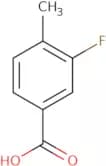
CAS :<p>3-Fluoro-4-methylbenzoic acid is an organic compound that is used as a ligand in coordination chemistry. This compound is an alkynyl ligand with a selenium atom at the 3 position, and it can be used to make metal complexes with cycloalkyl and heterocycloalkyl rings. 3-Fluoro-4-methylbenzoic acid has been shown to be a potent inhibitor of matrix metalloproteinase activity.</p>Formule :C8H7FO2Degré de pureté :Min. 95%Couleur et forme :PowderMasse moléculaire :154.14 g/molNonanoic acid
CAS :<p>Nonanoic acid is a fatty acid that is metabolized by the liver, and is used as a substrate in the film-forming test to measure the rate constant of glycol ethers. Nonanoic acid also has anti-inflammatory properties and can be used to treat skin diseases caused by bacteria. It can also be used as a therapeutic for people with chronic obstructive pulmonary disease (COPD). In mice, nonanoic acid has been shown to have an antibacterial effect on Gram-positive bacteria, including methicillin resistant Staphylococcus aureus (MRSA). This compound also prevents the activation of toll-like receptor 4 (TLR4) and TLR2 in human monocytes. Nonanoic acid is structurally similar to benzalkonium chloride and pelargonic acid, which are both antimicrobial agents.</p>Formule :C9H18O2Degré de pureté :Min. 95 Area-%Couleur et forme :Clear LiquidMasse moléculaire :158.24 g/mol2-Hydroxy-4,6-dimethoxybenzoic Acid
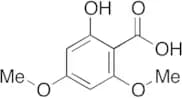
CAS :Produit contrôlé<p>Applications 2-Hydroxy-4,6-dimethoxybenzoic acid is a reagent used in the synthesis of rac Zearalenone-d6 (Z270502). rac Zearalenone-d6 s an estrogenic mycotoxin produced by Fusarium fungi commonly found in grains. One of a group of compounds known as resorcylic acid lactones.<br>References Tanaka, T., et al.: J. Agric. Food Chem., 36, 979 (1988), Hamilton, S., et al.: Anticancer Res., 16, 3597 (1996), Hecht, S., et al.: Cancer Lett., 150, 49 (2000), Hussein, H., et al.: Toxicology, 167, 101 (2001), Lim, H., et al.: J. Immunol., 175, 4180 (2005),<br></p>Formule :C9H10O5Couleur et forme :Light Orange Colour To Light BrownMasse moléculaire :198.053-Hydroxy-4-nitrobenzoic acid
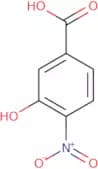
CAS :<p>3-Hydroxy-4-nitrobenzoic acid is a hydroxybenzoic acid that has been used for the synthesis of other compounds. It is an intermediate in the Friedel-Crafts reaction, which involves the conversion of 3-hydroxybenzoic acid to 3-ethylbenzthiazoline-6-sulfonic acid. It also forms reaction products with p-hydroxybenzoic acid and 5-nitrosalicylic acid as well as monosodium salt. This chemical can be analyzed using spectroscopy, enzymatic reactions, or laser ablation. It can also be used in analytical chemistry to identify phospholipases and hydroxybenzoic acids.</p>Formule :C7H5NO5Degré de pureté :Min. 95%Couleur et forme :Slightly Yellow PowderMasse moléculaire :183.12 g/mol1,3-Phenylenediacetic acid
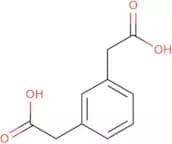
CAS :<p>1,3-Phenylenediacetic acid is a molecule that contains an aromatic ring and two carboxylate groups. It has been shown to react with collagen and water molecules by forming hydrogen bonds. 1,3-Phenylenediacetic acid also reacts with the hydroxyl group in the cell culture media to form a crosslink between two molecules. This reaction was found to be responsible for the observed increase in stiffness of collagen gels. The vibrational and macroscopic analysis of 1,3-phenylenediacetic acid has also revealed that it adopts a tetranuclear structure at room temperature.</p>Formule :C10H10O4Degré de pureté :Min. 95%Masse moléculaire :194.18 g/molIsobarbituric acid
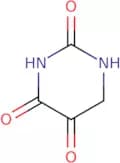
CAS :<p>Isobarbituric acid is a glycosylase that cleaves the bond between the amino group and the hydroxyl group of uridine in DNA. It has been shown to react with nucleophilic groups at neutral pH, such as an amine or hydroxyl group. Isobarbituric acid can be used to measure oxidative damage to DNA. This compound is reactive and sensitive to UV light, which makes it useful for detecting damaged DNA. Isobarbituric acid has been shown to induce neuronal death in rodents by interfering with dendritic spine formation.</p>Formule :C4H4N2O3Degré de pureté :Min. 95%Couleur et forme :White PowderMasse moléculaire :128.09 g/mol(+/-)-2-Propyl-4-pentenoic acid
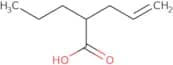
CAS :<p>(+/-)-2-Propyl-4-pentenoic acid is a reactive chemical that is used in the synthesis of sodium salts. This compound has been shown to produce a matrix effect and to be pharmacologically active. (+/-)-2-Propyl-4-pentenoic acid is also used in the preparation of monoclonal antibodies and can be used as an analytical method for determining the concentration–time curve. The use of this compound has been shown to be clinically relevant, with irreversible inhibition observed in rat liver microsomes and fatty acids. In addition, it has been shown to inhibit fatty acid synthase in vitro and can be used as a marker for measuring oxidative stress.</p>Formule :C8H14O2Degré de pureté :Min. 95%Couleur et forme :PowderMasse moléculaire :142.2 g/mol2-Amino-4,5-dimethylbenzoic Acid
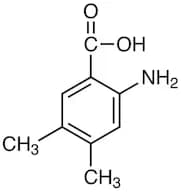
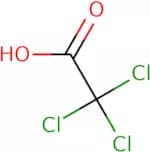
CAS :Formule :C9H11NO2Degré de pureté :>97.0%(T)(HPLC)Couleur et forme :White to Yellow powder to crystalMasse moléculaire :165.19Trichloroacetic acid
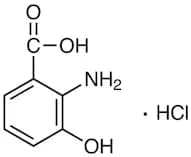
CAS :<p>Trichloroacetic acid is a chemical compound that is commonly used as an analytical reagent. It is a white solid that can be dissolved in water and has a faint odor of chlorine. Trichloroacetic acid is used to measure the concentration of sodium trifluoroacetate in biological samples or as an analytical reagent in various chemical reactions. Trichloroacetic acid has been shown to cause oxidative injury to cells, which may be due to its ability to inhibit growth factor-β1 synthesis and glycol ether metabolism. Trichloroacetic acid also causes cancer cells to die by inducing apoptosis, which may be due to its ability to inhibit basic protein synthesis.</p>Formule :C2HCl3O2Degré de pureté :Min. 95%Couleur et forme :White/Off-White SolidMasse moléculaire :163.39 g/mol2-Amino-3-hydroxybenzoic Acid Hydrochloride
CAS :Formule :C7H7NO3·HClDegré de pureté :>98.0%(T)(HPLC)Couleur et forme :White to Light yellow to Purple powder to crystalMasse moléculaire :189.60
![N-[S-(2-Pyridylthio)cysteaminyl]ethylenediamine-N,N,N',N'-tetraacetic acid, monoamide - Technical …](/_next/image/?url=https%3A%2Fstatic.cymitquimica.com%2Fproducts%2F3D%2Fthumb-webp%2FFP27342.webp&w=3840&q=75)


![Methyl 3-amino-6-methylthieno[2,3-b]pyridine-2-carboxylate](/_next/image/?url=https%3A%2Fstatic.cymitquimica.com%2Fproducts%2F3D%2Fthumb-webp%2FFM142163.webp&w=3840&q=75)