Acides carboxyliques
Les acides carboxyliques sont des molécules organiques caractérisées par un groupe fonctionnel de type carboxyle (-COOH). Ces acides sont fondamentaux dans diverses réactions chimiques, y compris l'estérification, l'amidation et la décarboxylation. Les acides carboxyliques sont largement utilisés dans la production de produits pharmaceutiques, de polymères et d'agrochimiques. Dans cette section, vous pouvez trouver un grand nombre d'acides carboxyliques prêts à l'emploi. Chez CymitQuimica, nous fournissons une large gamme d'acides carboxyliques de haute qualité pour soutenir vos applications de recherche et industrielles.
12454 produits trouvés pour "Acides carboxyliques"
Trier par
Degré de pureté (%)
0
100
|
0
|
50
|
90
|
95
|
100
DL-Indole-3-lactic acid
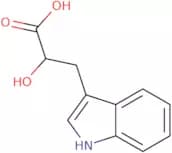
CAS :<p>Indole-3-lactic acid is a plant hormone that is produced in the leaves of the plant when they are under stress. It has been shown to have activity against bowel diseases and metabolic disorders. Indole-3-lactic acid has been isolated from plants like Caproicum album, which is used in vitro to measure its effect on caproic acid production. This compound has also been detected in human serum and wastewater treatment. Indole-3-lactic acid inhibits tryptophan degradation by competing with indolecarboxylase for substrate. The effect of indole-3-lactic acid on dextran sulfate and glomerular filtration rate was studied using a rat model, where it was found that it had no significant effects.</p>Formule :C11H11NO3Degré de pureté :Min. 95%Couleur et forme :PowderMasse moléculaire :205.21 g/molBis(2,2,2-trichloroethyl)azodicarboxylate
CAS :<p>Bis(2,2,2-trichloroethyl)azodicarboxylate is a nucleophile that can be used as an alkylating agent in the industrial process. It is also used to prepare chiral amines by adding an amine to the enantiomerically pure bis(2,2,2-trichloroethyl)azodicarboxylate. The anticancer activity of Bis(2,2,2-trichloroethyl)azodicarboxylate is due to its ability to inhibit tumor cell proliferation. Bis(2,2,2-trichloroethyl)azodicarboxylate is not effective against cancerous cells that do not have functional groups such as amino acids.</p>Formule :C6H4Cl6N2O4Degré de pureté :Min. 95%Couleur et forme :Yellow SolidMasse moléculaire :380.82 g/molD-Lactic acid
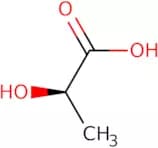
CAS :<p>D-lactic acid is a metabolic byproduct of lactic acid bacteria that can be found in food products such as fermented vegetables and dairy products. It is also produced in the human body and can be used as an energy source. D-lactic acid has been shown to have antibacterial efficacy against wild-type strains of Escherichia coli, but not against multidrug-resistant strains. D-lactic acid has been shown to increase the mitochondrial membrane potential and decrease the surface area of squamous carcinoma cells.</p>Formule :C3H6O3Couleur et forme :Clear LiquidMasse moléculaire :90.08 g/mol3-Indoxylacetate
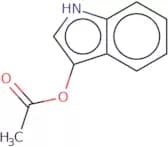
CAS :<p>Please enquire for more information about 3-Indoxylacetate including the price, delivery time and more detailed product information at the technical inquiry form on this page</p>Formule :C10H9NO2Couleur et forme :White PowderMasse moléculaire :175.18 g/mol2,4-Dimethoxyphenyl acetic acid
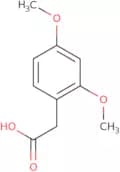
CAS :<p>2,4-Dimethoxyphenyl acetic acid is a synthetic compound that has been used as a pharmacological agent in the treatment of high blood pressure. It is also used as a reaction intermediate and can be obtained by the condensation of 2-hydroxybenzaldehyde with acetyl chloride. The kinetic data for this compound has been determined using deuterium isotope labeling and ion-pairing. The synthesis of 2,4-dimethoxyphenyl acetic acid involves the conversion of malonic acid to methylmalonate with ethyl bromoacetate and hydrobromic acid. This compound is chiral and optically active, giving it an R or S configuration. The reaction rate for 2,4-dimethoxyphenyl acetic acid has been found to be faster when in contact with phosphite ions than without.</p>Formule :C10H12O4Degré de pureté :Min. 95%Couleur et forme :Off-White PowderMasse moléculaire :196.2 g/molPiperidin-1-yl-acetic acid
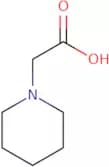
CAS :<p>Piperidin-1-yl-acetic acid is a nitrogen-containing organic compound, which is an alkanoic acid. It has a molecular weight of 104.09 and empirical formula C6H11NO2. Piperidin-1-yl-acetic acid is not soluble in cold water, but it dissolves in boiling water to form a white solid. This compound can be used as an enzyme inhibitor or as a pharmacological agent.<br>Piperidin-1-yl-acetic acid has been shown to inhibit the transcriptional regulation of enzymes that are involved in the production of porphyrins and other heme protein cofactors such as cytochrome c. The compound also inhibits the synthesis of these enzymes by binding to their active sites and inhibiting their function.</p>Formule :C7H13NO2Degré de pureté :Min. 95 Area-%Couleur et forme :PowderMasse moléculaire :143.18 g/molPhytic acid, 50% aqueous solution
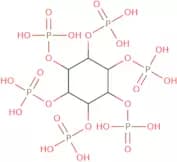
CAS :<p>Phytic acid is a naturally occurring compound that is found in plants. It can be found in grains such as wheat, corn, rice, and oats. Phytic acid has been shown to inhibit the absorption of calcium, magnesium, copper, iron, and zinc from the diet. This may be due to its ability to bind these minerals in the gastrointestinal tract. The binding of these minerals may also lead to an increase in bioavailability of phytates by preventing their absorption from the gut. Phytic acid has been shown to have a number of physiological effects on humans including inhibition of squamous carcinoma growth and autoimmune diseases. It also has been shown to have biological properties that include being an inhibitor for binding with other compounds such as sodium citrate and inositol.</p>Formule :C6H18O24P6Couleur et forme :Colorless PowderMasse moléculaire :660.04 g/molEthyl 5-Nitroindole-2-Carboxylate
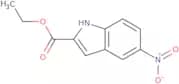
CAS :<p>Ethyl 5-Nitroindole-2-Carboxylate is a precursor to the anti-HIV drug Delavirdine. It is synthesized by condensation of ethyl pyruvate and urea derivative in the presence of thionyl chloride. This compound can be used as an intermediate in the synthesis of other compounds such as ethyl ester and ethyl pyruvate. The chemical reaction is carried out at room temperature using a chlorinated solvent such as methylene chloride or chloroform. Ethyl 5-nitroindole-2-carboxylate can also be used for the synthesis of other drugs, including antitumor agents.</p>Formule :C11H10N2O4Degré de pureté :Min. 95%Couleur et forme :PowderMasse moléculaire :234.21 g/mol3-(4-Bromobenzoyl)-acrylic acid
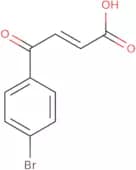
CAS :<p>3-(4-Bromobenzoyl)-acrylic acid is a chiral secondary amine that was synthesised in the laboratory. It is an inhibitor of xanthine oxidase, which is an enzyme involved in purine metabolism. The compound inhibits the enzyme by binding to it and preventing it from breaking down xanthine into uric acid. This has been shown to inhibit xanthine oxidase activity in vitro, but not in vivo. 3-(4-Bromobenzoyl)-acrylic acid has been shown to be more potent than some other inhibitors, such as thiourea and erythromycin. However, it has only been studied at low concentrations so far and its effects on human cells are unknown.</p>Formule :C10H7BrO3Degré de pureté :Min. 95%Couleur et forme :PowderMasse moléculaire :255.06 g/mol4-Nitrophthalic acid
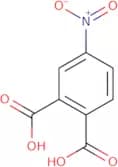
CAS :<p>4-Nitrophthalic acid is a white crystalline solid that has an acid and basic character. It has been shown to be antigenic, with a specific antibody able to bind to the 4-nitro group. The structure of 4-Nitrophthalic acid was determined using X-ray crystallography and NMR spectroscopy. The molecular weight of 4-Nitrophthalic acid is 177.2 g/mol, with a melting point of 174 °C and a boiling point of 341 °C. It is soluble in water and organic solvents such as ethanol, acetone, chloroform, ethyl ether, benzene, hexane, dichloromethane and ethyl acetate.</p>Formule :C8H5NO6Degré de pureté :Min. 97 Area-%Couleur et forme :White PowderMasse moléculaire :211.13 g/molRef: 3D-FN03461
Produit arrêté4-N-Butoxycinnamic acid
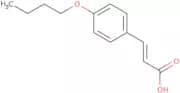
CAS :<p>4-N-Butoxycinnamic acid is a chemical compound with the molecular formula CH3(CH2)7COCH=CH(COOH). It belongs to the group of cinnamic acid derivatives, which are organic compounds that may be synthesized by condensation of malonic acid and benzene. 4-N-Butoxycinnamic acid has been shown to have anti-inflammatory properties in animal models. This compound inhibits inflammatory cytokines and their signaling pathways, thereby preventing the translocation of neutrophils into inflamed tissues.</p>Formule :C13H16O3Degré de pureté :Min. 95%Masse moléculaire :220.26 g/molmethyl 2-(4,5-dimethoxy-2-(((3-(trifluoromethyl)phenyl)amino)sulfonyl)phenyl)acetate
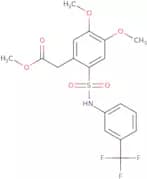
CAS :<p>Please enquire for more information about methyl 2-(4,5-dimethoxy-2-(((3-(trifluoromethyl)phenyl)amino)sulfonyl)phenyl)acetate including the price, delivery time and more detailed product information at the technical inquiry form on this page</p>Degré de pureté :Min. 95%2-Hydroxy-4,6-dimethoxybenzoic Acid
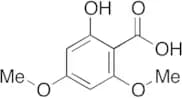
CAS :Produit contrôlé<p>Applications 2-Hydroxy-4,6-dimethoxybenzoic acid is a reagent used in the synthesis of rac Zearalenone-d6 (Z270502). rac Zearalenone-d6 s an estrogenic mycotoxin produced by Fusarium fungi commonly found in grains. One of a group of compounds known as resorcylic acid lactones.<br>References Tanaka, T., et al.: J. Agric. Food Chem., 36, 979 (1988), Hamilton, S., et al.: Anticancer Res., 16, 3597 (1996), Hecht, S., et al.: Cancer Lett., 150, 49 (2000), Hussein, H., et al.: Toxicology, 167, 101 (2001), Lim, H., et al.: J. Immunol., 175, 4180 (2005),<br></p>Formule :C9H10O5Couleur et forme :Light Orange Colour To Light BrownMasse moléculaire :198.052-Amino-4,5-dimethylbenzoic Acid
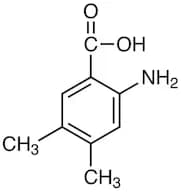
CAS :Formule :C9H11NO2Degré de pureté :>97.0%(T)(HPLC)Couleur et forme :White to Yellow powder to crystalMasse moléculaire :165.19(+/-)-2-Propyl-4-pentenoic acid
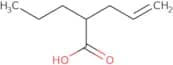
CAS :<p>(+/-)-2-Propyl-4-pentenoic acid is a reactive chemical that is used in the synthesis of sodium salts. This compound has been shown to produce a matrix effect and to be pharmacologically active. (+/-)-2-Propyl-4-pentenoic acid is also used in the preparation of monoclonal antibodies and can be used as an analytical method for determining the concentration–time curve. The use of this compound has been shown to be clinically relevant, with irreversible inhibition observed in rat liver microsomes and fatty acids. In addition, it has been shown to inhibit fatty acid synthase in vitro and can be used as a marker for measuring oxidative stress.</p>Formule :C8H14O2Degré de pureté :Min. 95%Couleur et forme :PowderMasse moléculaire :142.2 g/molPeriodic acid
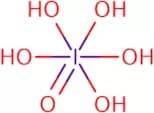
CAS :<p>Periodic acid is a natural product that has been used as an antimicrobial agent for more than 100 years. It has been shown to have pro-apoptotic properties in a number of cell systems, including monocyte-like cells, hepatocyte-like cells, and epidermal growth factor receptor-transfected cells. Periodic acid is also effective against inflammatory bowel disease in infants. This drug also has anti-inflammatory effects and may be useful for the treatment of autoimmune diseases. Periodic acid inhibits the metabolic rate in cell cultures by blocking oxidative phosphorylation at complex I and II, leading to increased levels of reactive oxygen species (ROS). This ROS production induces apoptosis through a caspase cascade.</p>Formule :H5IO6Degré de pureté :Min. 95%Couleur et forme :White Clear LiquidMasse moléculaire :227.94 g/mol4-(Chlorosulfonyl)benzoic acid
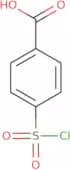
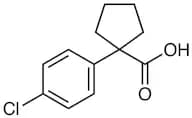
CAS :<p>4-(Chlorosulfonyl)benzoic acid is a growth factor that has been shown to stimulate epidermal growth. It is used in the treatment of glaucoma, carbonic anhydrase inhibitor therapy, and immobilization. 4-(Chlorosulfonyl)benzoic acid may also be useful in the treatment of viral infections, as it inhibits viral replication by binding to the virus's envelope protein. This drug has been shown to act as an adrenergic receptor agonist and has molecular modeling properties. 4-(Chlorosulfonyl)benzoic acid inhibits matrix metalloproteinase activity and increases the expression of matrix metalloproteinase inhibitors. The drug was not found to inhibit collagenase and elastase activities in vitro.</p>Formule :C7H5ClO4SDegré de pureté :Min. 95%Couleur et forme :SolidMasse moléculaire :220.63 g/mol1-(4-Chlorophenyl)-1-cyclopentanecarboxylic Acid
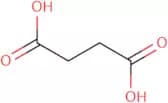
CAS :Formule :C12H13ClO2Degré de pureté :>98.0%(GC)(T)Couleur et forme :White to Almost white powder to crystalMasse moléculaire :224.68Succinic acid
CAS :<p>Succinic acid is a calcium salt of succinic acid that can be used as a chemical reagent. It has been shown to have protective effects against ischemic preconditioning, which may be due to its ability to inhibit the production of nitric oxide. Succinic acid also inhibits alcohol dehydrogenase and has been shown to have an anti-inflammatory effect in human mdr1 knockout mice. This compound is used as an analytical reagent for the determination of nitrate reductase activity in biological samples. Succinic acid is also used as a reagent for coordination geometry in organic chemistry.</p>Formule :C4H6O4Couleur et forme :PowderMasse moléculaire :118.09 g/molRef: 3D-FS27891
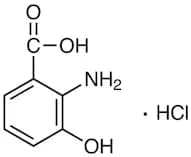
Produit arrêté2-Amino-3-hydroxybenzoic Acid Hydrochloride
CAS :Formule :C7H7NO3·HClDegré de pureté :>98.0%(T)(HPLC)Couleur et forme :White to Light yellow to Purple powder to crystalMasse moléculaire :189.60