Aldéhydes
Les aldéhydes sont des composés organiques contenant un groupe carbonyle (C=O) lié à au moins un atome d'hydrogène. Ces composés polyvalents sont fondamentaux dans diverses réactions chimiques, notamment l'oxydation, la réduction et l'addition nucléophile. Les aldéhydes sont des building blocks essentiels dans la synthèse de produits pharmaceutiques, de parfums et de polymères. Chez CymitQuimica, nous proposons une large sélection d'aldéhydes de haute qualité pour soutenir vos applications de recherche et industrielles.
8540 produits trouvés pour "Aldéhydes"
Trier par
Degré de pureté (%)
0
100
|
0
|
50
|
90
|
95
|
100
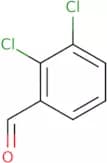
2,3-Dichlorobenzaldehyde
CAS :<p>2,3-Dichlorobenzaldehyde (2,3-DBA) is an organic compound that is used as a synthetic intermediate in the preparation of other chemicals. It is prepared by reacting 2-chloroacetophenone with hydrochloric acid and sodium carbonate in a reaction vessel. The product can be purified through fractional distillation or crystallization. The optical properties of 2,3-DBA are determined by its dipole moment and the substituents attached to the methylene group. Molecular modeling studies have shown that felodipine can bind to 2,3-DBA through its active methylene group. The reaction products between sulfadiazine and 2,3-DBA are pyridinedicarboxylic acid and 3-chlorobenzaldehyde.</p>Formule :C7H4Cl2ODegré de pureté :Min. 95%Couleur et forme :White PowderMasse moléculaire :175.01 g/mol2,5-Dibromoterephthalaldehyde
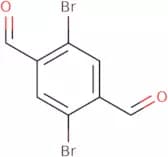
CAS :<p>2,5-Dibromoterephthalaldehyde is a red fluorescent compound that has been shown to have potential as a cancer therapy. The compound is able to bind to the electron acceptor 2,5-dibromoterephthalate (DBT) and can be used in photocatalytic reactions. It has been shown that 2,5-dibromoterephthalaldehyde can cause high levels of cell death in cancer cells with low levels of toxicity to healthy cells. This property may be due to its ability to target cancerous cells by binding with their mitochondria. The compound is also fluorescent and emits light when excited with UV light. 2,5-Dibromoterephthalaldehyde has been shown to form structured metallacycles in the presence of copper ions.<br>!--</p>Formule :C8H4Br2O2Degré de pureté :Min. 95%Couleur et forme :PowderMasse moléculaire :291.92 g/mol1,6-Dimethyl-1H-indole-3-carbaldehyde
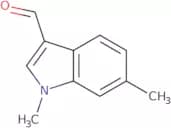
CAS :<p>1,6-Dimethyl-1H-indole-3-carbaldehyde is a compound that can be used in the synthesis of many organic and pharmaceutical compounds. It is also an intermediate for the production of other chemicals. 1,6-Dimethyl-1H-indole-3-carboxylic acid has been shown to be useful as a building block in organic synthesis, due to its versatility and reactivity. The compound is also a reagent and can be used as part of research studies. This chemical has CAS number 202584-14-3.</p>Formule :C11H11NODegré de pureté :Min. 95%Couleur et forme :PowderMasse moléculaire :173.21 g/mol2-Methoxy-3-methylbenzaldehyde
CAS :<p>2-Methoxy-3-methylbenzaldehyde is a natural product that belongs to the class of methoxymethyl. It has been shown to be synthesized by permethylation of methoxy, which is an important intermediate in the synthesis of many naturally occurring compounds such as terpenes and sterols. This compound exists in two enantiomers that can be separated chromatographically. The technique used for this separation is known as equivalence. The elution time for each enantiomer is different, and its spectroscopic properties are also different, making it possible to separate them by these means.</p>Formule :C9H10O2Degré de pureté :Min. 95%Couleur et forme :PowderMasse moléculaire :150.17 g/mol9,10-Anthracenedicarboxaldehyde
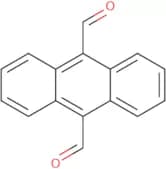
CAS :<p>9,10-Anthracenedicarboxaldehyde is a chemical compound that is used to measure the terminal half-life of drugs in humans. It is an inhibitor of collagen synthesis and has anticancer properties. 9,10-Anthracenedicarboxaldehyde has been shown to inhibit cancer cells by interfering with DNA replication and cell division. The chemical stability of 9,10-anthracenedicarboxaldehyde has been demonstrated in the reaction solution by the formation of chloromethyl ketone. This product also inhibits activity at the camp level and shows antineoplastic properties. The terminal half-life of 9,10-anthracenedicarboxaldehyde was determined to be 48 hours in a study involving human volunteers. The terminal half-life of this product can be shortened by hydrochloric acid or nitro (a reagent).</p>Formule :C16H10O2Degré de pureté :Min. 95%Couleur et forme :PowderMasse moléculaire :234.25 g/mol2-Bromo-3,6-difluorobenzaldehyde
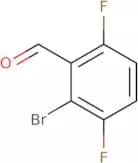
CAS :<p>2-Bromo-3,6-difluorobenzaldehyde is a versatile building block that is used in the synthesis of many complex compounds. It has been shown to be a useful intermediate and reaction component in organic synthesis. 2-Bromo-3,6-difluorobenzaldehyde can be used as a reagent or speciality chemical for research purposes. This compound has high quality and is a useful scaffold for the preparation of fine chemicals.</p>Formule :C7H3BrF2ODegré de pureté :Min. 95%Couleur et forme :Off-White PowderMasse moléculaire :221 g/mol5-Chloro-2-methoxybenzaldehyde
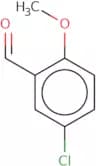
CAS :<p>5-Chloro-2-methoxybenzaldehyde is a potent inhibitor of the bacterial enzyme acetylcholinesterase. It has been shown to have an interaction with biomolecules, such as chalcones, and can be used in the manufacture of antibacterial agents. 5-Chloro-2-methoxybenzaldehyde has been found to have potent inhibitory activity against organocatalytic aldehydes and atypical aldehydes and can be used as an active ingredient in the synthesis of novel compounds with antibacterial activity.</p>Formule :C8H7ClO2Degré de pureté :Min. 95%Couleur et forme :PowderMasse moléculaire :170.59 g/mol1-Ethyl-3-methyl-1H-pyrazole-4-carbaldehyde
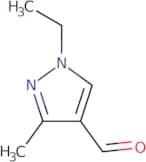
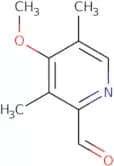
CAS :<p>1-Ethyl-3-methyl-1H-pyrazole-4-carbaldehyde is a reactive intermediate that is used as a reagent in organic synthesis. It is also a useful scaffold for the synthesis of complex compounds, such as pharmaceuticals and agrochemicals. 1-Ethyl-3-methyl-1H-pyrazole-4-carbaldehyde has been used as an intermediate to synthesize the antihistamine drug terfenadine and the insecticide carbofuran. This chemical is manufactured by reacting ethyl pyruvate with anhydrous hydrazine.</p>Formule :C7H10N2ODegré de pureté :Min. 95%Couleur et forme :Yellow PowderMasse moléculaire :138.17 g/mol4-Methoxy-3,5-dimethyl-2-pyridinecarboxaldehyde
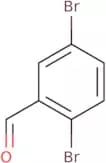
CAS :<p>4-Methoxy-3,5-dimethyl-2-pyridinecarboxaldehyde is a trifunctional molecule that has been shown to suppress the growth of cancer cells in mice. This compound is an inhibitor of acid synthesis and has also been shown to be an antirheumatic drug. 4-Methoxy-3,5-dimethyl-2-pyridinecarboxaldehyde inhibits the activity of three enzymes: synthetase, an enzyme that synthesizes fatty acids; 3-ketoacyl CoA synthase, which synthesizes ketones; and enoyl CoA reductase, which produces fatty acids. The long term efficacy of this molecule has not yet been studied in humans.</p>Formule :C9H11NO2Degré de pureté :Min. 95%Couleur et forme :Colourless LiquidMasse moléculaire :165.19 g/mol2,5-Dibromobenzaldehyde
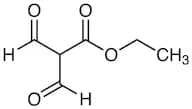
CAS :<p>2,5-Dibromobenzaldehyde is a synthetic compound that has been shown to have a red fluorescent emission. It is also thermally stable and can be used in the synthesis of quinoline derivatives. 2,5-Dibromobenzaldehyde may be used as a potential fluorescent label for viologen or amines. This compound can undergo an intermolecular Diels-Alder reaction with diacetate to form a bicyclic system, which is important to the understanding of its interactions with other compounds.</p>Formule :C7H4Br2ODegré de pureté :Min. 95%Couleur et forme :PowderMasse moléculaire :263.91 g/molEthyl Diformylacetate
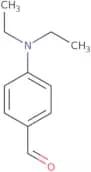
CAS :Formule :C6H8O4Degré de pureté :>97.0%(T)Couleur et forme :Colorless to Light yellow to Light orange clear liquidMasse moléculaire :144.134-Diethylaminobenzaldehyde
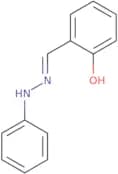
CAS :<p>4-Diethylaminobenzaldehyde is an organic compound that contains a hydroxyl group. It is a fluorescent probe and can be used to measure the transcriptional regulation of genes. This molecule has been shown to be an effective fluorescence probe for the detection of cb2 receptors in Langmuir adsorption isotherms and LC-MS/MS methods. 4-Diethylaminobenzaldehyde has also been shown to have chemopreventive properties against carcinoma cells.</p>Formule :C11H15NODegré de pureté :Min. 98%Couleur et forme :PowderMasse moléculaire :177.24 g/molSalicylaldehyde phenylhydrazone
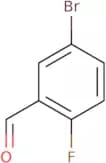
CAS :<p>Salicylaldehyde phenylhydrazone is a covid-19 pandemic, organometallic compound. It is a colorless solid that reacts with water to give hydrogen chloride and salicylaldehyde. Salicylaldehyde phenylhydrazone has been shown to react with amines, which may be due to its chelate ring system. The analytical method for this compound is gravimetric analysis, which involves the use of lanthanum as an indicator. This compound has good transport properties and can be activated by hydrogen gas.</p>Formule :C13H12N2ODegré de pureté :Min. 97 Area-%Couleur et forme :PowderMasse moléculaire :212.25 g/mol5-Bromo-2-fluorobenzaldehyde
CAS :<p>Intermediate in the synthesis of ipragliflozin</p>Formule :C7H4BrFODegré de pureté :Min. 95%Couleur et forme :PowderMasse moléculaire :203.01 g/mol3,6-Dimethoxyterephthaldicarboxaldehyde
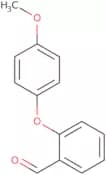
<p>3,6-Dimethoxyterephthaldicarboxaldehyde is a chemical compound that can be used in the synthesis of complex compounds. It has been shown to be an effective reagent for the synthesis of heterocycles and has also been used as a building block in the synthesis of pharmaceuticals and other organic compounds. 3,6-Dimethoxyterephthaldicarboxaldehyde is a versatile building block with many potential uses. It has also been identified as a useful scaffold for drug design and development.</p>Degré de pureté :Min. 95%2-(4-Methoxyphenoxy)benzaldehyde
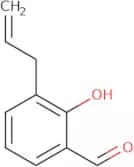
CAS :<p>2-(4-Methoxyphenoxy)benzaldehyde is a fine chemical that is used as a versatile building block in the synthesis of complex compounds and research chemicals. 2-(4-Methoxyphenoxy)benzaldehyde is also a reagent that can be used to synthesize speciality chemicals, useful building blocks, and reaction components. This chemical may be used as an intermediate for the synthesis of high-quality pharmaceuticals or other useful scaffolds. It has CAS number 19434-36-7.</p>Formule :C14H12O3Degré de pureté :Min. 95%Couleur et forme :White To Brown SolidMasse moléculaire :228.24 g/mol3-Allyl salicylaldehyde
CAS :<p>3-Allyl salicylaldehyde is a fluorescent probe that is used to measure the mitochondrial membrane potential. It can be used as an amine-reactive fluorescence probe for the detection of amines such as histamine and serotonin. 3-Allyl salicylaldehyde has been shown to bind to metal complexes, such as palladium complexes, immobilized on silica gel. The cavity of the immobilized metal complex acts as an adsorption site for 3-allyl salicylaldehyde, which binds to the cavity by means of a metal chelate mechanism. This binding results in an alteration in the absorption spectra and x-ray absorption properties of 3-allyl salicylaldehyde. The hydroxyl group of 3-allyl salicylaldehyde is not involved in this binding process with the immobilized metal complex, while its carbonyl group is important for this interaction.</p>Formule :C10H10O2Degré de pureté :Min. 95%Masse moléculaire :162.19 g/mol6-Methoxy-1-methyl-1H-indole-3-carbaldehyde
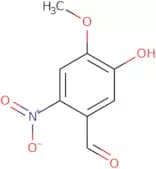
CAS :<p>6-Methoxy-1-methyl-1H-indole-3-carbaldehyde is a high quality chemical that is used as a reagent, complex compound, useful intermediate, and speciality chemical. It is a fine chemical that has been shown to be useful as a building block in the synthesis of many other compounds. 6-Methoxy-1-methyl-1H-indole-3-carbaldehyde is also versatile and can be used in reactions involving nucleophilic substitution, reductive amination, and oxidative coupling.</p>Formule :C11H11NO2Degré de pureté :Min. 95%Couleur et forme :White PowderMasse moléculaire :189.21 g/mol5-Hydroxy-4-methoxy-2-nitrobenzaldehyde
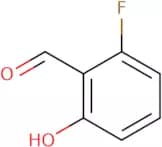
CAS :<p>5-Hydroxy-4-methoxy-2-nitrobenzaldehyde is a substrate molecule that can be minimised to the corresponding oxime, which can then be oxidised to form an aldehyde. The product of this reaction is a conformationally restricted dienone. This compound has been synthesized using a number of different methods, including oxidation by sodium dichromate. 5-Hydroxy-4-methoxy-2-nitrobenzaldehyde is a phenolic compound with two aromatic rings and one carbon ring. It has natural product properties and is used as a chemical skeleton in the synthesis of other compounds.</p>Formule :C8H7NO5Degré de pureté :Min. 95%Couleur et forme :Slightly Yellow PowderMasse moléculaire :197.14 g/mol6-Fluorosalicylaldehyde
CAS :<p>6-Fluorosalicylaldehyde is a sulfate that has been used in the synthesis of 6-fluorosalicylic acid, which is an intermediate for the production of aspirin. It also can be used to synthesize phenols and formylation products. The reaction with hydroxylamine leads to salicylaldehydes, while the reaction with methoxide leads to salicylaldehyde.<br>6-Fluorosalicylaldehyde reacts with magnesium salts in acidic conditions to produce paraformaldehyde. Deprotonation of 6-fluorosalicylaldehyde yields methoxide.</p>Formule :C7H5FO2Degré de pureté :Min. 95%Couleur et forme :PowderMasse moléculaire :140.11 g/mol2-Fluoro-4-iodobenzaldehyde
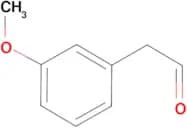
CAS :Formule :C7H4FIODegré de pureté :98%Couleur et forme :SolidMasse moléculaire :250.011(3-Methoxyphenyl)acetaldehyde
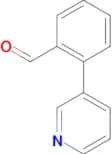
CAS :Formule :C9H10O2Degré de pureté :95%Couleur et forme :Liquid, OilMasse moléculaire :150.1772-Pyridin-3-yl-benzaldehyde
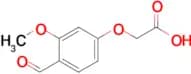
CAS :Formule :C12H9NODegré de pureté :96%Couleur et forme :SolidMasse moléculaire :183.212-(4-Formyl-3-methoxyphenoxy)acetic acid
CAS :Formule :C10H10O5Degré de pureté :98%Masse moléculaire :210.1854-formyl-1H-pyrrole-2-carbonitrile
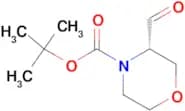
CAS :Formule :C6H4N2ODegré de pureté :95.0%Masse moléculaire :120.111(S)-tert-Butyl 3-formylmorpholine-4-carboxylate
CAS :Formule :C10H17NO4Degré de pureté :97%Couleur et forme :SolidMasse moléculaire :215.2491-(Trifluoromethyl)-1H-pyrazole-4-carbaldehyde
CAS :Degré de pureté :98%Masse moléculaire :164.08700564-Bromo-2-fluoro-5-nitrobenzaldehyde
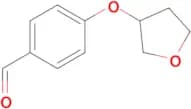
CAS :Formule :C7H3BrFNO3Degré de pureté :95%Couleur et forme :SolidMasse moléculaire :248.0074-((TETRAHYDROFURAN-3-YL)OXY)BENZALDEHYDE
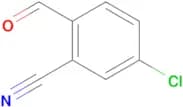
CAS :Formule :C11H12O3Degré de pureté :95.0%Masse moléculaire :192.2145-Chloro-2-formylbenzonitrile
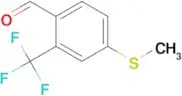
CAS :Formule :C8H4ClNODegré de pureté :97%Couleur et forme :SolidMasse moléculaire :165.584-(Methylthio)-2-(trifluoromethyl)benzaldehyde
CAS :Formule :C9H7F3OSDegré de pureté :97.0%Masse moléculaire :220.212,4,6-Trichloronicotinaldehyde
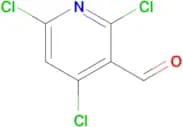
CAS :Formule :C6H2Cl3NODegré de pureté :98%Couleur et forme :SolidMasse moléculaire :210.442-HYDROXY-4-(TRIFLUOROMETHYL)BENZALDEHYDE
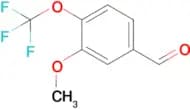
CAS :Formule :C8H5F3O2Degré de pureté :95%Couleur et forme :SolidMasse moléculaire :190.1213-METHOXY-4-(1H-PYRAZOL-1-YL)BENZALDEHYDE
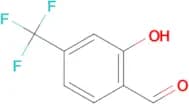
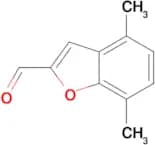
CAS :Formule :C12H22N2O2Degré de pureté :95.0%Masse moléculaire :226.322-BENZOFURANCARBOXALDEHYDE, 4,7-DIMETHYL-
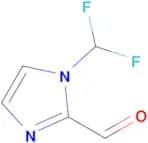
CAS :Formule :C11H10O2Degré de pureté :96.0%Couleur et forme :Liquid, No data available.Masse moléculaire :174.1991-(Difluoromethyl)-1h-imidazole-2-carbaldehyde
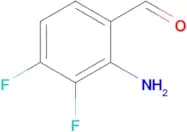
CAS :Degré de pureté :95%Masse moléculaire :146.09700014-AMINO-2-CHLORO-3-FLUOROBENZALDEHYDE
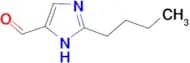
CAS :Formule :C7H5ClFNODegré de pureté :95.0%Masse moléculaire :173.572-Butyl-1H-imidazole-4-carbaldehyde
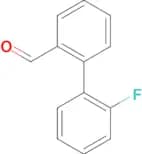
CAS :Formule :C8H12N2ODegré de pureté :97.0%Couleur et forme :SolidMasse moléculaire :152.1972′-Fluorobiphenyl-2-carbaldehyde
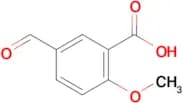
CAS :Formule :C13H9FODegré de pureté :95.0%Couleur et forme :SolidMasse moléculaire :200.2125-Formyl-2-methoxybenzoic acid
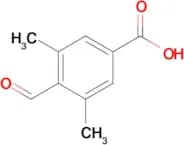
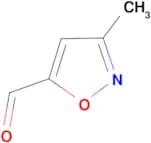
CAS :Formule :C9H8O4Degré de pureté :98%Couleur et forme :SolidMasse moléculaire :180.1593-Methylisoxazole-5-carbaldehyde
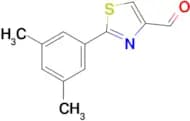
CAS :Formule :C5H5NO2Degré de pureté :95.0%Couleur et forme :Solid, Low Melting SolidMasse moléculaire :111.12-(3,5-Dimethylphenyl)thiazole-4-carbaldehyde
CAS :Formule :C12H11NOSDegré de pureté :95%Masse moléculaire :217.295-Cyanoindole-3-carboxyaldehyde
CAS :Formule :C10H6N2ODegré de pureté :95.0%Couleur et forme :SolidMasse moléculaire :170.171Ethyl 2-(2-formyl-4,6-dimethoxyphenoxy)acetate
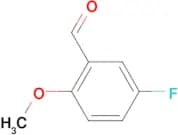
CAS :Formule :C13H16O6Degré de pureté :95.0%Masse moléculaire :268.2655-Fluoro-2-methoxybenzaldehyde
CAS :Formule :C8H7FO2Degré de pureté :97%Couleur et forme :SolidMasse moléculaire :154.142-(5-formyl-2-methoxyphenyl)acetonitrile
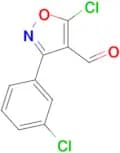
CAS :Formule :C10H9NO2Degré de pureté :95.0%Masse moléculaire :175.1875-chloro-3-(3-chlorophenyl)-1,2-oxazole-4-carbaldehyde
CAS :Formule :C10H5Cl2NO2Degré de pureté :95.0%Masse moléculaire :242.06Undecanal
CAS :Formule :C11H22ODegré de pureté :97%Couleur et forme :LiquidMasse moléculaire :170.2962,5-Dimethyl-1H-pyrrole-3,4-dicarbaldehyde
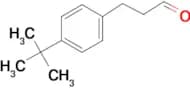
CAS :Degré de pureté :95%;RGMasse moléculaire :151.16499333-(4-tert-Butyl-phenyl)propionaldehyde
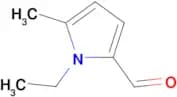
CAS :Formule :C13H18ODegré de pureté :≥98%Couleur et forme :Liquid, ClearMasse moléculaire :190.2861-ethyl-5-methyl-1H-pyrrole-2-carbaldehyde
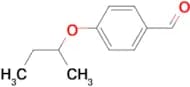
CAS :Formule :C8H11NODegré de pureté :95.0%Couleur et forme :LiquidMasse moléculaire :137.1824-(Butan-2-yloxy)benzaldehyde
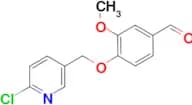
CAS :Formule :C11H14O2Degré de pureté :98%Couleur et forme :LiquidMasse moléculaire :178.2314-((6-CHLOROPYRIDIN-3-YL)METHOXY)-3-METHOXYBENZALDEHYDE
CAS :Formule :C14H12ClNO3Degré de pureté :95.0%Masse moléculaire :277.76-Bromoimidazo[1,2-a]pyrazine-3-carbaldehyde
CAS :Formule :C7H4BrN3ODegré de pureté :95.0%Masse moléculaire :226.033Pyrazolo[1,5-a]pyridine-5-carbaldehyde
CAS :Formule :C8H6N2ODegré de pureté :98%Couleur et forme :SolidMasse moléculaire :146.149tert-butyl 3-formyl-2H,4H,5H,6H,7H-pyrazolo[4,3-c]pyridine-5-carboxylate
CAS :Degré de pureté :98%Masse moléculaire :251.2859955(2E,4E)-5-(4-nitrophenyl)penta-2,4-dienal
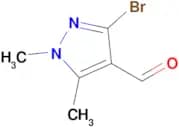
CAS :Formule :C11H9NO3Degré de pureté :95.0%Masse moléculaire :203.1973-Bromo-1,5-dimethyl-1H-pyrazole-4-carbaldehyde
CAS :Formule :C6H7BrN2ODegré de pureté :97.0%Masse moléculaire :203.0394-(Pyrrolidin-1-yl)-2-(trifluoromethyl)benzaldehyde
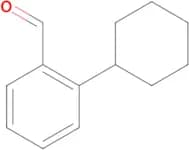
CAS :Degré de pureté :98%Masse moléculaire :243.22900392-Cyclohexylbenzaldehyde
CAS :Formule :C13H16ODegré de pureté :97.0%Couleur et forme :LiquidMasse moléculaire :188.274-[(2-chloro-4-fluorobenzyl)oxy]benzaldehyde
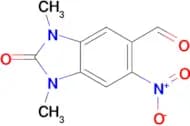
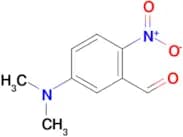
CAS :Formule :C14H10ClFO2Degré de pureté :95.0%Masse moléculaire :264.681,3-dimethyl-6-nitro-2-oxo-2,3-dihydro-1H-benzimidazole-5-carbaldehyde
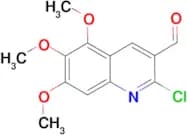
CAS :Formule :C10H9N3O4Masse moléculaire :235.1992-Chloro-5,6,7-trimethoxyquinoline-3-carbaldehyde
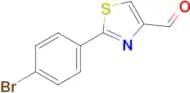
CAS :Formule :C13H12ClNO4Degré de pureté :95.0%Masse moléculaire :281.692-(4-Bromophenyl)thiazole-4-carbaldehyde
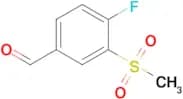
CAS :Formule :C10H6BrNOSDegré de pureté :98%Couleur et forme :SolidMasse moléculaire :268.134-Fluoro-3-(methylsulfonyl)benzaldehyde
CAS :Formule :C8H7FO3SDegré de pureté :97%Couleur et forme :SolidMasse moléculaire :202.2Pyrazole-4-carboxaldehyde hydrochloride
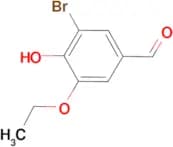
CAS :Formule :C4H5ClN2ODegré de pureté :98%Couleur et forme :SolidMasse moléculaire :132.553-Bromo-5-ethoxy-4-hydroxy-benzaldehyde
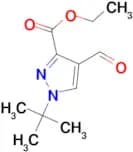
CAS :Formule :C9H9BrO3Degré de pureté :97%Masse moléculaire :245.072ETHYL 1-(TERT-BUTYL)-4-FORMYL-1H-PYRAZOLE-3-CARBOXYLATE
CAS :Formule :C11H16N2O3Degré de pureté :95.0%Couleur et forme :Liquid, No data available.Masse moléculaire :224.26Methyl 3-formyl-1H-pyrrolo[3,2-b]pyridine-6-carboxylate
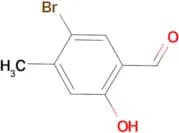
CAS :Degré de pureté :97%Masse moléculaire :204.18499765-Bromo-2-hydroxy-4-methyl-benzaldehyde
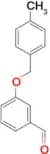
CAS :Formule :C8H7BrO2Degré de pureté :≥95%Couleur et forme :SolidMasse moléculaire :215.0463-(4-Methylbenzyloxy)benzaldehyde
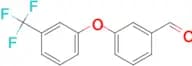
CAS :Formule :C15H14O2Degré de pureté :98%Masse moléculaire :226.2753-(3-TRIFLUOROMETHYLPHENOXY)BENZALDEHYDE
CAS :Formule :C14H9F3O2Degré de pureté :95+%Masse moléculaire :266.2196-Fluoro-1,7-dimethyl-1h-indole-2-carbaldehyde
CAS :Degré de pureté :97%Masse moléculaire :191.20500182-Fluoro-3-formyl-4-(trifluoromethyl)benzoic acid
CAS :Degré de pureté :≥95%Masse moléculaire :236.1219943-METHYL-1H-PYRROLO[2,3-B]PYRIDINE-5-CARBALDEHYDE
CAS :Formule :C9H8N2ODegré de pureté :95%Masse moléculaire :160.176n-(2,4-Difluorophenyl)-n-(4-formyl-1,3-thiazol-2-yl)acetamide
CAS :Degré de pureté :97%Masse moléculaire :282.26000983-Bromoquinoline-7-carbaldehyde
CAS :Formule :C10H6BrNODegré de pureté :98%Masse moléculaire :236.068









![Furo[2,3-b]pyridine-5-carbaldehyde](/_next/image/?url=https%3A%2Fstatic.cymitquimica.com%2Fproducts%2F10%2Fthumb-webp%2FF610948.webp&w=3840&q=75)










![6-Bromoimidazo[1,2-a]pyrazine-3-carbaldehyde](/_next/image/?url=https%3A%2Fstatic.cymitquimica.com%2Fproducts%2F10%2Fthumb-webp%2FF076374.webp&w=3840&q=75)
![Pyrazolo[1,5-a]pyridine-5-carbaldehyde](/_next/image/?url=https%3A%2Fstatic.cymitquimica.com%2Fproducts%2F10%2Fthumb-webp%2FF229606.webp&w=3840&q=75)
![tert-butyl 3-formyl-2H,4H,5H,6H,7H-pyrazolo[4,3-c]pyridine-5-carboxylate](/_next/image/?url=https%3A%2Fstatic.cymitquimica.com%2Fproducts%2F10%2Fthumb-webp%2FF661917.webp&w=3840&q=75)


![4-[(2-chloro-4-fluorobenzyl)oxy]benzaldehyde](/_next/image/?url=https%3A%2Fstatic.cymitquimica.com%2Fproducts%2F10%2Fthumb-webp%2FF307607.webp&w=3840&q=75)

![Methyl 3-formyl-1H-pyrrolo[3,2-b]pyridine-6-carboxylate](/_next/image/?url=https%3A%2Fstatic.cymitquimica.com%2Fproducts%2F10%2Fthumb-webp%2FF784107.webp&w=3840&q=75)



![3-METHYL-1H-PYRROLO[2,3-B]PYRIDINE-5-CARBALDEHYDE](/_next/image/?url=https%3A%2Fstatic.cymitquimica.com%2Fproducts%2F10%2Fthumb-webp%2FF502682.webp&w=3840&q=75)