Aldéhydes
8588 produits trouvés pour "Aldéhydes"
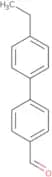
4-(4-Ethylphenyl)benzaldehyde
CAS :4-(4-Ethylphenyl)benzaldehyde is a high quality, reagent, complex compound. CAS No. 101002-44-2. It is a useful intermediate and fine chemical that can be used as a versatile building block for the synthesis of speciality chemicals such as research chemicals and reaction components. This chemical is an excellent starting material for the synthesis of useful scaffolds and useful building blocks.
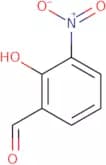
Formule :C15H14ODegré de pureté :Min. 95%Couleur et forme :SolidMasse moléculaire :210.27 g/mol3-Nitrosalicylaldehyde
CAS :3-Nitrosalicylaldehyde is an oxidizing agent that reacts with DNA in vitro to form DNA adducts. 3-Nitrosalicylaldehyde also has antioxidative properties, which can be demonstrated by its ability to inhibit the oxidation of low density lipoprotein (LDL) in vivo. This compound has been shown to activate the metalloproteinase MT2 receptor, which is involved in the regulation of blood pressure and heart function. 3-Nitrosalicylaldehyde is metabolized by hydrolysis and reduction to form a neutral product, which has been shown to have antidiabetic effects on mice.
Formule :C7H5NO4Degré de pureté :Min. 95%Couleur et forme :PowderMasse moléculaire :167.12 g/mol3-Methoxy-2-nitrobenzaldehyde
CAS :3-Methoxy-2-nitrobenzaldehyde is a synthetic compound that has been used in the industrial process of synthesizing other compounds. It is a nucleophilic compound, which means it can react with electrophiles to form new bonds. 3-Methoxy-2-nitrobenzaldehyde is also an oriented molecule, meaning that when it reacts with an electrophile, the resulting product can be determined by the orientation of the molecules. The rate of this reaction depends on how many functional groups are present and the presence of catalysts. 3-Methoxy-2-nitrobenzaldehyde is fluorescent, so it will emit light in a spectroscopic experiment. It has six functional groups which are all nucleophilic and capable of participating in reactions with other molecules. Catalytic rates for this reaction depend on concentration and temperature, as well as the number of chlorine atoms and polydentate ligands present in solution.
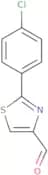
Formule :C8H7NO4Degré de pureté :Min. 95%Couleur et forme :Slightly Yellow PowderMasse moléculaire :181.15 g/mol2-(4-Chlorophenyl)thiazole-4-carbaldehyde
CAS :Please enquire for more information about 2-(4-Chlorophenyl)thiazole-4-carbaldehyde including the price, delivery time and more detailed product information at the technical inquiry form on this page
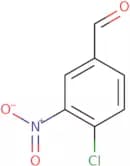
Formule :C10H6ClNOSDegré de pureté :Min. 95%Couleur et forme :PowderMasse moléculaire :223.68 g/mol3-Nitro-4-chlorobenzaldehyde
CAS :3-Nitro-4-chlorobenzaldehyde is a copper complex that has been used in the study of molecular interactions. The molecule has been studied by a number of techniques, including binding experiments, vibrational spectroscopy, and light emission. 3-Nitro-4-chlorobenzaldehyde has shown bacteriostatic activity against Escherichia coli and Bacillus subtilis. This compound also appears to have potential as a drug target due to its ability to inhibit the growth of Pseudomonas aeruginosa. 3-Nitro-4-chlorobenzaldehyde may be useful in the treatment of industrial processes involving nitric acid.
Formule :C7H4ClNO3Degré de pureté :Min. 95%Couleur et forme :White PowderMasse moléculaire :185.56 g/mol1-Acetyl-3-indolecarboxaldehyde
CAS :1-Acetyl-3-indolecarboxaldehyde is a ligand that binds to the cannabinoid receptor 1 (CB1). It has been shown to bind to the CB1 receptor with high affinity and selectivity. In addition, it has been demonstrated to inhibit the proliferation of human breast cancer cells in vitro. The compound is used as a fluorescent probe for cb1 receptor binding. Data obtained from molecular modelling studies have suggested that the hydroxyl group might be involved in binding to the CB1 receptor. 1-Acetyl-3-indolecarboxaldehyde also binds carotenoids, which are molecules responsible for giving plants and other photosynthetic organisms their coloration. This compound can be found in many different plants, such as carrots and bananas, where it acts as an antioxidant.
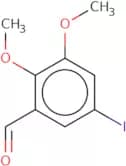
Formule :C11H9NO2Degré de pureté :Min. 95%Couleur et forme :PowderMasse moléculaire :187.19 g/mol5-Iodo-2,3-dimethoxybenzaldehyde
CAS :5-Iodo-2,3-dimethoxybenzaldehyde is a fine chemical that is useful as a scaffold for the synthesis of other compounds. It can be used as an intermediate for research chemicals or as a reaction component in the synthesis of complex compounds. 5-Iodo-2,3-dimethoxybenzaldehyde is used for the manufacture of high quality reagents and building blocks.
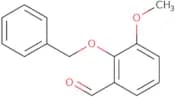
Formule :C9H9IO3Degré de pureté :Min. 95%Couleur et forme :PowderMasse moléculaire :292.07 g/mol2-Benzyloxy-3-methoxybenzaldehyde
CAS :2-Benzyloxy-3-methoxybenzaldehyde is an enantiopure compound that has been shown to have antiproliferative effects on cancer cells. It was also found to have a strong binding affinity for DNA and protein. The antiproliferative effects of 2-Benzyloxy-3-methoxybenzaldehyde were found to be due to its ability to bind to dna and inhibit the enzyme activity of pyrazine-2-carboxylic acid, leading to a decrease in the production of proteins vital for cell division. 2-Benzyloxy-3-methoxybenzaldehyde has been shown to have anticancer activity against colorectal cancer cells and may serve as a lead compound for future drug development.
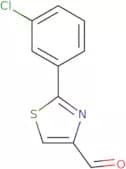
Formule :C15H14O3Degré de pureté :Min. 95%Masse moléculaire :242.27 g/mol2-(3-Chlorophenyl)thiazole-4-carbaldehyde
CAS :Please enquire for more information about 2-(3-Chlorophenyl)thiazole-4-carbaldehyde including the price, delivery time and more detailed product information at the technical inquiry form on this page
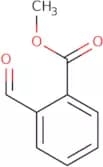
Formule :C10H6ClNOSDegré de pureté :Min. 95%Couleur et forme :PowderMasse moléculaire :223.68 g/mol2-Carbomethoxybenzaldehyde
CAS :2-Carbomethoxybenzaldehyde (2CMB) is a synthetic chemical compound that has been used as an efficient method for the synthesis of amines. The carbonyl group in 2CMB reacts with nucleophiles, such as amines, to form a tetrahydroisoquinoline derivative. This nucleophilic attack leads to the formation of an unstable intermediate that can be isolated and purified by trifluoroacetic acid (TFA). 2CMB is also used in the synthesis of quinoline derivatives and naphthalene derivatives. The acidic properties of 2CMB allow it to react with carboxylic acids, leading to the formation of esters.
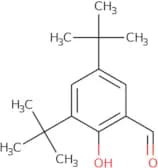
Formule :C9H8O3Degré de pureté :Min. 95%Couleur et forme :Colorless PowderMasse moléculaire :164.16 g/mol3,5-Di-tert-butyl-2-hydroxy benzaldehyde
CAS :3,5-Di-tert-butyl-2-hydroxy benzaldehyde is a molecule that has been shown to have inhibitory effects on cancer cells. It has been tested in vitro on carcinoma cell lines with promising results and shows the potential to be used as an anticancer agent. 3,5-Di-tert-butyl-2-hydroxy benzaldehyde inhibits the growth of cancer cells by binding to their DNA and preventing the synthesis of proteins. This drug is also effective against bacterial strains such as Escherichia coli, Salmonella typhimurium, Klebsiella pneumoniae, Pseudomonas aeruginosa, and Vibrio cholerae. 3,5-Di-tert-butyl-2-hydroxy benzaldehyde forms hydrogen bonds with nitrogen atoms that are present in the molecules of these bacteria. The intramolecular hydrogen bonding interactions between 3,5-di tert butyl 2 hydroxyben
Formule :C15H22O2Degré de pureté :Min. 95%Couleur et forme :Off-White PowderMasse moléculaire :234.33 g/molPolydialdehyde starch (Polymeric dialdehyde)
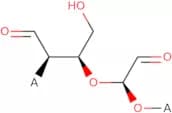
CAS :Polydialdehyde starch is a cross-linking agent that is used to form hydrophobic polymers, which are prodrugs. It is a polymer of dialdehydes and can be used as an additive for restenosis prevention. Polydialdehyde starch has been shown to reduce platelet adhesion and aggregation in vitro and in vivo. The mechanism of action may be related to the ability of polydialdehyde starch to bind collagen and promote its degradation by hydrolysis. This also results in an increase in the rate of dilation of blood vessels, which may contribute to the antiplatelet effect. Polydialdehyde starch has been shown to be biodegradable, with a half-life of about two weeks in vivo after injection into rats.
Couleur et forme :White PowderMasse moléculaire :347.66Ref: 3D-FP30795
Produit arrêté4-N-Octylbenzaldehyde
CAS :4-N-Octylbenzaldehyde is a nitro compound which is used as an immunosuppressive agent. It has been shown to inhibit the activity of diphenolase, which plays an important role in the metabolism of fatty acids. 4-N-Octylbenzaldehyde also has an oil extractant that can be used to extract and separate different types of organic compounds from oils, fats, or greases. In addition, 4-N-octylbenzaldehyde inhibits the synthesis of prostaglandin E2 and thromboxane A2 by inhibiting cyclooxygenase enzymes. It has been shown to possess anti-inflammatory properties and has been found to be useful in treating rheumatoid arthritis.
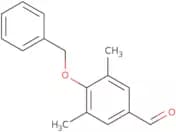
Formule :C15H22ODegré de pureté :Min. 95%Couleur et forme :Clear LiquidMasse moléculaire :218.33 g/mol4-Benzyloxy-3,5-dimethylbenzaldehyde
CAS :4-Benzyloxy-3,5-dimethylbenzaldehyde is a potent anticancer drug that inhibits cell proliferation and induces apoptosis. It has been shown to inhibit the growth of prostate cancer cells and human erythroleukemia cells. This compound also has antibacterial activity against gram-positive bacteria such as methicillin-resistant Staphylococcus aureus (MRSA) and Mycobacterium tuberculosis. 4-Benzyloxy-3,5-dimethylbenzaldehyde binds to the flavone binding site on the enzyme DNA gyrase and topoisomerase IV in both bacterial and mammalian cells. This binding leads to inhibition of DNA synthesis by preventing the formation of an enzyme complex with DNA polymerase. A study has shown that apigenin, one of the flavone derivatives found in this compound, enhances the antitumor activity of cisplatin by inhibiting DNA repair mechanisms in human cancer cells.
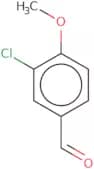
Formule :C16H16O2Degré de pureté :90%Couleur et forme :PowderMasse moléculaire :240.3 g/mol3-Chloro-4-methoxybenzaldehyde
CAS :3-Chloro-4-methoxybenzaldehyde is a chemical compound that belongs to the class of aromatic compounds. It is synthesized by reacting 3-chlorobenzaldehyde with methoxyacetone in a hydroxylation reaction. The asymmetric synthesis of 3-chloro-4-methoxybenzaldehyde was achieved by using a chiral auxiliary, which is an organic molecule that can be used to control the stereochemistry of other reactions. This product has high cytotoxicity and is able to cause melanogenesis (production of melanin) when applied to rat striatal membranes.
Formule :C8H7ClO2Degré de pureté :Min. 95%Couleur et forme :PowderMasse moléculaire :170.59 g/mol3-Fluoro-4-methoxybenzaldehyde
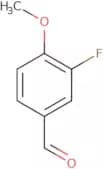
CAS :3-Fluoro-4-methoxybenzaldehyde is a chemical compound that is used in the synthesis of natural products. It has been shown to have inhibitory properties against cancer cells, and has been synthesized as an analog of 3-fluoro-4-hydroxybenzaldehyde. The biological function of 3-fluoro-4-methoxybenzaldehyde is not yet known. Hydrochloric acid may be used to react with 3-fluoro-4-methoxybenzaldehyde to form a salt. This chemical also has anti-tumor effects and can be synthesized using cryogenic techniques.
Formule :C8H7FO2Degré de pureté :Min. 95%Couleur et forme :Slightly Yellow PowderMasse moléculaire :154.14 g/molGallaldehyde
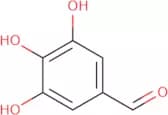
CAS :Gallaldehyde is a bioactive phenolic compound with antiproliferation activity. It has been shown to inhibit the growth of bacteria in vitro and also has hypoglycemic effects in mice. Gallaldehyde inhibits tyrosine kinase activity, which is needed for the growth of cells. Gallaldehyde is a tannin that can bind to proteins, inhibiting their functions. Gallaldehyde may also have anti-inflammatory properties due to its ability to inhibit the production of TNF-α induced by epidermal growth factor. This active form is metabolized by a number of metabolic transformations, including hydrolysis by esterases or glucuronidases, oxidation by cytochrome P450 enzymes, reduction by glutathione reductase, or conjugation with glucuronic acid.
Formule :C7H6O4Degré de pureté :Min. 95%Couleur et forme :PowderMasse moléculaire :154.12 g/mol2,4,5-Trimethylbenzaldehyde
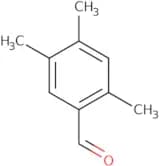
CAS :2,4,5-Trimethylbenzaldehyde is a cell line that can be used to study the oxidation of α-pinene. It is a chemical compound that belongs to the group of aromatic compounds and has been shown to have high cytotoxicity. It has been found to oxidize other molecules in the body with an electron acceptor such as oxygen or another molecule. 2,4,5-Trimethylbenzaldehyde has also been shown to have biological properties. This product is being researched for its ability to inhibit fatty acid synthesis and reduce cholesterol production in the liver.
Formule :C10H12ODegré de pureté :Min. 95%Masse moléculaire :148.2 g/mol4-Chloropyridine-3-carboxaldehyde
CAS :4-Chloropyridine-3-carboxaldehyde (4CPCA) is a potent inhibitor of the enzyme, formylation. 4CPCA is synthesized in an experimental method involving reaction of 4-chloropyridine and 3-bromoformaldehyde with a base, followed by hydrolysis to produce the desired product. This compound has been shown to inhibit formylation in vitro with inhibition potentials as high as 5000 μM. The IC 50 value for 4CPCA was found to be 0.6 mM. Formylation activity was inhibited in cell free systems and in cells from rat liver and human erythrocytes. The pharmacokinetic profile of 4CPCA is dose dependent and it is metabolized into inactive compounds by oxidation or conjugation with glucuronic acid.
Formule :C6H4ClNODegré de pureté :Min. 95%Couleur et forme :Yellow SolidMasse moléculaire :141.55 g/mol2,4,6-Tribromo-3-hydroxybenzaldehyde
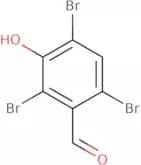
CAS :2,4,6-Tribromo-3-hydroxybenzaldehyde (2,4,6-TBHB) is an aldehyde that is synthesized from the reaction of 2,4,6-trichlorobenzaldehyde and bromine. It has been shown to be cytotoxic in tumour cell lines in vitro. This compound binds to DNA by covalent binding and inhibits the synthesis of proteins. 2,4,6-TBHB also inhibits cellular uptake of halides such as chloride and bromide ions. This aldehyde has been shown to induce cell death in human lung cancer cells in a concentration dependent manner.
Formule :C7H3Br3O2Degré de pureté :Min. 95%Couleur et forme :PowderMasse moléculaire :358.81 g/mol