Aldéhydes
8588 produits trouvés pour "Aldéhydes"
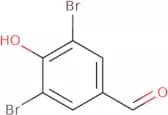
3,5-Dibromo-4-hydroxybenzaldehyde
CAS :3,5-Dibromo-4-hydroxybenzaldehyde is an aldehyde that is used as a precursor to other organic compounds. It can be produced using the efficient method of reacting 3,5-dibromo-4-hydroxybenzoic acid with sodium borohydride in methanol. The molecule has three hydroxymethyl groups and two functional groups. 3,5-Dibromo-4-hydroxybenzaldehyde is soluble in water and organic solvents such as ethanol and acetone. This compound has shown antibacterial activity against some strains of bacteria, including group P2 bacteria. The reaction yield for the synthesis of this compound is approximately 93%. The inhibitory activities of 3,5-dibromo-4-hydroxybenzaldehyde have been demonstrated against both Gram positive and Gram negative bacteria.
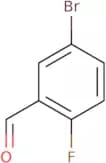
Formule :C7H4Br2O2Degré de pureté :Min. 95%Couleur et forme :PowderMasse moléculaire :279.91 g/mol5-Bromo-2-fluorobenzaldehyde
CAS :Intermediate in the synthesis of ipragliflozin
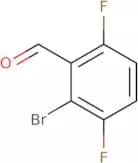
Formule :C7H4BrFODegré de pureté :Min. 95%Couleur et forme :PowderMasse moléculaire :203.01 g/mol2-Bromo-3,6-difluorobenzaldehyde
CAS :2-Bromo-3,6-difluorobenzaldehyde is a versatile building block that is used in the synthesis of many complex compounds. It has been shown to be a useful intermediate and reaction component in organic synthesis. 2-Bromo-3,6-difluorobenzaldehyde can be used as a reagent or speciality chemical for research purposes. This compound has high quality and is a useful scaffold for the preparation of fine chemicals.
Formule :C7H3BrF2ODegré de pureté :Min. 95%Couleur et forme :Off-White PowderMasse moléculaire :221 g/molRef: 3D-FB67309
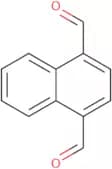
Produit arrêtéNaphthalene 1,4-dicarboxaldehyde
CAS :Naphthalene 1,4-dicarboxaldehyde is a low energy focusing molecule that is used in macrocyclic compounds. It can be oxidized to form naphthalene 1,4-diacid and naphthalene 1,4-diketone. This compound has been used to synthesize the triarylmethane dye viologen by Wittig reaction. Naphthalene 1,4-dicarboxaldehyde has also been shown to have fluorescence properties and can be useful for chemiluminescence. Naphthalene 1,4-dicarboxaldehyde reacts with sulfide or amine groups to form sulfides or amines respectively.
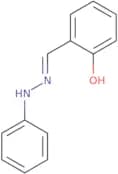
Formule :C12H8O2Degré de pureté :Min. 95%Couleur et forme :PowderMasse moléculaire :184.19 g/molSalicylaldehyde phenylhydrazone
CAS :Salicylaldehyde phenylhydrazone is a covid-19 pandemic, organometallic compound. It is a colorless solid that reacts with water to give hydrogen chloride and salicylaldehyde. Salicylaldehyde phenylhydrazone has been shown to react with amines, which may be due to its chelate ring system. The analytical method for this compound is gravimetric analysis, which involves the use of lanthanum as an indicator. This compound has good transport properties and can be activated by hydrogen gas.
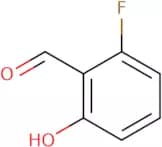
Formule :C13H12N2ODegré de pureté :Min. 97 Area-%Couleur et forme :PowderMasse moléculaire :212.25 g/mol6-Fluorosalicylaldehyde
CAS :6-Fluorosalicylaldehyde is a sulfate that has been used in the synthesis of 6-fluorosalicylic acid, which is an intermediate for the production of aspirin. It also can be used to synthesize phenols and formylation products. The reaction with hydroxylamine leads to salicylaldehydes, while the reaction with methoxide leads to salicylaldehyde.
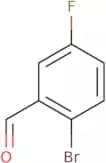
6-Fluorosalicylaldehyde reacts with magnesium salts in acidic conditions to produce paraformaldehyde. Deprotonation of 6-fluorosalicylaldehyde yields methoxide.Formule :C7H5FO2Degré de pureté :Min. 95%Couleur et forme :PowderMasse moléculaire :140.11 g/mol2-Bromo-5-fluorobenzaldehyde
CAS :2-Bromo-5-fluorobenzaldehyde is a chemical compound that has been shown to inhibit the activity of ns3 protease, an enzyme responsible for the cleavage of peptides in HIV. 2-Bromo-5-fluorobenzaldehyde binds to the active site of ns3 protease and prevents it from carrying out its function. This drug has also been shown to bind to the active site of ns5b polymerase and inhibit its activity, which is necessary for viral DNA synthesis. 2-Bromo-5-fluorobenzaldehyde has been used as a fungicide and has shown high potency against Candida albicans, Cryptococcus neoformans, Saccharomyces cerevisiae, and Aspergillus fumigatus.
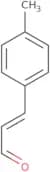
Formule :C7H4BrFODegré de pureté :Min. 95%Couleur et forme :PowderMasse moléculaire :203.01 g/mol(E)-3-(p-Tolyl)acrylaldehyde
CAS :(E)-3-(p-Tolyl)acrylaldehyde is a reactive compound that has been shown to have antibacterial activity. It also inhibits the growth of Coxsackievirus A21 by binding to cardiomyocytes and inducing apoptosis. (E)-3-(p-Tolyl)acrylaldehyde binds to the amine group of proteins, which prevents it from being hydrolysed. This inhibition leads to an accumulation of the reactive amine in the organism, causing cell death. The reaction between (E)-3-(p-Tolyl)acrylaldehyde and nitro groups in DNA can cause mutagenesis or carcinogenesis.
Formule :C10H10ODegré de pureté :Min. 98 Area-%Couleur et forme :PowderMasse moléculaire :146.19 g/mol8-Nonenal
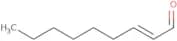
CAS :Produit contrôléApplications 8-Nonenal is used as a reactant in the preparation of macrocyclic Z-enoates and (E,Z)- or (Z,E)-dienoates through catalytic stereoselective ring-closing metathesis.
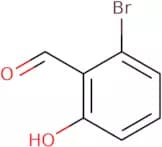
References Zhang, H., et al.: JACS., 136, 16493 (2014)Formule :C9H16OCouleur et forme :NeatMasse moléculaire :140.222-Bromo-6-hydroxybenzaldehyde
CAS :2-Bromo-6-hydroxybenzaldehyde is a synthetic chemical that consists of a furan ring with an acetonitrile group. It has been shown to be a constant in cyclic electroreduction and is used as a biomolecular surfactant. 2-Bromo-6-hydroxybenzaldehyde has also been shown to react intramolecularly with the hydroxyl group on the benzene ring, which results in the formation of a dimer. This chemical can be produced by solvolysis or electroreduction.
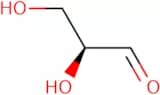
Formule :C7H5BrO2Degré de pureté :Min. 95%Couleur et forme :PowderMasse moléculaire :201.02 g/molL-(-)-Glyceraldehyde - Technical grade aqueous solution
CAS :Please enquire for more information about L-(-)-Glyceraldehyde - Technical grade aqueous solution including the price, delivery time and more detailed product information at the technical inquiry form on this page
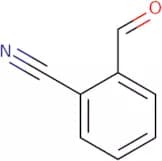
Formule :C3H6O3Degré de pureté :Min. 95%Couleur et forme :Clear Viscous LiquidMasse moléculaire :90.08 g/mol2-Cyanobenzaldehyde
CAS :2-Cyanobenzaldehyde is an aldehyde that reacts with nucleophiles such as trifluoromethanesulfonic acid to form a molecule. 2-Cyanobenzaldehyde has potent inhibitory activity against the kinase glycogen synthase kinase 3 (GSK3) and can be used to treat autoimmune diseases. It also reacts with hydrochloric acid in solution to form an intermediate, which is then reacted with glycine and ATP to produce a chiral compound. The product of this reaction has been shown to be active methylene, which was synthesized by asymmetric synthesis.
Formule :C8H5NODegré de pureté :Min. 95%Couleur et forme :PowderMasse moléculaire :131.13 g/molTrans-2-nonenal
CAS :Trans-2-nonenal is a monoclonal antibody that recognizes the physiological function of cardiac and rat liver microsomes. It has been shown to inhibit enzyme activities in both cell lines. Trans-2-nonenal has also been shown to protect against ischemia/reperfusion injury in rats by reducing the release of intracellular Ca2+ and ATP levels. Trans-2-nonenal is genotoxic and induces oxidative injury, which may be due to its ability to react with caproic acid to form reactive oxygen species.
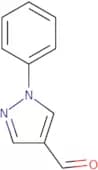
Formule :C9H16ODegré de pureté :Min. 95%Masse moléculaire :140.22 g/mol1-Phenyl-1H-pyrazole-4-carbaldehyde
CAS :1-Phenyl-1H-pyrazole-4-carbaldehyde is an antibacterial agent that has been shown to have bactericidal activity against bacteria. It inhibits the growth of bacteria by binding to the pyrazole ring in the bacterial cell wall and blocking the formation of a hydrogen bond. 1-Phenyl-1H-pyrazole-4-carbaldehyde has been shown to be effective against methicillin resistant Staphylococcus aureus (MRSA) and Ciprofloxacin resistant Pseudomonas aeruginosa isolates, but not against Mycobacterium tuberculosis or Mycobacterium avium complex.
Formule :C10H8N2ODegré de pureté :Min. 95%Masse moléculaire :172.18 g/molFerrocenecarboxaldehyde
CAS :Ferrocenecarboxaldehyde is a fatty acid with a ferrocene carboxylic acid group. It has been shown to have antimicrobial activity against bacteria, fungi, and yeast when it was mixed with nitric acid. Ferrocenecarboxaldehyde can be synthesized by reacting ferrocene with glycerol in the presence of sulfuric acid. The reaction mechanism of this synthesis is as follows: The structural analysis of ferrocenecarboxaldehyde has been studied using FT-IR spectroscopy and NMR spectroscopy. The chemical structure of ferrocenecarboxaldehyde is as follows: The asymmetric synthesis of ferrocenecarboxaldehyde is shown below:
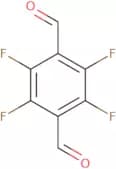
Formule :C11H10FeODegré de pureté :Min. 95%Couleur et forme :PowderMasse moléculaire :214.04 g/molTetrafluoroterephthaldehyde
CAS :Tetrafluoroterephthaldehyde (TFPA) is a reactive aldehyde that can be synthesized in the laboratory by the reaction of trifluoromethanesulfonic acid with an aromatic hydrocarbon or ester compound. TFPA has been used to study the synthesis of supramolecular assemblies and supramolecular chemistry. The radiation-induced formation of TFPA is a useful method for the synthesis of polymers, and the thermal expansion of TFPA is high enough to be used as a thermometer. TFPA has shown chemical stability in both acidic and alkaline media, as well as resistance to radiation and oxidation. TFPA also has a high boiling point, making it useful for desolvation during gas chromatography experiments.
Formule :C8H2F4O2Degré de pureté :Min. 95%Couleur et forme :PowderMasse moléculaire :206.09 g/molAdrenalone hydrochloride
CAS :Produit contrôléAdrenalone hydrochloride is a synthetic form of epinephrine, which is an endogenous catecholamine. Adrenalone hydrochloride has been used to treat autoimmune diseases and bowel disease. Adrenalone hydrochloride binds to the alpha and beta receptors on the surface of cells, which stimulates the production of other hormones and neurotransmitters. It has also been shown to have antimicrobial properties against bacteria, fungi, and viruses. Adrenalone hydrochloride has a chemical stability that is greater than that of dopamine or adrenaline.
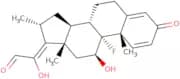
Formule :C9H11NO3·HClDegré de pureté :Min. 95%Masse moléculaire :217.65 g/molDexamethasone-δ17,20 21-aldehyde
CAS :Produit contrôléPlease enquire for more information about Dexamethasone-δ17,20 21-aldehyde including the price, delivery time and more detailed product information at the technical inquiry form on this page
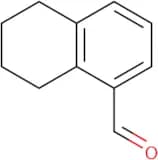
Formule :C22H27FO4Degré de pureté :Min. 95%Couleur et forme :PowderMasse moléculaire :374.45 g/mol5,6,7,8-Tetrahydronaphthalene-1-carbaldehyde
CAS :Please enquire for more information about 5,6,7,8-Tetrahydronaphthalene-1-carbaldehyde including the price, delivery time and more detailed product information at the technical inquiry form on this page
Formule :C11H12ODegré de pureté :Min. 95%Couleur et forme :Clear LiquidMasse moléculaire :160.21 g/molRef: 3D-FT143578
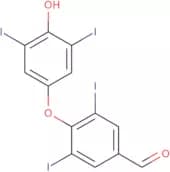
Produit arrêté3,5,3',5'-Tetraiodo thyroaldehyde
CAS :Please enquire for more information about 3,5,3',5'-Tetraiodo thyroaldehyde including the price, delivery time and more detailed product information at the technical inquiry form on this page
Formule :C13H6I4O3Degré de pureté :Min. 95%Couleur et forme :PowderMasse moléculaire :717.8 g/mol