Aldéhydes
8588 produits trouvés pour "Aldéhydes"
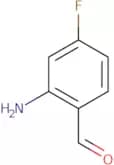
2-Amino-4-fluorobenzaldehyde
CAS :2-Amino-4-fluorobenzaldehyde is a plant growth regulator that has been shown to be effective at increasing the yield of flowers and fruit crops. It is used as an intermediate in the synthesis of agrochemicals, such as 2-aminobenzaldehyde and anthranilic acid. The biosynthesis of 2-amino-4-fluorobenzaldehyde starts from methanol and intermediates such as anthranilic acid, aminoaldehydes, or alcohols. It can also be produced by oxidative coupling of 2-aminobenzaldehyde with phenylacetone in the presence of sodium hydroxide. 2-Amino-4-fluorobenzaldehyde has been shown to be more efficient than other plant growth regulators such as robinia or aminocyclopentane carboxylic acid (ACC).
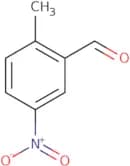
Formule :C7H6FNODegré de pureté :Min. 95%Couleur et forme :SolidMasse moléculaire :139.13 g/mol2-Methyl-5-nitrobenzaldehyde
CAS :2-Methyl-5-nitrobenzaldehyde is a nitro compound that is used in the synthesis of dobutamine. It has been shown to undergo rearrangements, with the formation of 2-methyl-5-nitrophenol. Kinetic studies have shown that chlorine can be substituted for hydrogen at the 2 position, and this substitution leads to an increase in reactivity. 2-methyl-5-nitrobenzaldehyde also reacts with dopamine to form a ketone. The hydroxy group on this molecule is nucleophilic and can attack electrophiles, making it useful as an active site for synthetic reactions. This compound is also pyrophoric, which means it will spontaneously ignite in air and burn until all its fuel is consumed.
Formule :C8H7NO3Degré de pureté :Min. 95%Couleur et forme :Off-White PowderMasse moléculaire :165.15 g/mol3-Fluoro-2-nitrobenzaldehyde
CAS :3-Fluoro-2-nitrobenzaldehyde is a pyridine derivative that has been used in the synthesis of a number of important heterocyclic compounds. This compound can be prepared by reacting 3,4-dichloroaniline with nitrous acid and then hydrolyzing the resulting 3-chloroquinoline with hydrochloric acid. The reaction yields anilines and quinolines in regiospecifically, as well as formylation, cyclisation, and condensation products. It is also capable of aromatisation reactions with benzene to produce benzofuran derivatives.
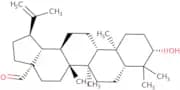
Formule :C7H4FNO3Degré de pureté :Min. 95%Couleur et forme :Yellow PowderMasse moléculaire :169.11 g/molBetulinaldehyde
CAS :Produit contrôléBetulinaldehyde is a natural compound that belongs to the group of betulinic acid. It has been shown to have antimicrobial activity against oral pathogens and has been shown to inhibit the growth of bacteria by reacting with their cell walls. Betulinaldehyde has also been shown to have an effect on autoimmune diseases such as multiple sclerosis, as well as infectious diseases such as HIV and tuberculosis. Betulinaldehyde can be extracted from the bark of birch trees using acetate, which is then reacted with hydrogen peroxide in a reaction solution. The resulting product is purified using preparative high-performance liquid chromatography (HPLC).
Formule :C30H48O2Degré de pureté :Min. 95%Couleur et forme :PowderMasse moléculaire :440.7 g/molRef: 3D-FB73804
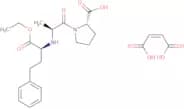
Produit arrêtéEnalapril maleate
CAS :Angiotensin-converting enzyme inhibitor; anti-hypertensive
Formule :C20H28N2O5•C4H4O4Degré de pureté :Min. 95%Couleur et forme :PowderMasse moléculaire :492.52 g/molRef: 3D-FE02668
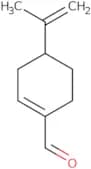
Produit arrêté(+/-)-Perillaldehyde
CAS :Perillaldehyde is a natural compound that has been used in food and medicine for centuries. It is an antimicrobial agent with dextran sulfate, which is a sugar polymer that inhibits the growth of fungi and bacteria. Perillaldehyde also has been shown to inhibit the energy metabolism of microorganisms by decreasing ATP production. Perillaldehyde has also been shown to have genotoxic activity, as it can cause DNA strand breaks. This compound also causes oxidative stress in cells by reducing mitochondrial membrane potential and inducing reactive oxygen species (ROS). Perillaldehyde has acute toxicities, as it causes electrochemical impedance spectroscopy changes that indicate cell death.
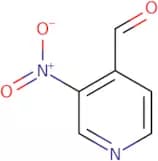
Formule :C10H14ODegré de pureté :Min. 95%Couleur et forme :PowderMasse moléculaire :150.22 g/mol3-Nitroisonicotinaldehyde
CAS :3-Nitroisonicotinaldehyde is a kinase inhibitor that binds to the ATP binding site of receptor tyrosine kinases. It inhibits the activation of these receptors and prevents the phosphorylation of tyrosine residues on the receptor. 3-Nitroisonicotinaldehyde has been shown to inhibit VEGFR-2, ABCG2, and efflux in human cancer cells. This drug has been shown to inhibit tumor growth in mice by inhibiting angiogenesis, which is a process that involves the formation of new blood vessels from pre-existing ones. 3-Nitroisonicotinaldehyde also inhibits tumor growth by blocking the production of vascular endothelial growth factor (VEGF) from angiogenic cells.
Formule :C6H4N2O3Degré de pureté :Min. 95%Masse moléculaire :152.11 g/molRef: 3D-FN151432
Produit arrêté2,3,5-Trichlorobenzaldehyde
CAS :2,3,5-Trichlorobenzaldehyde is a chemical compound that has been shown to have anticancer and apoptotic effects. It inhibits the growth of bacteria by chelating iron ions and inhibiting bacterial dna synthesis. 2,3,5-Trichlorobenzaldehyde has also been shown to inhibit the growth of cancer cells in culture in an experimental study. This chemical has been used as a substrate for nmr spectroscopy to study its functional groups and radical scavenging activities. 2,3,5-Trichlorobenzaldehyde can be synthesized from phenacyl chloride and benzaldehyde in the presence of hydrogen chloride gas. The carbonyl group in 2,3,5-trichlorobenzaldehyde may cause metabolic disorders such as diabetes mellitus or hyperglycemia.
Formule :C7H3Cl3ODegré de pureté :Min. 95%Couleur et forme :PowderMasse moléculaire :209.46 g/mol