Aldéhydes
Les aldéhydes sont des composés organiques contenant un groupe carbonyle (C=O) lié à au moins un atome d'hydrogène. Ces composés polyvalents sont fondamentaux dans diverses réactions chimiques, notamment l'oxydation, la réduction et l'addition nucléophile. Les aldéhydes sont des building blocks essentiels dans la synthèse de produits pharmaceutiques, de parfums et de polymères. Chez CymitQuimica, nous proposons une large sélection d'aldéhydes de haute qualité pour soutenir vos applications de recherche et industrielles.
8540 produits trouvés pour "Aldéhydes"
Trier par
Degré de pureté (%)
0
100
|
0
|
50
|
90
|
95
|
100
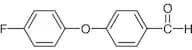
4-(4-Fluorophenoxy)benzaldehyde
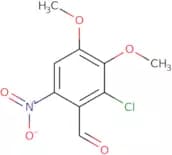
CAS :Formule :C13H9FO2Degré de pureté :>98.0%(GC)Couleur et forme :White to Yellow to Orange powder to crystalMasse moléculaire :216.212-Chloro-3,4-dimethoxy-6-nitrobenzaldehyde
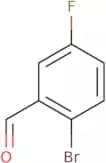
CAS :<p>2-Chloro-3,4-dimethoxy-6-nitrobenzaldehyde is a fine chemical with a CAS number of 82330-54-9. It is a versatile building block that can be used as a reagent or intermediate for the production of other chemicals. This product has been shown to have many different reactions. It is useful in the synthesis of complex compounds and offers high quality and purity.</p>Formule :C9H8ClNO5Degré de pureté :Min. 95%Couleur et forme :PowderMasse moléculaire :245.62 g/mol2-Bromo-5-fluorobenzaldehyde
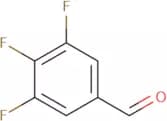
CAS :<p>2-Bromo-5-fluorobenzaldehyde is a chemical compound that has been shown to inhibit the activity of ns3 protease, an enzyme responsible for the cleavage of peptides in HIV. 2-Bromo-5-fluorobenzaldehyde binds to the active site of ns3 protease and prevents it from carrying out its function. This drug has also been shown to bind to the active site of ns5b polymerase and inhibit its activity, which is necessary for viral DNA synthesis. 2-Bromo-5-fluorobenzaldehyde has been used as a fungicide and has shown high potency against Candida albicans, Cryptococcus neoformans, Saccharomyces cerevisiae, and Aspergillus fumigatus.</p>Formule :C7H4BrFODegré de pureté :Min. 95%Couleur et forme :PowderMasse moléculaire :203.01 g/mol3,4,5-Trifluorobenzaldehyde
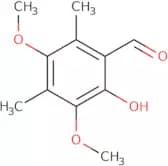
CAS :<p>3,4,5-Trifluorobenzaldehyde is an aldehyde that can be synthesized in the laboratory. It reacts with ammonium nitrate and fatty alcohols to form 3,4,5-trifluoro-1-(alkyloxy)benzene. This reaction proceeds via a dipole mechanism and produces an intermediate called 2-amino-2-nitroethanol. This intermediate then undergoes dehydrogenation to produce 3,4,5-trifluoroethanol and ammonia. The reaction time for this process varies depending on the immobilization of the reactants and the temperature of the reaction.</p>Formule :C7H3F3ODegré de pureté :Min. 95%Couleur et forme :Clear LiquidMasse moléculaire :160.09 g/mol2-Hydroxy-4,6-dimethoxy-3,5-dimethylbenzaldehyde
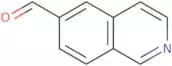
CAS :<p>2-Hydroxy-4,6-dimethoxy-3,5-dimethylbenzaldehyde is a versatile building block that can be used in research chemicals, reagents, and speciality chemicals. It is also a useful building block that can be used as a reaction component or scaffold for high-quality compounds. This chemical has been shown to have antihistamine properties with applications in treatment of allergies and asthma.</p>Formule :C11H14O4Degré de pureté :Min. 95%Couleur et forme :PowderMasse moléculaire :210.23 g/molIsoquinoline-6-carbaldehyde
CAS :<p>Isoquinoline-6-carbaldehyde is a fine chemical that belongs to the group of research chemicals. It can be used as a reagent for organic synthesis, a speciality chemical, or a building block in complex organic molecules. Isoquinoline-6-carbaldehyde is also an intermediate for the synthesis of many pharmaceuticals and other useful compounds. Isoquinoline-6-carbaldehyde has been shown to react with 2-aminoethanol to form (2E)-3-(4-(1,1'-biphenyl)-2-yl)butanal, which is an important reaction component in the synthesis of nitroaromatics. Isoquinoline-6-carbaldehyde is also a versatile scaffold for the synthesis of other fine chemicals.</p>Formule :C10H7NODegré de pureté :Min. 95%Couleur et forme :SolidMasse moléculaire :157.17 g/mol6-(Hydroxymethyl)pyridine-2-carboxaldehyde
CAS :<p>6-(Hydroxymethyl)pyridine-2-carboxaldehyde is a ligand that has anisotropic magnetic properties. It crystallizes in an orthorhombic system, and its structure consists of two iron atoms (II) coordinated by two hydrazone groups and one carboxylate group. The compound is dimeric, with each unit consisting of two iron atoms (II) coordinated by two hydrazone groups and one carboxylate group. The compound exhibits ferromagnetic properties, being paramagnetic at room temperature. In crystallography studies, it was found that the 6-(hydroxymethyl)pyridine-2-carboxaldehyde adducts are tetranuclear with a helicate geometry around the Fe(II) atom. This compound is also paramagnetic at room temperature due to the presence of unpaired electrons on the two Fe(II) centers.</p>Formule :C7H7NO2Degré de pureté :Min. 99.8 Area-%Couleur et forme :White Off-White PowderMasse moléculaire :137.14 g/mol5-Chloro-2-(trifluoromethyl)benzaldehyde
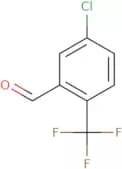
CAS :<p>5-Chloro-2-(trifluoromethyl)benzaldehyde is a fine chemical that can be used as a versatile building block for organic synthesis. It has CAS number 90381-07-0 and is an intermediate in the synthesis of a variety of organic compounds. 5-Chloro-2-(trifluoromethyl)benzaldehyde is also an effective reagent for the preparation of complex compounds. It is soluble in polar solvents, such as chloroform, ethanol, ether, acetone, and benzene.</p>Formule :C8H4ClF3ODegré de pureté :Min. 95%Masse moléculaire :208.56 g/mol3-Butoxybenzaldehyde
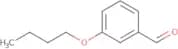
CAS :<p>3-Butoxybenzaldehyde is an electron donor. It is used in the synthesis of heterocyclic compounds and as a reagent or postulated intermediate in the formation of epoxides, ethylene, and peroxides. 3-Butoxybenzaldehyde also functions as a precursor to other oxygenated compounds. 3-Butoxybenzaldehyde has been shown to undergo both aldol condensation and interaction with other compounds.</p>Formule :C11H14O2Degré de pureté :Min. 95%Couleur et forme :PowderMasse moléculaire :178.23 g/molQuinoxaline-5-carboxaldehyde
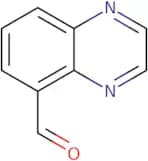
CAS :<p>Quinoxaline-5-carboxaldehyde is a versatile building block and reagent for organic chemistry. It is a complex compound that can be used as a research chemical or as a speciality chemical, with high quality and a useful scaffold. This compound has been shown to be an intermediate in the synthesis of other compounds, such as quinoxaline-5-carboxylic acid.</p>Formule :C9H6N2ODegré de pureté :Min. 95%Couleur et forme :Off-White PowderMasse moléculaire :158.16 g/mol4-Chloro-1H-pyrazole-3-carboxaldehyde
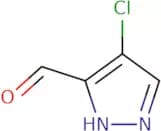
CAS :<p>4-Chloro-1H-pyrazole-3-carboxaldehyde is a fine chemical that is used as a building block in research and development. The CAS number is 623570-54-7. This compound has been found to be useful in the synthesis of complex compounds and versatile scaffolds.</p>Formule :C4H3ClN2ODegré de pureté :Min. 95%Couleur et forme :SolidMasse moléculaire :130.53 g/mol4-(Piperidin-1-ylmethyl)benzaldehyde
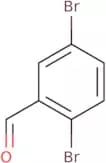
CAS :<p>4-(Piperidin-1-ylmethyl)benzaldehyde is a benzyl compound that has been shown to inhibit the activity of some imidazole compounds. It has been shown to have an agonistic effect on h3 receptors, and can be used for the treatment of anxiety disorders. This compound can be used in drug design as a linker or pharmacophore for other compounds. 4-(Piperidin-1-ylmethyl)benzaldehyde can be synthesized from commercially available materials, which makes it worth further exploration.</p>Formule :C13H17NODegré de pureté :Min. 95%Couleur et forme :PowderMasse moléculaire :203.28 g/mol2,5-Dibromobenzaldehyde
CAS :<p>2,5-Dibromobenzaldehyde is a synthetic compound that has been shown to have a red fluorescent emission. It is also thermally stable and can be used in the synthesis of quinoline derivatives. 2,5-Dibromobenzaldehyde may be used as a potential fluorescent label for viologen or amines. This compound can undergo an intermolecular Diels-Alder reaction with diacetate to form a bicyclic system, which is important to the understanding of its interactions with other compounds.</p>Formule :C7H4Br2ODegré de pureté :Min. 95%Couleur et forme :PowderMasse moléculaire :263.91 g/mol7-Isopropyl-1,4-dimethylazulene-3-carboxaldehyde
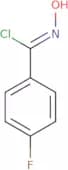
CAS :Formule :C16H18ODegré de pureté :>97.0%(GC)Couleur et forme :Gray to Dark purple to Black powder to crystalMasse moléculaire :226.32α-Chloro-4-fluorobenzaldehyde oxime
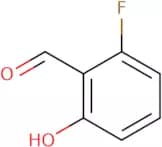
CAS :<p>Alpha-Chloro-4-fluorobenzaldehyde oxime is a selenium compound that can be stabilized with heat resistance and structuring. It is used as an additive in the plating of alloys, thermoplastics, and rubber products. Alpha-Chloro-4-fluorobenzaldehyde oxime has been shown to have anti-oxidant effects, which may be due to its ability to stabilize free radicals.</p>Formule :C7H5ClFNODegré de pureté :Min. 95%Masse moléculaire :173.57 g/mol6-Fluorosalicylaldehyde
CAS :<p>6-Fluorosalicylaldehyde is a sulfate that has been used in the synthesis of 6-fluorosalicylic acid, which is an intermediate for the production of aspirin. It also can be used to synthesize phenols and formylation products. The reaction with hydroxylamine leads to salicylaldehydes, while the reaction with methoxide leads to salicylaldehyde.<br>6-Fluorosalicylaldehyde reacts with magnesium salts in acidic conditions to produce paraformaldehyde. Deprotonation of 6-fluorosalicylaldehyde yields methoxide.</p>Formule :C7H5FO2Degré de pureté :Min. 95%Couleur et forme :PowderMasse moléculaire :140.11 g/mol3-Bromothiophene-2-carbaldehyde
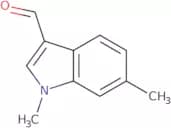
CAS :<p>3-Bromothiophene-2-carbaldehyde is an organic compound that has been shown to have antibacterial activity. It can be synthesized by reacting triethyl orthoformate with methyl ketones in the presence of a photocatalyst such as titanium dioxide or zinc oxide. This reaction produces 3-bromothiophene-2-carboxylic acid which reacts with ammonia and hydrogen bromide to form 3-bromothiophene-2-carbaldehyde. 3-Bromothiophene-2-carbaldehyde has been shown to inhibit the growth of cancer cells and induce apoptosis, which may be due to its ability to inhibit angiogenesis. The anticancer properties are most likely due to its ability to bind DNA and inhibit protein synthesis, leading to cell death.</p>Formule :C5H3BrOSDegré de pureté :Min. 95%Couleur et forme :White To Yellow To Light Brown SolidMasse moléculaire :191.05 g/mol1,6-Dimethyl-1H-indole-3-carbaldehyde
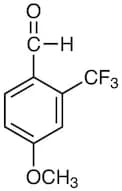
CAS :<p>1,6-Dimethyl-1H-indole-3-carbaldehyde is a compound that can be used in the synthesis of many organic and pharmaceutical compounds. It is also an intermediate for the production of other chemicals. 1,6-Dimethyl-1H-indole-3-carboxylic acid has been shown to be useful as a building block in organic synthesis, due to its versatility and reactivity. The compound is also a reagent and can be used as part of research studies. This chemical has CAS number 202584-14-3.</p>Formule :C11H11NODegré de pureté :Min. 95%Couleur et forme :PowderMasse moléculaire :173.21 g/mol4-Methoxy-2-(trifluoromethyl)benzaldehyde
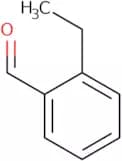
CAS :Formule :C9H7F3O2Degré de pureté :>97.0%(GC)Couleur et forme :White to Almost white powder to lumpMasse moléculaire :204.152-Ethylbenzaldehyde
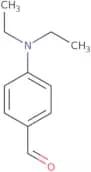
CAS :<p>2-Ethylbenzaldehyde is a colorless volatile liquid that has an odor similar to that of cloves. 2-Ethylbenzaldehyde can be found in the essential oil of nutmeg and other spices, such as cinnamon. It is used in the chemical industry as a control agent for analytical methods, such as the spectrometric determination of ether linkages. 2-Ethylbenzaldehyde has been shown to inhibit fatty acid production by bacteria and to inhibit lipid peroxidation. It also exhibits anti-inflammatory effects when exposed to cells in vitro. Exposure to 2-ethylbenzaldehyde may cause irritation of the eyes, skin, and respiratory tract, dizziness, headache, nausea and vomiting.<br>2-Ethylbenzaldehyde is generally considered safe for human consumption at low levels; however it may cause adverse health effects if ingested in large quantities or if heated over 400° F (204° Celsius).</p>Formule :C9H10ODegré de pureté :Min. 95%Couleur et forme :PowderMasse moléculaire :134.18 g/mol4-Diethylaminobenzaldehyde
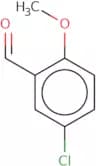
CAS :<p>4-Diethylaminobenzaldehyde is an organic compound that contains a hydroxyl group. It is a fluorescent probe and can be used to measure the transcriptional regulation of genes. This molecule has been shown to be an effective fluorescence probe for the detection of cb2 receptors in Langmuir adsorption isotherms and LC-MS/MS methods. 4-Diethylaminobenzaldehyde has also been shown to have chemopreventive properties against carcinoma cells.</p>Formule :C11H15NODegré de pureté :Min. 98%Couleur et forme :PowderMasse moléculaire :177.24 g/mol5-Chloro-2-methoxybenzaldehyde
CAS :<p>5-Chloro-2-methoxybenzaldehyde is a potent inhibitor of the bacterial enzyme acetylcholinesterase. It has been shown to have an interaction with biomolecules, such as chalcones, and can be used in the manufacture of antibacterial agents. 5-Chloro-2-methoxybenzaldehyde has been found to have potent inhibitory activity against organocatalytic aldehydes and atypical aldehydes and can be used as an active ingredient in the synthesis of novel compounds with antibacterial activity.</p>Formule :C8H7ClO2Degré de pureté :Min. 95%Couleur et forme :PowderMasse moléculaire :170.59 g/mol6-Methoxy-1-methyl-1H-indole-3-carbaldehyde
CAS :<p>6-Methoxy-1-methyl-1H-indole-3-carbaldehyde is a high quality chemical that is used as a reagent, complex compound, useful intermediate, and speciality chemical. It is a fine chemical that has been shown to be useful as a building block in the synthesis of many other compounds. 6-Methoxy-1-methyl-1H-indole-3-carbaldehyde is also versatile and can be used in reactions involving nucleophilic substitution, reductive amination, and oxidative coupling.</p>Formule :C11H11NO2Degré de pureté :Min. 95%Couleur et forme :White PowderMasse moléculaire :189.21 g/mol4-Fluoro-1H-indole-3-carbaldehyde
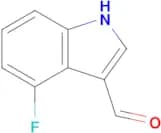
CAS :Formule :C9H6FNODegré de pureté :98%Couleur et forme :SolidMasse moléculaire :163.1514-(BUTYL(PHENYL)AMINO)BENZALDEHYDE
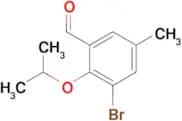
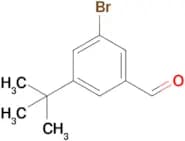
CAS :Formule :C17H19NODegré de pureté :95.0%Masse moléculaire :253.3453-Bromo-5-methyl-2-(1-methylethoxy)benzaldehyde
CAS :Degré de pureté :≥95%Masse moléculaire :257.1270142Methyl 4-(2-oxoethyl)bicyclo[2.2.1]heptane-1-carboxylate
CAS :Degré de pureté :97%Masse moléculaire :196.24600222-Amino-4-bromobenzaldehyde
CAS :Formule :C7H6BrNODegré de pureté :95%Couleur et forme :Solid, Yellow powderMasse moléculaire :200.0352,5-Dihydroxy-4-methylbenzaldehyde
CAS :Formule :C8H8O3Degré de pureté :95%Masse moléculaire :152.1491-[2-(2-fluorophenoxy)ethyl]-1H-indole-3-carbaldehyde
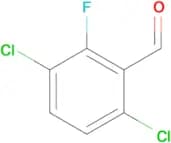
CAS :Formule :C17H14FNO2Degré de pureté :95.0%Couleur et forme :SolidMasse moléculaire :283.3023,6-Dichloro-2-fluorobenzaldehyde
CAS :Formule :C7H3Cl2FODegré de pureté :≥95%Couleur et forme :SolidMasse moléculaire :1934-(1-(Trifluoromethyl)cyclopropyl)benzaldehyde
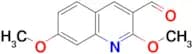
CAS :Formule :C11H9F3ODegré de pureté :95.0%Couleur et forme :No data available.Masse moléculaire :214.1872,7-Dimethoxy-quinoline-3-carbaldehyde
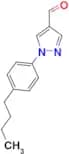
CAS :Formule :C12H11NO3Degré de pureté :95.0%Masse moléculaire :217.2241-(4-butylphenyl)-1H-pyrazole-4-carbaldehyde
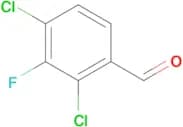
CAS :Formule :C14H16N2ODegré de pureté :95.0%Masse moléculaire :228.2952,4-DICHLORO-3-FLUOROBENZALDEHYDE
CAS :Formule :C7H3Cl2FODegré de pureté :95.0%Couleur et forme :SolidMasse moléculaire :1932-Formyl-[1,1′-biphenyl]-4,4′-dicarboxylic acid
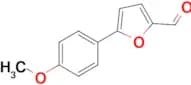
CAS :Degré de pureté :95%Masse moléculaire :270.23999025-(4-Methoxy-phenyl)-furan-2-carbaldehyde
CAS :Formule :C12H10O3Degré de pureté :95%Couleur et forme :SolidMasse moléculaire :202.2092-Ethyl-4-methyl-1H-imidazole-5-carbaldehyde
CAS :Formule :C7H10N2ODegré de pureté :97%Couleur et forme :SolidMasse moléculaire :138.17Methyl 4-formyl-2,5-dimethyl-1H-pyrrole-3-carboxylate
CAS :Degré de pureté :95+%Masse moléculaire :181.1909943









![Methyl 4-(2-oxoethyl)bicyclo[2.2.1]heptane-1-carboxylate](/_next/image/?url=https%3A%2Fstatic.cymitquimica.com%2Fproducts%2F10%2Fthumb-webp%2FF693566.webp&w=3840&q=75)


![1-[2-(2-fluorophenoxy)ethyl]-1H-indole-3-carbaldehyde](/_next/image/?url=https%3A%2Fstatic.cymitquimica.com%2Fproducts%2F10%2Fthumb-webp%2FF314769.webp&w=3840&q=75)


![2-Formyl-[1,1′-biphenyl]-4,4′-dicarboxylic acid](/_next/image/?url=https%3A%2Fstatic.cymitquimica.com%2Fproducts%2F10%2Fthumb-webp%2FF786238.webp&w=3840&q=75)
![1H-Pyrrolo[3,2-b]pyridine-6-carbaldehyde](/_next/image/?url=https%3A%2Fstatic.cymitquimica.com%2Fproducts%2F10%2Fthumb-webp%2FF608126.webp&w=3840&q=75)