Aldéhydes
Les aldéhydes sont des composés organiques contenant un groupe carbonyle (C=O) lié à au moins un atome d'hydrogène. Ces composés polyvalents sont fondamentaux dans diverses réactions chimiques, notamment l'oxydation, la réduction et l'addition nucléophile. Les aldéhydes sont des building blocks essentiels dans la synthèse de produits pharmaceutiques, de parfums et de polymères. Chez CymitQuimica, nous proposons une large sélection d'aldéhydes de haute qualité pour soutenir vos applications de recherche et industrielles.
8576 produits trouvés pour "Aldéhydes"
Trier par
Degré de pureté (%)
0
100
|
0
|
50
|
90
|
95
|
100
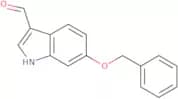
6-Benzyloxyindole-3-carboxaldehyde
CAS :6-Benzyloxyindole-3-carboxaldehyde is a benzyl compound that is produced by the catalytic hydrogenolysis of benzyl alcohol. The debenzylation product of 6-benzyloxyindole-3-carboxaldehyde is known as benzene.Formule :C16H13NO2Degré de pureté :Min. 95%Couleur et forme :PowderMasse moléculaire :251.28 g/mol2-(4-Fluorophenyl)thiazole-4-carbaldehyde
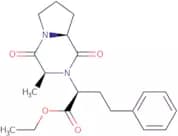
CAS :Please enquire for more information about 2-(4-Fluorophenyl)thiazole-4-carbaldehyde including the price, delivery time and more detailed product information at the technical inquiry form on this pageFormule :C10H6FNOSDegré de pureté :Min. 95%Couleur et forme :PowderMasse moléculaire :207.23 g/molEnalapril diketopiperazine
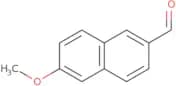
CAS :Enalapril is a potassium-sparing diuretic that belongs to the group of angiotensin-converting enzyme (ACE) inhibitors. It is used in the treatment of high blood pressure and congestive heart failure. Enalapril is activated by hydrolysis to enalaprilat, which in turn inhibits the formation of angiotensin II and prevents its effects on blood vessels and kidneys. Enalapril also prevents the conversion of captopril to enalaprilat, thereby reducing its effectiveness as an ACE inhibitor.Formule :C20H26N2O4Degré de pureté :Min. 95%Couleur et forme :PowderMasse moléculaire :358.43 g/mol6-Methoxy-2-naphthaldehyde
CAS :6-Methoxy-2-naphthaldehyde is a nonsteroidal antiinflammatory drug that belongs to the class of naphthalenes. It inhibits the formation of inflammatory prostaglandins, which are mediators of pain and inflammation. 6-Methoxy-2-naphthaldehyde has been shown to have cytotoxic effects on cancer cells and in vitro studies have shown that it can induce cell lysis. It has also been shown to be a potent fluorescence probe for use in biological applications. This compound binds to human serum proteins by hydrogen bonding interactions, which may affect its pharmacokinetic properties. In addition, this compound has been shown to inhibit the activity of detoxification enzymes such as CYP 2C9 and 2D6 at high concentrations, which may lead to unwanted side effects such as nausea or vomiting. The molecular docking analysis of 6-Methoxy-2-naphthaldehyde with the active site of human liver alcohol dehydrogenFormule :C12H10O2Degré de pureté :Min. 98 Area-%Couleur et forme :PowderMasse moléculaire :186.21 g/mol2,6-Dichloro-3-nitrobenzaldehyde
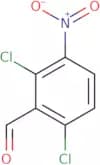
CAS :2,6-Dichloro-3-nitrobenzaldehyde (DCNB) is an electrophilic bidentate ligand that reacts with chlorine to form chloroform. It is also a good ligand for many metal ions, such as copper and nickel. DCNB can catalyze the epoxidation of alkenes to form epoxides. DCNB has been used in the industrial production of chlorinated solvents and hydrocarbons. It is a very efficient reagent for formylation, which can be used to convert alcohols and amines into formyl groups or carboxylic acids. The DCN group is also an excellent leaving group, which makes it useful as a solvent in organic syntheses. Finally, DCNB reacts with chlorine atoms to produce chloride ions that are soluble in water and organic solvents.Formule :C7H3Cl2NO3Degré de pureté :Min. 95%Masse moléculaire :220.01 g/mol3,4-Dihydroxy-5-methoxybenzaldehyde
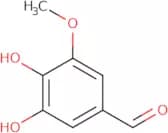
CAS :3,4-Dihydroxy-5-methoxybenzaldehyde is a synthetic compound that has shown to have inhibitory effects on the replication of DNA and RNA. It also inhibits the growth of bacteria in culture by binding to the nucleic acid. The chemical structure of 3,4-Dihydroxy-5-methoxybenzaldehyde is similar to that of bisbenzylisoquinoline alkaloids, which are found in plants such as opium poppy. This similarity may explain its ability to inhibit bacterial growth. 3,4-Dihydroxy-5-methoxybenzaldehyde may be used as a drug candidate for treating bacterial infections.Formule :C8H8O4Degré de pureté :Min. 95%Couleur et forme :PowderMasse moléculaire :168.15 g/mol2-Hydroxy-5-methoxybenzaldehyde
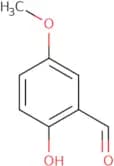
CAS :2-Hydroxy-5-methoxybenzaldehyde is a colorless, water-soluble liquid that has been used as a chemical intermediate in the synthesis of pharmaceuticals. It is also an antiinflammatory agent that inhibits acetylcholinesterase. 2-Hydroxy-5-methoxybenzaldehyde binds to copper ions by means of hydrogen bonding interactions and forms stable complexes with nitrogen atoms such as amides, nitriles, and hydrazones. 2HMB has been shown to have antiinflammatory activity in animal studies. This compound has a redox potential of -0.8 V, which indicates it can be oxidized by strong oxidizing agents or reduced by strong reducing agents.Formule :C8H8O3Degré de pureté :Min. 95%Couleur et forme :Colorless Clear LiquidMasse moléculaire :152.15 g/molLenalidomide
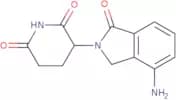
CAS :Produit contrôléInhibitor of E3 ubiquitin ligase cereblon; inducer of CK1α degradationFormule :C13H13N3O3Degré de pureté :Min. 95%Couleur et forme :PowderMasse moléculaire :259.26 g/mol5-(Trifluoromethoxy)salicylaldehyde
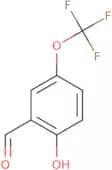
CAS :5-(Trifluoromethoxy)salicylaldehyde is a ligand that binds to the active site of the enzyme catalysis, thereby inhibiting its activity. It has been shown to be effective in colon cancer and other cancers due to its ability to inhibit protein synthesis. 5-(Trifluoromethoxy)salicylaldehyde also inhibits the production of prostaglandins, which may prevent inflammation. The compound is also used in supramolecular chemistry and biological studies as a tool for studying protein-ligand interactions. 5-(Trifluoromethoxy)salicylaldehyde has been shown to have dose-dependent effects on cell proliferation and protein synthesis.Formule :C8H5F3O3Degré de pureté :Min. 95%Couleur et forme :PowderMasse moléculaire :206.12 g/mol4-Methoxy-2,3,6-trimethylbenzaldehyde
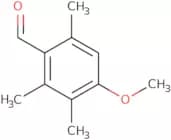
CAS :4-Methoxy-2,3,6-trimethylbenzaldehyde (MTMB) is a chemical intermediate that can be used as a building block for the synthesis of complex compounds. It has a high quality and is a versatile building block. MTMB is also known to react with other chemical compounds to form an aromatic ring. This compound is used in research and development as well as in fine chemical production.Formule :C11H14O2Degré de pureté :Min. 95%Couleur et forme :PowderMasse moléculaire :178.23 g/molUreaformaldehyde
CAS :Ureaformaldehyde is a synthetic slow-release fertilizer that contains urea and formaldehyde. It has been shown to be highly active as a slow-release fertilizer in Langmuir adsorption isotherm studies. Ureaformaldehyde also has the ability to mineralize chloride and hydrogen bond to soil particles, increasing the availability of these ions for plant uptake. Ureaformaldehyde is also used in analytical methods such as chromatographic determination of fatty acids, which are an important component of animal and vegetable oils. !--
Formule :(CH4N2O•CH2O)xDegré de pureté :Min. 95%Couleur et forme :Clear LiquidMasse moléculaire :90.08 g/mol2,4,6-Trimethoxy-3-methylbenzaldehyde
CAS :2,4,6-Trimethoxy-3-methylbenzaldehyde is a flavanone that is structurally related to the drug ciprofloxacin. The two molecules share a common molecular framework with the addition of a hydroxyl group on the 2 position of the benzene ring. In molecular docking studies, 2,4,6-Trimethoxy-3-methylbenzaldehyde has shown antitubercular activity against Mycobacterium tuberculosis and Mycobacterium avium complex. It is also an inhibitor of protein tyrosine phosphatase and has been shown to have antibacterial activity against various strains of bacteria.Formule :C11H14O4Degré de pureté :Min. 95%Couleur et forme :PowderMasse moléculaire :210.23 g/mol4-Biphenylcarboxaldehyde
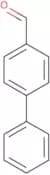
CAS :4-Biphenylcarboxaldehyde is a chemical compound that belongs to the group of hydrocarbons. It is a colorless liquid with an unpleasant odor, soluble in ether and benzene, and has a boiling point of 210 °C. 4-Biphenylcarboxaldehyde can be used as a raw material for the production of pharmaceuticals and agrochemicals. The molecular structure of this compound is unsymmetrical due to its biphenyl backbone and two carbonyl groups. Hydrochloric acid reacts with 4-biphenylcarboxaldehyde to form 2-bromoethylbenzene and hydrogen gas:Formule :C13H10ODegré de pureté :Min. 95%Couleur et forme :White PowderMasse moléculaire :182.22 g/mol4-Nitrobenzaldehyde oxime
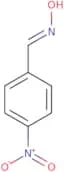
CAS :4-Nitrobenzaldehyde oxime is a phenylhydrazone derivative that is a potent cytotoxic agent. The 1,2-nitration of the benzene ring in 4-nitrobenzaldehyde oxime produces a reactive intermediate that reacts with nucleophilic groups on cellular macromolecules to produce DNA strand breaks and other types of damage. 4-Nitrobenzaldehyde oxime has been shown to have significant anticancer activity against leukemia cells in culture, as well as antibacterial and anticancer activity against Staphylococcus aureus and Escherichia coli.Formule :C7H6N2O3Degré de pureté :Min. 95%Couleur et forme :PowderMasse moléculaire :166.13 g/mol2-Bromobenzaldehyde ethylene acetal
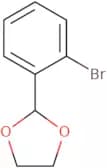
CAS :2-Bromobenzaldehyde ethylene acetal is a reactive intermediate that can be used to form allyl ethers. It is prepared by the Grignard reaction of 2-bromobenzaldehyde with an ethylene acetal. This molecule may be useful for the synthesis of dioxolanes and amines, as well as for other applications such as supramolecular chemistry and emulsions.Formule :C9H9BrO2Degré de pureté :Min. 95%Masse moléculaire :229.07 g/mol3-Methylbenzaldehyde
CAS :3-Methylbenzaldehyde is a diphenolase that is found in a Chinese medicinal plant, Acalypha wilkesiana. 3-Methylbenzaldehyde has been shown to have anti-inflammatory properties and can be used as a complementary therapy for inflammatory diseases. The chemical ionization technique was used to measure the production rate of 3-methylbenzaldehyde from the acetate extract of A. wilkesiana. The linear regression analysis showed that there was an increase in the production rate with increased concentration of hydrogen bonding interactions with 3-methylbenzaldehyde. Hydrogen bonding interactions are due to the presence of hydroxyl groups on the benzene ring and methyl group on the side chain. This chemical reaction forms glyoxal, which is then metabolized through p450 isozymes in order to produce 3-methylbenzaldehyde or other metabolites.Formule :C8H8ODegré de pureté :Min. 98 Area-%Couleur et forme :Colorless Clear LiquidMasse moléculaire :120.15 g/molGallaldehyde hemihydrate
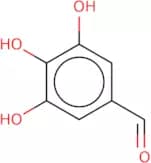
CAS :Gallaldehyde hemihydrate is a bioactive phenolic compound that inhibits the tyrosine kinase domain of the epidermal growth factor receptor (EGFR). It has been shown to inhibit tumor cell growth and induce apoptosis in cancer tissues. Gallaldehyde hemihydrate has also been found in lentils, which might be used as a potential biomarker for this compound. The optimum pH for gallaldehyde hemihydrate is between 2.0-4.0, and it can bind to cation channels and act as a potential biomarker for skin cancer cells.Formule :C7H6O4Degré de pureté :Min. 95%Couleur et forme :PowderMasse moléculaire :154.12 g/mol3-[(Dimethylamino)methyl]benzaldehyde
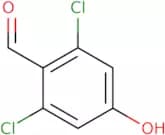
CAS :3-[(Dimethylamino)methyl]benzaldehyde is a fine chemical that is used as a versatile building block in the synthesis of pharmaceuticals. It is also a useful intermediate in the synthesis of complex compounds and research chemicals. This product has been shown to be high quality and can be used as a reagent for many reactions.Formule :C10H13NODegré de pureté :Min. 95%Masse moléculaire :163.22 g/mol2,6-Dichloro-4-hydroxybenzaldehyde
CAS :2,6-Dichloro-4-hydroxybenzaldehyde is a chlorinated organic compound that can be synthesized by the chlorination of 2,6-dichlorobenzaldehyde. It has non-polar properties and can be used as an analytical reagent. Due to its chlorine atoms, it is used in the analysis of chlorine content in water and other substances. It is a formyl derivative and a homologue of formaldehyde. There are two isomers: 2,4-dichloro-6-hydroxybenzaldehyde (2,4 DCHA) and 2,5-dichloro-6-hydroxybenzaldehyde (2,5 DCHA).Formule :C7H4Cl2O2Degré de pureté :Min. 95%Couleur et forme :Yellow PowderMasse moléculaire :191.01 g/mol2-Chloro-6-fluorobenzaldehyde
CAS :2-Chloro-6-fluorobenzaldehyde is an impurity that can be found in wastewater. It has been shown to be a reactive intermediate for the synthesis of streptochlorin, which is a natural product with potential antibiotic activity. 2-Chloro-6-fluorobenzaldehyde is produced by the reaction of chlorine and anhydrous sodium, with acid as catalyst. The molecule has two fluorine atoms and one chloride atom. This compound can also be used in the treatment of waste water due to its ability to react with hydroxyl ions and chloride ions in the presence of hydrogen chloride or hydrochloric acid. The pain model was evaluated using nmr spectra and optical properties.Formule :C7H4ClFODegré de pureté :Min. 95%Couleur et forme :White PowderMasse moléculaire :158.56 g/mol




![3-[(Dimethylamino)methyl]benzaldehyde](/_next/image/?url=https%3A%2Fstatic.cymitquimica.com%2Fproducts%2F3D%2Fthumb-webp%2FFD124097.webp&w=3840&q=75)