Aldéhydes
8576 produits trouvés pour "Aldéhydes"
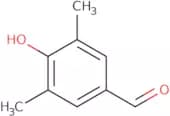
4-Hydroxy-3,5-dimethylbenzaldehyde
CAS :4-Hydroxy-3,5-dimethylbenzaldehyde (HDA) is an aromatic hydrocarbon that can be found in plants. It is a product of the oxidation of hydroxyl groups by inorganic acids and has been shown to induce hepatic steatosis in mice. This reaction is mediated by malic acid, which reacts with the benzyl group to form a cavity. The molecular modeling study of this reaction mechanism shows that the carboxylate group deprotonates, which leads to the formation of a carbocation intermediate when it attacks the aromatic ring. The aromatic ring opens up during this step, leading to a carbocation. The carbocation then collapses and hydrogen from the hydroxyl group attaches to carbon 2 on C4, forming HDA and releasing water.Formule :C9H10O2Degré de pureté :Min. 95%Couleur et forme :Off-White PowderMasse moléculaire :150.17 g/molChamigrenal
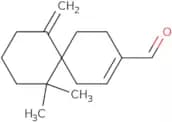
CAS :Chamigrenal is a complex enzyme that is extracted from the fruit of the chamomile plant, which has been used for centuries in Ayurvedic medicine. Chamigrenal has been shown to have anti-inflammatory and anti-allergic activities. It also binds to G-protein coupled receptors, which may be due to its eluting property. Chamigrenal contains many chemical structures, including phenolic acids, flavonoids, terpenoids, and coumarins. The molecule has been shown to inhibit the growth of human cervical carcinoma cells by binding to a receptor called factor receptor.
DEFINITION: Chamigrenal is an extract from the fruit of the chamomile plant that has been used for centuries in Ayurvedic medicine as a treatment for inflammation and allergies. It has also been shown to bind to G-protein coupled receptors and inhibit human cervical carcinoma cells by binding to a receptor called factor receptor.Formule :C15H22ODegré de pureté :Min. 98 Area-%Couleur et forme :PowderMasse moléculaire :218.33 g/mol7-Methoxy-1-naphthaldehyde
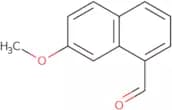
CAS :7-Methoxy-1-naphthaldehyde is an aldehyde that is synthesized from acetaldehyde and 7-methoxy-1-naphthol. It has been shown to inhibit the cytosolic aldehyde dehydrogenase, which converts acetaldehyde to acetate. This reaction is one of the major routes for the metabolism of alcohol in humans. 7-Methoxy-1-naphthaldehyde can be used as a substrate in immunochemical assays, and its synthetic scheme has been published. 7MNA was also found to have cytotoxic effects on human liver cells in vitro.Formule :C12H10O2Degré de pureté :Min. 95%Masse moléculaire :186.21 g/mol4-Methoxycinnamylidene acetaldehyde
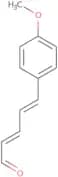
CAS :4-Methoxycinnamylidene acetaldehyde is a versatile building block with a CAS number of 27394-81-6. It is used in the research and production of fine chemicals, pharmaceuticals, and high quality reagents. 4-Methoxycinnamylidene acetaldehyde can be used as a useful scaffold for the synthesis of complex compounds. This building block is also a useful intermediate in organic chemistry reactions.
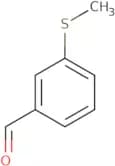
Formule :C12H12O2Degré de pureté :Min. 95%Couleur et forme :PowderMasse moléculaire :188.22 g/mol3-(Methylthio)benzaldehyde
CAS :3-(Methylthio)benzaldehyde is a molecule that can be used in the preparation of mandelic acid. It has been shown to inhibit the activity of lipase, an enzyme that breaks down fats. The cavity of 3-(methylthio)benzaldehyde has been studied by X-ray analysis and was found to have cationic character with silver ions. It also has functional groups that can be used for protein modification by enzymatic reactions.Formule :C8H8OSDegré de pureté :Min. 95%Couleur et forme :Clear LiquidMasse moléculaire :152.21 g/mol4-Methoxy-2-methylbenzaldehyde
CAS :4-Methoxy-2-methylbenzaldehyde (4MMBA) is a synthetic chemical that is used as an antifungal agent. It interacts with the cellular membranes of fungi and disrupts their ability to maintain homeostasis. 4MMBA inhibits the growth of invasive aspergillosis by inhibiting protein synthesis, which leads to cell death. The mechanism of action for 4MMBA is not well understood, but it has been shown to inhibit the growth of fungi in a model system. It also inhibits the production of pyrylium, which may be responsible for its activity against fungi.Formule :C9H10O2Degré de pureté :90%Masse moléculaire :150.17 g/mol5-Methylindole-3-carboxaldehyde
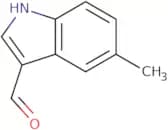
CAS :5-Methylindole-3-carboxaldehyde (5MI) is a β-unsaturated aldehydes that is used as an analyte in assays for the detection of α,β-unsaturated aldehydes. It has been shown to be effective in degranulation of cells and induces cellular degranulation. 5MI has also been shown to be an analog of other β-unsaturated aldehydes and acts competitively with these compounds.
Formule :C10H9NODegré de pureté :Min. 95%Couleur et forme :PowderMasse moléculaire :159.18 g/mol(3E)-4-(1,3-Benzodioxol-4-yl)-3-butenoic acid
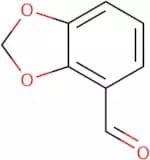
CAS :2,3-Methylenedioxybenzaldehyde is an organic compound that has been used as a chemical ionization reagent in the development of chemosensors. The formyl group in this molecule reacts with chloride to produce the corresponding formate salt, which can be detected by gas chromatography. This compound has also been shown to inhibit bacterial growth in vitro and may have potential applications as a drug substance. 2,3-Methylenedioxybenzaldehyde is an isomer of 2,4-methylenedioxybenzaldehyde, which has been shown to inhibit bacterial growth via hydrogen bonding with amines and electron deficient molecules such as chlorides. 2,3-Methylenedioxybenzaldehyde can be used for chromatographic science and the detection of drugs in urine samples.Formule :C11H10O4Degré de pureté :Min. 95%Couleur et forme :PowderMasse moléculaire :206.19 g/molCyclooctanecarbaldehyde
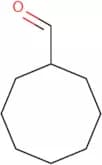
CAS :Cyclooctanecarbaldehyde is a reactive chemical that contains a hydroxyl group and hydroxy group. It is used for the production of polymers such as cyclooctyne-1,4-diol. Cyclooctanecarbaldehyde is also used to synthesize acyl halides. The compound has been shown to be cytotoxic in cancer cells. It can inhibit the production of nucleic acids, proteins and lipids in cancer cells, leading to cell death. Cyclooctanecarbaldehyde also has depression and cardiac arrhythmia effects due to its κ-opioid receptor agonist properties.Formule :C9H16ODegré de pureté :Min. 95%Couleur et forme :Clear LiquidMasse moléculaire :140.22 g/mol2,5-Dihydroxybenzaldehyde
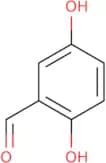
CAS :2,5-Dihydroxybenzaldehyde is a compound that can be used as an antioxidant. It is also a precursor for the synthesis of benzalkonium chloride. 2,5-Dihydroxybenzaldehyde reacts with p-hydroxybenzoic acid to form 2,5-dihydroxyphenylacetic acid and benzoic acid. The reaction mechanism of 2,5-dihydroxybenzaldehyde has been studied in detail using hl-60 cells and has been shown to be significant cytotoxicity. The hydroxyl group in this molecule creates a hydrogen bond with the carbonyl group in p-hydroxybenzoic acid and the two react together to form products. This reaction is catalyzed by Michaelis–Menten kinetics and proceeds via an electrochemical detector. Nitrogen atoms are not present in this molecule but do exist in benzalkonium chloride, which is synthesized from 2
Formule :C7H6O3Degré de pureté :Min. 95%Couleur et forme :Yellow PowderMasse moléculaire :138.12 g/mol3-Chloro-4-hydroxybenzaldehyde
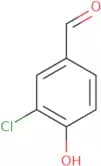
CAS :3-Chloro-4-hydroxybenzaldehyde is a molecule that belongs to the class of aldehydes. It is a monocarboxylic acid and an important precursor in the production of coumarin derivatives. 3-Chloro-4-hydroxybenzaldehyde has been shown to have pharmacokinetic properties, such as vibrational, chemical, and optical properties. It is also a fluorophore with strong fluorescence emission. The hydroxymethyl group can be programmed by adding an amine or thiol group at the 4 position on the ring of 3-chloro-4-hydroxybenzaldehyde. The addition of these groups will change the optical properties of 3-chloro-4-hydroxybenzaldehyde to make it more useful for biotechnology applications.Formule :C7H5ClO2Degré de pureté :Min. 95%Couleur et forme :PowderMasse moléculaire :156.57 g/mol3-Chloro-2,6-dihydroxy-4-methylbenzaldehyde
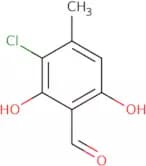
CAS :3-Chloro-2,6-dihydroxy-4-methylbenzaldehyde is a hydroxylated compound that is used in wastewater treatment. It can be found in many products including plastics and pesticides. 3-Chloro-2,6-dihydroxy-4-methylbenzaldehyde has been shown to inhibit the growth of bacteria such as Usnic Acid through its ability to react with hydrogen atoms on the bacterial cell wall and replace them with chlorine. This replacement halts the production of benzoate, which is essential for bacterial growth. The reaction mechanism has been detected using an electrochemical detector, chloroatranol.Formule :C8H7ClO3Degré de pureté :Min. 95%Couleur et forme :Off-White PowderMasse moléculaire :186.59 g/mol2-Phenoxybenzaldehyde
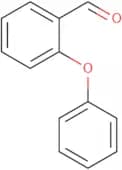
CAS :2-Phenoxybenzaldehyde is an organic compound that belongs to the heterocyclic aldehyde family. It is a white solid with a strong, pleasant odor. 2-Phenoxybenzaldehyde is used as an intermediate in organic synthesis, and has been shown to inhibit the receptor activity of human leukocyte antigen (HLA) class II molecules. The reaction mechanism for this inhibition is not known. The reaction of 2-phenoxybenzaldehyde with hydrochloric acid produces phenylhydroxylamine, which can be oxidized by inorganic acids to form phenyloxalic acid. This compound also inhibits the production of inflammatory cytokines such as TNFα and IL-1β in vitro and in vivo.Formule :C13H10O2Degré de pureté :Min. 95%Couleur et forme :Clear LiquidMasse moléculaire :198.22 g/mol6-Fluoroindole-3-carboxaldehyde
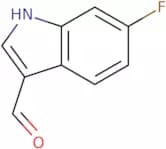
CAS :6-Fluoroindole-3-carboxaldehyde (6FLA) is a synthetic compound that inhibits biosynthesis of the phytoalexins salicylic acid and lignin in plants. It also inhibits the β-glucuronidase enzyme, which hydrolyzes the glucuronide conjugates of phenolic compounds and xenobiotics. 6FLA has been shown to cause mild liver damage in rats, but its effects on humans are unknown. 6FLA may be used as a detectable substance for assays.
Formule :C9H6FNODegré de pureté :Min. 95%Masse moléculaire :163.15 g/mol5-Hydroxy-3-methyl-1H-pyrazole-4-carbaldehyde
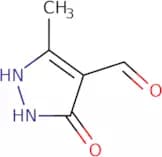
CAS :5-Hydroxy-3-methyl-1H-pyrazole-4-carbaldehyde is an organic compound that is used as a building block in the synthesis of a variety of complex compounds. It can be used as a reaction component and is also useful in the production of speciality chemicals. 5-Hydroxy-3-methyl-1H-pyrazole-4-carbaldehyde has been shown to form complexes with metals, such as copper, silver, and gold. These complexes are useful for research into catalytic reactions and electrochemistry. This chemical is also used in the production of pharmaceuticals, agrochemicals, and other high quality reagents.Formule :C5H6N2O2Degré de pureté :Min. 95%Couleur et forme :PowderMasse moléculaire :126.11 g/mol4-(N,N-Diethylamino)salicylaldehyde
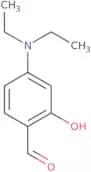
CAS :4-(N,N-Diethylamino)salicylaldehyde is a coumarin derivative that has been shown to be a fluorescent probe for proton transfer. It emits light at around 400 nm when the probe is excited by light of wavelength greater than 300 nm. The emission spectrum changes from green to red as the pH increases. 4-(N,N-Diethylamino)salicylaldehyde also exhibits fluorescence enhancement in the presence of metal ions such as Fe3+, Cu2+, or Cr3+. This compound can be used as a fluorescent probe for hydrogen bonding interactions and metal hydroxides.Formule :C11H15NO2Degré de pureté :Min. 95%Couleur et forme :PowderMasse moléculaire :193.24 g/mol3-Cyclohexene-1-carboxaldehyde
CAS :3-Cyclohexene-1-carboxaldehyde is a carbonyl reduction agent that converts primary alcohols to aldehydes. 3-Cyclohexene-1-carboxaldehyde is an effective catalyst for the reduction of alpha, beta unsaturated carbonyls. The mechanism of this reaction involves the elimination of hydrogen chloride, which forms hydrochloric acid. The reaction can be controlled by adding either alkali metal or chloride ions to the reaction mixture. This process produces 2 products: aldehyde and alkyl chlorides. 3-Cyclohexene-1-carboxaldehyde is primarily used in the production of polyethylene terephthalate (PET) and nylon 6,6 from ethylene glycol.
Formule :C7H10ODegré de pureté :Min. 95%Masse moléculaire :110.15 g/mol2-Amino-4-chlorobenzaldehyde
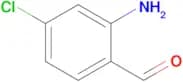
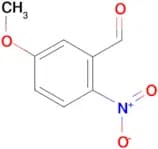
CAS :Formule :C7H6ClNODegré de pureté :97%Couleur et forme :SolidMasse moléculaire :155.585-Methoxy-2-nitrobenzaldehyde
CAS :Formule :C8H7NO4Degré de pureté :97%Couleur et forme :SolidMasse moléculaire :181.147