Aldéhydes
8588 produits trouvés pour "Aldéhydes"
Oct-7-enal
CAS :Produit contrôléStability Air Sensitive
Applications Oct-7-enal is a useful research chemical, an aliphatic aldehyde isolated from the roots of Cirsium Cipsacolepis.
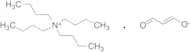
References Takano, S., et al.: Phytochemistry, 26, 435 (1987); Halle, M. B., et al.: RSC Adv., 4, 63342 (2014)Formule :C8H14OCouleur et forme :NeatMasse moléculaire :126.2N,N,N-Tributyl-1-butanaminium Salt with (E)-3-Hydroxy-2-propenal
CAS :Produit contrôléApplications N,N,N-Tributyl-1-butanaminium Salt with (E)-3-Hydroxy-2-propenal is a useful reagent for preparation of crystalline (±)-fecapentaene.
Not a dangerous good if item is equal to or less than 1g/ml and there is less than 100g/ml in the package
References Pfaendler, H., et al.: J. Am. Chem. Soc., 108, 1338 (1986);Formule :C16H36N•CH3O2Couleur et forme :Off-WhiteMasse moléculaire :242.46 + 71.062,4-Octadienal, predominantly trans,trans (Technical Grade)
CAS :Produit contrôléApplications 2,4-Octadienal, predominantly trans,trans >=95%, FG is a useful research chemical for organic synthesis and other chemical processes.
References Feng, J., et al.: J. Org. Chem., 82, 1412 (2017); Sun, S., et al.: J. Appl. Phycol., 24, 1003 (2012)Formule :C8H12OCouleur et forme :NeatMasse moléculaire :124.182-Propyl-2-heptenal (Technical Grade)
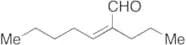
CAS :Produit contrôléApplications 2-Propyl-2-heptenal is an alkene shown as an metabolic by-product of unsaturated fatty acids metabolism to oxylipins.
References Montanari, C., et al.: J. App. Microbiol., 115, 1388 (2013);Formule :C10H18OCouleur et forme :Clear ColourlessMasse moléculaire :154.252,4-Dihydroxy-6-methylbenzaldehyde
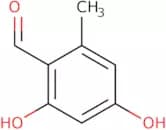
CAS :2,4-Dihydroxy-6-methylbenzaldehyde is a chemical that is found naturally in a variety of plants. It has been shown to have immunomodulatory and anti-inflammatory effects in vitro and in vivo. 2,4-Dihydroxy-6-methylbenzaldehyde has been shown to reduce the production of inflammatory molecules such as tumor necrosis factor alpha (TNFα) and interleukin 12 (IL-12) by inhibiting the activation of microglia cells. This compound also inhibits LPS induced inflammatory response in human carcinoma cells. 2,4-Dihydroxy-6 methylbenzaldehyde is currently undergoing clinical trials for its potential use in regenerative medicine.Formule :C8H8O3Degré de pureté :Min. 95%Masse moléculaire :152.15 g/mol3-(Chloromethyl)-4-methoxybenzaldehyde
CAS :3-(Chloromethyl)-4-methoxybenzaldehyde is a natural product that can be extracted from the rhizomes of the plant. It has been shown to have antibacterial activity in laboratory experiments and has been used in traditional medicine for the treatment of fungus infections. 3-(Chloromethyl)-4-methoxybenzaldehyde is an imidazolylmethyl derivative with a hexane structure. It reacts with hydrochloric acid to form a molecule called chloromethylation, which is also known as an esterification reaction. Piperazine acts as a catalyst in this reaction, increasing its scalability and making it suitable for large-scale production. The compound exhibits radical scavenging activity, which may be due to its ability to donate electrons or hydrogen atoms to free radicals.Formule :C9H9CIO2Degré de pureté :Min. 95%Masse moléculaire :288.08 g/mol3-Methyl-p-anizaldehyde
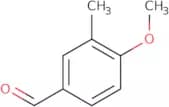
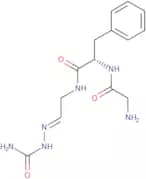
CAS :3-Methyl-p-anizaldehyde is a vanillyl alcohol, which is a natural compound that can be found in vanilla beans. It has been used in the synthesis of vanillic acid and lactams. 3-Methyl-p-anizaldehyde has been shown to react with alkyl halides to form alkylated products. These reactions are catalyzed by an enzyme called alcohol dehydrogenase. This enzyme binds to the hydroxyl group on the 3 position of the vanillin molecule, which is then oxidized to form a functional group called an acetate ester. The reaction occurs at low temperatures and can result in optical activity if it produces a chiral product. 3-Methyl-p-anizaldehyde also reacts with ecteinascidins, which are marine natural products that have potent cytotoxic properties against cancer cells.Formule :C9H10O2Degré de pureté :Min. 95%Masse moléculaire :150.17 g/molH-Gly-Phe-Gly-aldehyde semicarbazone acetate salt
CAS :Please enquire for more information about H-Gly-Phe-Gly-aldehyde semicarbazone acetate salt including the price, delivery time and more detailed product information at the technical inquiry form on this pageFormule :C14H20N6O3Degré de pureté :Min. 95%Masse moléculaire :320.35 g/mol2-Hydroxy-1-naphthaldehyde
CAS :2-Hydroxy-1-naphthaldehyde is a redox potential chemical that has been shown to have anticancer activity in vitro and in vivo. It inhibits the growth of cells by binding to iron, which is important for many biological processes including DNA synthesis. 2-Hydroxy-1-naphthaldehyde has also been shown to have metal carbonyl reactivity and fluorescence properties that may be useful as a fluorescent probe. 2-Hydroxy-1-naphthaldehyde binds to iron ions through hydrogen bonding interactions, forming an octahedral complex with six ligands. The compound also has coordination geometry that can be described as either trigonal bipyramidal or square planar, depending on the solvent used. This data was obtained by x-ray diffraction studies of crystalline solids. The compound's Langmuir adsorption isotherm was found to be linear at low concentrations and shifted to nonlinear behavior at higher concentrations. TheFormule :C11H8O2Degré de pureté :Min. 95%Couleur et forme :SolidMasse moléculaire :172.18 g/molAdrenalone
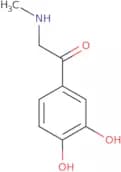
CAS :Produit contrôléAdrenalone is a caffeic acid derivative that contains a hydroxyl group. It is used in the treatment of infectious diseases, bowel disease, and autoimmune diseases. Adrenalone inhibits bacterial growth by interfering with cell wall synthesis, which prevents the formation of new cell walls and leads to bacterial death. It also inhibits the production of dopamine by acting on an amine oxidase enzyme. This drug has been shown to be effective in treating inflammatory bowel disease (IBD) in both mice and humans due to its ability to inhibit pro-inflammatory cytokines such as TNF-α, IL-1β, and IL-6.
Formule :C9H11NO3Degré de pureté :Min. 95%Couleur et forme :Colourless To Pale Yellow SolidMasse moléculaire :181.19 g/mol4-Bromo-2-hydroxybenzaldehyde
CAS :4-Bromo-2-hydroxybenzaldehyde is a versatile building block that can be used as a reaction component to synthesize other compounds. 4-Bromo-2-hydroxybenzaldehyde is a useful intermediate in the manufacture of pharmaceuticals, pesticides, and herbicides. This chemical also has various applications in research and industry. It is an important reagent for the production of polymers and resins, as well as being an essential raw material for the synthesis of pharmaceuticals and agrochemicals.
Formule :C7H5BrO2Masse moléculaire :201.02 g/molRef: 3D-W-201939
-Unit-ggÀ demander25gÀ demander50gÀ demander100gÀ demander250gÀ demander500gÀ demanderSuccinicsemialdehyde
CAS :Succinicsemialdehyde is a semialdehyde that is formed by the oxidative degradation of succinic acid. Succinicsemialdehyde has been shown to have high affinity for 5-HT3 receptors, which are found in the gastrointestinal tract and are involved in intestinal motility and bowel disease. The 5-HT3 receptor has been shown to be an important target for the treatment of irritable bowel syndrome. This semialdehyde also inhibits polymerase chain reaction (PCR) activity, which may be due to its ability to inhibit DNA synthesis. Succinicsemialdehyde has been shown to inhibit enzymes involved in energy metabolism, such as glutamate dehydrogenase and pyruvate formate lyase. The structural analysis of this molecule shows a keto group at C2, which indicates that it is a keto acid.
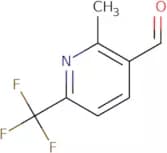
Formule :C4H6O3Degré de pureté :Min. 95%Couleur et forme :PowderMasse moléculaire :102.09 g/mol2-Methyl-6-(trifluoromethyl)nicotinaldehyde
CAS :Please enquire for more information about 2-Methyl-6-(trifluoromethyl)nicotinaldehyde including the price, delivery time and more detailed product information at the technical inquiry form on this page
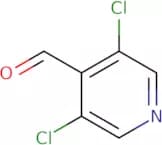
Formule :C8H6F3NODegré de pureté :Min. 95%Masse moléculaire :189.13 g/mol3,5-Dichloro-4-pyridinecarboxaldehyde
CAS :3,5-Dichloro-4-pyridinecarboxaldehyde is a synthetic heterocycle that has been studied for its pharmacokinetic properties. The compound has the ability to bind to the active site of metalloporphyrin and inhibit the enzyme's activity. This inhibition leads to an increase in the levels of homologous aldehydes, which are oxidized by hydrogen peroxide to produce electrosprays. 3,5-Dichloro-4-pyridinecarboxaldehyde also has a number of oxidation products that have been found in experiments using purines as substrates.
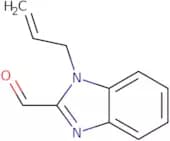
Formule :C6H3Cl2NODegré de pureté :Min. 95%Masse moléculaire :176 g/mol1-Allyl-1H-benzimidazole-2-carbaldehyde
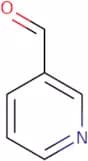
CAS :1-Allyl-1H-benzimidazole-2-carbaldehyde is a dipolar compound that can be synthesized from the reaction of 1,3-diphenylazomethine and allyl bromide. It is an orange solid that has been shown to form cycloadducts with alkenes. The selectivity of this reaction depends on the substituents on both reactants, with electron withdrawing groups increasing the rate of substitution. Dipolar cycloaddition theory predicts that 1-allyl-1H-benzimidazole-2-carbaldehyde undergoes intramolecular cycloaddition to form a six membered ring in which one carbon atom is shared between two adjacent atoms.Formule :C11H10N2ODegré de pureté :Min. 95%Couleur et forme :SolidMasse moléculaire :186.21 g/molPyridine-3-carboxaldehyde
CAS :Pyridine-3-carboxaldehyde is a heterocyclic compound that is structurally related to nicotinic acid and picolinic acid. It has been shown to have anti-tumor activity, with hl-60 cells as the model system. Pyridine-3-carboxaldehyde has also been shown to be toxic to bacteria in biological studies. The chemical stability of this compound was studied by Langmuir adsorption isotherm and electrochemical impedance spectroscopy. It was found that pyridine-3-carboxaldehyde is stable at a pH range of 7 to 8 and at temperatures up to 60 degrees Celsius.Formule :C6H5NODegré de pureté :Min. 95%Couleur et forme :Clear LiquidMasse moléculaire :107.11 g/molParaformaldehyde
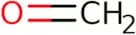
CAS :Paraformaldehyde is a carcinogenic substance that belongs to the family of heterocyclic compounds. It reacts with water vapor in the air to form formaldehyde, which is responsible for its fluorescence properties. Paraformaldehyde has been used as a probe for DNA and RNA and can be used as an indicator for nonsteroidal anti-inflammatory drugs. The reaction mechanism of paraformaldehyde is not well understood and it has been shown that it reacts with p-hydroxybenzoic acid, polymerase chain, and water vapor. This compound can be found in soybean extract or fetal bovine serum. Paraformaldehyde is usually detected using a plate test or analytical methods such as high performance liquid chromatography (HPLC).
Formule :(CH2O)nDegré de pureté :90%MinCouleur et forme :White Clear LiquidBenalaxyl
CAS :Benalaxyl is an insecticide that belongs to the group of organochlorine compounds. It is a chiral compound that has been used in analytical methods for wastewater treatment and as an anti-fouling agent. Benalaxyl has been shown to possess acute toxicity, based on the results of redox cycle experiments, cell nuclei studies, enzyme activities, and rat liver microsomes. Toxicological studies have also shown that benalaxyl can cause high levels of resistance in nutrient solutions, energy metabolism, and synthesis methods.
Formule :C20H23NO3Degré de pureté :Min. 95%Masse moléculaire :325.4 g/mol4-tert-Butylbenzaldehyde
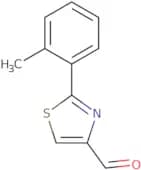
CAS :4-tert-Butylbenzaldehyde is an organic compound with the molecular formula CH3COCH2C6H5. It is a viscous liquid that is insoluble in water and has a boiling point of 146 °C. 4-tert-Butylbenzaldehyde reacts with cationic surfactants to form polymeric micelles, which are spherical structures composed of many small spherical subunits. These polymeric micelles are used as model systems for studying the properties of surfactant aggregates in solution. The reaction mechanism for this polymerization process involves the oxidation of 4-tert-butylbenzaldehyde by hydrogen peroxide and the subsequent condensation of 4-tert-butylbenzoic acid with malonic acid or other cinnamic acid derivatives to form the corresponding esters. The oxidized product, 4-tert-butylbenzoic acid, can be regenerated by boiling a mixture containing itFormule :C11H14ODegré de pureté :Min. 96.5%Couleur et forme :Colorless Clear LiquidMasse moléculaire :162.23 g/mol2-O-Tolyl-thiazole-4-carbaldehyde
CAS :Please enquire for more information about 2-O-Tolyl-thiazole-4-carbaldehyde including the price, delivery time and more detailed product information at the technical inquiry form on this page
Formule :C11H9NOSDegré de pureté :Min. 95%Masse moléculaire :203.26 g/mol