Lactones
Les lactones sont une classe d'esters caractérisés par une structure cyclique formée par l'estérification intramoléculaire des acides hydroxyliques. Ces composés sont connus pour leurs structures annulaires distinctives, qui peuvent varier de trois à sept membres ou plus. Les lactones sont largement utilisées dans l'industrie des arômes et des parfums en raison de leurs arômes agréables, ainsi que dans les produits pharmaceutiques et agrochimiques pour leurs diverses activités biologiques. Chez CymitQuimica, nous proposons une sélection complète de lactones de haute qualité pour soutenir vos applications de recherche et industrielles, garantissant des performances fiables et efficaces dans vos projets.
490 produits trouvés pour "Lactones"
Trier par
Degré de pureté (%)
0
100
|
0
|
50
|
90
|
95
|
100
Isosibiricin
CAS :<p>Isosibiricin is a naturally occurring lignan, which is extracted from certain plant sources. This compound is derived from the genus Daphne, traditionally known for its diverse range of biologically active constituents. Its mode of action is primarily through the modulation of key signaling pathways involved in cell proliferation and apoptosis. Isosibiricin exhibits notable inhibitory effects on specific enzymes and receptors implicated in oncogenic processes, making it a subject of interest for cancer research.</p>Formule :C16H18O5Degré de pureté :Min. 95%Couleur et forme :PowderMasse moléculaire :290.31 g/molColumbianadin
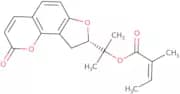
CAS :<p>Columbianadin is a coumarin derivative, which is a natural compound primarily extracted from plants in the Apiaceae family, such as Angelica species. This natural product possesses a unique molecular structure characterized by the presence of a coumarin skeleton, which is responsible for its diverse biological activities.</p>Formule :C19H20O5Degré de pureté :Min. 98 Area-%Couleur et forme :PowderMasse moléculaire :328.36 g/molAlloisoimperatorin
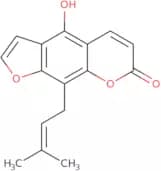
CAS :<p>Alloisoimperatorin is a naturally occurring furanocoumarin compound, which is extracted from certain plant species, primarily those belonging to the Apiaceae family. As a type of coumarin derivative, it is synthesized through intricate plant metabolic pathways involving the precursors umbelliferone and isopentenyl pyrophosphate, among others.</p>Formule :C16H14O4Degré de pureté :Min. 95%Masse moléculaire :270.28 g/molSuberosin
CAS :<p>Suberosin is a naturally occurring sesquiterpene lactone, which is isolated from members of the Rutaceae family, such as the plant Feronia limonia. The compound exhibits diverse biological activities, primarily attributed to its complex structure that facilitates interaction with various biological targets. Suberosin's mode of action involves disrupting microbial cell membranes and interfering with critical biochemical pathways, effectively inhibiting microbial growth and propagation.</p>Formule :C15H16O3Degré de pureté :Min. 95%Masse moléculaire :244.29 g/molXanthotoxol
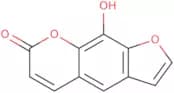
CAS :<p>Xanthotoxol is a naturally occurring furanocoumarin, which is derived from various plant species, primarily within the Apiaceae family. This compound exhibits its biological activity through several mechanisms, including the inhibition of enzyme pathways, modulation of signaling pathways, and interaction with cellular proteins, impacting various physiological processes.</p>Formule :C11H6O4Degré de pureté :Min. 95%Couleur et forme :Brown PowderMasse moléculaire :202.16 g/molEllagic Acid
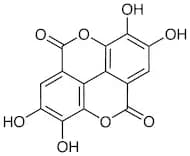
CAS :Formule :C14H6O8Degré de pureté :>95.0%(T)(HPLC)Couleur et forme :White to Light yellow powder to crystalMasse moléculaire :302.196'-Dehydromarmin
CAS :<p>6'-Dehydromarmin is a natural product, classified as a coumarin derivative, which is primarily sourced from certain plant species, notably within the Rutaceae family. This compound arises through the biochemical transformation of secondary metabolites in plants, typically involving oxidation processes that occur under specific enzymatic conditions.</p>Formule :C19H22O5Degré de pureté :Min. 95%Masse moléculaire :330.37 g/molDecursidin
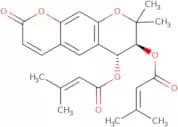
CAS :<p>Decursidin is a chemical compound, classified as a coumarin derivative, which is a bioactive constituent derived from the roots of the Angelica gigas plant. This compound is prominent for its pharmacological activities, attributed to its distinct chemical structure.</p>Degré de pureté :Min. 95%5,7-Dihydroxy-4-methyl-2H-chromen-2-one Monohydrate
CAS :Produit contrôlé<p>Applications 5,7-dihydroxy-4-methyl-2H-chromen-2-one (cas# 2107-76-8) is a useful research chemical.<br></p>Formule :C10H8O4•H2OCouleur et forme :NeatMasse moléculaire :210.181802Isobergapten
CAS :<p>Isobergapten is a naturally occurring furanocoumarin, which is primarily derived from plants in the Apiaceae family, such as celery and parsley. The compound is structurally characterized by its fused furan and coumarin rings. It exerts its effects through its ability to interact with cellular enzymes and DNA, often influencing photodynamic processes. This interaction can result in modifications to DNA replication and transcription, making it a compound of interest in photochemotherapy and photobiology.</p>Formule :C12H8O4Degré de pureté :Min. 95%Couleur et forme :PowderMasse moléculaire :216.19 g/molFraxetin
CAS :<p>Fraxetin is a chemical compound known as a coumarin derivative, which is a natural product primarily sourced from various plant species. As a member of the coumarin family, fraxetin is often extracted from the roots, bark, and leaves of plant sources like Fraxinus species and other related flora. The compound operates through an array of biochemical pathways, prominently exhibiting antioxidant and anti-inflammatory properties. It acts by scavenging free radicals and modulating oxidative stress-related pathways, while also influencing the expression of various inflammatory cytokines.</p>Formule :C10H8O5Masse moléculaire :208.17 g/molRef: 3D-Q-100662
1gÀ demander5gÀ demander10gÀ demander500mgÀ demander2500mgÀ demander-Unit-ggÀ demanderDaphnetin-8-methyl ether
CAS :<p>Daphnetin-8-methyl ether is a naturally derived coumarin compound, which is predominantly sourced from the Daphne genus of plants, among other botanical species known for their therapeutic potential. This compound is recognized for its biochemical interaction with key cellular pathways, particularly through the modulation of enzymes and receptors associated with inflammatory and oxidative stress responses.</p>Formule :C10H8O4Degré de pureté :Min. 95%Masse moléculaire :192.17 g/molArnottinin
CAS :<p>Arnottinin is a bioactive compound, which is derived from natural plant sources. It functions primarily through modulation of specific cellular pathways, targeting key receptors that regulate physiological responses. This compound exhibits its mode of action by influencing signal transduction pathways, effectively altering cellular activities at the molecular level.</p>Formule :C14H14O4Degré de pureté :Min. 95%Masse moléculaire :246.26 g/molScopoletin-2',3'-epoxy-3'-methylbutyl ether
<p>Scopoletin-2',3'-epoxy-3'-methylbutyl ether is a synthetic derivative of scopoletin, which is a coumarin compound. This ether derivative is primarily obtained from chemical synthesis processes designed to modify the parent compound, scopoletin, which is naturally found in various plants, such as those in the Asteraceae and Rubiaceae families. The mode of action typically involves the modulation of biochemical pathways, primarily through interacting with enzymes or receptors that regulate oxidative stress or inflammation.</p>Degré de pureté :Min. 95%7-Amino-4-(methoxymethyl)coumarin
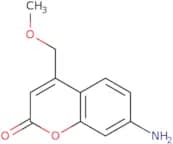
CAS :<p>7-Amino-4-(methoxymethyl)coumarin is a fluorogenic compound, which is synthesized chemically for bioanalytical applications. This compound serves as a substrate in enzyme assays and is particularly valuable in studying enzymatic activity due to its fluorescent properties.</p>Formule :C11H11NO3Degré de pureté :Min. 95%Masse moléculaire :205.21 g/molAnomelin
<p>Anomelin is a synthetic anticancer compound, which is derived from complex organic synthesis methodologies. This compound is typically produced through careful laboratory processes due to its intricate chemical structure, which is crafted to target specific molecular pathways involved in cancer cell proliferation.</p>Degré de pureté :Min. 95%trans-Khellactone
CAS :<p>Trans-Khellactone is a naturally occurring lactone derivative, which is isolated from plants of the Apiaceae family. This compound exhibits a variety of biological functions due to its unique chemical structure, which includes a dihydropyran ring. Trans-Khellactone's mode of action involves interacting with various cellular pathways, potentially modulating enzyme activity, receptor binding, and influencing signal transduction processes.</p>Formule :C14H14O5Degré de pureté :Min. 95%Masse moléculaire :262.26 g/mol7-Prenyloxyumbelliferone
<p>7-Prenyloxyumbelliferone is a natural coumarin derivative, which is primarily sourced from plants belonging to the Rutaceae and Apiaceae families. This compound exhibits a range of biological activities, including anti-inflammatory, antioxidant, and antimicrobial properties. The mode of action of 7-Prenyloxyumbelliferone involves the modulation of specific enzymes and signaling pathways, such as the inhibition of cyclooxygenase and lipoxygenase, and the scavenging of free radicals, which collectively contribute to its pharmacological effects.</p>Degré de pureté :Min. 95%3-(α-Acetonylbenzyl)-4-hydroxycoumarin sodium
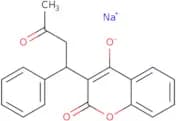
CAS :<p>3-(α-Acetonylbenzyl)-4-hydroxycoumarin sodium is an anticoagulant compound, which is a synthetic derivative of coumarin. It is primarily sourced via chemical synthesis in laboratory settings. Its mode of action involves inhibiting the synthesis of vitamin K-dependent clotting factors, specifically factors II, VII, IX, and X. This inhibition impairs blood coagulation, leading to uncontrolled bleeding.</p>Formule :C19H15NaO4Degré de pureté :Min. 95%Couleur et forme :White PowderMasse moléculaire :330.31 g/molVaginidin
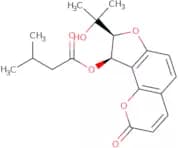
CAS :<p>Please enquire for more information about Vaginidin including the price, delivery time and more detailed product information at the technical inquiry form on this page</p>Formule :C19H22O6Degré de pureté :Min. 95%Masse moléculaire :346.37 g/mol