Anneaux à 6 chaînons
Les cycles à 6 membres sont des composés contenant un cycle à six atomes dans leur structure. Cette catégorie inclut une grande variété de composés tels que les benzènes, cyclohexanes, anilines, anisoles, toluènes, quinones et hétérocycles à six membres. Ces composés sont essentiels dans de nombreuses synthèses et applications chimiques. Chez CymitQuimica, nous proposons une gamme complète de composés à cycles de 6 membres pour soutenir vos recherches et applications industrielles.
Sous-catégories appartenant à la catégorie "Anneaux à 6 chaînons"
- Hétérocycles à 6 chaînons(61.203 produits)
- Anilines(104 produits)
- Anisoles(29 produits)
- Benzènes(48.596 produits)
- Cyclohexanes(3.054 produits)
- Quinones(252 produits)
- Toluènes(189 produits)
10218 produits trouvés pour "Anneaux à 6 chaînons"
Trier par
Degré de pureté (%)
0
100
|
0
|
50
|
90
|
95
|
100
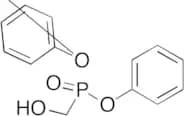
Diphenyl (Hydroxymethyl)phosphonate
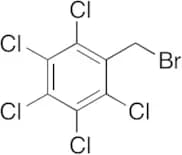
CAS :Produit contrôlé<p>Applications Diphenyl (Hydroxymethyl)phosphonate is a reagent for the synthesis of amidate prodrugs of novel nucleoside phosphonate HIV reverse transcriptase (RT) inhibitor GS-9148.<br>References Mackman, R. L., et al.: Bioorg. Med. Chem., 18, 3606 (2010)<br></p>Formule :C13H13O4PCouleur et forme :NeatMasse moléculaire :264.214α-Bromo-2,3,4,5,6-pentachlorotoluene
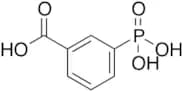
CAS :Produit contrôlé<p>Applications α-Bromo-2,3,4,5,6-pentachlorotoluene is used to prepare trisubstituted symmetrical triazines containing halobenzyl groups as flame retardants.<br>References Herzlinger, A., et al.: Eur. Pat. Appl. (1989), EP 305196 A2 19890301<br></p>Formule :C7H2BrCl5Couleur et forme :NeatMasse moléculaire :343.263-Phosphonobenzoic Acid
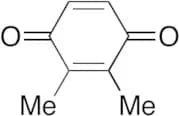
CAS :Produit contrôlé<p>Applications 3-Phosphonobenzoic Acid (cas# 14899-31-1) is a useful research chemical.<br></p>Formule :C7H7O5PCouleur et forme :NeatMasse moléculaire :202.12,3-Dimethylbenzoquinone
CAS :Produit contrôlé<p>Applications 2,3-Dimethylbenzoquinone is a reagent in the preparation of hydroxycinnolines which has antifungal activity.<br>References Ryu, C., et al.: Bioorg. Med. Chem. Lett., 16, 1850 (2006)<br></p>Formule :C8H8O2Couleur et forme :NeatMasse moléculaire :136.15(2S,5R)-5-[(tert-Butoxycarbonyl)amino]tetrahydro-2H-pyran-2-carboxylic Acid
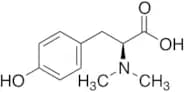
CAS :Produit contrôléFormule :C11H19NO5Couleur et forme :NeatMasse moléculaire :245.272N,N-Dimethyl L-Tyrosine
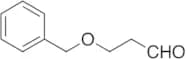
CAS :Produit contrôléFormule :C11H15NO3Couleur et forme :NeatMasse moléculaire :209.2423-(Phenylmethoxy)propanal
CAS :Produit contrôléFormule :C10H12O2Couleur et forme :NeatMasse moléculaire :164.2011,2,4,5-Benzenetetracarboxylic Acid
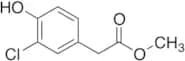
CAS :Produit contrôlé<p>Applications 1,2,4,5-BENZENETETRACARBOXYLIC ACID (cas# 89-05-4) is a useful research chemical.<br></p>Formule :C10H6O8Couleur et forme :NeatMasse moléculaire :254.15Methyl 3-Chloro-4-hydroxyphenylacetate
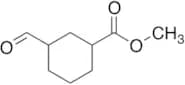
CAS :Produit contrôlé<p>Applications methyl 3-chloro-4-hydroxyphenylacetate (cas# 57017-95-5) is a useful research chemical.<br></p>Formule :C9H9ClO3Couleur et forme :NeatMasse moléculaire :200.61methyl 3-formylcyclohexane-1-carboxylate
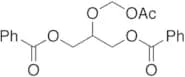
CAS :Produit contrôlé<p>Applications methyl 3-formylcyclohexane-1-carboxylate (cas# 50738-62-0) is a useful research chemical.<br></p>Formule :C9H14O3Couleur et forme :NeatMasse moléculaire :170.212-(Acetoxymethoxy)-1,3-propanediyl Dibenzoate
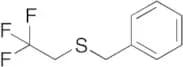
CAS :Produit contrôlé<p>Applications 2-(Acetoxymethoxy)-1,3-propanediyl Dibenzoate (cas# 110874-22-1) is a compound useful in organic synthesis.<br></p>Formule :C20H20O7Couleur et forme :NeatMasse moléculaire :372.37Benzyl 2,2,2-Trifluoroethyl Sulphide
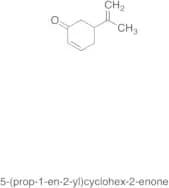
CAS :<p>Applications Benzyl 2,2,2-Trifluoroethyl Sulphide is a useful intermediate for the preparation of trifluoroethanesulfonic acid<br>References Bunyagidj, C., et al.: J. Org. Chem., 46, 3335 (1981)<br></p>Formule :C9H9F3SCouleur et forme :NeatMasse moléculaire :206.2285-(Prop-1-en-2-yl)cyclohex-2-enone
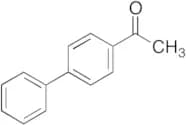
CAS :Produit contrôléFormule :C9H12OCouleur et forme :NeatMasse moléculaire :136.1914-Acetylbiphenyl
CAS :Produit contrôlé<p>Applications 4-Acetylbiphenyl is a biphenyl compound that can be prepared via Suzuki-Miyaura and Buchwald-Hartwig reactions of aryl halides or triflates with arylboronic acid and palladium catalysts.<br>References Littke, A., et al.: J. Am. Chem. Soc., 122, 4020 (2000); Marion, N., et al.: J. Am. Chem. Soc., 128, 4101 (2006);<br></p>Formule :C14H12OCouleur et forme :NeatMasse moléculaire :196.24(5-Benzyloxyindol-3-yl)acetonitrile
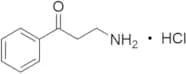
CAS :Produit contrôléFormule :C17H14N2OCouleur et forme :NeatMasse moléculaire :262.3063-Amino-1-phenylpropan-1-one Hydrochloride
CAS :Produit contrôléFormule :C9H12ClNOCouleur et forme :NeatMasse moléculaire :185.6517-Amino-2,3-dihydro-1,4,-benzoxazepine 1,1-Dimethyl Ester
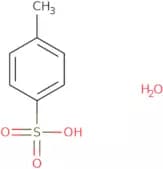
CAS :Produit contrôléFormule :C14H20N2O3Couleur et forme :NeatMasse moléculaire :264.32p-Toluenesulfonic acid monohydrate
CAS :<p>p-Toluenesulfonic acid monohydrate is a white, crystalline solid that is soluble in water. It is used as a catalyst for the synthesis of various organic compounds and pharmaceuticals. p-Toluenesulfonic acid monohydrate has been shown to have an effect on the thermal expansion of certain polymers and to be useful for preparation of medicinal preparations with high uptake. This compound can also be used as a carbon source for the production of various organic compounds.</p>Formule :CH3C6H4SO3H·H2OCouleur et forme :PowderMasse moléculaire :190.22 g/mol2-Bromo-1,3,5-triisopropylbenzene
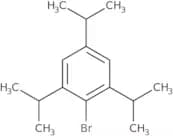
CAS :<p>2-Bromo-1,3,5-triisopropylbenzene is an ethylene acetal that is prepared by the catalyzed reaction of aryl chlorides and anhydrous zinc bromide in the presence of triethylamine. The selectivities of this method are high because it can produce mainly a single isomer. The stereoselectivity is also high because the reaction proceeds with the formation of only one stereoisomer. The mechanism for this reaction involves a nucleophilic substitution of the halogenated aryl chloride with the trialkylborane, which generates two different products. This product has been used in the synthesis of biphenyls and nitro compounds.</p>Formule :C15H23BrDegré de pureté :Min. 95%Couleur et forme :Colorless Clear LiquidMasse moléculaire :283.25 g/mol1-Bromo-2-fluoro-3-nitrobenzene
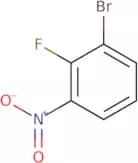
CAS :<p>1-Bromo-2-fluoro-3-nitrobenzene is a synthetic chemical that is used as an intermediate in the synthesis of various dyes. It can be obtained by the diazotization of acetyl nitrite and acetonitrile, followed by acetylation with acetic anhydride and hydrolysis with sodium hydroxide. The bromoaniline formed after this reaction is then converted to 1-bromo-2-fluoro-3-nitrobenzene by refluxing it with nitric acid. This chemical can also be synthesized from bromines and chloride in the presence of a diazo salt. It reacts with fluoride or halogens to produce fluorobenzene derivatives, which are used as intermediates for other organic compounds.</p>Formule :C6H3BrFNO2Degré de pureté :Min. 95%Couleur et forme :Yellow PowderMasse moléculaire :220 g/mol

![(2S,5R)-5-[(tert-Butoxycarbonyl)amino]tetrahydro-2H-pyran-2-carboxylic Acid](/_next/image/?url=https%3A%2Fstatic.cymitquimica.com%2Fproducts%2FTR%2Fthumb-webp%2FB690890.webp&w=3840&q=75)