Anneaux à 6 chaînons
Les cycles à 6 membres sont des composés contenant un cycle à six atomes dans leur structure. Cette catégorie inclut une grande variété de composés tels que les benzènes, cyclohexanes, anilines, anisoles, toluènes, quinones et hétérocycles à six membres. Ces composés sont essentiels dans de nombreuses synthèses et applications chimiques. Chez CymitQuimica, nous proposons une gamme complète de composés à cycles de 6 membres pour soutenir vos recherches et applications industrielles.
Sous-catégories appartenant à la catégorie "Anneaux à 6 chaînons"
- Hétérocycles à 6 chaînons(61.203 produits)
- Anilines(104 produits)
- Anisoles(29 produits)
- Benzènes(48.596 produits)
- Cyclohexanes(3.054 produits)
- Quinones(252 produits)
- Toluènes(189 produits)
10218 produits trouvés pour "Anneaux à 6 chaînons"
Trier par
Degré de pureté (%)
0
100
|
0
|
50
|
90
|
95
|
100
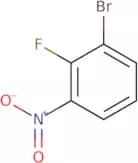
1-Bromo-2-fluoro-3-nitrobenzene
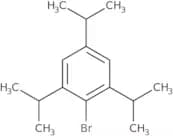
CAS :<p>1-Bromo-2-fluoro-3-nitrobenzene is a synthetic chemical that is used as an intermediate in the synthesis of various dyes. It can be obtained by the diazotization of acetyl nitrite and acetonitrile, followed by acetylation with acetic anhydride and hydrolysis with sodium hydroxide. The bromoaniline formed after this reaction is then converted to 1-bromo-2-fluoro-3-nitrobenzene by refluxing it with nitric acid. This chemical can also be synthesized from bromines and chloride in the presence of a diazo salt. It reacts with fluoride or halogens to produce fluorobenzene derivatives, which are used as intermediates for other organic compounds.</p>Formule :C6H3BrFNO2Degré de pureté :Min. 95%Couleur et forme :Yellow PowderMasse moléculaire :220 g/mol2-Bromo-1,3,5-triisopropylbenzene
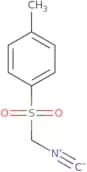
CAS :<p>2-Bromo-1,3,5-triisopropylbenzene is an ethylene acetal that is prepared by the catalyzed reaction of aryl chlorides and anhydrous zinc bromide in the presence of triethylamine. The selectivities of this method are high because it can produce mainly a single isomer. The stereoselectivity is also high because the reaction proceeds with the formation of only one stereoisomer. The mechanism for this reaction involves a nucleophilic substitution of the halogenated aryl chloride with the trialkylborane, which generates two different products. This product has been used in the synthesis of biphenyls and nitro compounds.</p>Formule :C15H23BrDegré de pureté :Min. 95%Couleur et forme :Colorless Clear LiquidMasse moléculaire :283.25 g/mol4-Toluenesulfonylmethylisonitrile
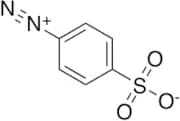
CAS :<p>4-Toluenesulfonylmethylisonitrile is a potent antagonist of the malonic acid receptor that has been shown to be reactive. It is synthesized by reacting methyl ketones with trifluoroacetic acid and nitrogen gas in the presence of a catalyst. The reaction mechanism has been studied using gravimetric analysis and the thermodynamic data have been calculated for fatty acids. 4-Toluenesulfonylmethylisonitrile can be used to make esters.</p>Formule :C9H9NO2SDegré de pureté :Min. 95%Couleur et forme :Off-White To Yellow SolidMasse moléculaire :195.24 g/mol4-Diazobenzenesulfonic Acid
CAS :<p>Applications 4-Diazobenzenesulfonic acid (cas# 305-80-6) is a useful research chemical.<br></p>Formule :C6H4N2O3SMasse moléculaire :184.174-Chlorobenzenethiol
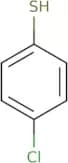
CAS :<p>4-Chlorobenzenethiol is a chemical compound that contains a fatty acid. It is an intramolecular hydrogen donor with the ability to form a disulfide bond. The compound also has high stability and can be used in organic synthesis reactions involving reactive sulfur groups. 4-Chlorobenzenethiol reacts with sodium carbonate to produce sodium thiocarbonate and chloroform, which are then reacted with phosphorus pentoxide for oxidation. The reaction mechanism is similar to that of the Diels-Alder reaction and the model system involves dinucleotide phosphate. 4-Chlorobenzenethiol can be reacted with hydrochloric acid or trifluoroacetic acid as an oxidizing agent.</p>Formule :C6H5ClSDegré de pureté :Min. 95%Couleur et forme :White PowderMasse moléculaire :144.62 g/molSodium 4-hydroxybenzenesulfonate dihydrate
CAS :<p>Sodium 4-hydroxybenzenesulfonate dihydrate is a hydrogenated compound with reactive properties. It is used in the production of optical materials and is used to produce hydrogen peroxide, which is a strong oxidizing agent. Sodium 4-hydroxybenzenesulfonate dihydrate has been shown to react with calcium ions to form calcium sulfinates. The luminescence property of this compound can be enhanced by mixing it with other compounds such as x-ray diffraction study, functional groups, or hydrogen peroxide. The reaction time for the formation of sodium 4-hydroxybenzenesulfonate dihydrate can be shortened by adding anions such as sulfamic acid.</p>Formule :C6H5NaO4S·2H2ODegré de pureté :Min. 95%Couleur et forme :White To Off-White SolidMasse moléculaire :232.19 g/mol4-Acetamidobenzenesulfonyl azide
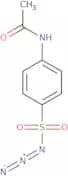
CAS :<p>4-Acetamidobenzenesulfonyl azide (4ABS) is a low detection reagent that can be used for the determination of 4-acetamidobenzoic acid. It reacts with the amine group in 4-acetamidobenzoic acid to form a sulfonamide intermediate and releases an azide ion. The linear calibration curve was obtained using vibrational spectroscopy and has a detection sensitivity of 0.03 ppm. This method can also be used to determine the functional groups present in dopamine, which have been shown to affect electrochemical impedance spectroscopy measurements.</p>Formule :C8H8N4O3SDegré de pureté :Min. 95%Couleur et forme :White PowderMasse moléculaire :240.24 g/molPotassium 3-(phenylsulfonyl)benzenesulfonate
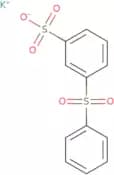
CAS :<p>Potassium 3-(phenylsulfonyl)benzenesulfonate is a chemical compound that is used as an anti-aging agent. It has been shown to reduce the viscosity of acrylonitrile, and is most effective when it is at a concentration of 1%. Potassium 3-(phenylsulfonyl)benzenesulfonate also reduces the strain on polymer fibers, which can be caused by temperatures or deionized water. The optimum temperature for this compound is about 50°C. Potassium 3-(phenylsulfonyl)benzenesulfonate does not have any adverse effects with other chemicals in the production process, and does not react with hexamethylenetetramine or aminopropyl naphthenate. This chemical also has a low cost and high tolerance for additives such as styrene or additives such as resistant</p>Formule :C12H9KO5S2Degré de pureté :Min. 95%Couleur et forme :PowderMasse moléculaire :336.43 g/mol2,5-Dimethyl-1,4-benzenediamine
CAS :<p>2,5-Dimethyl-1,4-benzenediamine is an amine that is used as a reagent in organic synthesis. It is also used to derivatize other molecules and as a precursor to other compounds. 2,5-Dimethyl-1,4-benzenediamine has been shown to be a good nucleophile and can react with electrophiles such as difluoride and the metal ion Ag(I). The reaction rate of 2,5-dimethyl-1,4-benzenediamine can be determined using high performance liquid chromatography or electrospray ionization. This compound can be synthesized from phenylmagnesium bromide and methyl iodide in the presence of aluminium chloride. It is possible to immobilize 2,5-dimethyl-1,4-benzenediamine on mesoporous silica by attaching it to the surface of the porous material with aminop</p>Formule :C8H12N2Degré de pureté :Min. 95%Couleur et forme :Beige To Brown SolidMasse moléculaire :136.19 g/mol1,4-Benzenedicarboxylic acid, monoethyl ester
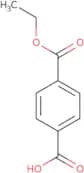
CAS :<p>1,4-Benzenedicarboxylic acid, monoethyl ester (1,4-BDE) is a monomer that is used in the manufacture of polycarbonates and other plastics. 1,4-BDE is also used as a solvent for xylene and butanol. It has been shown to be useful in the production of polyester fibers. The monomer can be synthesized by reacting ethylene with terephthalic acid or dimethyl terephthalate (DMT). This reaction produces 1,4-BDE and methanol as byproducts. The process is carried out at temperatures of 250 °C to 300 °C and under atmospheric pressure. The purified product can be isolated using distillation or extraction with organic solvents such as benzene or butanol. The reaction can be carried out in the presence of ruthenium, which acts as a catalyst.</p>Formule :C10H10O4Degré de pureté :Min. 95%Couleur et forme :White PowderMasse moléculaire :194.18 g/molN-Fluorobenzenesulfonimide
CAS :<p>N-Fluorobenzenesulfonimide is an organic compound with the molecular formula CHFNS. It is a fluorinating agent that can be used for the synthesis of organic compounds. N-Fluorobenzenesulfonimide has been shown to have anti-inflammatory properties and has shown promising results in animal studies for the treatment of hepatitis. The mechanism of action is not fully understood, but it may involve the formation of hydrogen bonds between N-fluorobenzenesulfonimide and amino acid residues in proteins, leading to inhibition of protein synthesis.</p>Formule :C12H10FNO4S2Degré de pureté :Min. 95%Couleur et forme :White PowderMasse moléculaire :315.34 g/mol1-Bromo-4-iodobenzene
CAS :<p>1-Bromo-4-iodobenzene is an aryl halide that can be synthesized by the cross coupling of ethyl formate and hydrochloric acid. This compound is useful in analytical applications, such as chromatographic methods, due to its high solubility in organic solvents. It is also used in synthetic procedures for the preparation of other aryl halides. 1-Bromo-4-iodobenzene has been used to synthesize calcium carbonate via the Suzuki coupling reaction with sodium salts, which are nucleophiles. The carbonyl group on this molecule reacts with the nucleophile, forming an alkyl group and a metal salt. Transfer reactions involving these salts can produce other products with different functional groups.</p>Formule :C6H4BrIDegré de pureté :Min. 95%Couleur et forme :PowderMasse moléculaire :282.9 g/mol4-Hydroxybenzenesulfonic acid, 65% aqueous solution
CAS :<p>4-Hydroxybenzenesulfonic acid is a chemical compound that is used as an antimicrobial agent in industrial applications. It is commonly used as a corrosion inhibitor, a chelating agent, and an additive for detergents and other cleaning products. 4-Hydroxybenzenesulfonic acid has been shown to inhibit the growth of bacteria by binding to fatty acids in the cell membrane and preventing them from being incorporated into the cell wall. This process causes the cell wall to weaken and eventually rupture. The reaction mechanism of 4-hydroxybenzenesulfonic acid is similar to that of p-hydroxybenzoic acid, which also inhibits bacterial growth by attacking fatty acids in the cell membrane. 4-Hydroxybenzenesulfonic acid may be preferable because it can be produced from renewable sources rather than from petroleum or natural gas.</p>Formule :C6H6O4SDegré de pureté :65%MinCouleur et forme :Red PowderMasse moléculaire :174.18 g/mol1,4-Dicyanobenzene
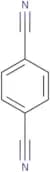
CAS :<p>1,4-Dicyanobenzene is an organic compound that is used as a reactant in the production of other chemicals. It has been shown to be reactive with nucleophiles such as amines and alcohols. 1,4-Dicyanobenzene has shown good transport properties and can be used in industrial preparation of polymers such as polyurethane. The reaction mechanism for 1,4-dicyanobenzene is nucleophilic attack by a nucleophile on the carbonyl carbon of the double bond. This reaction yields two products: an amide or an aliphatic hydrocarbon. 1,4-Dicyanobenzene can also undergo reactions involving hydrogen bonds with other molecules in order to form new compounds.</p>Formule :C8H4N2Degré de pureté :Min. 98 Area-%Couleur et forme :Off-White PowderMasse moléculaire :128.13 g/mol2-Oxo-2-(2,4,6-trihydroxyphenyl)acetic acid
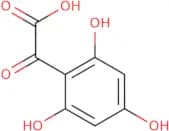
CAS :<p>2-Oxo-2-(2,4,6-trihydroxyphenyl)acetic acid is a useful synthetic building block/scaffold.</p>Formule :C8H6O6Degré de pureté :Min. 95%Masse moléculaire :198.13 g/mol2-Methylcyclohexanone
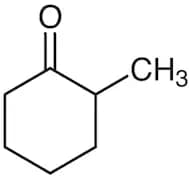
CAS :Formule :C7H12ODegré de pureté :>96.0%(GC)Couleur et forme :Colorless to Almost colorless clear liquidMasse moléculaire :112.172-Bromo-9,10-di(2-naphthyl)anthracene
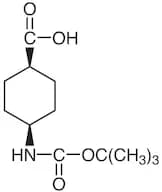
CAS :Formule :C34H21BrDegré de pureté :>98.0%(HPLC)Couleur et forme :White to Yellow to Green powder to crystalMasse moléculaire :509.45cis-4-(tert-Butoxycarbonylamino)cyclohexanecarboxylic Acid
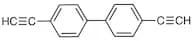
CAS :Formule :C12H21NO4Degré de pureté :>98.0%(GC)(T)Couleur et forme :White to Almost white powder to crystalMasse moléculaire :243.304,4'-Diethynylbiphenyl
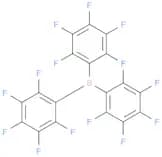
CAS :Formule :C16H10Degré de pureté :>98.0%(GC)Couleur et forme :White to Light yellow to Light orange powder to crystalMasse moléculaire :202.26Tris(pentafluorophenyl)borane
CAS :Formule :C18BF15Degré de pureté :97%Couleur et forme :SolidMasse moléculaire :511.9796Ref: IN-DA003661
Produit arrêté