Anneaux à 6 chaînons
Sous-catégories appartenant à la catégorie "Anneaux à 6 chaînons"
- Hétérocycles à 6 chaînons(61.535 produits)
- Anilines(104 produits)
- Anisoles(29 produits)
- Benzènes(48.875 produits)
- Cyclohexanes(3.075 produits)
- Quinones(253 produits)
- Toluènes(193 produits)
10221 produits trouvés pour "Anneaux à 6 chaînons"
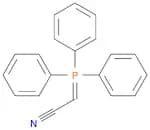
2-(Triphenylphosphoranylidene)acetonitrile
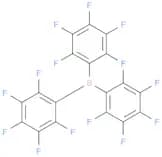
CAS :Formule :C20H16NPDegré de pureté :98%Couleur et forme :SolidMasse moléculaire :301.3215Tris(pentafluorophenyl)borane
CAS :Formule :C18BF15Degré de pureté :97%Couleur et forme :SolidMasse moléculaire :511.9796Ref: IN-DA003661
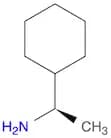
Produit arrêtéCyclohexanemethanamine, α-methyl-, (αR)-
CAS :Formule :C8H17NDegré de pureté :97%Couleur et forme :LiquidMasse moléculaire :127.2273Ref: IN-DA003C2D
Produit arrêté(BROMOMETHYL)CYCLOBUTANE
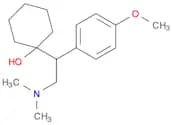
CAS :Formule :C5H9BrDegré de pureté :98%Couleur et forme :LiquidMasse moléculaire :149.0290Venlafaxine
CAS :Formule :C17H27NO2Degré de pureté :98%Couleur et forme :SolidMasse moléculaire :277.4018Trimethyl(phenyl)silane
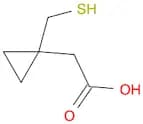
CAS :Formule :C9H14SiDegré de pureté :97%Couleur et forme :LiquidMasse moléculaire :150.2930Cyclopropaneacetic acid, 1-(mercaptomethyl)-
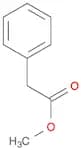
CAS :Formule :C6H10O2SDegré de pureté :95%Couleur et forme :SolidMasse moléculaire :146.2074Benzeneacetic acid, methyl ester
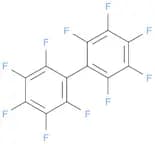
CAS :Formule :C9H10O2Degré de pureté :98%Couleur et forme :LiquidMasse moléculaire :150.1745Decafluorobiphenyl
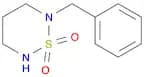
CAS :Formule :C12F10Degré de pureté :98%Couleur et forme :SolidMasse moléculaire :334.11242-Benzyl-1,2,6-Thiadiazinane 1,1-Dioxide
CAS :Formule :C10H14N2O2SDegré de pureté :96%Masse moléculaire :226.29544-Azidobenzoic acid
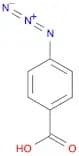
CAS :Formule :C7H5N3O2Degré de pureté :97%Couleur et forme :SolidMasse moléculaire :163.1335Bicyclo[4.2.0]octa-1,3,5-triene
CAS :Formule :C8H8Degré de pureté :97%Couleur et forme :LiquidMasse moléculaire :104.1491Ref: IN-DA003O21
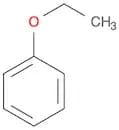
Produit arrêtéPhenetole
CAS :Formule :C8H10ODegré de pureté :98%Couleur et forme :LiquidMasse moléculaire :122.1644Ref: IN-DA003TO6
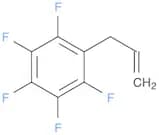
Produit arrêtéBenzene, 1,2,3,4,5-pentafluoro-6-(2-propen-1-yl)-
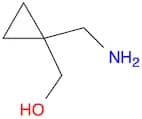
CAS :Formule :C9H5F5Degré de pureté :96%Couleur et forme :LiquidMasse moléculaire :208.1280(1-(Aminomethyl)cyclopropyl)methanol
CAS :Formule :C5H11NODegré de pureté :97%Couleur et forme :LiquidMasse moléculaire :101.1469Ref: IN-DA00376O
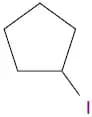
Produit arrêtéCyclopentane, iodo-
CAS :Formule :C5H9IDegré de pureté :98%Couleur et forme :LiquidMasse moléculaire :196.0294Ref: IN-DA001O1N
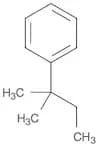
Produit arrêtéBenzene, (1,1-dimethylpropyl)-
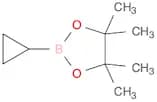
CAS :Formule :C11H16Degré de pureté :98%Couleur et forme :LiquidMasse moléculaire :148.2447Cyclopropylboronic acid, pinacol ester
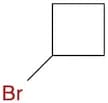
CAS :Formule :C9H17BO2Degré de pureté :98%Couleur et forme :LiquidMasse moléculaire :168.0411Cyclobutyl bromide
CAS :Formule :C4H7BrDegré de pureté :98%Couleur et forme :LiquidMasse moléculaire :135.0024Ref: IN-DA0034NC
Produit arrêtéCyclobutanecarboxaldehyde
CAS :Formule :C5H8ODegré de pureté :95%Couleur et forme :LiquidMasse moléculaire :84.1164Methyl Cyclohexanecarboxylate
CAS :Formule :C8H14O2Degré de pureté :98%Couleur et forme :LiquidMasse moléculaire :142.1956Ref: IN-DA003P4N
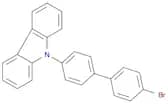
Produit arrêté9-(4'-BroMo-4-biphenylyl)-9H-carbazole
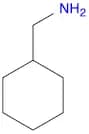
CAS :Formule :C24H16BrNDegré de pureté :98%Couleur et forme :SolidMasse moléculaire :398.2945Cyclohexylmethanamine
CAS :Formule :C7H15NDegré de pureté :98%Couleur et forme :LiquidMasse moléculaire :113.2007Ref: IN-DA003BZE
Produit arrêté5-Norbornene-2-carboxaldehyde
CAS :Formule :C8H10ODegré de pureté :97%Couleur et forme :LiquidMasse moléculaire :122.1644Ref: IN-DA003MXS
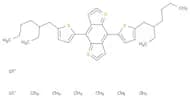
Produit arrêté2,6-Bis(triMethyltin)-4,8-bis(5-(2-ethylhexyl)thiophen-2-yl)benzo [1,2-b
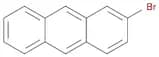
CAS :Formule :C40H58S4Sn2Degré de pureté :96%Couleur et forme :SolidMasse moléculaire :904.55052-Bromoanthracene
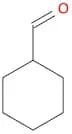
CAS :Formule :C14H9BrDegré de pureté :97%Couleur et forme :SolidMasse moléculaire :257.1253Cyclohexanecarboxaldehyde
CAS :Formule :C7H12ODegré de pureté :95%Couleur et forme :LiquidMasse moléculaire :112.1696Ref: IN-DA0029ES
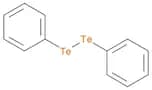
Produit arrêtéDIPHENYL DITELLURIDE
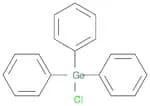
CAS :Formule :C12H10Te2Degré de pureté :98%Couleur et forme :SolidMasse moléculaire :409.4078Germane, chlorotriphenyl-
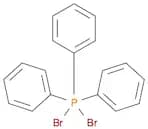
CAS :Formule :C18H15ClGeDegré de pureté :98%Couleur et forme :SolidMasse moléculaire :339.4047Triphenyldibromophosphorane
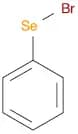
CAS :Formule :C18H15Br2PDegré de pureté :97%Couleur et forme :SolidMasse moléculaire :422.0935Phenylselenyl bromide
CAS :Formule :C6H5BrSeDegré de pureté :98%Couleur et forme :SolidMasse moléculaire :235.9679Cyclohexane, propyl-
CAS :Formule :C9H18Degré de pureté :98%Couleur et forme :LiquidMasse moléculaire :126.23921,3-Dithiane-2-carboxylic acid, ethyl ester
CAS :Formule :C7H12O2S2Degré de pureté :98%Couleur et forme :LiquidMasse moléculaire :192.2990Ref: IN-DA0029LU
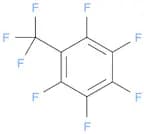
Produit arrêté1,2,3,4,5-Pentafluoro-6-(trifluoromethyl)benzene
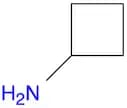
CAS :Formule :C7F8Degré de pureté :98%Couleur et forme :LiquidMasse moléculaire :236.0621Cyclobutylamine
CAS :Formule :C4H9NDegré de pureté :98%Couleur et forme :LiquidMasse moléculaire :71.1210Ref: IN-DA002QPB
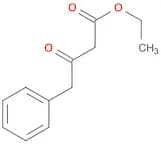
Produit arrêté3-OXO-4-PHENYL-BUTYRIC ACID ETHYL ESTER
CAS :Formule :C12H14O3Degré de pureté :95%Couleur et forme :LiquidMasse moléculaire :206.2378Ref: IN-DA00FC4H
Produit arrêtéBromocyclopropane
CAS :Formule :C3H5BrDegré de pureté :99%Couleur et forme :LiquidMasse moléculaire :120.9758Ref: IN-DA0034KG
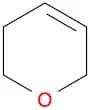
Produit arrêté3,6-dihydro-2H-pyran
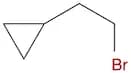
CAS :Formule :C5H8ODegré de pureté :98%Couleur et forme :LiquidMasse moléculaire :84.11642-Cyclopropylethyl bromide
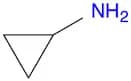
CAS :Formule :C5H9BrDegré de pureté :95%Couleur et forme :LiquidMasse moléculaire :149.0290Cyclopropylamine
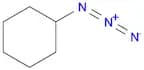
CAS :Formule :C3H7NDegré de pureté :97%Couleur et forme :LiquidMasse moléculaire :57.0944azidocyclohexane
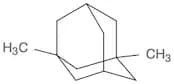
CAS :Formule :C6H11N3Degré de pureté :97%Couleur et forme :LiquidMasse moléculaire :125.17161,3-Dimethyladamantane
CAS :Formule :C12H20Degré de pureté :98%Couleur et forme :LiquidMasse moléculaire :164.2872Ref: IN-DA0032LV
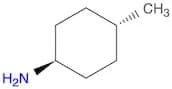
Produit arrêtéCyclohexanamine, 4-methyl-, trans-
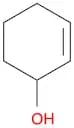
CAS :Formule :C7H15NDegré de pureté :97%Couleur et forme :LiquidMasse moléculaire :113.20072-Cyclohexen-1-ol
CAS :Formule :C6H10ODegré de pureté :97%Couleur et forme :LiquidMasse moléculaire :98.14302-Bromo-1,3-diethylbenzene
CAS :2-Bromo-1,3-diethylbenzene is a reactive intermediate that can be used for the synthesis of styrene derivatives. It is also used as an anesthetic agent and has been shown to have cognition-enhancing properties. This compound reacts with electrophiles to form monoadducts, which are useful for protein targetting. The pharmacophore of 2-bromo-1,3-diethylbenzene consists of vinyl groups and halides. Radiation induces substitution reactions on the vinyl groups. Pharmacophores are important in drug design because they help identify specific chemical features that are necessary for binding to a particular protein target or protein targets.
Formule :C10H13BrDegré de pureté :Min. 95%Couleur et forme :Clear LiquidMasse moléculaire :213.11 g/molAzobenzene
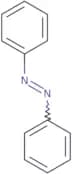
CAS :Azobenzene is an azobenzene that binds to the actin filaments and inhibits their polymerization. It has been shown to inhibit the polymerization of actin filaments in human serum, which may be due to its ability to react with the nitrogen atoms in actin. Azobenzene has also been shown to have a thermal expansion coefficient of 0.015x10⁻⁵/°C, which is much larger than that of most other compounds. The molecular geometry of azobenzene is planar and symmetrical, with two hydrogen atoms on each nitrogen atom on both sides of the molecule. This symmetry leads to a low intramolecular hydrogen bonding energy. The molecule’s photochemical properties are also interesting because it has a long lifetime and can be excited by wavelengths between 400-500 nm.
Formule :C12H10N2Degré de pureté :Min. 97.5 Area-%Couleur et forme :PowderMasse moléculaire :182.22 g/mol1,4-Dimethoxy-2-fluorobenzene
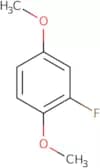
CAS :1,4-Dimethoxy-2-fluorobenzene is a synthetic molecule that belongs to the class of halides. It is used as a ligand in X-ray crystallography and has been shown to have anti-cancer properties. 1,4-Dimethoxy-2-fluorobenzene can be prepared by reacting primary amines with chloroformates in the presence of bases at temperatures between -20 °C and 100 °C. This method is efficient and produces high yields. The synthesis of 1,4-dimethoxy 2-fluorobenzene can be optimized by using strategies such as preparative scale techniques or temperature changes.
Formule :C8H9FO2Degré de pureté :Min. 95%Couleur et forme :PowderMasse moléculaire :156.15 g/mol1-Bromo-2-chloro-3-fluorobenzene
CAS :1-Bromo-2-chloro-3-fluorobenzene is a halide of fluorine and chlorine. It is used in the production of biphenyls and fluoroarenes. 1-Bromo-2-chloro-3-fluorobenzene has anticarcinogenic properties in animal studies, but it can be toxic to humans. Exposure to 1-bromo-2,3 difluorobenzene may lead to neurological, respiratory, hepatic, ocular, and gastrointestinal toxicity. This compound also has been shown to affect the liver enzymes as an enzyme inducer and is believed to be carcinogenic in animals.
Formule :C6H3BrClFDegré de pureté :Min. 95%Couleur et forme :PowderMasse moléculaire :209.44 g/mol2,4,6-Trimethylbromobenzene
CAS :2,4,6-Trimethylbromobenzene is a chemical compound with the molecular formula C7H8Br3. It is synthesized by the reaction of 2,4,6-trimethylaniline and bromine in the presence of a base such as potassium carbonate or sodium hydroxide. The synthesis can be carried out with or without solvent. When heated at reflux in toluene, it undergoes an electrophilic substitution reaction with chloroform to form 2-chloro-6-methylbenzene. 2,4,6-Trimethylbromobenzene can also be synthesized by reacting 1,3-dibromopropane with hydroquinone and dibutyltin dichloride in the presence of a strong acid catalyst. The light emission from this compound appears as a yellow color in solution. The molecule has three asymmetric centers: two on the benz
Formule :C9H11BrDegré de pureté :80%Couleur et forme :Clear LiquidMasse moléculaire :199.09 g/mol1,2,4,5-Tetrabromobenzene
CAS :1,2,4,5-Tetrabromobenzene is a brominated organic compound that forms a palladium complex. It has been studied by chemical ionization with an atmospheric pressure photoionization detector (APPI) and molecular modeling. The debromination reaction of 1,2,4,5-tetrabromobenzene was observed to take place in the liquid phase at room temperature. The detection limit for this reaction was found to be between 0.1 and 5 ppm. The most common form of 1,2,4,5-tetrabromobenzene is the monoclinic polymorph; however it can also exist as a trigonal system or as a hexagonal system when heated above its phase transition temperature. This compound is soluble in water and mercury chloride solutions but insoluble in ethers or chloroform.
Formule :C6H2Br4Degré de pureté :Min. 95%Couleur et forme :White PowderMasse moléculaire :393.7 g/mol



![Bicyclo[4.2.0]octa-1,3,5-triene](/_next/image/?url=https%3A%2Fstatic.cymitquimica.com%2Fproducts%2FIN%2Fthumb-webp%2FDA003O21.webp&w=3840&q=75)