Benzènes
Sous-catégories appartenant à la catégorie "Benzènes"
- Benzamides(62 produits)
- Acides benzoïques(5.474 produits)
- Alcools benzyliques(1.457 produits)
- Benzènes halogénés(33.965 produits)
- Phénols(2.661 produits)
11885 produits trouvés pour "Benzènes"
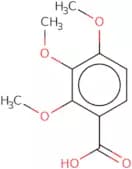
2,3,4-Trimethoxybenzoic acid
CAS :2,3,4-Trimethoxybenzoic acid is a molecule that has been shown to stimulate epidermal growth. It is a methylating agent that can be used to produce 2-hydroxybenzoic acid from protocatechuic acid. The hydroxy group on the 2,3,4-trimethoxybenzoic acid binds to the chloride ion in the protocatechuic acid and removes it from the molecule. This reaction mechanism is supported by x-ray crystal structures of protocatechuic acid and 2,3,4-trimethoxybenzoic acid.Formule :C10H12O5Degré de pureté :Min. 95%Couleur et forme :PowderMasse moléculaire :212.2 g/mol3-(Trifluoromethyl)phenylacetone
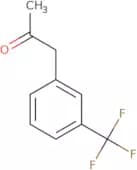
CAS :3-(Trifluoromethyl)phenylacetone is a chiral iminium-type organocatalyst that is used in asymmetric organic reactions. This compound has been shown to be effective for the synthesis of chiral amines and hydroxyl groups, as well as biotransformations. 3-(Trifluoromethyl)phenylacetone binds to substrates through hydrogen bonding, steric interactions, and electrostatic interactions. It also has a high affinity for hydroxides and isosteres. 3-(Trifluoromethyl)phenylacetone can be used as an alternative to L-proline in certain biotransformations because it binds more tightly to the enzyme than L-proline does.
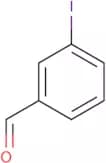
Formule :C10H9F3ODegré de pureté :Min. 95%Couleur et forme :Clear LiquidMasse moléculaire :202.17 g/mol3-Iodobenzaldehyde
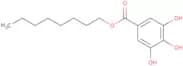
CAS :3-Iodobenzaldehyde is an atypical, isomeric, low energy, functional group. It has a fluorine atom in the 3-position and three different types of functional groups: alcohol, aldehyde and carboxylic acid. This compound has been studied for its ability to bind to receptors. 3-Iodobenzaldehyde can be synthesized by reacting benzalchohde with iodine and hydrochloric acid. The technique used to produce this compound is called Grignard reaction. 3-Iodobenzaldehyde can also be prepared by heating the corresponding nitrobenzene with sodium iodide in dry ether or under refluxing conditions. This compound has a low boiling point and melts at about 170 degrees Celsius. The frequency of this molecule ranges from 98 to 102 megahertzFormule :C7H5IODegré de pureté :Min. 95%Couleur et forme :PowderMasse moléculaire :232.02 g/molOctyl gallate
CAS :Octyl gallate is a naturally occurring compound that belongs to the class of gallates. It is a non-toxic, water-soluble antioxidant that has been used as a preservative in foods and pharmaceuticals. Octyl gallate has been shown to inhibit nuclear DNA synthesis by binding to the dinucleotide phosphate (NDP) site on ribonucleotide reductase, thereby preventing the formation of deoxyribonucleotide triphosphates. A rate constant for this reaction has been determined using analytical methods. This compound also inhibits the growth of wild-type strains of Escherichia coli and Staphylococcus aureus, as well as some strains resistant to antibiotics such as erythromycin, chloramphenicol, tetracycline, and clindamycin. Octyl gallate may also have an effect on energy metabolism in bacteria by inhibiting p-hydroxybenzoic acid (PHBA) dehydratase
Formule :C15H22O5Degré de pureté :Min. 95%Couleur et forme :White PowderMasse moléculaire :282.33 g/mol3-Fluoro-4-hydroxybenzaldehyde
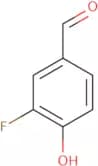
CAS :3-Fluoro-4-hydroxybenzaldehyde is a hydroxyl group with an activation energy of 87.7 kJ/mol. The molecule can be synthesized by the reaction of salicylaldehyde and 3,4-dihydroxybenzaldehyde in the presence of an organic solvent such as chloroform or methylene chloride. This compound has been shown to cause cell death in ht-29 cells and cancer cell lines, as well as human ovarian carcinoma cells. It causes apoptosis by inhibiting mitochondrial membrane potential, which leads to decreased intracellular ATP levels. 3-Fluoro-4-hydroxybenzaldehyde is most commonly used in molecular modeling studies to represent the hydroxyl group due to its simplicity in comparison to other hydroxyl groups like methanol or ethanol.Formule :C7H5FO2Degré de pureté :90%Couleur et forme :White PowderMasse moléculaire :140.11 g/mol4-Acetamidobenzoic acid
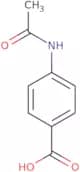
CAS :4-Acetamidobenzoic acid is an aromatic organic compound that is a precursor to many pharmaceuticals, such as acetaminophen, amoxicillin, dapsone, and sulfonamide. It is an intermediate in the formation of 4-hydroxybenzoic acid from benzoic acid. This molecule is also a component of some types of plastics. The chemical's structure and properties are determined by its coordination geometry, which consists of four nitrogen atoms and one hydroxyl group. 4-Acetamidobenzoic acid has been shown to inhibit the growth of certain bacteria by interfering with their metabolic activity. It has also been found to be active against several infectious diseases such as malaria and tuberculosis. The mechanism behind its effectiveness may be due to the fact that it inhibits bacterial fatty acid synthesis or prevents the production of ATP in mitochondria cells.br>br> br>br> The reaction solution was heated for 20 minutes at 100Formule :C9H9NO3Couleur et forme :White PowderMasse moléculaire :179.17 g/mol3-Hydroxy-5-nitrobenzaldehyde
CAS :3-Hydroxy-5-nitrobenzaldehyde is a solvent that has been used as a probe to measure chloride concentration in multimedia. It can be used as a sensor and an algorithm to detect the colorimetric change of 3-hydroxy-5-nitrobenzaldehyde in the presence of chloride ions. This probe is also used in colorimetric tests for linker, nonpolar, and surfactant compounds. The 3-hydroxy-5-nitrobenzaldehyde oxime can be cleaved by UV light to produce an unstable nitronium ion that reacts with metal ions such as copper(II) or silver(I) to form an insoluble precipitate.Formule :C7H5NO4Degré de pureté :Min. 95%Couleur et forme :PowderMasse moléculaire :167.12 g/mol3,4-Dihydroxybenzylamine hydrobromide
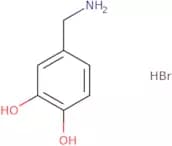
CAS :3,4-Dihydroxybenzylamine hydrobromide is a chemical that reacts with hydrogen peroxide to produce light. It is used as a nutrient for the chemiluminescent reaction in a nutrient solution to detect dopamine, chlorogenic acids, and trifluoroacetic acid. 3,4-Dihydroxybenzylamine hydrobromide can also be used as an analytical method for the measurement of cortisol concentration in plasma and saliva samples. This chemical analogically reacts with monoamine neurotransmitters such as dopamine and gamma-aminobutyric acid (GABA) to form fluorescent probes. 3,4-Dihydroxybenzylamine hydrobromide is not toxic or mutagenic and has been shown to be safe for use in humans.Formule :C7H10BrNO2Degré de pureté :Min. 95%Couleur et forme :PowderMasse moléculaire :220.06 g/molMethyl 4-formylbenzoate
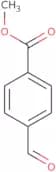
CAS :Methyl 4-formylbenzoate is a trifluoroacetic acid derivative that inhibits the conversion of androgens to estrogens. It has been shown to inhibit aromatase activity in human serum and cell culture, as well as in vitro cultured rat hepatocytes. Methyl 4-formylbenzoate also binds to copper(II) by forming a complex with copper(II) ions, which prevents the formation of an enzyme-substrate complex. The binding of methyl 4-formylbenzoate to copper(II) prevents the production of malonic acid from acetoacetate, which inhibits fatty acid synthesis. This compound also acts as an analytical reagent for the detection of acylation reactions, such as those involving benzimidazole compounds.
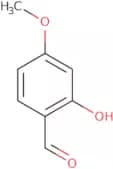
Formule :C9H8O3Degré de pureté :Min. 95%Couleur et forme :PowderMasse moléculaire :164.16 g/mol2-Hydroxy-4-methoxybenzaldehyde
CAS :2-Hydroxy-4-methoxybenzaldehyde is an antifungal agent that has been shown to have a broad spectrum of activity against filamentous fungi. It is able to inhibit the growth of fungi by inhibiting the enzyme shikimate dehydrogenase, which is involved in the synthesis of aromatic amino acids and other essential metabolites. 2-Hydroxy-4-methoxybenzaldehyde also inhibits xylose reductase and alpha-galactosidase, enzymes that are involved in cell wall biosynthesis. This compound is effective against Candida albicans, Aspergillus niger, and Trichophyton mentagrophytes. 2-Hydroxy-4-methoxybenzaldehyde has also been shown to have bacteriostatic effects on Escherichia coli.
Formule :C8H8O3Degré de pureté :Min. 95%Couleur et forme :Off-White PowderMasse moléculaire :152.15 g/mol3-Cyanobenzoic acid
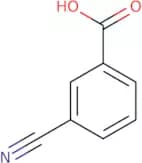
CAS :3-Cyanobenzoic acid is a chemical intermediate that is used to synthesize 3-cyanobenzamide. It is also a byproduct of the synthesis of benzonitrile and can be found in metal surface residues and environmental pollution. The molecule has two functional groups, one electron withdrawing and one electron donating, which are necessary for its stability. This compound can be found in high concentrations when it reacts with metal surfaces or organic solvents. 3-Cyanobenzamide was synthesized from 3-cyanobenzoic acid as an amide, which has been shown to have antimicrobial properties against Gram-positive bacteria such as Staphylococcus aureus, Streptococcus pyogenes and Enterococcus faecalis.Formule :C8H5O2NDegré de pureté :Min. 95%Couleur et forme :PowderMasse moléculaire :147.13 g/mol4-Aminobenzonitrile
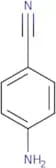
CAS :4-Aminobenzonitrile is a chemical compound that has been shown to be an antimicrobial agent. It has been found to be active against bacteria and fungi, such as Candida albicans and Aspergillus niger. 4-Aminobenzonitrile binds with epidermal growth factor (EGF) by intramolecular hydrogen bonding, which leads to the disruption of the protein's tertiary structure. The nitrogen atoms in this compound have been shown to react with water vapor at high temperatures, which results in the release of hydrogen gas. This reaction can be used for phase transition temperature studies. 4-Aminobenzonitrile also shows intermolecular hydrogen bonding with fatty acids, which causes the molecule to change its shape and protonation state. These changes affect its frequency shift and molecular modeling study results.Formule :C7H6N2Degré de pureté :Min. 95%Couleur et forme :Off-White PowderMasse moléculaire :118.14 g/mol2,5-Dimethoxybenzoic acid
CAS :2,5-Dimethoxybenzoic acid (2,5-DMA) is a plant metabolite that belongs to the group of cinnamic acid derivatives. It can be found in plants and has been shown to have systemic effects. 2,5-DMA is involved in the cycloacylation of protocatechuic acid. This reaction is catalyzed by an enzyme called cyclooxygenase and requires molecular oxygen as a cofactor. 2,5-DMA also forms hydrogen bonds with methoxy groups and other molecules. The monoclonal antibodies against 2,5-DMA have been used for radiation therapy and are effective against cancer cells. Model studies show that 2,5-DMA can be converted into more potent metabolites by the action of cytochrome P450 enzymes or glutathione S-transferases.Formule :C9H10O4Degré de pureté :Min. 95%Couleur et forme :PowderMasse moléculaire :182.17 g/molEthyl 2-nitrobenzoate
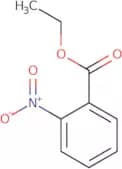
CAS :Ethyl 2-nitrobenzoate is a cyclic organic compound that contains a nitro group, which is an organic radical with the formula -NO2. It belongs to the class of amides and has two carbonyl groups. The molecule consists of a bicyclic heterocycle consisting of one ring with five carbon atoms and one ring with six carbon atoms. Ethyl 2-nitrobenzoate can be used in the treatment of muscle diseases, metabolic disorders, growth factor deficiencies, autoimmune diseases, and neural system disorders due to its ability to act as an antihypertensive agent and as an inhibitor of angiotensin converting enzyme (ACE). This molecule's hydroxyl group can also react with epidermal growth factor (EGF) to form N-hydroxyethyl EGF (NHE). This product has been shown to have antiviral properties against HIV-1 protease inhibitors by interfering with viral protein synthesis.Formule :C9H9NO4Degré de pureté :Min. 95%Couleur et forme :White PowderMasse moléculaire :195.17 g/molEthyl 4-(N,N-diethylamino)benzoate
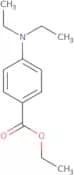
CAS :Ethyl 4-N,N-diethylamino)benzoate is a molecule that contains a carbonyl group. In an exothermic reaction, the carbonyl group reacts with naphthalene in the presence of activated alkyl substituents to form a fluorescent product. The molecule has a constant and is monomeric. It has an aromatic hydrocarbon structure, which results in a red shift in the fluorescence emission spectrum. Ethyl 4-N,N-diethylamino)benzoate reacts with solvents such as water and alcohols to form solutes that are fluorescent.Formule :C13H19NO2Degré de pureté :Min. 95%Couleur et forme :PowderMasse moléculaire :221.3 g/mol2-Hydroxy-6-methylbenzoic acid
CAS :2-Hydroxy-6-methylbenzoic acid is a natural product that is synthesized by the enzyme p. pastoris. It is a member of the polyketide class of compounds and has shown to have physiological effects such as anti-inflammatory and antioxidant properties. 2-Hydroxy-6-methylbenzoic acid also has been shown to inhibit ATP binding cassette transporter (ABC) proteins, which are involved in drug resistance, from transporting drugs out of cells, making it an attractive candidate for drug discovery.
Formule :C8H8O3Degré de pureté :Min. 95%Couleur et forme :PowderMasse moléculaire :152.15 g/mol3-Aminobenzonitrile
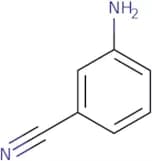
CAS :3-Aminobenzonitrile is an amine that has been shown to inhibit the growth of bacteria. It was synthesized by the reaction of nitrobenzene with benzamide in the presence of acetic acid. The chemical structure of 3-aminobenzonitrile is similar to that of a group of natural amino acids, including cysteine and tryptophan, which are known inhibitors of bacterial growth. This compound is soluble in organic solvents and can be used as an injection solution. 3-Aminobenzonitrile has been evaluated by kinetic studies and found to have a high affinity for bacterial cells, with an inhibition constant (Ki) value of 0.37 mM. It is also active against other microorganisms such as yeast or mold fungi, but not against plant or animal cells. 3-Aminobenzonitrile inhibits the synthesis of proteins by binding to a number of different sites on the ribosomes where
Degré de pureté :Min. 95%Couleur et forme :Yellow PowderMasse moléculaire :118.14 g/mol2-(Diphenylamino)benzoic acid
CAS :Please enquire for more information about 2-(Diphenylamino)benzoic acid including the price, delivery time and more detailed product information at the technical inquiry form on this page
Formule :C19H15NO2Degré de pureté :Min. 95%Masse moléculaire :289.33 g/mol2-Hydroxy-3-methoxybenzaldehyde
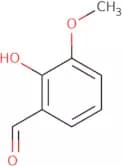
CAS :2-Hydroxy-3-methoxybenzaldehyde is a model compound that is used to study the reaction mechanism of hydrogen bonding. It has been shown to have antioxidative properties and amoebicidal activity. The biological properties of 2-hydroxy-3-methoxybenzaldehyde are still being studied. There are also no reports on its toxicity or carcinogenicity in humans. This compound is a member of the group P2, which includes compounds with two aromatic rings connected by one carbon atom. The molecular geometry around this carbon atom is pyramidal and the molecule can exist in either an axial or equatorial orientation. Synchronous fluorescence experiments have shown that 2-hydroxymethoxybenzaldehyde reacts with Toll-like receptor 4 (TLR4).
Formule :C8H8O3Degré de pureté :Min. 95%Couleur et forme :Yellow PowderMasse moléculaire :152.15 g/mol2-Bromo-5-methoxybenzoic acid
CAS :2-Bromo-5-methoxybenzoic acid (BMBA) is a natural compound that belongs to the class of ellagitannins. It has been shown to inhibit the proliferation of leukemia cells and induce apoptosis in these cells. The mechanism of this apoptotic activity may be due to BMBA's inhibition of the progesterone receptor, which has been demonstrated by molecular modeling and 13C NMR spectroscopy experiments. This receptor is involved in cancer development and progression. BMBA also inhibits the mitochondrial membrane potential, leading to cell death. In addition, 2-Bromo-5-methoxybenzoic acid has been shown to have anti-inflammatory properties in mice with chronic colitis. This compound also has an effect on bacteria such as Pseudomonas aeruginosa, which was observed using thermodynamic calculations.Formule :C8H7BrO3Degré de pureté :Min. 95%Couleur et forme :PowderMasse moléculaire :231.04 g/mol