Benzènes
Sous-catégories appartenant à la catégorie "Benzènes"
- Benzamides(62 produits)
- Acides benzoïques(5.474 produits)
- Alcools benzyliques(1.457 produits)
- Benzènes halogénés(33.965 produits)
- Phénols(2.661 produits)
11888 produits trouvés pour "Benzènes"
4-Formyl-3-hydroxybenzoic acid
CAS :4-Formyl-3-hydroxybenzoic acid (4FHB) is a member of the phenylacetic acid family. It has been shown to have potential as a substrate for creatine kinase and amines, as well as an inhibitor of the enzyme. 4FHB binds to the surface of silica particles in order to enhance Raman scattering in a solid-phase synthesis. The molecular weight of 4FHB is 148 g/mol, with optical properties that can be described by fluorescence spectroscopy. 4FHB has been shown to be homochiral and tetradentate, with a magnetic resonance spectrum that can be characterized by hydroxyl group and salicylaldehyde groups.Formule :C8H6O4Degré de pureté :Min. 96.5 Area-%Couleur et forme :PowderMasse moléculaire :166.13 g/mol2,4-Dimethylbenzoic acid
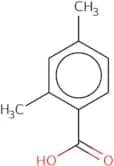
CAS :2,4-Dimethylbenzoic acid is a white solid with the chemical formula CH3C6H2O2. It is an organic acid that can be used as a building block in organic synthesis. The functional groups of 2,4-dimethylbenzoic acid are methyl and carboxyl. The most efficient method for the synthesis of 2,4-dimethylbenzoic acid is by reacting hydrochloric acid with dimethylaniline. This reaction can be carried out in one pot without isolation of intermediates. The structural analysis of 2,4-dimethylbenzoic acid was done using fluorescence lifetimes and hydrochloric acid. The reaction mechanism for the formation of 2,4-dimethylbenzoic acid from dimethylaniline is through a nucleophilic substitution reaction with chloride ion. Sample preparation for 2,4-dimethylbenzoic acid includes dissolution in water and filtration through a 0.45Formule :C9H10O2Degré de pureté :Min. 95%Couleur et forme :White PowderMasse moléculaire :150.17 g/mol3,4-Dinitrobenzoic acid
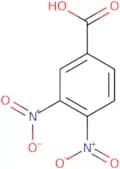
CAS :3,4-Dinitrobenzoic acid is a nitrobenzoic acid that has a hydrogen bond. 3,4-Dinitrobenzoic acid is activated by the loss of a proton and it reacts with amines to form diazonium salts. It can be found in plants and animals as an intermediate in the metabolism of tyrosine and tryptophan. 3,4-Dinitrobenzoic acid is used in analytical chemistry to detect the presence of amines. The functional groups on 3,4-dinitrobenzoic acid are carboxylic acid and nitro. Ribulose is an example of a molecule containing these functional groups.
Formule :C7H4N2O6Degré de pureté :Min. 98.0%Couleur et forme :Yellow PowderMasse moléculaire :212.12 g/mol4-Cyanobenzaldehyde
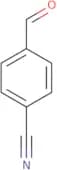
CAS :4-Cyanobenzaldehyde is an acid that inhibits tyrosinase, an enzyme involved in the production of melanin. It has been shown to have a strong inhibitory effect on the activity of this enzyme in a variety of biological studies. 4-Cyanobenzaldehyde is chemically stable and does not react with hydrochloric acid or water at room temperature, making it suitable for use in experiments involving these substances. This chemical also has antiinflammatory properties and can be used as a substitute for phenols in some chemical reactions. 4-Cyanobenzaldehyde is soluble in methanol and reacts with diphenolase, an enzyme involved in the synthesis of lignin, to produce benzophenone and benzoic acid. This reaction may be important for the formation of lignin during wood decomposition.Formule :C8H5NODegré de pureté :80%Couleur et forme :PowderMasse moléculaire :131.13 g/mol2,5-Dimethyl-3-nitrobenzoic acid
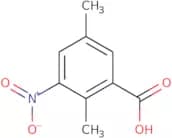
CAS :2,5-Dimethyl-3-nitrobenzoic acid is a versatile building block that can be used in the synthesis of a wide range of compounds. It is also an important intermediate for the synthesis of pharmaceuticals and other speciality chemicals. 2,5-Dimethyl-3-nitrobenzoic acid has been shown to be useful in the preparation of high quality fine chemicals and research chemicals. This compound has been found to be an excellent reagent for various chemical reactions.Formule :C9H9NO4Degré de pureté :Min. 95%Couleur et forme :PowderMasse moléculaire :195.17 g/mol2-Chloro-4-methoxybenzoic acid
CAS :2-Chloro-4-methoxybenzoic acid is a model compound for the screening of acridones, which are a class of compounds with anticancer activity. 2-Chloro-4-methoxybenzoic acid has been shown to inhibit potassium t-butoxide efflux in cancer cells and induce multidrug resistance in cancer cells. Furthermore, it has been shown that 2-Chloro-4-methoxybenzoic acid inhibits mitoxantrone efflux in cancer cells, leading to an increase in mitoxantrone cytotoxicity. This compound is also able to induce a phenotype change from cancerous to normal and can be used as a chemotherapeutic agent against cancers.Formule :C8H7ClO3Degré de pureté :Min. 95%Couleur et forme :PowderMasse moléculaire :186.59 g/mol3,5-Dibromo-2-anisic acid
CAS :3,5-Dibromo-2-anisic acid is a short chain dodecyl amine with the chemical formula CH2Br2C6H4N. It is an active compound that has been shown to have nematicidal activity and also shows high activity against saprophytes. 3,5-Dibromo-2-anisic acid is synthesized by reacting chlorine with salicylaldehyde in the presence of a base. The compound is used in the synthesis of various other organic compounds such as amides and amines.Formule :C8H6Br2O3Degré de pureté :Min. 95%Couleur et forme :PowderMasse moléculaire :309.94 g/mol3,4-Dihydroxybenzonitrile
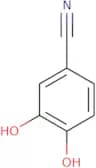
CAS :3,4-Dihydroxybenzonitrile is a chemical compound that is found in soybean lipoxygenase. The molecule has been shown to be an excellent Michaelis-Menten substrate and hydrogen bonding partner. It also reacts with chlorine to form chlorinating agents such as 3,4-dichlorobenzonitrile and 3,4-dibromobenzonitrile. 3,4-Dihydroxybenzonitrile can act as a nucleophile and forms stable complexes when reacted with hydroxyl group compounds such as protocatechuic acid or reaction solution. This chemical is reactive and can be activated by redox cycling or light. 3,4-Dihydroxybenzonitrile has been used to treat protocatechuic acid levels in the blood of patients with chronic liver disease who are being treated for alcoholism.Formule :C7H5NO2Degré de pureté :Min. 95%Couleur et forme :PowderMasse moléculaire :135.12 g/molMethyl 4-aminobenzoate
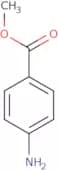
CAS :Methyl 4-aminobenzoate is a chemical compound that is used as a fluorescence probe in the study of DNA replication. It can be used to detect the presence of viral RNA in cell culture, and has been shown to inhibit the replication of bacterial RNA. Methyl 4-aminobenzoate binds to guanine residues in DNA and forms an alkyl bond with them. This prevents the binding of other amino acids, which are essential for DNA replication. Methyl 4-aminobenzoate has also been shown to have pharmacokinetic properties that make it useful for intravenous administration and oral administration.
Formule :C8H9NO2Degré de pureté :Min. 97.5 Area-%Couleur et forme :White PowderMasse moléculaire :151.16 g/mol3-Hydroxybenzaldehyde
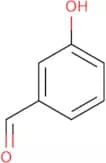
CAS :3-Hydroxybenzaldehyde (3HBA) is an organic molecule that belongs to the group of substituted benzaldehydes. It has been shown to induce muscle cell proliferation in vitro and in vivo, as well as increased levels of activated caspase-3 in vitro. 3HBA also has a high resistance to hydrochloric acid, hydrogen bond, and chemical structures. It also shows properties of intramolecular hydrogen bonding and aldehyde groups. 3HBA has been shown to be active against malonic acid-induced pulmonary edema in rats, which may be due to its ability to inhibit the release of erythrocytes from the bone marrow into the circulation.Formule :C7H6O2Degré de pureté :Min. 96 Area-%Couleur et forme :Off-White PowderMasse moléculaire :122.12 g/mol3-N-Maleimidobenzoic acid
CAS :3-N-Maleimidobenzoic acid is a chemical crosslinking agent that reacts with proteins through the formation of an amide bond. It has been shown to react with both actin subunits and human immunoglobulin. This molecule also reacts with spermatozoa, which are composed primarily of actin filaments, and is used in the preparation of polyclonal antibodies. 3-N-Maleimidobenzoic acid can be used to fix antigen onto a solid support for immunological purposes. It is also a cross-linking agent that can be used in cytochalasin B experiments to inhibit plastid activity in chloroplasts. 3-N-Maleimidobenzoic acid reacts with monoclonal antibodies by forming an amide bond, which can be used as a reaction product.
Formule :C11H7NO4Degré de pureté :Min. 95%Couleur et forme :PowderMasse moléculaire :217.18 g/molGallaldehyde hemihydrate
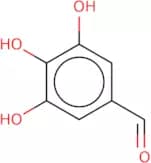
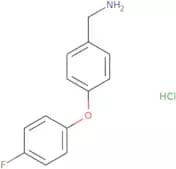
CAS :Gallaldehyde hemihydrate is a bioactive phenolic compound that inhibits the tyrosine kinase domain of the epidermal growth factor receptor (EGFR). It has been shown to inhibit tumor cell growth and induce apoptosis in cancer tissues. Gallaldehyde hemihydrate has also been found in lentils, which might be used as a potential biomarker for this compound. The optimum pH for gallaldehyde hemihydrate is between 2.0-4.0, and it can bind to cation channels and act as a potential biomarker for skin cancer cells.Formule :C7H6O4Degré de pureté :Min. 95%Couleur et forme :PowderMasse moléculaire :154.12 g/mol4-(4-Fluorophenoxy)benzylamine hydrochloride
CAS :4-(4-Fluorophenoxy)benzylamine hydrochloride is a metabolic agent that inhibits the metabolism of phenylpropionic acid and butanoic acid. It is used industrially as an oxime to protect other organic compounds from damage by peroxides, such as in polymerization reactions. 4-(4-Fluorophenoxy)benzylamine hydrochloride has been shown to be effective in treating metabolic diseases, such as phenylketonuria and urea cycle disorders.Formule :C13H12FNO·HClDegré de pureté :Min. 95%Couleur et forme :PowderMasse moléculaire :253.7 g/mol2-Bromo-6-fluorobenzonitrile
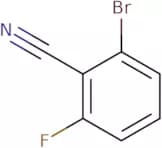
CAS :2-Bromo-6-fluorobenzonitrile is an organic compound with a molecular formula of C6H3BrF. It is a colorless liquid that is used as a precursor in the synthesis of other compounds. 2-Bromo-6-fluorobenzonitrile has been shown to be an efficient fluorophore and can be activated by electron transfer, thermally, or chemically. 2-Bromo-6-fluorobenzonitrile also has a quantum efficiency of 0.5% and transport properties that make it ideal for fluorescence microscopy. The fluorescence intensity of 2-bromo-6-fluorobenzonitrile is proportional to the amount of energy absorbed, which makes it useful for quantifying the concentration of fluorescent molecules in solution. 2-Bromo-6-fluorobenzonitrile has also been shown to have high quantum yields and high efficiency levels when
Formule :C7H3BrFNDegré de pureté :Min. 95%Couleur et forme :PowderMasse moléculaire :200.01 g/mol4-Fluoro-3-nitrobenzaldehyde
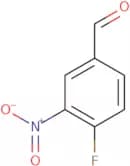
CAS :4-Fluoro-3-nitrobenzaldehyde is a diphenyl ether that has been used as a starting material for the synthesis of dihydroisoquinolines and related compounds. The compound also inhibits IL-10 production in an experiment with human cells, which might be due to its ability to act as a pro-inflammatory cytokine. 4-Fluoro-3-nitrobenzaldehyde can be used as a control experiment for 4-fluoroaniline, which was found to inhibit IL-10 production in an experiment with human cells.
4-Fluoro-3-nitrobenzaldehyde is not active against P. aeruginosa, but does have antinociceptive effects and can be considered to have nucleophilic properties.Formule :C7H4FNO3Degré de pureté :Min. 95%Couleur et forme :PowderMasse moléculaire :169.11 g/mol1,3-Diphenylacetone, 97.0%+
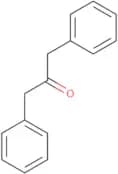
CAS :1,3-Diphenylacetone is a high quality chemical that is used as a reagent and intermediate in the production of specialty chemicals. It can be used to synthesize other compounds such as pharmaceuticals, pesticides, and lubricants. 1,3-Diphenylacetone has been shown to be an effective building block for a variety of chemical reactions. This compound is also versatile because it can be used as a research chemical or scaffold for synthesis of other compounds. 1,3-Diphenylacetone has CAS number 102-04-5 and can be found in the speciality chemical category.Formule :C15H14ODegré de pureté :Min. 97.0 Area-%Masse moléculaire :210.28 g/molRef: 3D-D-6112
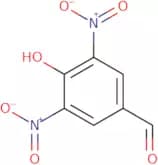
1kgÀ demander5kgÀ demander250gÀ demander500gÀ demander2500gÀ demander-Unit-kgkgÀ demander3,5-Dinitro-4-hydroxybenzaldehyde
CAS :Please enquire for more information about 3,5-Dinitro-4-hydroxybenzaldehyde including the price, delivery time and more detailed product information at the technical inquiry form on this pageFormule :C7H4N2O6Degré de pureté :Min. 95%Couleur et forme :PowderMasse moléculaire :212.12 g/mol5-Amino-2-nitrobenzoic acid
CAS :5-Amino-2-nitrobenzoic acid is a useful chemical building block that is used in the synthesis of complex compounds and useful scaffolds.
Formule :C7H6N2O4Masse moléculaire :182.13 g/molRef: 3D-A-6800
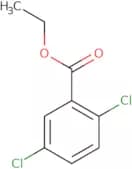
25gÀ demander50gÀ demander100gÀ demander250gÀ demander500gÀ demander-Unit-ggÀ demander2,5-Dichlorobenzoic acid ethyl ester
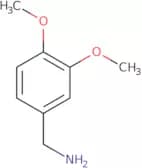
CAS :2,5-Dichlorobenzoic acid ethyl ester is a high quality, versatile building block that can be used as a reagent or intermediate. It is a useful scaffold for the synthesis of fine chemicals and research chemicals. This compound has been used in the synthesis of 2,5-dichloro-N-(2-hydroxyethyl)benzamide (CAS No. 35112-27-7), which is a speciality chemical with potential applications in pharmaceuticals and agrochemicals. 2,5-Dichlorobenzoic acid ethyl ester reacts with an amine to produce an N-[2-(2,5-dichlorophenyl)ethyl]amine (CAS No. 35112-27-7). The reaction proceeds via an amide bond formation by condensation of the amine with the acid chloride formed from the acid and ethyl chloride. This reaction is facilitated by heat andFormule :C9H8Cl2O2Degré de pureté :Min. 95%Couleur et forme :PowderMasse moléculaire :219.06 g/mol3,4-Dimethoxybenzylamine
CAS :3,4-Dimethoxybenzylamine is an amine that is used in the synthesis of pharmaceuticals. It can be polymerized by heating with aqueous formaldehyde and hydrochloric acid to form a resin. 3,4-Dimethoxybenzylamine inhibits serotonin receptors, exhibiting inhibitory properties at concentrations of 10-5 M. 3,4-Dimethoxybenzylamine also has pharmacokinetic properties that are similar to vitamin B1. This compound has been shown to inhibit homogeneous catalysts and is used for coatings for ganglion cells.
Formule :C9H13NO2Degré de pureté :Min. 95%Couleur et forme :Clear LiquidMasse moléculaire :167.21 g/mol