Benzènes
Sous-catégories appartenant à la catégorie "Benzènes"
- Benzamides(62 produits)
- Acides benzoïques(5.474 produits)
- Alcools benzyliques(1.457 produits)
- Benzènes halogénés(33.965 produits)
- Phénols(2.661 produits)
11888 produits trouvés pour "Benzènes"
5-Amino-2-nitrobenzoic acid
CAS :5-Amino-2-nitrobenzoic acid is a useful chemical building block that is used in the synthesis of complex compounds and useful scaffolds.
Formule :C7H6N2O4Masse moléculaire :182.13 g/molRef: 3D-A-6800
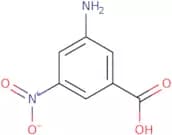
25gÀ demander50gÀ demander100gÀ demander250gÀ demander500gÀ demander-Unit-ggÀ demander3-Amino-5-nitrobenzoic acid
CAS :3-Amino-5-nitrobenzoic acid is a cyclic analog of diazepam. It has been shown to be an acceptor in the reduction of picric acid and nitro groups. 3-Amino-5-nitrobenzoic acid is a molecule which interacts with dopamine to produce pharmaceutical preparations.Formule :C7H6N2O4Degré de pureté :Min. 95%Couleur et forme :PowderMasse moléculaire :182.13 g/mol1,3-Diphenylacetone
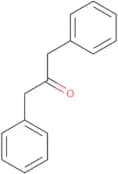
CAS :1,3-Diphenylacetone is a fine chemical that can be used as a building block for research chemicals, as a reagent in organic synthesis, or as a speciality chemical. It is also a versatile building block and has been shown to be useful in the formation of complex compounds. 1,3-Diphenylacetone can react with electrophiles to form new carbon-carbon bonds and has been used in reactions involving nucleophilic substitution, electrophilic addition, and Michael reactions. 1,3-Diphenylacetone is also water soluble and has been shown to be compatible with both ionic and covalent solvents.Formule :C15H14ODegré de pureté :Min. 99.0 Area-%Masse moléculaire :210.28 g/mol2,6-Dihydroxybenzaldehyde
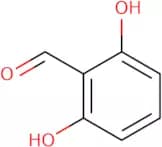
CAS :2,6-Dihydroxybenzaldehyde is a chemical compound that has been used as an intermediate in the synthesis of other chemicals. It is also used as a precursor for benzaldehyde and benzoic acid. 2,6-Dihydroxybenzaldehyde can be synthesized by reacting sodium carbonate with pluronic F127 in the presence of cationic surfactant. The surface methodology used in this process involves the use of hydrophobic molecules to form micelles and liposomes on the surface of the electrode. The interaction between these micelles and liposomes is pH dependent. This reaction causes an increase in hydrogen ions, which leads to an increase in conductivity at acidic pH values. Electrochemical impedance spectroscopy (EIS) results show that 2,6-dihydroxybenzaldehyde reacts with high concentrations of salt and water vapor. FTIR spectroscopy shows that it has two hydroxyl groups and one double
Formule :C7H6O3Degré de pureté :Min. 95%Couleur et forme :PowderMasse moléculaire :138.12 g/molm-Hydroxybenzonitrile
CAS :m-Hydroxybenzonitrile is a cationic surfactant that has the ability to form hydrogen bonds with an intramolecular hydrogen. It is used in the production of detergents, textile processing aids, and inks. m-Hydroxybenzonitrile inhibits fatty acids by forming an inhibitory complex at the surface of the cell membrane. This complex disrupts lipid bilayers and inhibits protein synthesis. m-Hydroxybenzonitrile also has been shown to have vibrational properties that can be seen when it absorbs ultraviolet light.Formule :C7H5NODegré de pureté :Min. 95%Couleur et forme :Off-White PowderMasse moléculaire :119.12 g/mol2-Bromo-6-fluorobenzonitrile
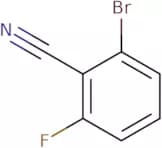
CAS :2-Bromo-6-fluorobenzonitrile is an organic compound with a molecular formula of C6H3BrF. It is a colorless liquid that is used as a precursor in the synthesis of other compounds. 2-Bromo-6-fluorobenzonitrile has been shown to be an efficient fluorophore and can be activated by electron transfer, thermally, or chemically. 2-Bromo-6-fluorobenzonitrile also has a quantum efficiency of 0.5% and transport properties that make it ideal for fluorescence microscopy. The fluorescence intensity of 2-bromo-6-fluorobenzonitrile is proportional to the amount of energy absorbed, which makes it useful for quantifying the concentration of fluorescent molecules in solution. 2-Bromo-6-fluorobenzonitrile has also been shown to have high quantum yields and high efficiency levels when
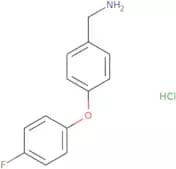
Formule :C7H3BrFNDegré de pureté :Min. 95%Couleur et forme :PowderMasse moléculaire :200.01 g/mol4-(4-Fluorophenoxy)benzylamine hydrochloride
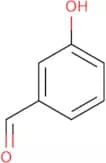
CAS :4-(4-Fluorophenoxy)benzylamine hydrochloride is a metabolic agent that inhibits the metabolism of phenylpropionic acid and butanoic acid. It is used industrially as an oxime to protect other organic compounds from damage by peroxides, such as in polymerization reactions. 4-(4-Fluorophenoxy)benzylamine hydrochloride has been shown to be effective in treating metabolic diseases, such as phenylketonuria and urea cycle disorders.Formule :C13H12FNO·HClDegré de pureté :Min. 95%Couleur et forme :PowderMasse moléculaire :253.7 g/mol3-Hydroxybenzaldehyde
CAS :3-Hydroxybenzaldehyde (3HBA) is an organic molecule that belongs to the group of substituted benzaldehydes. It has been shown to induce muscle cell proliferation in vitro and in vivo, as well as increased levels of activated caspase-3 in vitro. 3HBA also has a high resistance to hydrochloric acid, hydrogen bond, and chemical structures. It also shows properties of intramolecular hydrogen bonding and aldehyde groups. 3HBA has been shown to be active against malonic acid-induced pulmonary edema in rats, which may be due to its ability to inhibit the release of erythrocytes from the bone marrow into the circulation.Formule :C7H6O2Degré de pureté :Min. 96 Area-%Couleur et forme :Off-White PowderMasse moléculaire :122.12 g/mol5-Acetyl-2-aminobenzonitrile
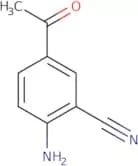
CAS :5-Acetyl-2-aminobenzonitrile is a versatile building block that can be used as an intermediate in the synthesis of a wide range of chemicals. It has been used to produce pharmaceuticals and other useful compounds, including research chemicals and speciality chemicals. 5-Acetyl-2-aminobenzonitrile is also a useful reagent for the production of organic products. The compound is available at high purity levels.
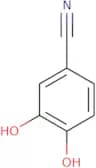
Formule :C9H8N2ODegré de pureté :Min. 95%Couleur et forme :White PowderMasse moléculaire :160.17 g/mol3,4-Dihydroxybenzonitrile
CAS :3,4-Dihydroxybenzonitrile is a chemical compound that is found in soybean lipoxygenase. The molecule has been shown to be an excellent Michaelis-Menten substrate and hydrogen bonding partner. It also reacts with chlorine to form chlorinating agents such as 3,4-dichlorobenzonitrile and 3,4-dibromobenzonitrile. 3,4-Dihydroxybenzonitrile can act as a nucleophile and forms stable complexes when reacted with hydroxyl group compounds such as protocatechuic acid or reaction solution. This chemical is reactive and can be activated by redox cycling or light. 3,4-Dihydroxybenzonitrile has been used to treat protocatechuic acid levels in the blood of patients with chronic liver disease who are being treated for alcoholism.Formule :C7H5NO2Degré de pureté :Min. 95%Couleur et forme :PowderMasse moléculaire :135.12 g/mol3,5-Dibromo-2-anisic acid
CAS :3,5-Dibromo-2-anisic acid is a short chain dodecyl amine with the chemical formula CH2Br2C6H4N. It is an active compound that has been shown to have nematicidal activity and also shows high activity against saprophytes. 3,5-Dibromo-2-anisic acid is synthesized by reacting chlorine with salicylaldehyde in the presence of a base. The compound is used in the synthesis of various other organic compounds such as amides and amines.Formule :C8H6Br2O3Degré de pureté :Min. 95%Couleur et forme :PowderMasse moléculaire :309.94 g/mol2-Carboxy-3,4-dimethoxybenzaldehyde
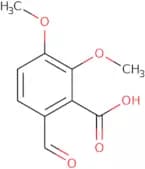
CAS :2-Carboxy-3,4-dimethoxybenzaldehyde is a chemical that belongs to the class of compounds known as butyric acid derivatives. It is a colorless liquid with a pungent odor and can be used in pharmaceutical preparations as an antispasmodic or a sedative. 2-Carboxy-3,4-dimethoxybenzaldehyde has been shown to have radical scavenging activities in tissue culture systems and dry weight reaction products in the presence of hydrochloric acid and chloride ion. This compound can also act as an acid complexing agent for hydrogen chloride and depressant activity on animal behavior.Formule :C10H10O5Degré de pureté :Min. 95%Couleur et forme :White Yellow PowderMasse moléculaire :210.18 g/mol2-Hydroxy-6-(methoxymethoxy)benzaldehyde
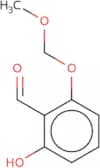
CAS :2-Hydroxy-6-(methoxymethoxy)benzaldehyde is a chemical intermediate that can be used in the synthesis of a wide range of compounds. It is an aromatic compound which has two hydroxyl groups on the benzene ring. This product is a versatile building block, and is useful in the synthesis of complex compounds with high purity. 2-Hydroxy-6-(methoxymethoxy)benzaldehyde can be obtained as a white solid with a melting point of 57°C.Formule :C9H10O4Degré de pureté :Min. 95%Couleur et forme :Clear LiquidMasse moléculaire :182.17 g/mol4-Acetamidobenzaldehyde
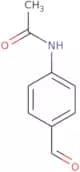
CAS :4-Acetamidobenzaldehyde is an organic compound that has been shown to exhibit inhibitory effects on influenza virus replication in cell culture. 4-Acetamidobenzaldehyde is a dihedral molecule with a p2 group and can be synthesized from benzaldehyde and acetamide. It has also been shown to have potential use in the treatment of tuberculosis. The biological properties of 4-acetamidobenzaldehyde are not well understood, but it is thought that uptake may occur through the imine nitrogen. This molecule has been detected in tissue samples such as lung, liver, and kidney.Formule :C9H9NO2Degré de pureté :Min. 95%Couleur et forme :PowderMasse moléculaire :163.17 g/mol2,6-Difluorobenzonitrile
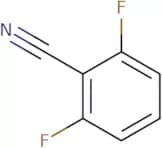
CAS :2,6-Difluorobenzonitrile is a nucleophilic compound that reacts with inorganic acids to form new chemical structures. It has been shown to react with hydrochloric acid, sodium carbonate and phosphotungstic acid. The FT-IR spectroscopy of 2,6-difluorobenzonitrile shows a reaction product with a proton. This means that the molecule is able to transfer a hydrogen ion from one site to another. The reaction between 2,6-difluorobenzonitrile and sodium carbonate produces an insoluble precipitate of sodium phosphate and sodium chloride, which can be analyzed gravimetrically. 2,6-Difluorobenzonitrile has also been shown to have fluorescence properties that are activated by ultraviolet light and naphthalene.
Formule :C7H3F2NDegré de pureté :Min. 95%Couleur et forme :PowderMasse moléculaire :139.1 g/mol4-Methoxy-3-methylphenylacetone
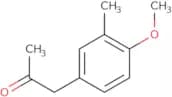
CAS :4-Methoxy-3-methylphenylacetone is an organic chemical that is used as a reaction component, reagent, and useful scaffold. It is a high quality research chemical that can be used as an intermediate in the synthesis of other compounds. 4-Methoxy-3-methylphenylacetone has a CAS number of 16882-23-8 and can be found under the category of speciality chemicals. This compound is versatile and can be used to make complex compounds.Formule :C11H14O2Degré de pureté :Min. 95%Couleur et forme :Yellow PowderMasse moléculaire :178.23 g/mol2,6-Dimethoxy-4-methylbenzaldehyde
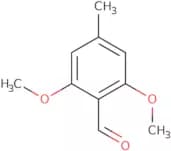
CAS :2,6-Dimethoxy-4-methylbenzaldehyde (DMMB) is a useful chemical that is used as a building block in the synthesis of complex compounds. It has been shown to be an effective chemical intermediate and can be used in the synthesis of various products, such as pharmaceuticals and pesticides. DMMB can also be used to produce high quality research chemicals.Formule :C10H12O3Degré de pureté :Min. 95%Couleur et forme :PowderMasse moléculaire :180.2 g/mol4-Amino-3-nitrobenzonitrile
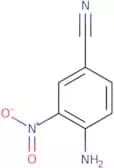
CAS :4-Amino-3-nitrobenzonitrile is an organic compound that is used as a precursor in the synthesis of drugs to treat infectious diseases. 4-Amino-3-nitrobenzonitrile has been shown to have potent activity against Leishmania species, including L. major and L. braziliensis. It binds to sulfoxides by a nitro group and forms a covalent bond with the sulfoxide. This results in the formation of an intramolecular hydrogen bond between the nitro group and the sulfoxide, which prevents it from forming hydrogen bonds with other molecules. Gel permeation chromatography can be used for analytical determination of this drug. 4-Amino-3-nitrobenzonitrile has also been studied using chemosensors and in vivo studies, showing that it can be used to inhibit protozoa such as Giardia lamblia, Entamoeba histolyt
Formule :C7H5N3O2Degré de pureté :Min. 98%Couleur et forme :PowderMasse moléculaire :163.13 g/mol2-Phenoxybenzoic acid
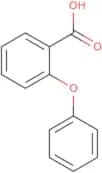
CAS :2-Phenoxybenzoic acid is a hydrochloride salt that is used as a reagent in analytical chemistry. It reacts with the carboxylate group of amino acids, proteins, and peptides to form a stable, water-soluble complex. The reaction is typically monitored by measuring the change in optical density at 260 nm. 2-Phenoxybenzoic acid reacts with bcr-abl kinase and colloidal gold to form an insoluble precipitate that can be detected with electron microscopy. This compound also has biological properties such as inhibiting carbonic anhydrase activity and changing the pH of the solution. 2-Phenoxybenzoic acid was originally synthesized from diphenyl ether and phenol (C6H5OH). 2-Phenoxybenzoic acid can be converted into 2-(4-nitrophenoxy) benzoic acid by reacting it with sodium nitrite followed by hydrochloric acidFormule :C13H10O3Degré de pureté :Min. 95%Couleur et forme :PowderMasse moléculaire :214.22 g/molPhenylacetone oxime
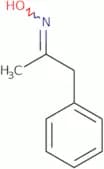
CAS :Phenylacetone oxime is a chemical intermediate that can be used in the synthesis of pharmaceuticals. It has a neutral pH and is stable in the presence of alkalis, acids, oxidizing agents, and reducing agents. Phenylacetone oxime reacts with hydrogen chloride to form 1-chloro-2-phenylethanone and 2-chloroethanol. The reaction mechanism is as follows:
Formule :C9H11NODegré de pureté :Min. 95%Couleur et forme :PowderMasse moléculaire :149.19 g/mol