Benzènes
Les benzènes sont des hydrocarbures aromatiques simples constitués d'un anneau de carbone à six membres avec des doubles liaisons alternées. Cette structure fondamentale est un bloc de construction pour de nombreux composés chimiques, y compris les produits pharmaceutiques, les polymères et les colorants. Les benzènes sont largement utilisés en synthèse organique en raison de leur stabilité et de leur polyvalence. Chez CymitQuimica, nous offrons une large gamme de benzènes de haute qualité pour soutenir vos recherches et applications industrielles.
Sous-catégories appartenant à la catégorie "Benzènes"
- Benzamides(62 produits)
- Acides benzoïques(5.471 produits)
- Alcools benzyliques(1.458 produits)
- Benzènes halogénés(33.962 produits)
- Phénols(2.653 produits)
11887 produits trouvés pour "Benzènes"
Trier par
Degré de pureté (%)
0
100
|
0
|
50
|
90
|
95
|
100
2-Amino-5-iodobenzoic acid
CAS :<p>2-Amino-5-iodobenzoic acid (5-AIBA) is a chemical compound with a molecular weight of 152.14 g/mol. It belongs to the group of anthranilic compounds, and has antiinflammatory activity. 5-AIBA also inhibits cancer cell proliferation in vitro and in vivo by inhibiting the synthesis of DNA, RNA, and proteins. The reaction solution for the palladium-catalyzed coupling of 5-AIBA with 2-(N,N′-dimethylcarbamoyl)phenyl boronic acid was found to be stable at room temperature for 24 hours. The inhibitory activity of 5-AIBA against MCL1 protein was potent, as it inhibited MCL1 protein expression by 90%. Molecular modeling studies showed that 5-AIBA binds to the amide region on the ATP binding site in MCL1 protein (mcf7). Carbonyl groups are present on both sides of the am</p>Formule :C7H6INO2Degré de pureté :Min. 98 Area-%Couleur et forme :PowderMasse moléculaire :263.03 g/mol3-Iodobenzaldehyde
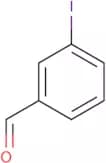
CAS :3-Iodobenzaldehyde is an atypical, isomeric, low energy, functional group. It has a fluorine atom in the 3-position and three different types of functional groups: alcohol, aldehyde and carboxylic acid. This compound has been studied for its ability to bind to receptors. 3-Iodobenzaldehyde can be synthesized by reacting benzalchohde with iodine and hydrochloric acid. The technique used to produce this compound is called Grignard reaction. 3-Iodobenzaldehyde can also be prepared by heating the corresponding nitrobenzene with sodium iodide in dry ether or under refluxing conditions. This compound has a low boiling point and melts at about 170 degrees Celsius. The frequency of this molecule ranges from 98 to 102 megahertzFormule :C7H5IODegré de pureté :Min. 95%Couleur et forme :PowderMasse moléculaire :232.02 g/mol3-Dimethylaminobenzoic acid
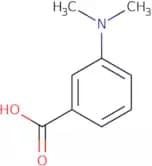
CAS :3-Dimethylaminobenzoic acid is a bacterial enzyme that belongs to the group of p2 carboxylates. It is a non-specific esterase that has been shown to hydrolyze 3-ethylbenzthiazoline-6-sulfonic acid, which is an indicator of root formation. The enzyme activity of 3-dimethylaminobenzoic acid has been demonstrated in kinetic data and redox potential measurements. 3DMBB is found in plants and can be used for the determination of dry weight, as it can hydrolyze triticum aestivum urine samples or cholesterol esters. This enzyme also has catalase activity and can be used in the determination of catalase activity in biological fluids such as urine samples or blood serum.Formule :C9H11NO2Degré de pureté :Min. 95%Couleur et forme :Off-White PowderMasse moléculaire :165.19 g/mol4-Iodobenzaldehyde
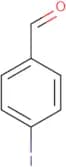
CAS :4-Iodobenzaldehyde is a chemical compound with the molecular formula C6H5IO. It is an aromatic compound that can be used in cancer therapy. 4-Iodobenzaldehyde reacts with trifluoroacetic acid to form an intramolecular hydrogen, which is detected using a low-energy monomer and high detection sensitivity. 4-Iodobenzaldehyde has two phenyl substituents and a serine protease functional group, which are required for its interaction with other molecules. The presence of these functional groups allows analytical methods to be used to identify 4-iodobenzaldehyde in various samples. Using analytical methods, it can be determined that 4-iodobenzaldehyde interacts with an acceptor molecule at the reaction vessel thermally or by irradiation.Formule :C7H5IODegré de pureté :Min. 95%Couleur et forme :Yellow PowderMasse moléculaire :232.02 g/mol2-Hydroxy-4-methoxybenzaldehyde
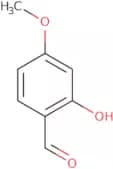
CAS :<p>2-Hydroxy-4-methoxybenzaldehyde is an antifungal agent that has been shown to have a broad spectrum of activity against filamentous fungi. It is able to inhibit the growth of fungi by inhibiting the enzyme shikimate dehydrogenase, which is involved in the synthesis of aromatic amino acids and other essential metabolites. 2-Hydroxy-4-methoxybenzaldehyde also inhibits xylose reductase and alpha-galactosidase, enzymes that are involved in cell wall biosynthesis. This compound is effective against Candida albicans, Aspergillus niger, and Trichophyton mentagrophytes. 2-Hydroxy-4-methoxybenzaldehyde has also been shown to have bacteriostatic effects on Escherichia coli.</p>Formule :C8H8O3Degré de pureté :Min. 95%Couleur et forme :Off-White PowderMasse moléculaire :152.15 g/mol2-Hydroxy-3-methoxybenzaldehyde
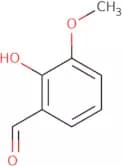
CAS :<p>2-Hydroxy-3-methoxybenzaldehyde is a model compound that is used to study the reaction mechanism of hydrogen bonding. It has been shown to have antioxidative properties and amoebicidal activity. The biological properties of 2-hydroxy-3-methoxybenzaldehyde are still being studied. There are also no reports on its toxicity or carcinogenicity in humans. This compound is a member of the group P2, which includes compounds with two aromatic rings connected by one carbon atom. The molecular geometry around this carbon atom is pyramidal and the molecule can exist in either an axial or equatorial orientation. Synchronous fluorescence experiments have shown that 2-hydroxymethoxybenzaldehyde reacts with Toll-like receptor 4 (TLR4).</p>Formule :C8H8O3Degré de pureté :Min. 95%Couleur et forme :Yellow PowderMasse moléculaire :152.15 g/molSalicylic acid
CAS :<p>Salicylic acid is a weak organic acid that is used as a plant hormone. It has been shown to have enzyme activities that may be involved in the regulation of glycol ether metabolism, photosynthetic activity, p-hydroxybenzoic acid biosynthesis and nutrient solution. Salicylic acid also inhibits nitrite ion production by reacting with acetylsalicylic, which is an inhibitor of the enzyme nitric oxide synthase. Salicylic acid may inhibit transcriptional regulation by steric interactions with DNA or by binding to regulatory proteins. The structural analysis of salicylic acid shows an intramolecular hydrogen bond between the hydroxyl group and carbonyl group which could lead to enzyme inhibition.</p>Formule :C7H6O3Degré de pureté :Min. 95%Couleur et forme :White Off-White PowderMasse moléculaire :138.12 g/mol3-Formyl-4-hydroxybenzoic acid
CAS :3-Formyl-4-hydroxybenzoic acid is a synthetic compound with anticancer activity. It is an azobenzene that has been shown to have photocatalytic activity. 3-Formyl-4-hydroxybenzoic acid has a carboxylate functional group and the ethyl ester functional group. The anticancer activity of this compound may be due to hydrogen bonding interactions, as well as its ability to cause DNA damage in cells by photolysis and its antiviral potency.Formule :C8H6O4Degré de pureté :90%Couleur et forme :White PowderMasse moléculaire :166.13 g/mol2,4,6-Trimethylbenzoic acid
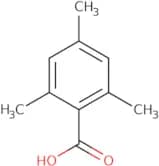
CAS :<p>2,4,6-Trimethylbenzoic acid is a molecule that belongs to the class of carboxylates. It has been shown to exhibit anticarcinogenic properties in patients with cervical cancer. 2,4,6-Trimethylbenzoic acid inhibits the growth of cervical cancer cells by blocking the activation of ferrocenecarboxylic acid (FCCA). This compound also blocks the activity of hydrogen bond and nitrogen atoms that are essential for cell division and development. 2,4,6-Trimethylbenzoic acid is used as an intermediate in the production of ferrocene derivatives. It can be used for acylation reactions with aromatic or aliphatic amines under acidic conditions.</p>Formule :C10H12O2Degré de pureté :Min. 95%Couleur et forme :PowderMasse moléculaire :164.2 g/molEthyl homovanillate
CAS :<p>Inhibitor of monoamine oxidase A</p>Formule :C11H14O4Degré de pureté :Min. 95%Couleur et forme :Colorless PowderMasse moléculaire :210.23 g/mol3-Methoxy-4-methylbenzonitrile
CAS :3-Methoxy-4-methylbenzonitrile is a reagent that is used in the synthesis of complex compounds, such as pharmaceuticals and fine chemicals. It has been shown to be useful as an intermediate for the synthesis of various drugs, including antibiotics. 3-Methoxy-4-methylbenzonitrile has also been shown to be a useful scaffold for the synthesis of new drugs and other chemical compounds. This compound is listed on the Chemical Abstracts Service registry number 3556-60-3.Formule :C9H9NODegré de pureté :Min. 95%Couleur et forme :PowderMasse moléculaire :147.17 g/mol2-Bromo-6-fluorobenzonitrile
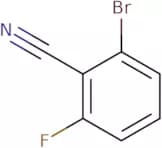
CAS :<p>2-Bromo-6-fluorobenzonitrile is an organic compound with a molecular formula of C6H3BrF. It is a colorless liquid that is used as a precursor in the synthesis of other compounds. 2-Bromo-6-fluorobenzonitrile has been shown to be an efficient fluorophore and can be activated by electron transfer, thermally, or chemically. 2-Bromo-6-fluorobenzonitrile also has a quantum efficiency of 0.5% and transport properties that make it ideal for fluorescence microscopy. The fluorescence intensity of 2-bromo-6-fluorobenzonitrile is proportional to the amount of energy absorbed, which makes it useful for quantifying the concentration of fluorescent molecules in solution. 2-Bromo-6-fluorobenzonitrile has also been shown to have high quantum yields and high efficiency levels when</p>Formule :C7H3BrFNDegré de pureté :Min. 95%Couleur et forme :PowderMasse moléculaire :200.01 g/mol2-Amino-4,6-dimethoxybenzoic acid
CAS :<p>2-Amino-4,6-dimethoxybenzoic acid is an organic chemical compound that can be used as a building block for the synthesis of other compounds. 2-Amino-4,6-dimethoxybenzoic acid has a number of uses including being a reagent in organic and inorganic reactions, such as the synthesis of dyes, pharmaceuticals, and pesticides. It is also used as a building block for complex compounds that are difficult to make. This chemical has been classified by the Chemical Abstract Services (CAS) registry with CAS number 21577-57-1.</p>Formule :C9H11NO4Degré de pureté :Min. 95%Couleur et forme :Yellow SolidMasse moléculaire :197.19 g/mol5,6-Dichlorovanillic acid
CAS :<p>5,6-Dichlorovanillic acid is a high quality, versatile molecule that can be used as a reagent in organic synthesis or as a building block for the synthesis of complex compounds. It has many useful properties, such as being a fine chemical and research chemicals. 5,6-Dichlorovanillic acid is also a speciality chemical with versatile uses in building blocks or reaction components.</p>Formule :C8H6Cl2O4Degré de pureté :Min. 95%Couleur et forme :PowderMasse moléculaire :237.04 g/molMethyl 3-amino-4-chlorobenzoate
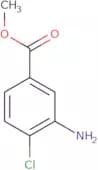
CAS :Methyl 3-amino-4-chlorobenzoate is an analog of 3-amino-4-chlorobenzoic acid. It is a multidrug that can cross the blood brain barrier and has been shown to have cytotoxic activity in vitro. Methyl 3-amino-4-chlorobenzoate has been postulated as a possible organometallic compound and may be synthesized through a chemical diversity approach. The chloride ion, which is present in methyl 3-amino-4-chlorobenzoate, has been shown to decrease the toxicity of nitrobenzoic acid, making this compound resistant to nitrosation reactions.Formule :C8H8ClNO2Degré de pureté :Min. 95%Couleur et forme :PowderMasse moléculaire :185.61 g/mol3,5-Dichloro-4-hydroxybenzaldehyde
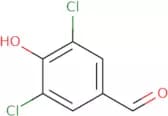
CAS :<p>3,5-Dichloro-4-hydroxybenzaldehyde is a triiodomethane derivative that reacts with chlorine to form a chlorinated aldehyde. It is used as an intermediate in the production of 4-hydroxybenzoic acid from phenylacetic acid and 4,4'-dichlorodiphenyl sulfone. 3,5-Dichloro-4-hydroxybenzaldehyde can be decarboxylated at elevated temperatures to produce formic acid. This compound has been used in wastewater treatment as it can remove chlorine byproducts and other pollutants such as nitrates, nitrites, and iron ions. The reaction kinetics of 3,5-dichloro-4-hydroxybenzaldehyde have been studied using hydroxymethyl groups and formyl groups to determine the rate of demethylation. The rates were found to be dependent on temperature.</p>Formule :C7H4Cl2O2Degré de pureté :Min. 95%Couleur et forme :White PowderMasse moléculaire :191.01 g/mol2-Amino-4-methoxybenzoic acid
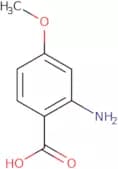
CAS :2-Amino-4-methoxybenzoic acid is a monophenolic compound that has been shown to have antioxidant properties. It is a redox potential with a pK of 7.8 and can be protonated at the phenolic hydroxyl group. 2-Amino-4-methoxybenzoic acid has been shown to inhibit the enzyme activities of histone proteins, which are enzymes that catalyze the formation of DNA from RNA. This compound also inhibits enzymes involved in amino acid synthesis such as anthranilate synthase and malic enzyme, as well as other enzymes such as phosphotransferase (PTS) and pyruvate kinase. 2-Amino-4-methoxybenzoic acid also causes inhibition of growth in phytophthora megasperma, an oomycete plant pathogen, by altering the redox potentials inside the cell membrane. The mechanism forFormule :C8H9NO3Degré de pureté :Min. 95%Couleur et forme :PowderMasse moléculaire :167.16 g/mol2-Nitrobenzoic acid - Technical
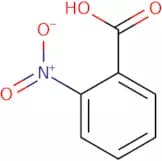
CAS :<p>2-Nitrobenzoic acid is an organic compound that is used as a reagent in the preparation of aldehydes, esters, and amides. It has been shown to be a potent inhibitor of the MCL-1 protein. This protein is an important regulator of mitochondrial permeability transition pore (MPTP) opening and apoptosis induction. The inhibition of the MPTP by 2-nitrobenzoic acid may be due to its ability to react with nitric oxide (NO) to form peroxynitrite, which reacts with MPTP proteins in the mitochondria. The use of 2-nitrobenzoic acid has been found to be effective in treating infectious diseases such as HIV, as well as autoimmune diseases such as psoriasis.</p>Formule :C7H5NO4Degré de pureté :Min. 95%Couleur et forme :PowderMasse moléculaire :167.12 g/mol5-Fluoro-2-methylbenzoic acid
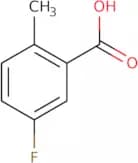
CAS :5-Fluoro-2-methylbenzoic acid is a synthetic compound that has antiviral potency against the influenza A virus. It is the active form of 5-fluoro-2-methylbenzoyl chloride, which is synthesized from a Grignard reagent and an asymmetric synthesis. 5-Fluoro-2-methylbenzoic acid has been shown to have anticancer properties in vitro, which may be due to its ability to inhibit cancer cell growth through interaction with chloride channels. This drug also inhibits the activity of dehydrogenases, which are enzymes that catalyze the oxidation of various substrates by reducing them.Formule :C8H7FO2Degré de pureté :Min. 95%Couleur et forme :White PowderMasse moléculaire :154.14 g/mol2-Amino-6-methoxybenzonitrile
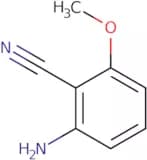
CAS :2-Amino-6-methoxybenzonitrile is an organic compound that belongs to a group of monosubstituted hydroxylamines. It has been used in the synthesis of various analogues, such as caprolactam and methoxyanthranilic acid. Hydrochloric acid reacts with 2-amino-6-methoxybenzonitrile to form 2-amino-6-hydroxybenzonitrile, which can be oxidized to 2-amino-6-(hydroxymethyl)benzonitrile. This reaction is catalyzed by copper or zinc metal.Formule :C8H8N2ODegré de pureté :Min. 95%Couleur et forme :PowderMasse moléculaire :148.16 g/mol