Benzènes
Les benzènes sont des hydrocarbures aromatiques simples constitués d'un anneau de carbone à six membres avec des doubles liaisons alternées. Cette structure fondamentale est un bloc de construction pour de nombreux composés chimiques, y compris les produits pharmaceutiques, les polymères et les colorants. Les benzènes sont largement utilisés en synthèse organique en raison de leur stabilité et de leur polyvalence. Chez CymitQuimica, nous offrons une large gamme de benzènes de haute qualité pour soutenir vos recherches et applications industrielles.
Sous-catégories appartenant à la catégorie "Benzènes"
- Benzamides(62 produits)
- Acides benzoïques(5.471 produits)
- Alcools benzyliques(1.458 produits)
- Benzènes halogénés(33.962 produits)
- Phénols(2.653 produits)
11887 produits trouvés pour "Benzènes"
Trier par
Degré de pureté (%)
0
100
|
0
|
50
|
90
|
95
|
100
Ethyl 4-nitrobenzoate
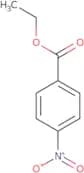
CAS :<p>Ethyl 4-nitrobenzoate is a compound that is used to synthesize other drugs, such as erythromycin. It is also an intermediate in the synthesis of some pesticides and dyes. The second-order rate constant for the reaction of ethyl 4-nitrobenzoate with phosphotungstic acid has been measured at 0.058/min at 25°C. This reaction is catalyzed by recombinant cytochrome P450 (P450) enzymes from human liver preparations and cationic surfactants such as nitrobenzene or sodium carbonate, which are known to form hydrogen bonds with the protonated nitrogen atom on the aromatic ring of ethyl 4-nitrobenzoate. Ethyl 4-nitrobenzoate is also used clinically to treat gastric ulcers, although it can be toxic if taken in large doses or over a long period of time.</p>Formule :C9H9NO4Degré de pureté :Min. 95%Couleur et forme :PowderMasse moléculaire :195.17 g/molMethyl 2-bromobenzoate
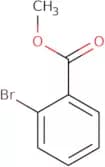
CAS :<p>Methyl 2-bromobenzoate is a chemical compound that can be used as a light emitting material. It is also used as a component of organic electrochemical cells (OECs) for the conversion of solar energy to electricity and can be used in the treatment of hepatitis. The reaction product is generated from the reaction of the halide with benzoate and light, which leads to an emission spectrum in the visible region. Methyl 2-bromobenzoate has been shown to be an efficient catalyst for Friedel-Crafts reactions, and it's pharmacokinetic properties have been studied in rats.<br>Methyl 2-bromobenzoate can also be used as a solid catalyst for the synthesis of bicyclic heterocycles.</p>Formule :C8H7BrO2Degré de pureté :Min. 95%Couleur et forme :Colorless Clear LiquidMasse moléculaire :215.04 g/molEthyl 4-ethoxybenzoate
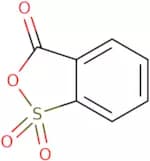
CAS :Ethyl 4-ethoxybenzoate is an antimicrobial agent that inhibits bacterial growth by interfering with the synthesis of DNA. It also has a genotoxic potential and can induce mutations in cells. Ethyl 4-ethoxybenzoate is used as an impurity in pharmaceutical drug production, such as solanum tuberosum extract, to prevent microbial contamination. It also has been shown to inhibit the growth of bacteria in cell cultures by binding to DNA and inhibiting DNA replication. Ethyl 4-ethoxybenzoate is used as a control agent for the detection of antibiotics in natural products, such as ethanol extracts from plants.Formule :C11H14O3Degré de pureté :Min. 97.5 Area-%Couleur et forme :Colorless Clear LiquidMasse moléculaire :194.23 g/molo-Sulfobenzoic acid anhydride
CAS :<p>Please enquire for more information about o-Sulfobenzoic acid anhydride including the price, delivery time and more detailed product information at the technical inquiry form on this page</p>Formule :C7H4O4SMasse moléculaire :184.17 g/molRef: 3D-S-9350
1kgÀ demander5kgÀ demander10kgÀ demander500gÀ demander2500gÀ demander-Unit-kgkgÀ demander3-Ethoxy-4-hydroxybenzaldehyde
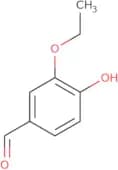
CAS :<p>3-Ethoxy-4-hydroxybenzaldehyde is an active analogue of p-hydroxybenzoic acid that can be used in the synthesis of vanillin. 3-Ethoxy-4-hydroxybenzaldehyde is extracted from a reaction solution using solid phase microextraction, and can then be analyzed by gas chromatography/mass spectrometry to determine the concentration of vanillin. This compound has been shown to have a solubility in water, but not in organic solvents. 3-Ethoxy-4-hydroxybenzaldehyde has been found to inhibit cytochrome P450 activity and polyvinyl chloride production. This chemical compound has also been found to be toxic when inhaled or ingested, with no known toxicity studies for skin contact or eye contact.</p>Formule :C9H10O3Degré de pureté :Min. 95%Couleur et forme :White PowderMasse moléculaire :166.17 g/molGlyceryl-4-aminobenzoate monomer
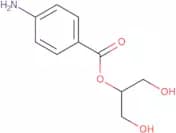
CAS :<p>Glyceryl-4-aminobenzoate monomer is a fine chemical that is an important building block in the synthesis of a variety of complex compounds. It has been used as a reagent and intermediate in research and development of pharmaceuticals and agrochemicals. Glyceryl-4-aminobenzoate monomer is a versatile building block, which can be used to form polymers, coatings, adhesives, elastomers, polyurethanes, and more. The compound also has been shown to have anticancer activity against human breast cancer cells.</p>Formule :C10H13NO4Degré de pureté :Min. 75 Area-%Couleur et forme :Off-white to beige solid.Masse moléculaire :211.21 g/mol3-Chloro-5-hydroxybenzoic acid ethyl ester
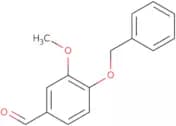
<p>Please enquire for more information about 3-Chloro-5-hydroxybenzoic acid ethyl ester including the price, delivery time and more detailed product information at the technical inquiry form on this page</p>Formule :C9H9ClO3Degré de pureté :Min. 98 Area-%Couleur et forme :PowderMasse moléculaire :200.62 g/mol4-Benzyloxy-3-methoxybenzaldehyde
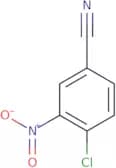
CAS :<p>4-Benzyloxy-3-methoxybenzaldehyde is a deuterium isotope analog of the natural compound benzaldehyde. This molecule has been shown to inhibit the growth of cancer cells in tissue culture by binding to DNA. The molecular mechanism of this inhibition is believed to involve an enzymatic process that results in the substitution of chloride for chlorine, thereby inhibiting DNA synthesis and preventing cell division. 4-Benzyloxy-3-methoxybenzaldehyde also inhibits the production of growth factors and thus has anticancer activity.</p>Formule :C15H14O3Degré de pureté :Min. 95%Couleur et forme :PowderMasse moléculaire :242.27 g/mol4-Chloro-3-nitrobenzonitrile
CAS :<p>4-Chloro-3-nitrobenzonitrile is a molecule with potent antibacterial activity. It is synthesized by the reaction of sodium carbonate, hydrogen chloride, and 4-chlorobenzonitrile. 4-Chloro-3-nitrobenzonitrile has shown antimicrobial properties against a wide range of bacteria, including methicillin resistant Staphylococcus aureus (MRSA) and Enterococcus faecium. This compound has been used in the treatment of infections caused by these bacteria. 4-Chloro-3-nitrobenzonitrile also has the ability to inhibit the synthesis of fatty acids and lipids in bacterial cells, which may be responsible for its antimicrobial effects.</p>Formule :C7H3ClN2O2Degré de pureté :Min. 95%Couleur et forme :PowderMasse moléculaire :182.56 g/mol3,4,5-Tribromobenzoic acid
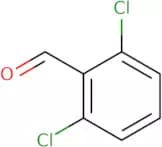
CAS :<p>3,4,5-Tribromobenzoic acid is a metabolite of 3-indoleacetic acid. It is excreted in the urine and has a phaseolus-like physiological activity. This compound has been found to reduce the number of internodes in plants and increase the number of subjacent nodes. In addition, it has been shown to inhibit abscission (the separation of plant parts) by inhibiting the release of auxin from the upper node. The structural properties of 3,4,5-tribromobenzoic acid are similar to those of benzoic acid and it can be found naturally in some plants. Diversity in this chemical has been found among different species: for example, 2,3,5-triiodobenzoic acid is only present in citrus fruits such as oranges and lemons.</p>Formule :C7H3Br3O2Degré de pureté :Min. 95%Couleur et forme :PowderMasse moléculaire :358.81 g/mol2,6-Dichlorobenzaldehyde
CAS :2,6-Dichlorobenzaldehyde is a nucleophilic compound that has the ability to form hydrogen bonds. It reacts with phosphorus pentachloride to produce 2-chloro-4,6-dichlorobenzene. 2,6-Dichlorobenzaldehyde can be used in the synthesis of β-unsaturated ketones and anticancer drugs such as aziridines. It is also used as a precursor for coordination complexes. This compound is an efficient method for making nitrogen nucleophiles, which are important in chain reactions and the production of polymers. The 2,6-dichlorobenzaldehyde molecule contains two chiral centers that give rise to four stereoisomers. X-ray diffraction data shows that this molecule exists as a mixture of these four isomers.Formule :C7H4Cl2ODegré de pureté :Min. 97.5%Couleur et forme :PowderMasse moléculaire :175.01 g/molo-Sulfobenzoic acid anhydride
CAS :<p>o-Sulfobenzoic acid anhydride is a chemical that belongs to the class of inorganic acids. It is a white crystalline solid with a melting point of 107°C and can be found in its pure form or as sodium salts. o-Sulfobenzoic acid anhydride is stable when exposed to light and can be used in detergent compositions. It also has pharmacokinetic properties, which are affected by the presence of cationic polymers. This chemical is metabolized by microorganisms through hydrogen bonding interactions and has been shown to have antimicrobial activity against infectious bacteria, such as erythromycin-resistant strains of Staphylococcus aureus and Mycobacterium tuberculosis.</p>Formule :C7H4O4SDegré de pureté :Min 98%Couleur et forme :Slightly Brown PowderMasse moléculaire :184.17 g/mol3,4-Dihydroxy-5-methoxybenzaldehyde
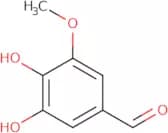
CAS :<p>3,4-Dihydroxy-5-methoxybenzaldehyde is a synthetic compound that has shown to have inhibitory effects on the replication of DNA and RNA. It also inhibits the growth of bacteria in culture by binding to the nucleic acid. The chemical structure of 3,4-Dihydroxy-5-methoxybenzaldehyde is similar to that of bisbenzylisoquinoline alkaloids, which are found in plants such as opium poppy. This similarity may explain its ability to inhibit bacterial growth. 3,4-Dihydroxy-5-methoxybenzaldehyde may be used as a drug candidate for treating bacterial infections.</p>Formule :C8H8O4Degré de pureté :Min. 95%Couleur et forme :PowderMasse moléculaire :168.15 g/mol2-Chloro-3-methylbenzylamine HCl - 90%
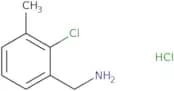
CAS :<p>2-Chloro-3-methylbenzylamine HCl is a fine chemical that is a versatile building block for synthesis of pharmaceuticals and research chemicals. It is also a useful intermediate in the production of other compounds, such as speciality chemicals, complex compounds, and reaction components. 2-Chloro-3-methylbenzylamine HCl has many potential applications in both academia and industry because it is a high quality reagent with many uses.</p>Formule :C8H10ClN·HClDegré de pureté :Min. 95%Couleur et forme :PowderMasse moléculaire :192.09 g/mol2-Bromo-4-cyanobenzaldehyde
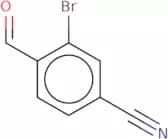
CAS :2-Bromo-4-cyanobenzaldehyde is a potent protease inhibitor and can be used as an antiviral agent. It inhibits the NS3 protease of hepatitis C virus (HCV) with IC50 of 0.2 μM. 2-Bromo-4-cyanobenzaldehyde has been evaluated for its ability to inhibit replicons from HCV genotypes 1, 2, 3, 4 and 5 with varying degrees of potency. In vitro studies have shown that 2-bromo-4-cyanobenzaldehyde is a potent inhibitor of HCV NS3 protease, demonstrating activity against all major HCV genotypes in cell culture. This molecule has also been shown to inhibit the replication of HIV, herpes simplex virus type 1 and human rhinovirus type 2 in cell culture.Formule :C8H4BrNODegré de pureté :Min. 95%Couleur et forme :PowderMasse moléculaire :210.03 g/mol3-Amino-2,4,6-triiodobenzoic acid
CAS :3-Amino-2,4,6-triiodobenzoic acid (3AIBA) is a chemical compound that is used as a contrast agent for medical imaging. It has been shown to be useful in the diagnosis of bladder cancer, and is used in the embolization of renal artery and ureteral calculi. 3AIBA functions by binding to the antigen binding sites on the tumor cells and allows visualization with X-rays. It has also been shown to be effective in reducing blood flow in tumors by blocking blood vessels with its cationic monomer. 3AIBA binds to the phosphate groups on DNA and causes crosslinking, which prevents DNA polymerase from binding with DNA. This inhibits DNA synthesis and cell division.Formule :C7H4I3NO2Degré de pureté :Min. 95%Couleur et forme :PowderMasse moléculaire :514.83 g/mol3-Methoxy-4-methylbenzoic acid methyl ester
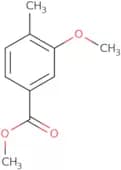
CAS :<p>3-Methoxy-4-methylbenzoic acid methyl ester is a potent inhibitor of the neurotoxic effects of β-amyloid peptide (Aβ) on cultured human neurons. 3-Methoxy-4-methylbenzoic acid methyl ester inhibits fibrillation in vitro and fluorescence assay, suggesting that it may be a promising therapeutic agent for Alzheimer's disease. The fluorescence assay is based on the inhibition of fluorescence by 3-methoxy-4-methylbenzoic acid methyl ester, which competes with Aβ for binding to an acceptor molecule. This inhibition can be used as a marker to measure the amount of Aβ present in vivo.</p>Formule :C10H12O3Degré de pureté :Min. 95%Couleur et forme :White PowderMasse moléculaire :180.2 g/mol4-Dimethylamino-2-methoxybenzaldehyde
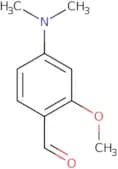
CAS :When used in combination with X-Gal, 4-dimethylamino-2-methoxybenzaldehyde can be used for effective staining under anaerobic conditions. This novel method is termed Indoxyl/Dimethylamino-2-methoxybenzaldehyde aldol staining and can be used as an alternative to indoxyl-substrate indicator systems which depends on molecule oxygen to develop the desired indigo chromogen.Formule :C10H13NO2Degré de pureté :Min. 95%Couleur et forme :Yellow PowderMasse moléculaire :179.22 g/molOctyl gallate
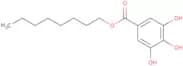
CAS :<p>Octyl gallate is a naturally occurring compound that belongs to the class of gallates. It is a non-toxic, water-soluble antioxidant that has been used as a preservative in foods and pharmaceuticals. Octyl gallate has been shown to inhibit nuclear DNA synthesis by binding to the dinucleotide phosphate (NDP) site on ribonucleotide reductase, thereby preventing the formation of deoxyribonucleotide triphosphates. A rate constant for this reaction has been determined using analytical methods. This compound also inhibits the growth of wild-type strains of Escherichia coli and Staphylococcus aureus, as well as some strains resistant to antibiotics such as erythromycin, chloramphenicol, tetracycline, and clindamycin. Octyl gallate may also have an effect on energy metabolism in bacteria by inhibiting p-hydroxybenzoic acid (PHBA) dehydratase</p>Formule :C15H22O5Degré de pureté :Min. 95%Couleur et forme :White PowderMasse moléculaire :282.33 g/mol3,4-Dihydroxybenzaldehyde
CAS :Please enquire for more information about 3,4-Dihydroxybenzaldehyde including the price, delivery time and more detailed product information at the technical inquiry form on this pageFormule :C7H6O3Masse moléculaire :138.12 g/mol