Benzènes
Les benzènes sont des hydrocarbures aromatiques simples constitués d'un anneau de carbone à six membres avec des doubles liaisons alternées. Cette structure fondamentale est un bloc de construction pour de nombreux composés chimiques, y compris les produits pharmaceutiques, les polymères et les colorants. Les benzènes sont largement utilisés en synthèse organique en raison de leur stabilité et de leur polyvalence. Chez CymitQuimica, nous offrons une large gamme de benzènes de haute qualité pour soutenir vos recherches et applications industrielles.
Sous-catégories appartenant à la catégorie "Benzènes"
- Benzamides(62 produits)
- Acides benzoïques(5.471 produits)
- Alcools benzyliques(1.458 produits)
- Benzènes halogénés(33.962 produits)
- Phénols(2.653 produits)
11887 produits trouvés pour "Benzènes"
Trier par
Degré de pureté (%)
0
100
|
0
|
50
|
90
|
95
|
100
2-Fluoro-3-methylbenzoic acid
CAS :2-Fluoro-3-methylbenzoic acid is a high quality, versatile building block that has been shown to be an effective reagent for the synthesis of complex compounds. It is also a useful intermediate in the synthesis of fine chemicals and speciality chemicals. This compound can be used as a reaction component for many chemical reactions, such as the formation of new bonds and the removal of protecting groups. As a versatile building block, 2-fluoro-3-methylbenzoic acid is an important starting material for synthesizing a number of natural products, pharmaceuticals, and other organic compounds.Formule :C8H7FO2Degré de pureté :Min. 95%Couleur et forme :White PowderMasse moléculaire :154.14 g/mol3-Methoxy-4-methylbenzonitrile
CAS :3-Methoxy-4-methylbenzonitrile is a reagent that is used in the synthesis of complex compounds, such as pharmaceuticals and fine chemicals. It has been shown to be useful as an intermediate for the synthesis of various drugs, including antibiotics. 3-Methoxy-4-methylbenzonitrile has also been shown to be a useful scaffold for the synthesis of new drugs and other chemical compounds. This compound is listed on the Chemical Abstracts Service registry number 3556-60-3.Formule :C9H9NODegré de pureté :Min. 95%Couleur et forme :PowderMasse moléculaire :147.17 g/molIso-propyl 4-aminobenzoate
CAS :<p>Iso-propyl 4-aminobenzoate is a chemical intermediate that belongs to the group of aminobenzoates. It can be synthesized by reacting isopropanol with 4-aminobenzoic acid in the presence of an acid catalyst. Iso-propyl 4-aminobenzoate has been used as a chromatographic stationary phase and as a component in the validation of impurities, which are genotoxic. Iso-propyl 4-aminobenzoate is not carcinogenic and has been shown to have a linear regression analysis with pharmacokinetic study data, which was based on plates.</p>Formule :C10H13NO2Degré de pureté :Min. 95%Couleur et forme :PowderMasse moléculaire :179.22 g/mol2,4,6-Trihydroxybenzoic acid methyl ester
CAS :<p>2,4,6-Trihydroxybenzoic acid methyl ester is a synthetic compound that has been used in animal studies to investigate the inflammatory effects of substances. It has been shown to have anti-inflammatory properties in vitro and in vivo. Furthermore, 2,4,6-Trihydroxybenzoic acid methyl ester has been shown to inhibit the production of tumour necrosis factor-α (TNF-α) and other cytokines. This drug also has anti-fungal activity against Candida albicans and Aspergillus fumigatus. 2,4,6-Trihydroxybenzoic acid methyl ester is biodegradable.</p>Formule :C8H8O5Degré de pureté :Min. 95%Couleur et forme :PowderMasse moléculaire :184.15 g/mol2-Ethoxy-4-nitrobenzoic acid
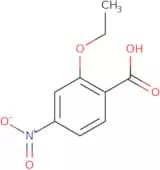
CAS :<p>2-Ethoxy-4-nitrobenzoic acid is a nitrobenzoyl compound that is used as an anticoccidial drug. It has shown to be effective against coccidiosis in poultry. 2-Ethoxy-4-nitrobenzoic acid binds to the aminobenzoate moiety of the enzyme glutamic acid decarboxylase, thereby inhibiting its activity. This inhibits the production of lactic acid and leads to cell death by lack of energy. Amprolium is a coccidiostat that inhibits the synthesis of beta-alanine in cells, which leads to inhibition of protein synthesis and cell death.</p>Formule :C9H9NO5Degré de pureté :Min. 95%Couleur et forme :PowderMasse moléculaire :211.17 g/molMethyl 2-bromobenzoate
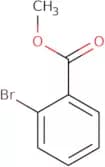
CAS :<p>Methyl 2-bromobenzoate is a chemical compound that can be used as a light emitting material. It is also used as a component of organic electrochemical cells (OECs) for the conversion of solar energy to electricity and can be used in the treatment of hepatitis. The reaction product is generated from the reaction of the halide with benzoate and light, which leads to an emission spectrum in the visible region. Methyl 2-bromobenzoate has been shown to be an efficient catalyst for Friedel-Crafts reactions, and it's pharmacokinetic properties have been studied in rats.<br>Methyl 2-bromobenzoate can also be used as a solid catalyst for the synthesis of bicyclic heterocycles.</p>Formule :C8H7BrO2Degré de pureté :Min. 95%Couleur et forme :Colorless Clear LiquidMasse moléculaire :215.04 g/mol3,4,5-Tribromobenzoic acid
CAS :<p>3,4,5-Tribromobenzoic acid is a metabolite of 3-indoleacetic acid. It is excreted in the urine and has a phaseolus-like physiological activity. This compound has been found to reduce the number of internodes in plants and increase the number of subjacent nodes. In addition, it has been shown to inhibit abscission (the separation of plant parts) by inhibiting the release of auxin from the upper node. The structural properties of 3,4,5-tribromobenzoic acid are similar to those of benzoic acid and it can be found naturally in some plants. Diversity in this chemical has been found among different species: for example, 2,3,5-triiodobenzoic acid is only present in citrus fruits such as oranges and lemons.</p>Formule :C7H3Br3O2Degré de pureté :Min. 95%Couleur et forme :PowderMasse moléculaire :358.81 g/mol3,4-Dibenzyloxybenzaldehyde
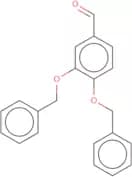
CAS :<p>3,4-Dibenzyloxybenzaldehyde is a chemical compound with the formula ClCH=C(O)CHO. This compound is an intermediate in the synthesis of the cancer drug daunorubicin. 3,4-Dibenzyloxybenzaldehyde has been shown to induce apoptosis in human ovary cells and has been detected in urine samples from patients undergoing chemotherapy for ovarian cancer. 3,4-Dibenzyloxybenzaldehyde also inhibits the production of flavonoids and has been shown to inhibit rat striatal membranes and rat atria.</p>Formule :C21H18O3Degré de pureté :Min. 95%Couleur et forme :PowderMasse moléculaire :318.37 g/mol2,5-Dihydroxybenzaldehyde
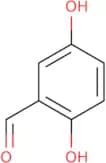
CAS :<p>2,5-Dihydroxybenzaldehyde is a compound that can be used as an antioxidant. It is also a precursor for the synthesis of benzalkonium chloride. 2,5-Dihydroxybenzaldehyde reacts with p-hydroxybenzoic acid to form 2,5-dihydroxyphenylacetic acid and benzoic acid. The reaction mechanism of 2,5-dihydroxybenzaldehyde has been studied in detail using hl-60 cells and has been shown to be significant cytotoxicity. The hydroxyl group in this molecule creates a hydrogen bond with the carbonyl group in p-hydroxybenzoic acid and the two react together to form products. This reaction is catalyzed by Michaelis–Menten kinetics and proceeds via an electrochemical detector. Nitrogen atoms are not present in this molecule but do exist in benzalkonium chloride, which is synthesized from 2</p>Formule :C7H6O3Degré de pureté :Min. 95%Couleur et forme :Yellow PowderMasse moléculaire :138.12 g/mol4-iso-Propoxybenzoic acid
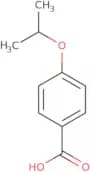
CAS :<p>4-iso-Propoxybenzoic acid is a synthetic compound with antimycobacterial activity. It is an active form of 4-iso-propoxybenzoic acid that has been shown to potently inhibit the growth of Mycobacterium tuberculosis and other mycobacteria. The formyl group in the structure of this compound enables it to bind to DNA, RNA, and proteins and disrupts their synthesis. This chemical also has the ability to cross cell membranes, which may contribute to its potent activity. This drug has been industrially produced by solid phase synthesis techniques.</p>Formule :C10H12O3Degré de pureté :Min. 95%Couleur et forme :PowderMasse moléculaire :180.2 g/mol2,4,6-Trimethylbenzoic acid
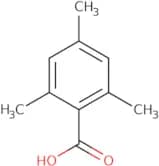
CAS :<p>2,4,6-Trimethylbenzoic acid is a molecule that belongs to the class of carboxylates. It has been shown to exhibit anticarcinogenic properties in patients with cervical cancer. 2,4,6-Trimethylbenzoic acid inhibits the growth of cervical cancer cells by blocking the activation of ferrocenecarboxylic acid (FCCA). This compound also blocks the activity of hydrogen bond and nitrogen atoms that are essential for cell division and development. 2,4,6-Trimethylbenzoic acid is used as an intermediate in the production of ferrocene derivatives. It can be used for acylation reactions with aromatic or aliphatic amines under acidic conditions.</p>Formule :C10H12O2Degré de pureté :Min. 95%Couleur et forme :PowderMasse moléculaire :164.2 g/molEthyl 2-nitrobenzoate
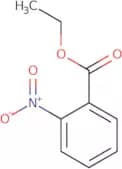
CAS :<p>Ethyl 2-nitrobenzoate is a cyclic organic compound that contains a nitro group, which is an organic radical with the formula -NO2. It belongs to the class of amides and has two carbonyl groups. The molecule consists of a bicyclic heterocycle consisting of one ring with five carbon atoms and one ring with six carbon atoms. Ethyl 2-nitrobenzoate can be used in the treatment of muscle diseases, metabolic disorders, growth factor deficiencies, autoimmune diseases, and neural system disorders due to its ability to act as an antihypertensive agent and as an inhibitor of angiotensin converting enzyme (ACE). This molecule's hydroxyl group can also react with epidermal growth factor (EGF) to form N-hydroxyethyl EGF (NHE). This product has been shown to have antiviral properties against HIV-1 protease inhibitors by interfering with viral protein synthesis.</p>Formule :C9H9NO4Degré de pureté :Min. 95%Couleur et forme :White PowderMasse moléculaire :195.17 g/molo-Sulfobenzoic acid anhydride
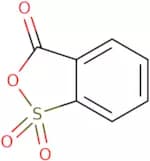
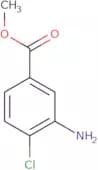
CAS :<p>o-Sulfobenzoic acid anhydride is a chemical that belongs to the class of inorganic acids. It is a white crystalline solid with a melting point of 107°C and can be found in its pure form or as sodium salts. o-Sulfobenzoic acid anhydride is stable when exposed to light and can be used in detergent compositions. It also has pharmacokinetic properties, which are affected by the presence of cationic polymers. This chemical is metabolized by microorganisms through hydrogen bonding interactions and has been shown to have antimicrobial activity against infectious bacteria, such as erythromycin-resistant strains of Staphylococcus aureus and Mycobacterium tuberculosis.</p>Formule :C7H4O4SDegré de pureté :Min 98%Couleur et forme :Slightly Brown PowderMasse moléculaire :184.17 g/molMethyl 3-amino-4-chlorobenzoate
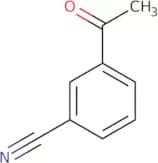
CAS :Methyl 3-amino-4-chlorobenzoate is an analog of 3-amino-4-chlorobenzoic acid. It is a multidrug that can cross the blood brain barrier and has been shown to have cytotoxic activity in vitro. Methyl 3-amino-4-chlorobenzoate has been postulated as a possible organometallic compound and may be synthesized through a chemical diversity approach. The chloride ion, which is present in methyl 3-amino-4-chlorobenzoate, has been shown to decrease the toxicity of nitrobenzoic acid, making this compound resistant to nitrosation reactions.Formule :C8H8ClNO2Degré de pureté :Min. 95%Couleur et forme :PowderMasse moléculaire :185.61 g/mol3-Acetylbenzonitrile
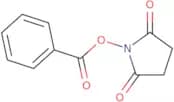
CAS :3-Acetylbenzonitrile is an isomeric, asymmetric synthesis that has been synthesised in the presence of copper complex and salicylic acid. The reaction was carried out with a gaseous phase, where the chalcone was formed. The experimental techniques used were cross-coupling reactions and molecular modeling techniques. 3-Acetylbenzonitrile has been synthesised by a rationalized enthalpic approach that includes alcohol dehydrogenases and molecular modeling techniques.Formule :C9H7NODegré de pureté :Min. 95%Couleur et forme :PowderMasse moléculaire :145.16 g/molBenzoic acid N-hydroxysuccinimide ester
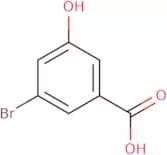
CAS :<p>Benzoic acid N-hydroxysuccinimide ester is a chemical compound that is used for the diagnosis of cancer. It is used as a reagent in chromatographic methods and as a sample preparation agent in amine extraction techniques. The benzoate group reacts with amines to form an aminobenzoate ester, which can be detected by ionization techniques. This reaction mechanism has been studied extensively with spinorphin and epidermal growth factor.</p>Formule :C11H9NO4Degré de pureté :Min. 95%Couleur et forme :White PowderMasse moléculaire :219.19 g/mol3-Bromo-5-hydroxybenzoic acid
CAS :<p>3-Bromo-5-hydroxybenzoic acid is a metabolite of 3,5-dihydroxybenzoic acid (DHB) in the metabolism of benzoic acid. It has been shown to be an antibacterial agent and has been used to treat metabolic disorders in hamsters. Symptoms of 3-bromo-5-hydroxybenzoic acid include dyslipidemia, which can lead to metabolic disorders such as diabetes mellitus and atherosclerosis. The compound may also have a role in tuberculosis and cancer due to its ability to induce apoptosis.</p>Formule :C7H5O3BrDegré de pureté :Min. 95%Couleur et forme :White PowderMasse moléculaire :217.02 g/mol2-Chloro-3,5-dihydroxybenzoic acid
CAS :2-Chloro-3,5-dihydroxybenzoic acid (2C3HB) is a fine chemical that is used as a versatile building block in the synthesis of complex compounds. It is also used as a reagent for the production of pharmaceuticals and other chemicals. 2C3HB has been shown to be an important reaction component for the synthesis of drugs such as methotrexate and 6-fluoro-3-indoxyl-beta-D-galactopyranoside. This compound has a high quality and can be used as a building block in chemical reactions with other compounds.Formule :C7H5ClO4Degré de pureté :Min. 90%Couleur et forme :PowderMasse moléculaire :188.56 g/mol5,6-Dichlorovanillic acid
CAS :<p>5,6-Dichlorovanillic acid is a high quality, versatile molecule that can be used as a reagent in organic synthesis or as a building block for the synthesis of complex compounds. It has many useful properties, such as being a fine chemical and research chemicals. 5,6-Dichlorovanillic acid is also a speciality chemical with versatile uses in building blocks or reaction components.</p>Formule :C8H6Cl2O4Degré de pureté :Min. 95%Couleur et forme :PowderMasse moléculaire :237.04 g/mol2,5-Dimethoxybenzaldehyde
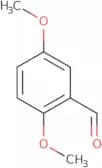
CAS :<p>Intermediate in organic synthesis</p>Formule :C9H10O3Degré de pureté :Min. 98 Area-%Couleur et forme :Off-White PowderMasse moléculaire :166.17 g/mol