Acides benzoïques
Les acides benzoïques sont des acides carboxyliques aromatiques avec la formule moléculaire C7H6O2, caractérisés par un anneau benzénique lié à un groupe carboxyle (-COOH). Ces composés sont largement utilisés comme conservateurs, intermédiaires en synthèse organique et dans la production de divers produits chimiques, y compris les colorants et les parfums. Les acides benzoïques sont également importants dans les industries alimentaire et pharmaceutique. Chez CymitQuimica, nous offrons une gamme diversifiée d'acides benzoïques de haute qualité pour soutenir vos besoins en recherche et industriels.
5434 produits trouvés pour "Acides benzoïques"
Trier par
Degré de pureté (%)
0
100
|
0
|
50
|
90
|
95
|
100
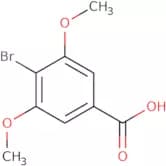
4-Bromo-3,5-dimethoxybenzoic acid
CAS :<p>4-Bromo-3,5-dimethoxybenzoic acid is a synthetic molecule that has been shown to have catalytic properties. It was generated by the reaction of resorcinol and dimethoxybenzoic acid in the presence of copper(II) acetate. This compound has also been shown to be bioinspired by its similarity to natural products such as 3,5-dihydroxybenzoic acid. 4-Bromo-3,5-dimethoxybenzoic acid has been used for the synthesis of bioactive molecules with cyclic structures. These advances are important for sustainable development and may help in the discovery of new natural products.</p>Formule :C9H9BrO4Degré de pureté :Min. 95%Couleur et forme :PowderMasse moléculaire :261.07 g/molEthyl 3,5-dichloro-4-methoxybenzoate
CAS :<p>Ethyl 3,5-dichloro-4-methoxybenzoate is an organic compound that has a variety of uses. It is an intermediate in the synthesis of various other compounds and as a reagent, it reacts with amines to form ureas. Ethyl 3,5-dichloro-4-methoxybenzoate can also be used as a complex building block for synthesizing other compounds. This chemical can be used as a speciality chemical or research chemical. As a versatile building block, ethyl 3,5-dichloro-4-methoxybenzoate can be used to make reaction components for synthesizing polymers or pharmaceuticals.</p>Formule :C10H10Cl2O3Degré de pureté :Min. 95%Couleur et forme :PowderMasse moléculaire :249.09 g/mol3,5-Dibromo-2-anisic acid
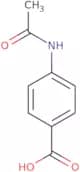
CAS :<p>3,5-Dibromo-2-anisic acid is a short chain dodecyl amine with the chemical formula CH2Br2C6H4N. It is an active compound that has been shown to have nematicidal activity and also shows high activity against saprophytes. 3,5-Dibromo-2-anisic acid is synthesized by reacting chlorine with salicylaldehyde in the presence of a base. The compound is used in the synthesis of various other organic compounds such as amides and amines.</p>Formule :C8H6Br2O3Degré de pureté :Min. 95%Couleur et forme :PowderMasse moléculaire :309.94 g/mol4-Acetamidobenzoic acid
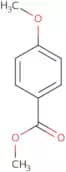
CAS :<p>4-Acetamidobenzoic acid is an aromatic organic compound that is a precursor to many pharmaceuticals, such as acetaminophen, amoxicillin, dapsone, and sulfonamide. It is an intermediate in the formation of 4-hydroxybenzoic acid from benzoic acid. This molecule is also a component of some types of plastics. The chemical's structure and properties are determined by its coordination geometry, which consists of four nitrogen atoms and one hydroxyl group. 4-Acetamidobenzoic acid has been shown to inhibit the growth of certain bacteria by interfering with their metabolic activity. It has also been found to be active against several infectious diseases such as malaria and tuberculosis. The mechanism behind its effectiveness may be due to the fact that it inhibits bacterial fatty acid synthesis or prevents the production of ATP in mitochondria cells.br>br><br>br>br><br>The reaction solution was heated for 20 minutes at 100</p>Formule :C9H9NO3Couleur et forme :White PowderMasse moléculaire :179.17 g/molMethyl 4-methoxybenzoate
CAS :<p>Methyl 4-methoxybenzoate is a white, crystalline powder that is soluble in alcohol and ether. The chemical formula for methyl 4-methoxybenzoate is C8H10O4. It has a molecular weight of 196.19 g/mol and a melting point of 136°C. Methyl 4-methoxybenzoate has been used as an organic reagent, as well as a pharmaceutical intermediate and additive in food manufacturing. It also has biological properties such as being an anti-inflammatory agent and being able to inhibit the growth of infectious diseases like tuberculosis and malaria. Methyl 4-methoxybenzoate can be synthesized by reacting benzoic acid with methanol, phosphoric acid, or hydrochloric acid. This molecule can also be synthesized from p-hydroxybenzoic acid by electrophilic substitution with methyl iodide followed by hydrolysis using sodium hydroxide. The chemical</p>Formule :C9H10O3Degré de pureté :Min. 98%Couleur et forme :PowderMasse moléculaire :166.17 g/mol4-Aminohippuric acid sodium
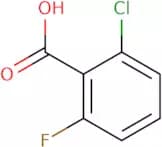
CAS :<p>4-Aminohippuric acid sodium (4AHA) is a drug that is used as a diagnostic tool for measuring renal plasma flow and renal function. The drug is administered intravenously and its optical properties are measured. 4AHA is filtered by the kidneys, which causes it to be excreted in urine. A sensor is placed on the patient's arm and measures the concentration of 4AHA in the blood flowing through the arm. This measurement can then be used to calculate renal plasma flow, which indirectly indicates kidney function. 4AHA can also be used to measure sodium levels in blood plasma, as it binds to sodium ions in solution. However, this application of 4AHA has been superseded by newer technologies such as ion-selective electrodes and magnetic resonance imaging, which offer improved accuracy at lower cost.</p>Formule :C9H10N2NaO3Degré de pureté :Min. 95%Couleur et forme :PowderMasse moléculaire :217.18 g/mol2-Chloro-6-fluorobenzoic acid
CAS :<p>2-Chloro-6-fluorobenzoic acid is an aromatic compound that is used as a solvent in the production of pharmaceuticals, plastics, and dyes. The 2-chloro-6-fluorobenzoic acid molecule has an electron rich ring structure that can undergo nucleophilic attack by a nucleophile such as hydrogen chloride or hydrochloric acid. It also has a high affinity for water molecules, which may be attributed to its aromatic hydrocarbon structure. This allows 2-chloro-6-fluorobenzoic acid to act as a good solvent for many organic compounds. This chemical is classified as a possible human carcinogen and is toxic to the liver cells.</p>Formule :C7H4ClFO2Degré de pureté :Min. 95%Couleur et forme :PowderMasse moléculaire :174.56 g/mol2-Fluoro-3-methylbenzoic acid
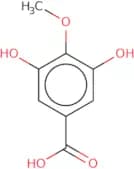
CAS :<p>2-Fluoro-3-methylbenzoic acid is a high quality, versatile building block that has been shown to be an effective reagent for the synthesis of complex compounds. It is also a useful intermediate in the synthesis of fine chemicals and speciality chemicals. This compound can be used as a reaction component for many chemical reactions, such as the formation of new bonds and the removal of protecting groups. As a versatile building block, 2-fluoro-3-methylbenzoic acid is an important starting material for synthesizing a number of natural products, pharmaceuticals, and other organic compounds.</p>Formule :C8H7FO2Degré de pureté :Min. 95%Couleur et forme :White PowderMasse moléculaire :154.14 g/mol3,5-Dihydroxy-4-methoxybenzoic acid
CAS :<p>Inhibitor of redox-based NF-ΚB activation</p>Formule :C8H8O5Degré de pureté :Min. 95%Couleur et forme :PowderMasse moléculaire :184.15 g/molMethyl 4-amino-2-methyl benzoate
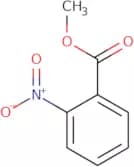
CAS :Methyl 4-amino-2-methyl benzoate is a fine chemical that can be used as a building block for research chemicals, pharmaceuticals, and speciality chemicals. Methyl 4-amino-2-methyl benzoate is a versatile building block in organic synthesis because it can be used as a reaction component and intermediate to synthesize other compounds. This compound is also an excellent scaffold for the synthesis of complex compounds, making it a useful intermediate for organic chemistry. Methyl 4-amino-2-methyl benzoate has CAS No. 6933-47-7 and is soluble in organic solvents such as dichloromethane, chloroform, ether, or acetone.Formule :C9H11NO2Degré de pureté :Min. 95%Couleur et forme :PowderMasse moléculaire :165.19 g/molMethyl 2-nitrobenzoate
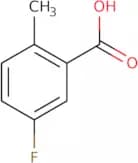
CAS :<p>Methyl 2-nitrobenzoate is a nitro compound that has been used to synthesize benzyl esters. It has been shown to react with protonation and acidic conditions. Methyl 2-nitrobenzoate is also used as an intermediate in the synthesis of methyl anthranilate, which is a component of artificial grape flavoring. The mechanism of the reaction is not fully understood, but it has been proposed that methyl 2-nitrobenzoate undergoes an intramolecular hydrogen bond with the benzoate group to form an intermediate compound called N-methyl-2-(phenylmethyl)benzamide. This intermediate then reacts with methylamine to form methyl anthranilate.<br> <br>The molecule can be detected by gas chromatography or liquid chromatography in organic solvents such as methanol or acetone.</p>Formule :C8H7NO4Degré de pureté :Min. 95%Couleur et forme :Yellow Clear LiquidMasse moléculaire :181.15 g/mol5-Fluoro-2-methylbenzoic acid
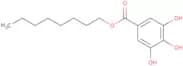
CAS :<p>5-Fluoro-2-methylbenzoic acid is a synthetic compound that has antiviral potency against the influenza A virus. It is the active form of 5-fluoro-2-methylbenzoyl chloride, which is synthesized from a Grignard reagent and an asymmetric synthesis. 5-Fluoro-2-methylbenzoic acid has been shown to have anticancer properties in vitro, which may be due to its ability to inhibit cancer cell growth through interaction with chloride channels. This drug also inhibits the activity of dehydrogenases, which are enzymes that catalyze the oxidation of various substrates by reducing them.</p>Formule :C8H7FO2Degré de pureté :Min. 95%Couleur et forme :White PowderMasse moléculaire :154.14 g/molOctyl gallate
CAS :<p>Octyl gallate is a naturally occurring compound that belongs to the class of gallates. It is a non-toxic, water-soluble antioxidant that has been used as a preservative in foods and pharmaceuticals. Octyl gallate has been shown to inhibit nuclear DNA synthesis by binding to the dinucleotide phosphate (NDP) site on ribonucleotide reductase, thereby preventing the formation of deoxyribonucleotide triphosphates. A rate constant for this reaction has been determined using analytical methods. This compound also inhibits the growth of wild-type strains of Escherichia coli and Staphylococcus aureus, as well as some strains resistant to antibiotics such as erythromycin, chloramphenicol, tetracycline, and clindamycin. Octyl gallate may also have an effect on energy metabolism in bacteria by inhibiting p-hydroxybenzoic acid (PHBA) dehydratase</p>Formule :C15H22O5Degré de pureté :Min. 95%Couleur et forme :White PowderMasse moléculaire :282.33 g/mol2,6-Dimethoxybenzoic acid
CAS :<p>2,6-Dimethoxybenzoic acid is a chemical compound with the molecular formula of C9H8O4. It belongs to the group of sesquiterpene lactones and has been shown to have anti-inflammatory properties. 2,6-Dimethoxybenzoic acid exhibits a carboxylate reaction mechanism that can be activated by an enzyme, curculigoside, which hydrolyzes the ester bond in 2,6-dimethoxybenzoic acid. The reaction mechanism involves the group p2 (COOH) on 2,6-dimethoxybenzoic acid reacting with an alcohol on curculigoside to form an ester and protocatechuic acid. The dianthus caryophyllus plant produces 2,6-dimethoxybenzoic acid as a byproduct of its synthesis of protocatechuic acid. This compound is chemically studied using solid phase microextraction</p>Formule :C9H10O4Degré de pureté :Min. 95%Couleur et forme :PowderMasse moléculaire :182.17 g/molMethyl 5-nitrosalicylate
CAS :<p>Methyl 5-nitrosalicylate is a chemical compound that belongs to the group of 4-hydroxycoumarin derivatives. It is an inhibitor of the reaction between salicylic acid and nitrous acid, inhibiting the formation of 5-nitrosalicylic acid. Methyl 5-nitrosalicylate has shown inhibitory activity against various nitro compounds, including benzofurans. The inhibitory effect on oxidation reactions may be due to its ability to act as a ligand and form coordination complexes with metal ions such as copper, zinc, and iron. Methyl 5-nitrosalicylate also has anti-inflammatory properties that are due to its ability to inhibit prostaglandin synthesis by blocking cyclooxygenase enzyme activity.<br>Methyl 5-nitrosalicylate can be synthesized in a few ways. One method includes reacting methyl salicylate with nitrous acid in the presence of light</p>Formule :C8H7NO5Degré de pureté :Min. 95%Couleur et forme :PowderMasse moléculaire :197.14 g/mol2,4-Dihydroxybenzoic acid
CAS :<p>2,4-Dihydroxybenzoic acid is a building block for the production of pharmaceuticals and other chemicals. It is a versatile chemical that can be used in the synthesis of complex compounds. 2,4-Dihydroxybenzoic acid is also a reaction component, reagent, and useful scaffold. This compound has been shown to have high quality and is a research chemical with speciality use.</p>Formule :C7H6O4Masse moléculaire :154.12 g/molMethyl gentisate
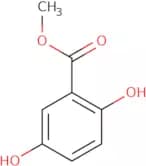
CAS :<p>Starting material for euonyminol synthesis; inhibits melanogenesis</p>Formule :C8H8O4Degré de pureté :Min. 98 Area-%Couleur et forme :PowderMasse moléculaire :168.15 g/molMethyl 3-bromo-2-fluorobenzoate
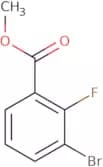
CAS :<p>Methyl 3-bromo-2-fluorobenzoate (MBFB) is a versatile building block in chemical synthesis. MBFB can be used as a reagent or speciality chemical. It has been used as an intermediate for the synthesis of other compounds, such as methyl 5-bromo-2-fluorobenzoate and ethyl 5-bromo-2-fluorobenzoate. MBFB is also a useful scaffold for the synthesis of complex compounds with interesting functions, such as research chemicals.</p>Formule :C8H6BrF2Degré de pureté :Min. 95%Couleur et forme :White PowderMasse moléculaire :233 g/mol4-Hydroxy-3,5-dimethylbenzoic acid
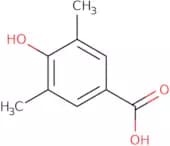
CAS :<p>4-Hydroxy-3,5-dimethylbenzoic acid (4HDMBA) is an antimicrobial agent that inhibits bacterial cell growth by binding to the GyrA subunit of DNA gyrase. It is a potent inhibitor of the GyrA subunit, with activity against both mutant and wild type strains. 4HDMBA also has anticancer activity in vitro and in vivo studies have shown that it can inhibit the growth of cells from human cancer cell lines. 4HDMBA is synthesized by reacting amide with chloroacetyl chloride. The carboxylate group on 4HDMBA can be transformed into a hydroxyl group by reaction with sodium hydroxide. The chemical structure of 4HDMBA includes a hydroxy group, a chlorine atom, and a hydroxyl group.</p>Formule :C9H10O3Degré de pureté :Min. 95%Couleur et forme :PowderMasse moléculaire :166.17 g/mol3-Amino-2-chlorobenzoic acid
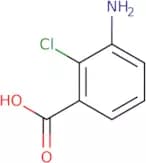
CAS :<p>3-Amino-2-chlorobenzoic acid is a molecule that belongs to the group of acidic compounds. It has been shown to induce apoptosis and inhibit cell proliferation in human immunodeficient virus (HIV) cells, as well as inhibit the growth of cancer cells. 3-Amino-2-chlorobenzoic acid also inhibits histone deacetylase, which is an enzyme that controls gene expression by removing acetyl groups from lysine residues on the N-terminal tails of histones. This inhibition may be responsible for its anticancer activity. 3-Amino-2-chlorobenzoic acid is metabolized by oxidation to chlorinated derivatives and excreted via the kidneys. It has been shown to have a pharmacokinetic profile in rats similar to that observed with other triazines such as atrazine and simazine. The elimination half-life of 3-amino-2-chlorob</p>Formule :C7H6ClNO2Degré de pureté :Min. 95%Couleur et forme :Off-White PowderMasse moléculaire :171.58 g/mol